Mục lục
QUICK SUMMARY
- Smart solution: Instead of throwing them away, repurpose old plastic buckets and bottles to build DIY mouse traps. This is not only an effective mouse-catching method but also a creative way to reduce waste.
- Complete guide: This article provides step-by-step instructions for 3 popular, easy-to-build trap designs:
- “Rolling Log” mouse trap (using a spinning can).
- “Tipping Bridge” mouse trap (using cardboard).
- “Fish Trap” mouse trap (one-way entry).
- Keys to success: Practical tips on bait selection, trap placement, and safety precautions to maximize effectiveness.
Mice are among the most troublesome pests - they not only damage property but also pose serious disease risks. Instead of discarding old plastic buckets and bottles and adding to the waste stream, you can repurpose them intelligently. Building a mouse trap from a plastic bucket is an effective, low-cost pest control method and a creative way to reduce household waste.
This article provides detailed guidance on trap-building techniques and simple DIY tools to help you solve the problem.
1. Tools and Materials
How to choose the right plastic bucket
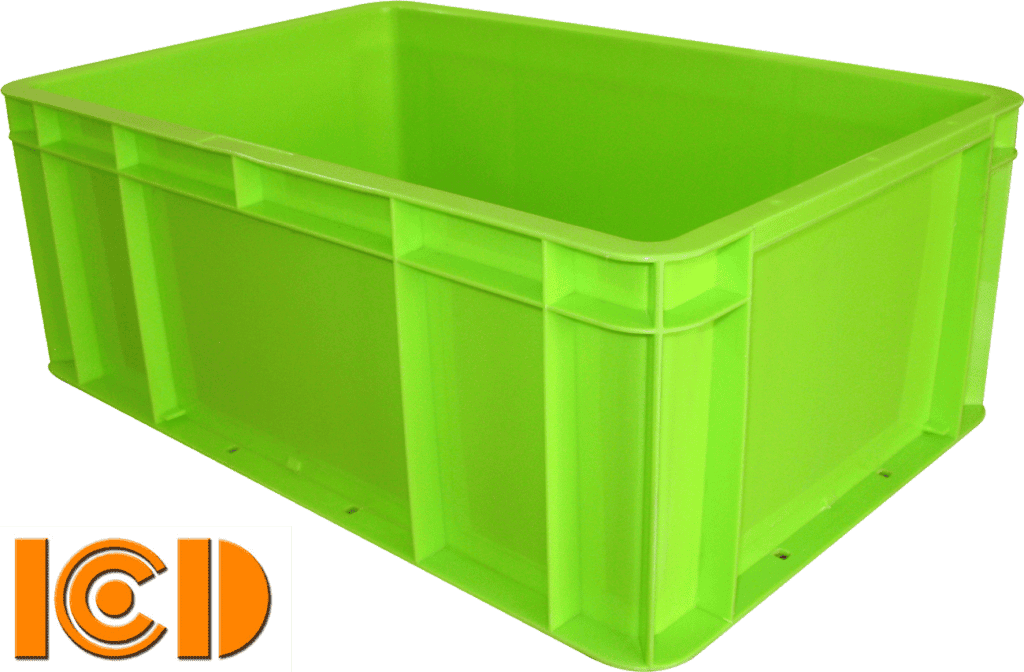
Choosing the correct bucket is the most important factor. An unsuitable bucket lets mice escape easily. Use these 4 criteria:
- Height and Interior Surface:
- Height: The bucket must be at least 40-50 cm tall. Mice can jump surprisingly high.
- Surface: The inner walls must be smooth with no large ridges or scratches that mice could use to climb out.
- Material:
- Prioritize HDPE or PP plastic buckets - for example, old paint buckets (thoroughly cleaned). These plastics are rigid and smooth enough to prevent escape.
- Capacity and Shape:
- A 20-litre bucket (similar to a standard paint bucket) is the most practical size. Round or rectangular shapes both work well.
- Cleaning and Odour Removal:
- Mice have a very keen sense of smell. Wash the bucket with soap and water, then leave it in direct sunlight for 1-2 days to sterilise it and remove any residual odours.
Other tools and bait needed
- Easy-to-find materials: Box cutter, scissors, wire, an empty soda can, cardboard.
- Attractive bait: Peanut butter is the best choice. Crushed roasted peanuts or cheese also work well.
- Adhesive: Tape or staples to secure the parts.
- Ramp: A wooden plank or piece of cardboard long enough to reach from the floor to the bucket rim.
2. Step-by-Step Guide: 3 Effective Mouse Trap Designs
Method 1: “Rolling Log” Mouse Trap (using a soda can)
This is the most popular and effective method.
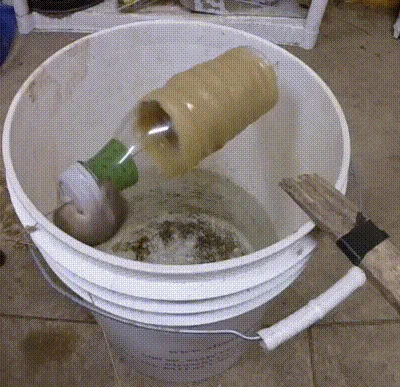
- How it works: A mouse walks along a freely spinning can to reach the bait. When it steps on the can, it rotates, causing the mouse to lose balance and fall to the bottom of the bucket.
- Instructions:
- Drill 2 small holes on opposite sides near the top rim of the plastic bucket.
- Take an empty soda can and punch a hole through the centre of both ends.
- Thread a straight piece of wire through one bucket hole, through the can, and out the other hole to create a spinning axle.
- Spread a layer of bait (peanut butter) across the centre of the can.
- Place the wooden plank as a ramp from the floor up to the level of the bucket rim.
- (Optional) Pour 5-10 cm of water into the bottom of the bucket.
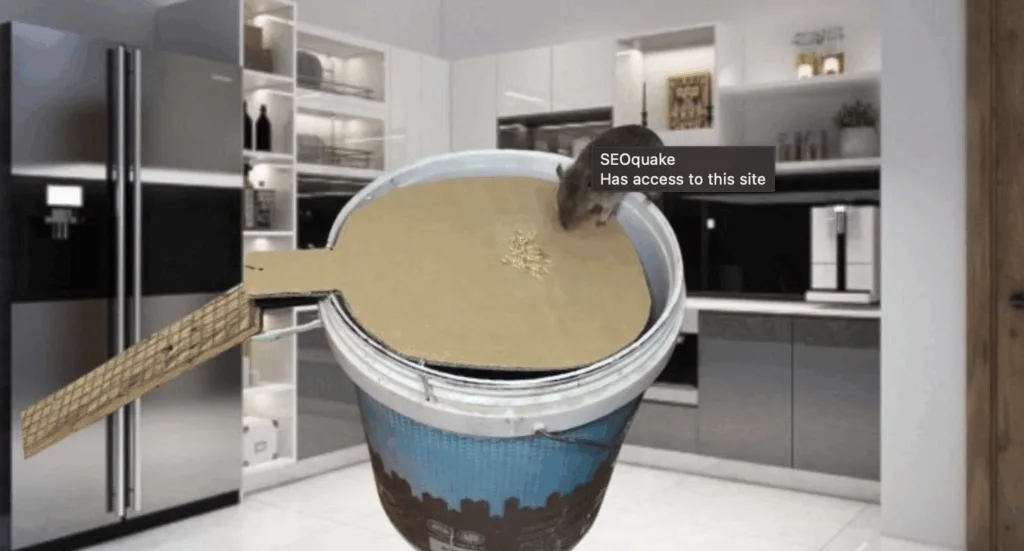
Method 2: “Tipping Bridge” Mouse Trap (using cardboard)
- How it works: A mouse walks along a precariously balanced piece of cardboard. When it passes the pivot point to reach the bait, the cardboard tips and dumps the mouse into the bucket.
- Instructions:
- Place a chopstick or bamboo skewer across the top of the bucket rim.
- Balance a stiff piece of cardboard on top so that one half rests over the bucket opening and the other half extends outside.
- Place the bait at the far end of the overhanging section of cardboard.
- Set up a ramp for the mouse to climb up.
Method 3: “Fish Trap” Mouse Trap (using a plastic bottle)
This method is typically used to catch mice one at a time.
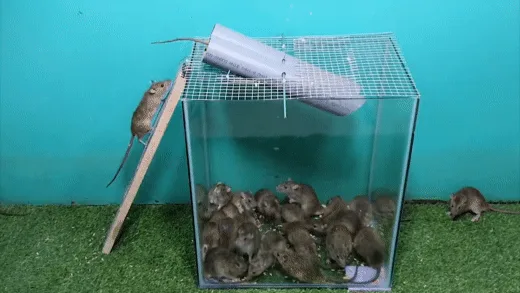
- How it works: Creates a one-way entry. A mouse can easily enter but cannot get back out.
- Instructions:
- Take a 1.5 L plastic bottle and use a knife to cut off the neck section.
- Place a small amount of bait inside the body of the bottle.
- Invert the cut neck and insert it back into the bottle body, creating an inverted funnel.
- Secure both parts with tape or staples.
3. Tips for Placement and Better Results
- Trap placement: Always place traps flush against walls, in corners, or where you have spotted mouse tracks or droppings. Mice habitually travel along edges and walls.
- Remove human scent: Wear gloves when building the trap and handling the bait to avoid leaving your scent behind.
- Eliminate competing food sources: Clean the area around the trap so mice focus only on the bait inside your trap.
Frequently Asked Questions (FAQ)
1. What is the best bait for catching mice?
Peanut butter is generally considered the most effective bait. Its strong aroma attracts mice, and its stickiness forces them to spend time eating - increasing the chance they fall into the trap.
2. Why is my trap not catching any mice?
There are a few possible reasons: the trap still carries human scent (use gloves), the placement is not ideal (place it flush against a wall), or there are too many other food sources nearby that draw mice away from the trap.
3. How do I safely dispose of a caught mouse?
Always wear thick gloves. If you did not add water, carry the entire bucket to a remote location well away from your home and release the mouse. If you used water, dispose of the carcass hygienically - bury it or seal it in a bag before placing it in the rubbish bin.