Mục lục
Author: Le Van Thang, Director of ICD Vietnam.
I still remember the early days working with export shipments. We did everything perfectly - correct pallets, carefully packed goods. Yet some consignments were still returned because the carton corners were dented and deformed in transit. That was when I truly understood the role of a small but powerful detail: the paper angle board. It is not merely an accessory; it is the silent guardian of your product’s value.
QUICK SUMMARY
- Direct answer: Paper angle board in English is “Paper Angle Board” or “Edge Protector”. These are the most widely used terms in international logistics and packaging.
- What is it? A product made from multiple layers of kraft paper pressed together under high pressure, forming a rigid V-shape used to protect the edges and corners of cargo.
- Why does it matter? This article shares practical experience on the role of edge protectors in protecting goods from impact, reinforcing cargo structure, and optimizing warehouse space.
- Diverse applications: Beyond transport, paper angle boards are also used in interior design and creative crafts.
1. Paper angle board in English
When working with foreign partners or consulting technical documents, you will frequently encounter this product. To answer directly and precisely:
Paper angle board in English is “Paper Angle Board” or “Edge Protector”.
Depending on context, other terms are also used: “Corner Protector”, “Edge Guard”, or “Corner Board”. However, “Paper Angle Board” is the most widely used and easily understood term.
2. What is a paper angle board and how is it made?
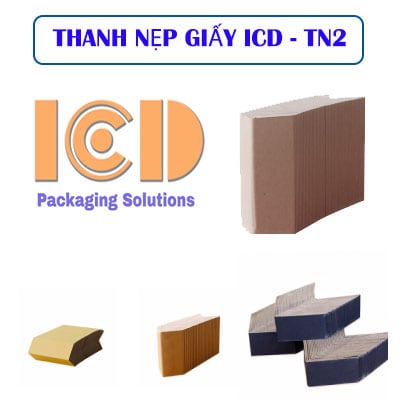
Many people look at it and think it is just a folded piece of cardboard. In reality it is considerably more complex - the result of specialist corner processing and layer-pressing techniques.
It is made from multiple layers of recycled kraft paper bonded together with a special adhesive under high pressure and heat. This process creates an extremely rigid and durable V-shape (or L-shape) channel - far stiffer than ordinary corrugated cardboard.
3. The real role of edge protectors in the supply chain
From my experience, paper angle boards solve three core problems every business faces.
- Protecting corners and edges: This is the primary function. The corners and edges of carton boxes are the weakest points and most prone to impact damage in transit. A rigid edge guard disperses impact forces, keeping the carton square and undamaged.
- Reinforcing cargo structure: When stacking multiple cartons on a pallet and strapping them down, the strapping force can easily crush the top cartons. The angle board acts as a skeleton, distributing the strapping force evenly along the edges, allowing you to apply tighter straps without crushing the cartons. The entire pallet load becomes a unified, stable block.
- Optimizing stacking: Thanks to this reinforcement, you can stack cargo higher in the warehouse or truck without fear of the bottom cartons collapsing, saving valuable storage space.
4. Creative applications beyond logistics
Interestingly, the value of paper angle boards extends well beyond cargo protection.
- Interior design: Thanks to their rigidity and distinctive shape, architects and interior designers use them to create decorative elements, picture frames, bookshelves, and unique wall features.
- Crafts: They are an excellent material for framing artwork or as structural formers for architectural scale models.
Key specifications: sizes and thickness
- Edge width: 30 mm to 100 mm per side
- Thickness: 2 mm to 10 mm
- Standard lengths: 500 mm, 1000 mm, 1200 mm, or cut to order
- Material: 100% recycled kraft paper layers, fully recyclable
Paper vs Plastic Angle Board: which to choose?
| Criteria | Paper Angle Board | Plastic Angle Board |
|---|---|---|
| Water resistance | Low (degrades when wet) | Excellent |
| Rigidity | High for dry conditions | High |
| Cost | Lower | Higher |
| Environmental impact | 100% recyclable | Recyclable but slower degradation |
| Best for | Indoor, dry warehouse, export carton | Cold storage, humid environments |
Frequently Asked Questions
1. Can paper angle boards be recycled?
Yes, absolutely. Since they are made primarily from kraft paper, they can be recycled together with other cardboard and paper waste.
2. Are paper angle boards difficult to cut and assemble?
Not at all. You can easily cut them with a heavy-duty box cutter. To join sections, use plastic snap-lock channels, staples, or specialized ultrasonic heat welding.
3. Where to buy paper angle boards in Vietnam?
ICD Vietnam is a leading supplier of paper angle board solutions in Hanoi and northern Vietnam, offering a full range of sizes and thicknesses with factory-direct pricing and technical consulting.
4. Are there standard HS codes for paper angle boards?
Yes. Paper angle boards (edge protectors) for export packaging typically fall under HS 4819.40 (other cartons, boxes and cases of corrugated paper) or 4820.90, depending on construction. Check with your customs broker for the specific subheading applicable to your product.
Contact ICD Vietnam for Paper Angle Board pricing
Hotline 24/7: 0983 797 186 | 090 345 9186 | 090 5859 186
Zalo: icdvietnam | Email: sales@icdvietnam.com.vn
References
- ICD Vietnam technical team field observations - export packaging quality incidents, 2014-2026
- ASTM D642 - Standard test method for determining compressive resistance of shipping containers