Mục lục
- Key facts at a glance
- 1. What is PE-laminated kraft paper? Definition and production process
- 2. Core benefits: moisture barrier and enhanced mechanical durability
- 3. Key applications in logistics and packaging
- 4. Selection criteria and quality control
- 5. Standards and references
- Related articles
- Frequently asked questions about PE-laminated kraft paper
- Contact ICD Vietnam
Kraft paper laminated with PE (polyethylene) film bonds high-strength virgin kraft fiber to a thin heat-extruded plastic layer, creating a packaging material that blocks moisture, resists grease, and enables heat sealing. It is the standard outer shell for container dunnage air bags and a reliable barrier for dry food and industrial packaging.
Key facts at a glance
- The PE layer acts as a complete moisture barrier, cutting the water vapor transmission rate well below that of plain kraft paper.
- Maintaining paper dryness preserves mechanical strength - wet kraft can lose up to 50% of its compression resistance.
- Primary applications: container dunnage air bags, dry food bags, agricultural chemical sacks, and construction moisture barriers.
- The laminate balances the sustainability credentials of kraft paper with the technical performance of polyethylene film.
1. What is PE-laminated kraft paper? Definition and production process
PE-laminated kraft paper is a composite packaging material produced by the extrusion lamination process, in which a thin polyethylene layer is applied to the surface of kraft paper. The combination delivers the tensile and tear strength of paper together with the waterproof barrier of plastic.
1.1. Physical structure and PE resin types
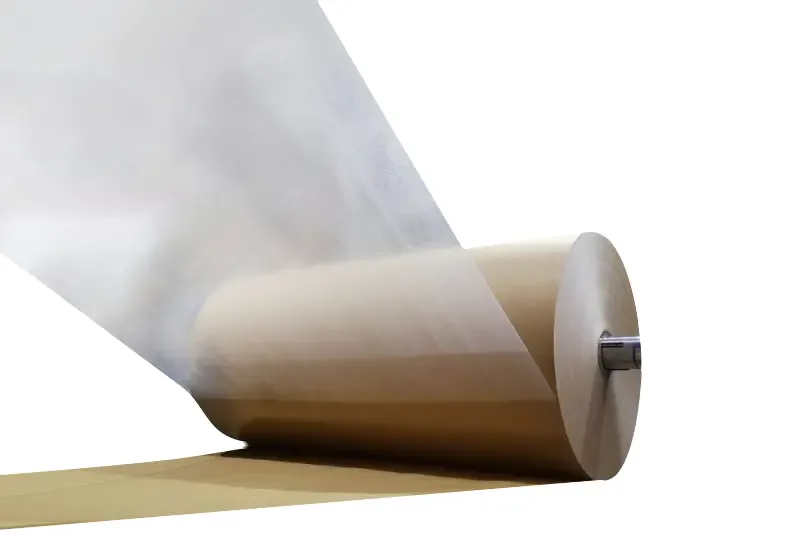
- Kraft paper layer (substrate): The load-bearing layer, providing high mechanical strength, superior tear resistance, and tensile strength. Kraft paper is the primary structural element, supplying the rigidity the packaging needs.
- PE film layer (polyethylene): The coating layer, acting as the moisture vapor barrier. It is heat-pressed onto the paper to form a continuous bond that creates the waterproofing function.
PE resin types used:
- LDPE (Low-Density Polyethylene): The most common choice. Flexible, easy to process, and offers excellent heat-seal performance. Preferred for bags that require elasticity and packaging versatility.
- HDPE (High-Density Polyethylene): Stiffer, with better heat resistance and chemical resistance. Used in applications requiring reinforced moisture protection or industrial packaging under mechanical load.
1.2. Extrusion lamination process and bond strength
The PE film is applied to kraft paper primarily by extrusion coating - a high-precision process that produces a uniform, firmly bonded coating layer.

- Extrusion principle: PE resin pellets are fed into an extruder and melted at high temperature. The molten resin is extruded through a die to form a thin film, then pressed directly onto the kraft paper surface using pressure rollers.
- Bond strength: This method creates high adhesion between the two materials and excellent bond durability - ideal for load-bearing and heat-exposed applications such as dunnage air bag outer shells. The bond must be strong enough to resist tearing and thermal stress in harsh transport environments.
- Quality control: The PE layer must be applied uniformly with no air bubbles or thin spots (voids) to ensure the integrity of the moisture barrier across the entire surface. Any void allows moisture penetration that degrades the paper substrate.
2. Core benefits: moisture barrier and enhanced mechanical durability
The greatest value of PE-laminated kraft paper is its ability to create a complete moisture barrier and preserve the mechanical properties of the paper substrate, extending the service life of both the packaging and the goods inside.
2.1. Moisture barrier mechanism and water vapor transmission rate
Plain kraft paper readily absorbs moisture from the air, which degrades its mechanical strength - compression resistance can drop by up to 50%. The PE film layer resolves this problem completely.
- Blocking vapor diffusion: The PE layer acts as a complete moisture and water barrier, significantly reducing the Water Vapor Transmission Rate (WVTR), the standard measure of how much moisture passes through a material per unit time.
- Protection from container sweating: In sea freight, container condensation - known as container sweating - is a major risk. The PE layer protects the paper substrate from condensation buildup, maintaining the dunnage air bag’s load-bearing capacity throughout long ocean voyages.
- Sustained mechanical strength: When kraft paper remains dry thanks to the PE protection, it retains maximum dynamic compression and tensile strength - a critical requirement in logistics. This is especially important for load-bearing packaging such as jumbo bags or air bag outer shells.
2.2. Improved heat-seal performance and chemical resistance
The PE layer is an important thermoplastic material that delivers additional technical advantages:
- Heat sealing: The thermoplastic property allows PE-laminated kraft paper packaging to be heat-sealed at the edges easily and securely. This produces kraft ziplock bags or stand-up pouches with an airtight seal that blocks air, dust, and moisture from entering through the seams.
- Oil and chemical resistance: The PE layer prevents oil or liquid from products inside (such as fast food or liquid chemicals) from soaking through the packaging, and protects the paper from mild chemical attack. The PE functions as a safe separation layer.
3. Key applications in logistics and packaging
PE-laminated kraft paper is the ideal packaging solution for industries that demand strict product preservation.
3.1. Critical application: container dunnage air bag outer shell
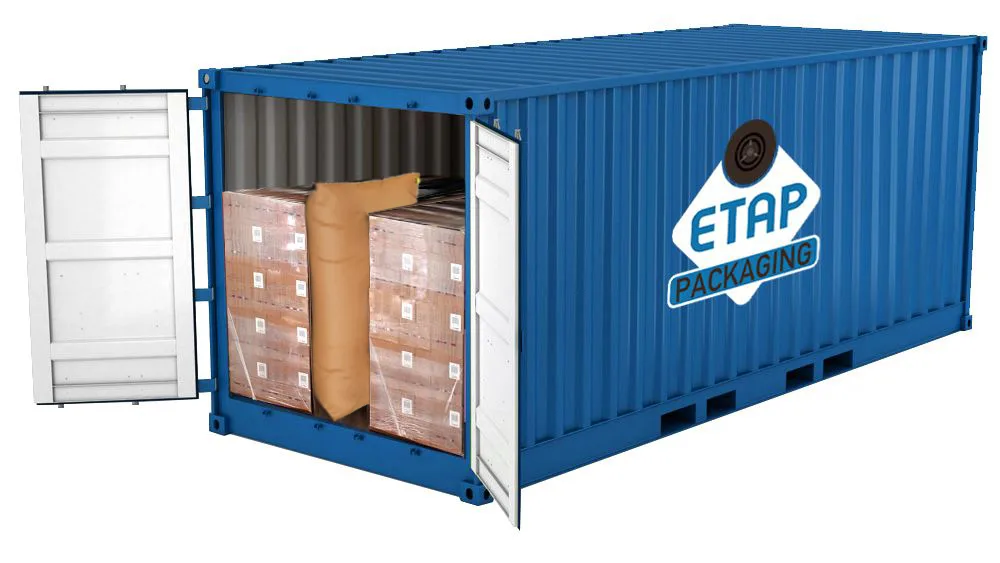
In logistics, PE-laminated kraft paper is the core material for the outer shell of container dunnage air bags.
ICD Vietnam experience:
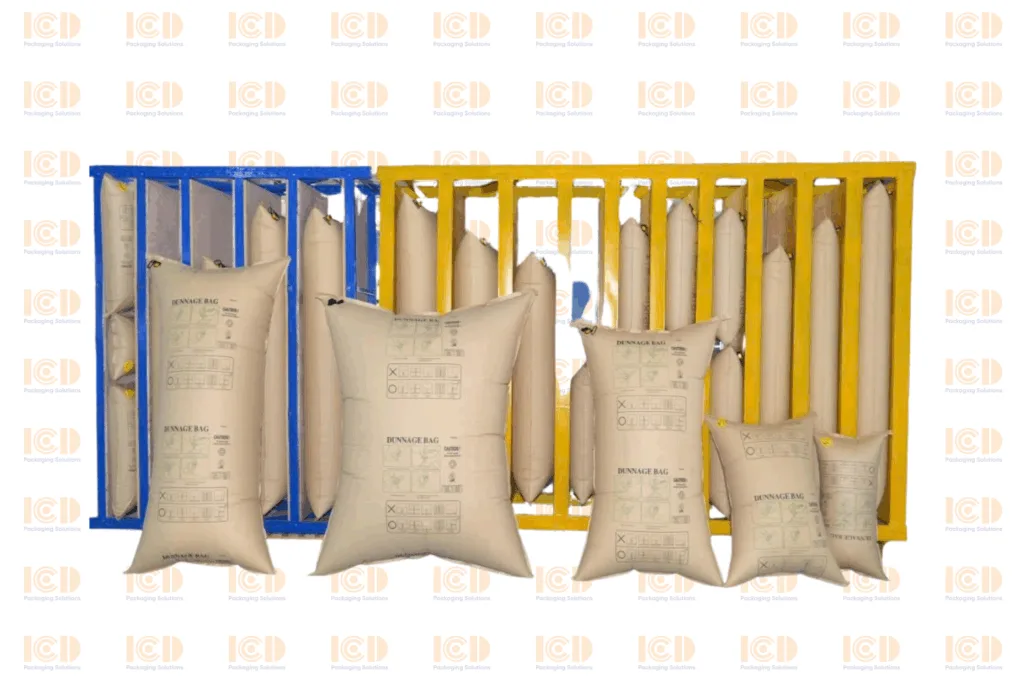
- ICD Vietnam uses PE-coated kraft paper (plastic film laminate) for the outer shell of its dunnage air bags - the mandatory specification for sea-export cargo.
- Sustaining dynamic compression load: The primary goal is ensuring the kraft paper shell does not lose mechanical strength due to high humidity. The PE layer keeps the kraft dry, maintaining the ability to withstand dynamic compression loads of several tonnes - securing the cargo block completely. This allows the air bag to meet stringent AAR (Association of American Railroads) standards.
- Extended service life: The PE layer also protects the bag shell from abrasion caused by friction against the container walls and cargo units, prolonging the physical life of the bag and increasing reuse potential for high-load-rated bags.
3.2. Food packaging and other industrial applications
- Dry food packaging: Used to produce kraft ziplock bags or packaging for coffee and grain flour. The PE layer keeps dry food from absorbing moisture and extends shelf life by creating an effective vapor barrier.
- Agricultural chemicals and aquaculture: Used as packaging for pesticides, fertilizers, and powder products that require airtight preservation. The PE layer prevents chemical leakage from the inside and protects the outer paper from mild corrosion.
- Construction materials: Used as moisture barriers and underlayment where paper-based materials must be isolated from ground water and vapor, such as in roofing sheets or insulation material production.
4. Selection criteria and quality control
Choosing the right PE-laminated kraft paper requires attention to technical specifications and rigorous quality-control processes.
4.1. Paper grammage (GSM) and PE film thickness
| Parameter | Effect on performance | Typical range |
|---|---|---|
| Paper grammage (GSM) | Determines mechanical strength and rigidity - higher GSM means greater load and tear resistance | 80-150+ GSM for industrial use |
| PE film thickness | Determines moisture-barrier effectiveness and heat-seal strength | 15-30 micrometers |
4.2. Lamination quality and bond adhesion
The PE film must be extrusion-laminated with high adhesion and no voids or air bubbles to guarantee the integrity of the moisture barrier.
- Peel Test (bond adhesion check): The key quality-control method. If adhesion is poor, the PE layer can delaminate, destroying the waterproofing and vapor-barrier function. A passing result requires the paper substrate to tear before the PE layer separates - meaning the chemical bond has reached optimum strength.
- MVTR Test (Moisture Vapor Transmission Rate): Specialist laboratories measure this value to confirm how effectively the PE layer blocks moisture vapor. Particularly important for food and pharmaceutical packaging.
4.3. Recyclability and sustainability considerations
Although kraft paper is easily recycled, the combination with a PE layer creates an environmental challenge.
- Separation challenge: To recycle the laminate, the two material layers (paper and plastic) must be completely separated. This requires more complex processing than recycling plain kraft paper - typically hydrolysis or other specialized techniques.
- Sustainability trade-off: Businesses must weigh the benefit of extended product life (through moisture protection) against the difficulty of end-of-life processing. In load-bearing logistics applications such as dunnage air bags, the benefit of cargo safety and reduced damage is generally prioritized over the recycling challenge.
Related product: Kraft paper dunnage air bags
5. Standards and references
The following standards and documents are commonly applied to verify the quality and technical performance of PE-laminated kraft paper in packaging applications:
- AAR (Association of American Railroads): Specifies strength and performance requirements for cargo dunnage materials, including dunnage air bags with PE-laminated kraft outer shells.
- ASTM E96 / E96M: International standard for testing the Water Vapor Transmission Rate (WVTR) of materials, including PE-laminated kraft paper.
- ISO 2872 and ISO 2874: Standards for measuring water absorption and moisture content of paper-based substrates - directly relevant to the need for a PE barrier layer.
- FEFCO (European Federation of Corrugated Board Manufacturers): Guidelines on packaging materials, covering the use of paper combined with barrier materials for product protection.
- Manufacturer technical data sheets: Detailed specifications for peel strength and tear resistance from reputable suppliers such as ICD Vietnam.
Related articles
| Stretch wrapping articles - ICD Vietnam | Dunnage air bag material guide | What is stretch film? Uses and specifications |
Frequently asked questions about PE-laminated kraft paper
1. What is the main difference between PE-laminated and PP-laminated kraft paper?
The difference lies in the film properties. PE (polyethylene), especially LDPE, is more flexible, offers better heat-seal performance, and provides a highly effective moisture barrier (low WVTR) - the preferred choice when airtight sealing and flexibility are needed. PP (polypropylene) is stiffer, with higher tensile strength and better heat resistance. PP is used in jumbo bags and industrial packaging requiring superior surface hardness and abrasion resistance, though heat-sealing and moisture-barrier performance may be lower than PE.
2. Can PE-laminated kraft paper be recycled?
Yes, but the process is more complex than recycling plain kraft paper, and it is classified as a multi-material composite. Standard paper recycling uses water to break down the paper fibers, but the PE layer does not dissolve in water and must be separated. Specialized facilities use hydrolysis or mild chemical processes to delaminate the PE. In many cases the separation is not complete, which reduces the quality of the recycled paper fiber. In load-bearing logistics applications, the cargo safety benefit is generally prioritized over the recycling challenge, and reusing the bag multiple times is encouraged where possible.
3. How do I test the quality of PE lamination on kraft paper?
Quality control relies on two main tests. The Peel Test measures bond adhesion: on a correctly laminated sheet, the paper substrate should tear before the PE layer separates - meaning the chemical bond is at optimum strength. If the PE peels away cleanly with low force, the bond is insufficient. The MVTR Test (Moisture Vapor Transmission Rate) measures how much moisture vapor passes through the material in 24 hours - the lower the value, the better the PE barrier. Both tests should be conducted before accepting a batch for critical applications such as dunnage air bags or food packaging.
4. How do paper grammage and PE thickness affect a dunnage air bag?
Both parameters are critical for bag performance. Paper grammage (GSM) determines the outer shell’s ability to withstand dynamic compression loads. Higher grammage kraft (for example, 150 GSM and above) provides maximum load-bearing capacity so the bag does not tear under the push and vibration forces inside a container. PE film thickness determines how well the paper is protected from moisture. A thicker PE layer (for example, 25 micrometers instead of 15 micrometers) provides a more effective vapor barrier, ensuring the kraft paper retains its strength throughout a long sea voyage in high-humidity conditions.
5. What AAR standards apply to PE-laminated kraft dunnage air bags?
The AAR (Association of American Railroads) publishes load-resistance and performance standards for dunnage materials used in rail and intermodal freight. Dunnage air bags with PE-laminated kraft outer shells are tested for dynamic compression capacity, burst pressure, and sustained load-holding ability. Using PE-coated kraft ensures the outer shell meets the mechanical requirements for the full journey, including exposure to temperature swings and high humidity that would weaken uncoated paper.
Contact ICD Vietnam
Hotline: 0983 797 186 / 090 345 9186 / 090 5859 186
Email: sales@icdvietnam.com.vn | Zalo: Chat Zalo