Table of Contents
- 4 parameters to settle when choosing PE film
- Choosing PE film thickness by type of load
- Choosing PE film by the wrapping machine you use
- Virgin and recycled PE film: the practical differences
- Checking film quality before buying
- Frequently asked questions
- Which parameters must be settled when choosing PE film?
- What is the most common mistake when choosing PE film?
- What thickness of PE film should I choose?
- How many metres are in a roll of pallet-wrapping PE film?
- When is black PE film used?
- Should I choose the thickest film to be safe?
- What film does a pre-stretch machine use?
- Contact us to order PE film and wrapping machines
- References
Reviewed and updated by ICD - Week 43/2026
Choose pallet-wrapping PE film by 4 parameters: film type (hand or machine roll), width (pallets use 500 mm), thickness and roll weight. ICD Vietnam’s hand-wrap film is 17 microns thick, in 2.1-5.0 kg rolls; machine-roll film is 20-30 microns thick, in 7-18 kg rolls with a 76 mm core. Choose thickness by the weight and edge sharpness of the load, then test on a real pallet.
- Choosing PE film: settle 4 parameters - type (hand/machine), width, thickness (microns), roll weight.
- The most common mistake: buying hand film for a pallet wrapping machine, so the film keeps breaking.
- The roll must stay within the machine’s limits for width, core, diameter and roll weight.
- PE film advice: contact ICD Vietnam
Choosing the wrong thickness, type or width makes the film break midway, loads loosen in transit, or use twice as much film as needed. This guide goes through the 4 parameters, how to choose thickness by type of load, how to match a roll to the wrapping machine you use, and how to check film quality before ordering large quantities.
4 parameters to settle when choosing PE film
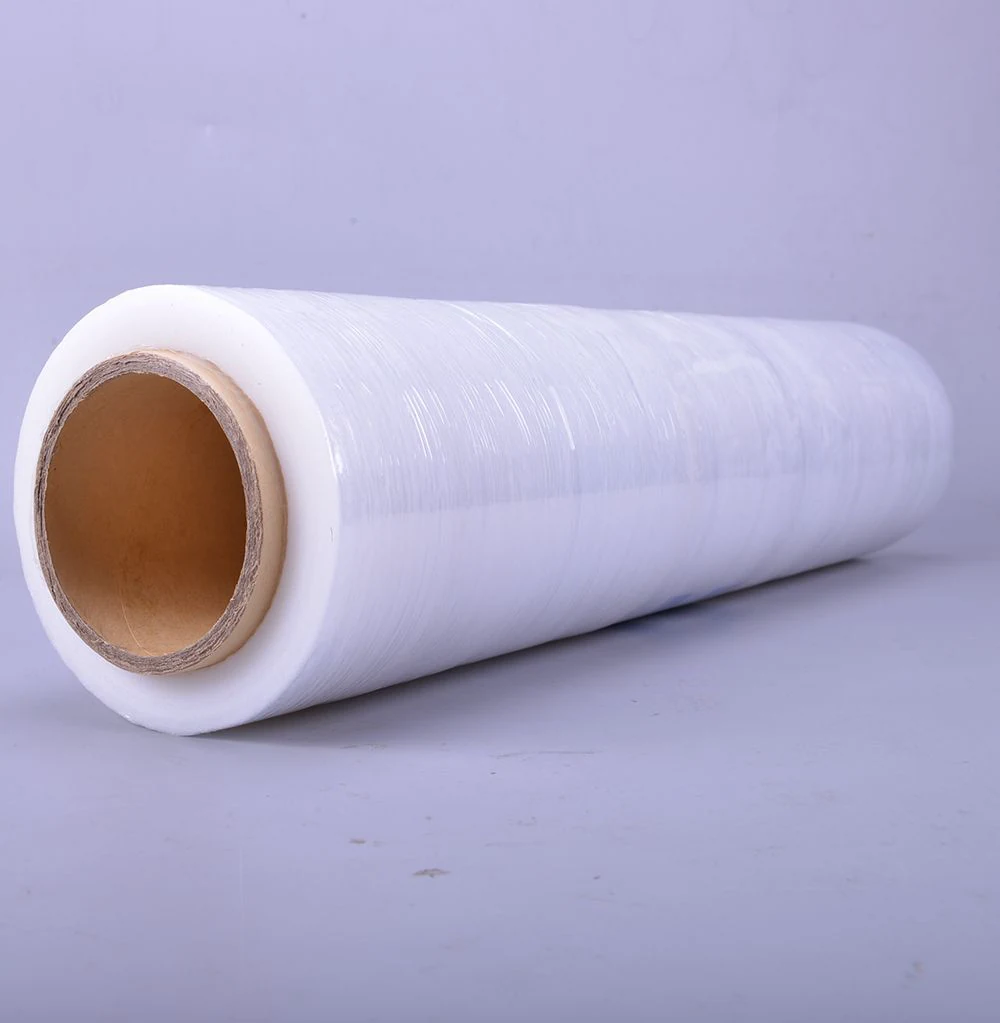
Four parameters must be settled before ordering film: film type (hand or machine), width, thickness and roll weight; the first two must match how you wrap and the machine you use, and the last two decide how firm the load is and the film cost per pallet.
Film type: hand wrap or machine roll?
This is the first and most important question. Hand stretch film is made so an operator can pull it by hand or with a hand tool, so rolls are light and the pulling force moderate. Machine stretch film is thicker, rolls are heavier, and it withstands the even pull of a motor, especially when the machine has a pre-stretch unit that stretches the film 200-300% before wrapping.
Using the wrong type causes two opposite faults: hand film fitted on a machine usually breaks constantly because the machine pulls harder than the film can take; machine film wrapped by hand cannot be pulled with enough force by the operator, so it wrinkles and the load is not tight enough. The table below compares the two types by the real specifications of the film ICD Vietnam supplies:
| Parameter | Hand-wrap film | Machine-roll film |
|---|---|---|
| Total roll weight | 2.1-5.0 kg (for example a 2.1 kg roll: 1.8 kg film, 0.3 kg core) | 7-18 kg (for example a 15 kg roll: 14 kg film, 1 kg core) |
| Thickness | 17 microns (blue film can be 12-20 microns on request) | 20-30 micron |
| Width | 500 mm | 500 mm |
| Core | 76 mm or 54 mm | 76 mm (3 inches); some lines have a 54 mm core |
| How it is used | Pulled by hand or with a hand tool | Fitted on the film carriage of a turntable machine, robot or automatic machine |
Film width
Standard pallet-wrapping film is 500 mm wide, used for hand wrapping and for turntable machines, robots and the ICD-LP600F-L luggage wrapping machine. Carton-wrapping machines such as the ICD-DBC800 use narrow film of 100-250 mm. Check the machine specifications before ordering film, because a machine’s film carriage accepts only rolls of its design width.
Film thickness (microns)
Thickness directly affects load holding, tear resistance at the pallet corners and the metres of film per roll. How to choose by type of load is in the section right below; the thing to remember is that thicker film is not always better, because for the same weight a thicker roll is shorter.
Roll weight
Rolls of 7-18 kg are for pallet wrapping machines, with fewer stops to change rolls. Light rolls of 2.1-5.0 kg are for hand wrapping; for a warehouse that hand wraps a lot, a 3-4 kg roll is the balance between roll changes and human pulling strength. Ordering rolls above the film carriage’s weight or diameter limit makes the machine pull the film unevenly, so always check against the machine documents.
Choosing PE film thickness by type of load
Thickness is chosen by the weight and shape of the load. No mandatory standard sets microns for each load level, so the table below is ICD Vietnam’s starting recommendation to narrow the choice; the final level must be settled by testing on your own pallets.
| Thickness | Pallet weight | Typical load |
|---|---|---|
| 15-17 micron | Under 200 kg | Paper boxes, plastic bags, light household goods, smooth surfaces |
| 17-20 micron | 200-800 kg | Cartons, packaged consumer goods |
| 20-23 micron | 800-2,000 kg | Metal, sawn timber, aluminium profiles, long-distance haulage |
| Over 25 microns | Special applications | Sharp metal goods, long sea export voyages |
Film of 15-17 microns suits light goods with smooth surfaces and no sharp edges; it is the thinnest film commonly used in industry, the cheapest, but breaks easily if the load has sharp corners. Film of 17-20 microns is the most common in logistics warehouses because it balances strength and cost well for cartons and consumer goods of 200-800 kg.
Film of 20-23 microns is for heavy loads of 800-2,000 kg, loads with sharp edges and corners such as metal, sawn timber and aluminium profile bars, or loads that must be wrapped tightly for long hauls. Above 25 microns is used only for special applications such as sharp metal goods and long sea exports, at high cost and rarely. If the film still tears at the corners despite more thickness, add paper corner boards instead of increasing microns further.
Thickness also decides how many metres a film roll holds. For LLDPE film, density is about 0.92 g/cm³, and roll length is worked out by the formula: length (m) = film weight (kg) / (width (m) x thickness (m) x 920). Applied to a 500 mm roll, core not counted:
| Film weight (without core) | 17 micron | 20 micron | 23 micron | 25 micron |
|---|---|---|---|---|
| 1.8 kg (hand roll) | 230 m | 200 m | 170 m | 160 m |
| 14 kg (machine roll) | 1,790 m | 1,520 m | 1,320 m | 1,220 m |
The table shows that for the same 14 kg of film, a 17 micron roll is about 35% longer than a 23 micron roll. When comparing prices between two suppliers, convert to price per metre or number of pallets wrapped per kg of film; do not compare price per roll. If a real roll is much shorter than the calculated figure, the film may be thicker than declared or the core heavier than the label states.
The table shows that for the same 14 kg of film, a 17 micron roll is about 35% longer than a 23 micron roll. When comparing prices between two suppliers, convert to price per metre or number of pallets wrapped per kg of film; do not compare price per roll. If a real roll is much shorter than the calculated figure, the film may be thicker than declared or the core heavier than the label states.
Choosing PE film by the wrapping machine you use
For a warehouse using a machine, the film roll must stay within the 4 limits of the film carriage: width, core diameter, outer diameter and roll weight; a machine with pre-stretch also needs film tough enough to take the machine’s stretch ratio. A few figures from ICD Vietnam product pages show how these limits differ between machine lines:
On stretch ratio, the ICD-X0PS, X100 and 2000BF have 250% pre-stretch, the Robopac Masterplat Plus TP3 up to 300%, and the horizontal ICD-S800E up to 200%.
The pre-stretch ratio decides which film to buy. According to Wikipedia, most stretch film has an elongation at break of about 500% and is usually pulled 100-300% in use; a machine pulling 250-300% is already near the upper end of that range, so it needs virgin LLDPE machine film of the right grade, not hand film or recycled blends. A machine with no pre-stretch pulls the film by brake, with lower force, so a wider range of film is acceptable.
Virgin and recycled PE film: the practical differences
Virgin film stretches evenly and breaks rarely, so it is the choice for pre-stretch machines; recycled film is cheaper and suits only hand wrapping or basic semi-automatic machines. The hand-wrap and machine-roll film ICD Vietnam supplies is made from virgin LLDPE with additives that add toughness and clarity.
Virgin PE film uses pure resin with no recycled blend, so it is clear, pulls evenly and breaks rarely without warning, at a higher price. Recycled PE film blends in part recycled resin, may be slightly ivory in colour, pulls less evenly and tends to break at poor-quality recycled spots; it costs less to buy but often needs extra turns to be firm enough, so the film cost per pallet is not necessarily lower.
For a professional warehouse using pre-stretch machines, choose virgin film to avoid breaks when stretched 200-300%. For a warehouse using basic semi-automatic machines or hand wrapping, good-quality recycled film may still be enough, provided it has been tested on real loads.
Checking film quality before buying
Check on the spot with 4 actions: pull, stick, inspect and leave for 24 hours; for large orders, also ask for a certificate of the film’s mechanical properties. The four quick checks:
- Pull a length of film by hand: good film stretches evenly and does not break at a point.
- Stick the film to a smooth surface and peel it off: good film clings well and peels cleanly, leaving no residue.
- Look at an angle: the film is even, with no streaks or unusually thin areas.
- Leave the film at normal conditions for 24 hours: good film does not shrink back or deform.
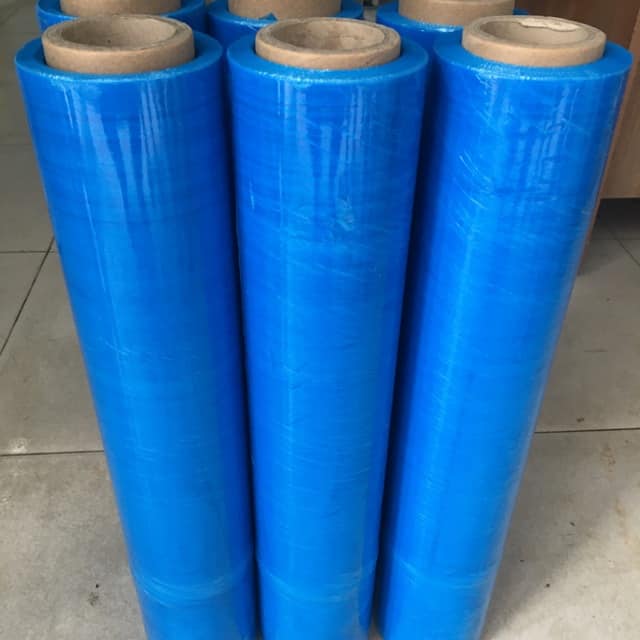
Thickness is only part of quality. At the same thickness, two films can hold a load very differently depending on the resin formula and evenness when the film is blown. In the laboratory, tensile strength and elongation at break are measured under ASTM D882; elastic recovery and force retention after stretching are measured under ASTM D5459, a method written specifically for stretch wrapping film.
When reading a test certificate or running a trial, these are the signs that show poor film on each parameter:
See also what PE shrink film is and how it differs from PE stretch film to avoid confusion when ordering. See the difference between shrink film and stretch film for more on names and applications. Reference prices for each type are in the 2026 PE film price list.
Frequently asked questions
Below are the questions most often asked when choosing and buying pallet-wrapping PE film.
Which parameters must be settled when choosing PE film?
4 parameters: film type (hand or machine roll), width (pallets use 500 mm), thickness (microns) and roll weight. For a wrapping machine, also the core diameter, outer roll diameter and the machine’s pre-stretch ratio.
What is the most common mistake when choosing PE film?
Buying hand film for a pallet wrapping machine: hand film cannot take the machine’s pulling force, so it keeps breaking.
What thickness of PE film should I choose?
ICD Vietnam’s starting recommendation: 17-20 microns for ordinary loads of 200-800 kg; 20-23 microns for heavy loads of 800-2,000 kg or sharp edges. Settle the final level by testing on a real pallet.
How many metres are in a roll of pallet-wrapping PE film?
It depends on film weight and thickness. A 1.8 kg hand roll of 500 mm wide, 17 micron film is about 230 m long; a 14 kg machine roll of 23 micron film is about 1,320 m long. Formula: length (m) = film weight (kg) / (width (m) x thickness (m) x 920).
When is black PE film used?
Black PE film is used when the contents must be fully concealed, to keep a design confidential or to limit light reaching the goods. ICD Vietnam’s black hand-wrap film comes in a 2.1 kg roll, 500 mm wide, 17 microns thick; choose thickness by load as for clear film.
Should I choose the thickest film to be safe?
Not necessary. Thicker film holds more firmly but each roll is shorter and uses more plastic. For even carton loads, 17-20 micron film with enough turns is usually enough; increase thickness only when the load is heavy, has sharp edges or travels a long way.
What film does a pre-stretch machine use?
Use virgin LLDPE machine-roll film of 20-30 microns, 500 mm wide, with the right core and within the machine’s roll weight limit (for example the ICD-2000BF takes a maximum of 16 kg). Hand film or recycled-blend film tends to break when the machine stretches 200-300%.
Contact us to order PE film and wrapping machines
Send us the type of goods, pallet weight, wrapping method (hand or machine, machine model) and pallets per day; ICD Vietnam will propose the right film, thickness and roll size. Price: contact for a quote.
ICD Viet Nam Industrial Production Company Limited
- See wrapping machines: ICD Vietnam pallet shrink-wrapping machines.
- North (Hanoi warehouse): 3rd Floor, Thang Long A1 Building, Bau Hamlet, Thien Loc Commune, Hanoi - 0983 797 186 / 090 345 9186.
- Southern workshop: 551/212 Le Van Khuong, Tan Thoi Hiep, District 12, Ho Chi Minh City - 098 6784 186.
- Email: sales@icdvietnam.com.vn. Zalo: Chat Zalo.
- Film + machine quote: Get a quote.
References
- Material characteristics of polyethylene (PE) - British Plastics Federation (BPF).
- ASTM D5459-95(2025) - Standard Test Method for Machine Direction Elastic Recovery and Permanent Deformation and Stress Retention of Stretch Wrap Film.
- ASTM D882 - Standard Test Method for Tensile Properties of Thin Plastic Sheeting.
- Linear low-density polyethylene, Wikipedia: LLDPE density; Stretch wrap article: elongation at break and in-use stretch of stretch film.
- Specifications of hand-wrap film, machine-roll film and the film roll limits of wrapping machines - ICD Vietnam product pages, checked in October 2026.