Table of Contents
- The standard definitions - do not mix them up
- Why does the Vietnamese name “shrink film” cause confusion?
- Detailed technical differences
- How to tell the two apart in your hand
- The right application for each type of film
- Running cost, speed and waste: where do shrink film and stretch film differ?
- When to choose shrink film and when to choose stretch film
- Frequently asked questions
- Contact us for advice
Reviewed and updated by ICD - Week 43/2026
Shrink film only shrinks when heated in a shrink tunnel or with a heat gun, at a temperature set for the type of film (a shrink tunnel can reach about 170°C), and it is used to wrap tightly around single products and bottle packs. Stretch film (usually LLDPE) is stretched 100-300% by mechanical force and then recovers elastically to tighten the load, and it is used to wrap pallets. The two are not interchangeable.
- Shrink film: shrinks when heated, used with a heat tunnel
- Stretch wrap: stretched by mechanical force, used with a rotary table pallet wrapper
- The two are not interchangeable: using the wrong type on the wrong machine is the most common mistake
- ICD pallet wrapping machines use stretch film: see ICD models
In the Vietnamese packaging trade, the terms “shrink film” and “stretch film” are often used interchangeably, and even many people in the industry do not tell them apart. The confusion leads to ordering the wrong type of film, using it on unsuitable machines and wasted cost. This article sets out the difference between the two clearly and firmly.
The standard definitions - do not mix them up
Shrink film reacts to heat and stretch film reacts to pulling force; that is the root difference that decides the equipment, the application and how to buy.
PE shrink film (shrink wrap): Polyethylene (or polyolefin, PVC) film that is stretched while hot to orient its molecular chains, then cooled to “freeze” that state. When heated enough (the temperature depends on the type of film), the chains are released, shrink back to their original size and the film clings tightly to the product surface (the mechanism is described in Wikipedia - Shrink wrap). Shrink film cannot be shrunk by mechanical pulling; it needs heat.
PE stretch film (stretch wrap): Highly elastic polyethylene film that can be stretched 100-300% by mechanical force without breaking. When the force is released, the film partly shrinks back and creates a holding force that presses the goods tight. No heat is needed - it works entirely by mechanical force.
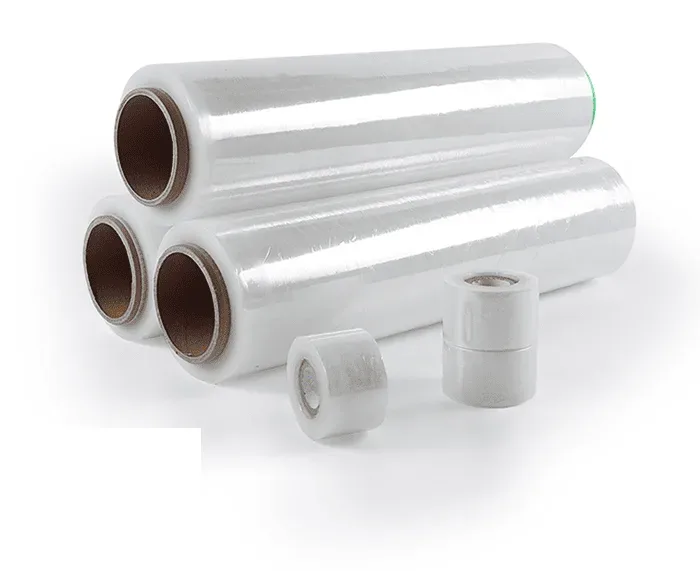
This is the film used in a rotary table pallet stretch wrapping machine.
Why does the Vietnamese name “shrink film” cause confusion?
The common Vietnamese name for a “pallet shrink film wrapping machine” actually refers to a machine that uses stretch wrap, not heat shrink film. The name has become habit in Vietnamese logistics even though it is technically inaccurate.
In English the distinction is clear: “stretch wrap machine” = a pallet stretch film wrapper; “shrink wrap machine” = a heat machine that uses shrink film. When ordering imported film or reading technical documents, use the correct English term to avoid mix-ups.
| Common name in Vietnam | What it actually is | Correct English term |
|---|---|---|
| PE pallet film, goods wrapping film, pallet cling film | LLDPE stretch film | Stretch film, stretch wrap, pallet wrap |
| Pallet “shrink film” wrapping machine | Stretch wrapping machine | Stretch wrapper, pallet wrapping machine |
| POF shrink film, PVC shrink film, heat shrink film | Heat shrink film | Shrink film, shrink wrap |
| Film shrinking machine, heat tunnel | Heat shrink machine | Shrink tunnel, heat tunnel |
Detailed technical differences
| Criterion | Shrink film | Stretch film |
|---|---|---|
| Activation principle | Heat makes the film shrink onto the goods; the temperature is set for the type of film | Mechanical pulling force, stretched 100-300% and then recovering to hold tight |
| Material | PVC, POF (polyolefin), LDPE | LLDPE (linear low density polyethylene) |
| Equipment needed | Heat tunnel (shrink tunnel) or heat gun | Rotary table pallet wrapper or hand wrapping, no heating |
| Energy | Needs a continuous heat supply to the tunnel or heat gun | No heat needed; a machine only uses motor electricity |
| Thickness | Chosen by the size and weight of the pack | ICD film: hand wrapping 17 micron, machine rolls 20-30 micron |
| Clarity | High with POF; LDPE shrink film is less clear | Medium to high |
| Waste | Can lose 20-50% to holes during shrinking (NPTEL) | Less waste than shrink film |
| Packing speed | Depends on time through the tunnel; fast for many small items together | Fast for bulky goods; ICD rotary table machines are rated at about 20-50 pallets/hour in the catalog |
| Main applications | Wrapping single products, multipacks, shrink labels, retail packaging | Securing pallets, bulky goods, warehousing and logistics |
| Size of goods | Small to medium | Pallets and large loads |
| Reuse | No (shrinks hard, no elasticity) | No (single use) |
When quality has to be assessed rather than just told apart, the packaging industry uses standard test methods for each type of film:
- ASTM D882: measures tensile strength and elongation at break of thin film, used for both shrink film and stretch film.
- ASTM D5459: measures elastic recovery and residual stretch after stretching of stretch film.
- ASTM D2732: measures free shrink of shrink film by temperature.
- EUMOS 40509: measures the stability of the whole load on a pallet wrapped in stretch film under acceleration and braking.
How to tell the two apart in your hand
A quick 3-second test: pull a length of film and let go. Stretch film stretches 2-3 times its length and, when released, shrinks back partly but does not return to its original shape. Shrink film is stiffer, does not stretch much, and tends to shrink back at once when released.
A heat test (be careful): warm the film lightly with a hair dryer from a safe distance, without touching the film. Shrink film shrinks at once. Stretch film does not shrink, or shrinks very little, at low heat.
The right application for each type of film
Shrink film is for single products and small packs that need a tight, neat wrap; stretch film is for securing many packages into one block on a pallet.
Use shrink film when: you need to wrap individual bottles, jars or product boxes; pack multipacks (6 bottles per pack); apply sleeve labels on bottles and boxes; or pack gifts that need a polished look.
Use stretch wrap when: wrapping pallets of goods for storage and transport; bundling large, heavy packages; wrapping cartons on a conveyor (with a carton wrapping machine); wrapping long goods (steel pipes, aluminium bars) with a horizontal machine.
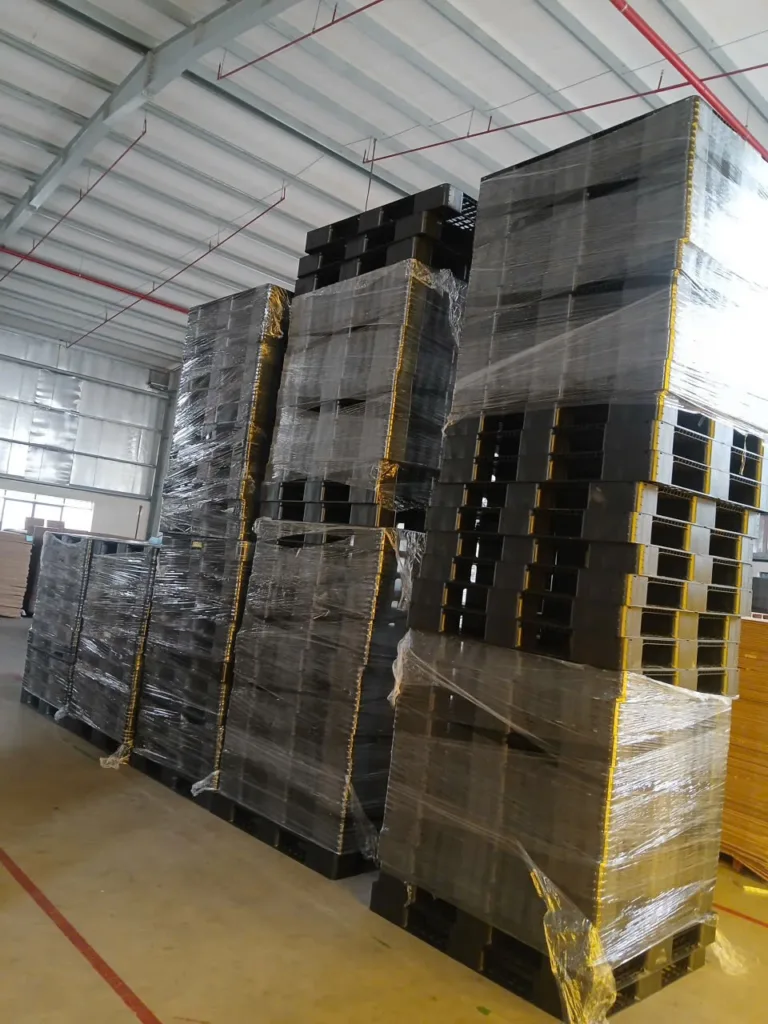
The ICD stretch film rolls on sale are all virgin LLDPE in 500 mm width; they differ mainly in roll weight and thickness, which decide whether they are for hand wrapping or machine use:
| Code | Whole roll | Thickness | Used for |
|---|---|---|---|
| ICD-MPE21 | 2.1 kg (0.3 kg core) | 17 micron | Hand wrapping, light goods |
| ICD-MPE30 | 3.0 kg (0.5 kg core) | 17 micron | Hand wrapping |
| ICD-MPE38 | 3.8 kg (0.5 kg core) | 17 micron | Hand wrapping |
| ICD-MPE50 | 5.0 kg (0.5 kg core) | 17 micron | Hand wrapping, warehouses that wrap a lot |
| ICD-MPE15 (MPE150) | 15 kg (1 kg core) | 20-30 micron | Machine use |
| ICD-MPEM | 7-18 kg (1.0-1.4 kg core) | 20-30 micron | Machine use, extra tough |
See more about what PE stretch film is and how to choose the right PE film for specific applications.
If you are still unsure, the tool below suggests a type of film by goods, existing equipment and volume:
Running cost, speed and waste: where do shrink film and stretch film differ?
The two films solve two different packing problems, so the gap is not only in the principle but also in equipment, material and running cost. The table below gathers the practical criteria a workshop should weigh before investing.
The biggest cost difference is energy: shrink film has to pass through a shrink tunnel or heat gun that is continuously heated, while stretch film only needs pulling force and, with a machine, extra electricity for the table motor and the stretch unit. For a workshop wrapping pallets every day, this heat cost adds up over every shift the tunnel runs.
Waste differs too. According to the lecture NPTEL - Food Packaging Technology, shrink film can lose 20-50% to holes that appear during shrinking, while stretch film wastes less. With stretch film the saving comes from the stretch ratio: according to the ICD Vietnam stretch film product page, hand wrapping stretches about 150-200%, while a machine with a pre-stretch unit stretches 300-350%, so the same pallet uses less film when wrapped by machine.
On speed, shrink film is fast when small items run together on a conveyor through the tunnel, while stretch film is fast for bulky goods because it wraps the whole pallet block in one go; the ICD Vietnam rotary table machines on sale are rated at about 20-50 pallets per hour in the catalog.
When to choose shrink film and when to choose stretch film
The decision is not about which type is “better” but about the packing goal. Below is a quick framework based on the real needs of warehousing and manufacturing.
- Choose shrink film when you need to wrap individual products or small packs tightly (water bottles, cans, gift boxes), want a taut glossy surface for retail display, or need dust and moisture protection for single items.
- Choose stretch film when you need to secure many cartons on a pallet, move bulky goods, want to save energy, and have no room for a heat tunnel.
- Favour stretch film if the workshop counts total running cost: no electricity for heating, and you can wrap with dedicated PE film and a wrapping machine to cut waste.
- Consider both for a two-layer packing chain: shrink film bundles each pack of products, then stretch film secures the whole load on the pallet before it leaves the warehouse.
A typical example is a soft drink factory: packs of 6 or 24 bottles are wrapped in shrink film through a heat tunnel, the packs are stacked on pallets and wrapped in stretch film so the whole block does not shift when a forklift moves or a truck brakes hard.
Frequently asked questions
Can stretch film replace shrink film?
No. Stretch film holds tight by pulling force but does not follow the outline of a product as closely as shrink film does after heating. For bottles, cans or single boxes that need a taut glossy surface, shrink film gives a result stretch film cannot match; for pallets, on the other hand, stretch film is more effective and cheaper.
Which is cheaper for warehousing?
For pallet goods, stretch film is clearly cheaper. Stretch film only needs a wrapping machine or hand wrapping, with none of the heating energy a shrink tunnel uses for shrink film. A machine with a pre-stretch unit stretches the film 300-350%, higher than the 150-200% of hand wrapping, so it uses less film per pallet.
How do PVC, POF and PE shrink film differ?
POF is clear, glossy, resists puncture well, and some grades are FDA approved for food. PVC is light and cheap but has a low shrink force, so it is not suited to bundling heavy packs, and its use is restricted in some countries. PE (LDPE type) is durable, suits heavy packs and can be printed, in exchange for lower shrink and clarity than POF. Choose the material by product: POF first for food, PE usually for heavy industrial packs.
Can a pallet wrapping machine use shrink film?
No. A pallet wrapper stretches the film and then relies on its elasticity to tighten the load, so it must use LLDPE stretch film. Shrink film does not have enough elasticity; on a machine it tears easily and creates no holding force, unless it is heated afterwards.
What temperature does shrink film need to shrink?
There is no single temperature for every shrink film: the tunnel temperature is set by film type and thickness, and some tunnels reach about 170°C; PVC film usually shrinks at a lower temperature than POF and PE. Temperature and conveyor speed in the tunnel must be set for the type and thickness of film so the film shrinks evenly without holes.
Is there black stretch film, and when is it used?
Yes. Black stretch film (ICD-MPEDEN, 2.1 kg roll) hides the goods inside, used when the contents need to stay private in transit or when light on the product should be limited.
Contact us for advice
- ICD stretch wrapping machines: All pallet wrapping machine models in the stretch wrapping machine category
- Northern Vietnam (Hanoi warehouse): 3rd Floor, Thang Long A1 Building, Bau Hamlet, Thien Loc Commune, Hanoi - 0983 797 186 | 090 345 9186
- Southern workshop: 551/212 Le Van Khuong Street, Tan Thoi Hiep Ward, District 12, Ho Chi Minh City - 098 6784 186
- Email: Sales@icdvietnam.com.vn
- Quote: Contact us for a quote
References
- Telling heat shrink film from mechanical stretch film - Institute of Packaging Professionals (IoPP).
- Wikipedia - Shrink wrap: molecular orientation mechanism, heat shrinking and comparison of PVC, POF and LDPE shrink film.
- NPTEL - Food Packaging Technology (KUFOS course): shrink tunnel temperature, waste of shrink film and stretch film.
- Wikipedia - Stretch wrap: LLDPE material and 100-300% stretch in use.
- ASTM D5459; ASTM D882; ASTM D2732 - test methods for thin plastic film.
- EUMOS 40509 - pallet load stability testing.
- Specifications of ICD PE stretch film (MPE21, MPE30, MPE38, MPE50, MPE15 i.e. MPE150, MPEM, MPEDEN) and ICD wrapping machines on the ICD Vietnam product pages (accessed October 2026).