Table of Contents
- Criterion 1: Pallets to wrap per day
- Criterion 2: Type of goods and pallet characteristics
- Criterion 3: Level of automation
- Criterion 4: Floor area and warehouse layout
- Criterion 5: Investment budget and total cost of ownership
- Criterion 6: Expansion plans and system integration
- Summary: Choose a machine by situation
- Stretch wrapping machine FAQ
- I cannot decide between the T1650F and the Y1650F. Are the two machines the same?
- How many pallets a day justify an automatic machine?
- Do I have to buy PE film from ICD for an ICD stretch wrapper?
- How long does it take for a stretch wrapper to pay for itself?
- Where can I buy a reliable stretch wrapping machine in Hanoi?
- How is a semi-automatic stretch wrapper different from an automatic one?
- Can a wrapping robot wrap small pallets and light loads?
- Can a carton stretch wrapping machine be used to wrap pallets?
- What film thickness does a stretch wrapping machine use?
- Contact us for machine selection advice
- References
Reviewed and updated by ICD - Week 43/2026
Choose a stretch wrapping machine (a machine that wraps PE stretch film around a pallet) by six criteria: pallets per day, type of goods, level of automation, floor space, total cost, and expansion plans. Quick rule: under 50 pallets a day, use a semi-automatic rotary-table machine rated 1,500 - 2,000 kg; for 50 - 200 pallets a day, use a semi-automatic machine with pre-stretch or an automatic machine; above 200 pallets a day or three shifts, use a fully automatic machine or a robot; for long goods, use a horizontal machine.
Buying the wrong stretch wrapper usually costs money in one of two ways: the machine is too big for the real demand, or it is too small and has to be replaced a few years later. This guide walks through six criteria in order of importance, with real figures from the machines currently on sale, so you can narrow down the right segment before asking for a price.
I have worked at ICD Vietnam since 2011, and I regularly meet companies that bought a machine on instinct or on a recommendation without measuring actual demand. The two most common results are a semi-automatic machine overloaded because the warehouse grew faster than planned, and an expensive automatic machine that wraps only about 30 pallets a day. Both are avoidable if you measure correctly at the start.
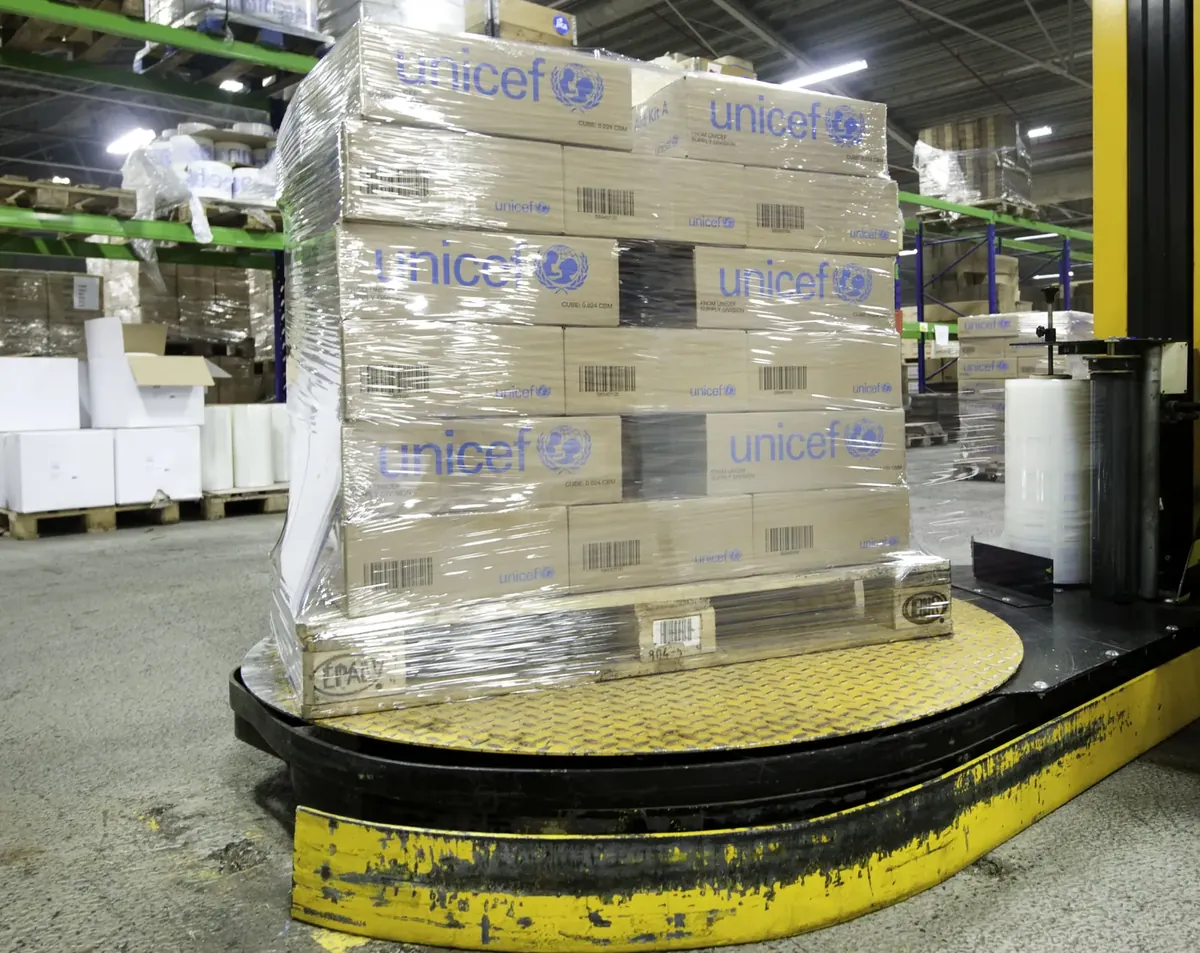
The market has four main groups of pallet wrappers: automatic and semi-automatic stretch wrappers with a rotary table, rotary-arm machines (the pallet stays still while the arm circles it), self-propelled robots that drive around the pallet, and horizontal wrappers for long goods. No group is best in every case; there is only the group that fits your volume, your goods and your floor space.
The four groups below show how the six criteria lead to each type of machine. The first two criteria (pallet volume and type of goods) almost decide the segment; the other four help you pick a specific model within it.
Criterion 1: Pallets to wrap per day
Average pallets per day (plus a 20 - 30% growth reserve) set the machine segment: under 50, a basic semi-automatic machine; 50 - 200, a semi-automatic machine with pre-stretch or an automatic one; over 200, a fully automatic machine or a robot.
This is the most important criterion, and it must be measured, not guessed. Many companies quote a figure higher than reality because they count peak days at month end or quarter end, and then over-invest. The standard method is to count the pallets shipped over 30 consecutive days and divide by the number of working days. Then add the growth you expect over the next two years (typically 20 - 30%) so you do not have to replace the machine early.
Compare that figure with the rated output of each machine in the table below. These are figures under standard conditions; in practice you also lose time while the forklift brings the pallet in and takes it out, and while the film tail is attached and cut, so do not pick a machine that runs near its maximum capacity. The table also includes load rating, wrapping height and power supply, which you will need for the later criteria.
| Model (ICD Vietnam catalog) | Machine type | Rated output | Maximum load | Wrapping height | Pre-stretch | Power supply |
|---|---|---|---|---|---|---|
| ICD-T1650F | 1650 mm rotary table, semi-automatic | Not stated | 2,000 kg | 2,100 mm | Not stated | 220 V single-phase |
| ICD-Y1650F | 1650 mm rotary table, with wheels | Not stated | 1,500 kg | 2,000 mm | Not stated | Not stated |
| ICD-T1650FM | Rotary table | 20 - 40 pallets/hour | 1,000 kg | Not stated | Not stated | Not stated |
| ICD-X0MS | 1500 - 2400 mm rotary table (optional) | 30 pallets/hour | 1,500 kg | 2,000 mm | None | 220 V |
| ICD-X0PS | Same as X0MS, with a pre-stretch unit added | 30 pallets/hour | 1,500 kg | 2,000 mm | 250% | 220 V |
| ICD-X100 | Rotary table, film attached by hand | 30 - 40 pallets/hour | 1,500 kg | Not stated | 250% | 220 - 240 V |
| ICD-2000BF | 1650 mm rotary table, 7.2-inch PLC screen | Not stated | 2,000 kg | 2,500 mm | Up to 250% | Not stated |
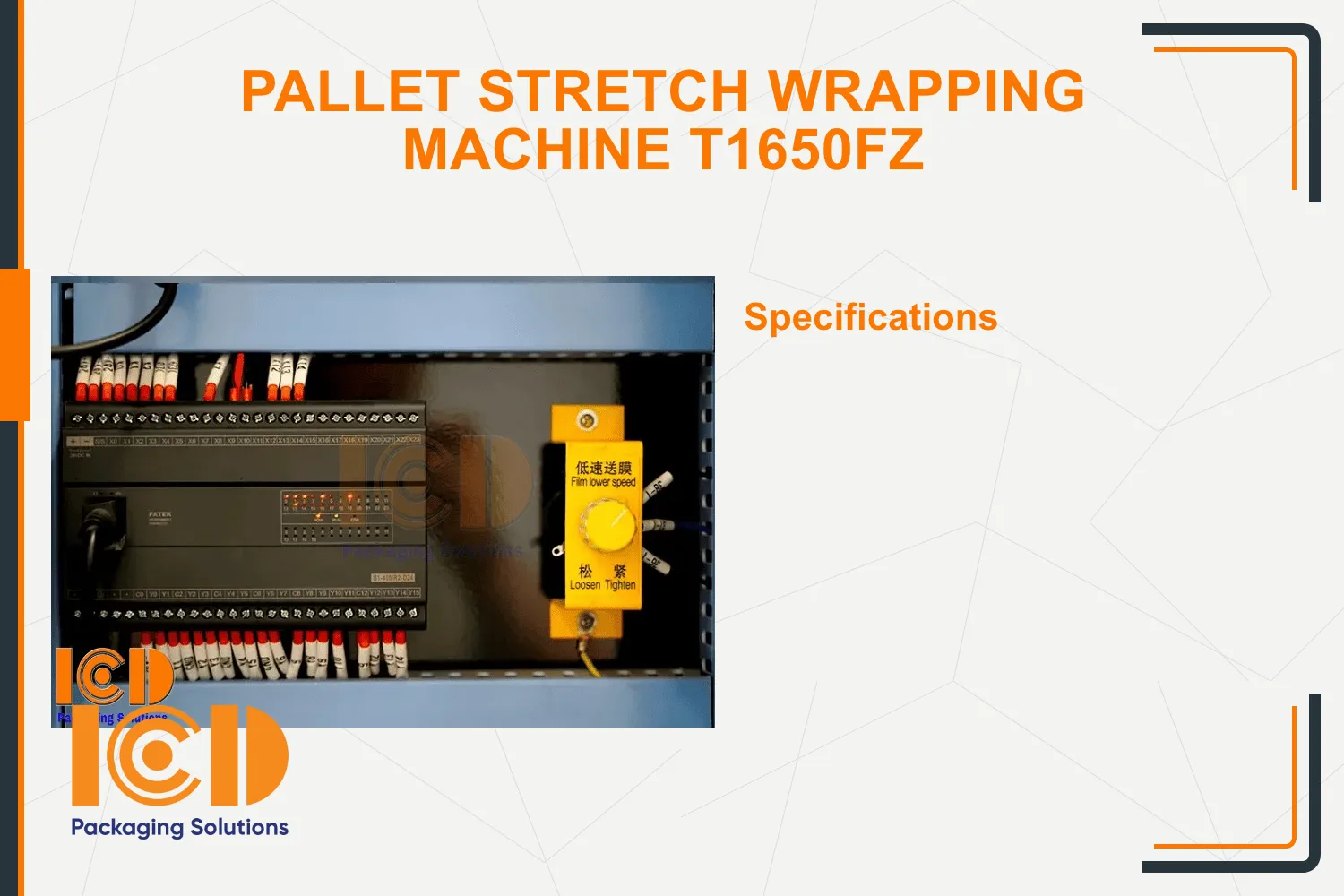
| ICD-T1650FZ | Automatic rotary table | 30 - 50 pallets/hour | 2,000 kg | Not stated | 250% | Not stated |
| ICD-T1800FZ | Automatic rotary table, with conveyor | 20 - 40 pallets/hour | 1,500 kg | Not stated | 250% | 380 V |
| ICD-R1800FZ-PL | Automatic rotary arm | 35 - 45 pallets/hour | Pallet stays still | 500 - 1,800 mm | Not stated | 380 V three-phase |
| Robot S7 Robopac | Self-propelled robot | Over 250 pallets per charge | No limit | 2,200 mm (optional up to 3,100 mm) | Not stated | Rechargeable battery, 100 - 240 V |
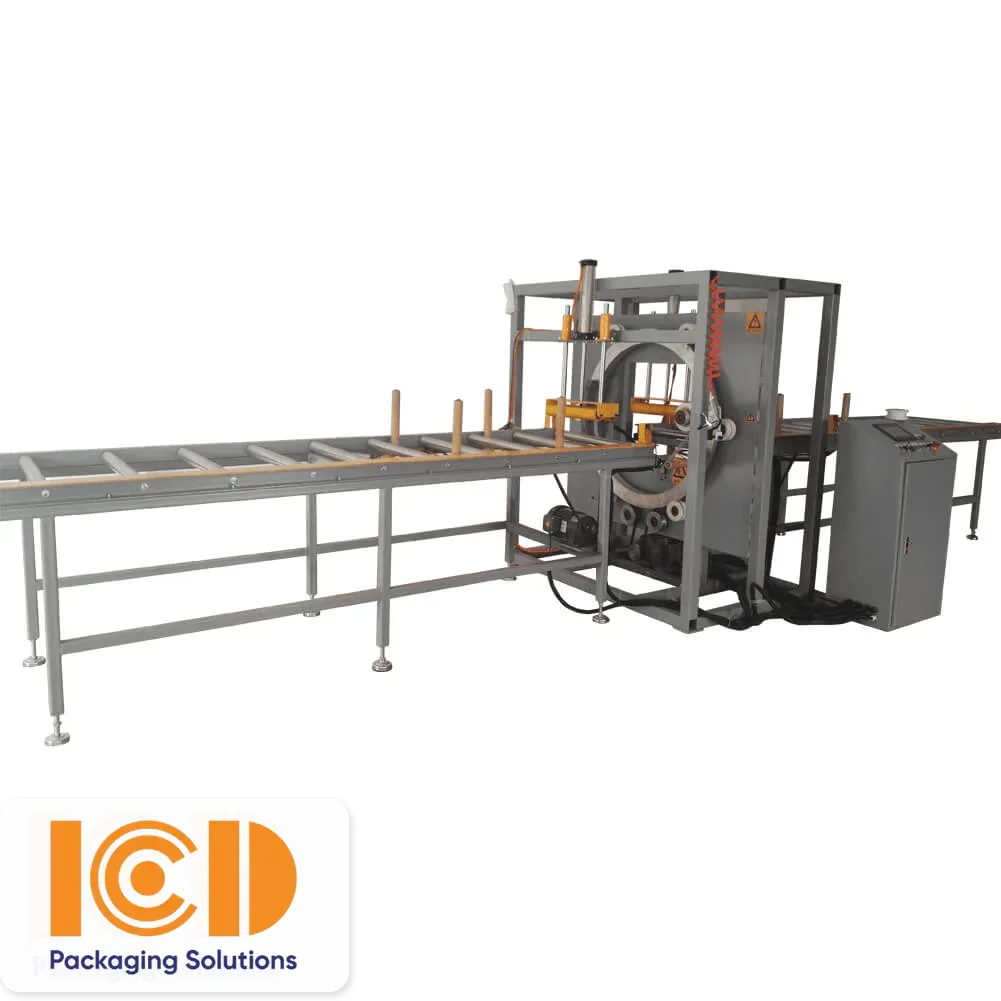
| ICD-S800E | Horizontal, 800 mm wrapping ring | Not stated | Goods up to 600 mm in diameter | Length follows the conveyor | 200% | 380 V three-phase |
If you are not sure which group your volume falls into, the tool below converts pallets per day and shifts into pallets per hour and suggests a matching segment.
Criterion 2: Type of goods and pallet characteristics
The goods decide the machine type: uniform carton loads suit a rotary table; off-centre, unstable or very heavy loads suit a rotary-arm machine or a robot that keeps the pallet still; long goods suit a horizontal machine; and the pallet weight must stay below the table rating.
Goods decide more than you might think: not only weight, but also how the load sits on the pallet, how far off-centre it is, and how well it withstands centrifugal force when the table turns. Neatly stacked cartons are fine on an ordinary rotary-table machine. Loads that are stacked unevenly or tip when the table turns fast need a slower table, or a machine that keeps the pallet still.
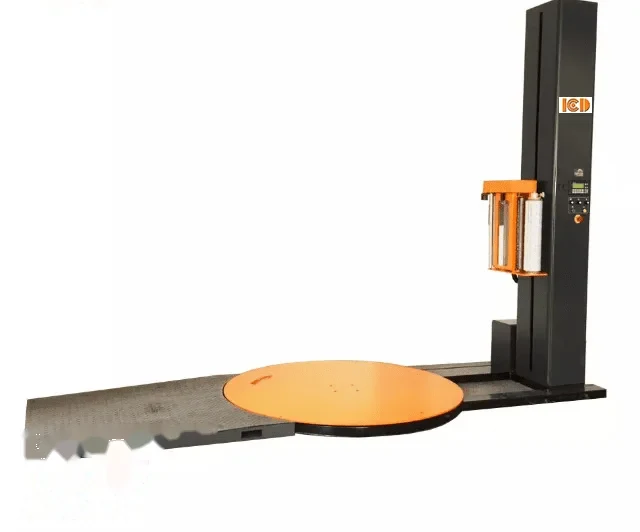
Liquids in cans or drums, bottles with gas, and tall but light stacks are the group to keep off a rotary table, because the spinning easily shifts the load before the film can hold it. For these, the R1800FZ-PL rotary-arm machine or a self-propelled robot is the safer choice. Long goods such as plastic pipes, steel sections and timber cannot sit on a table and need the S800E horizontal wrapper.
Pallet weight must also be checked: the T1650F takes up to 2,000 kg, the Y1650F 1,500 kg and the T1650FM 1,000 kg. If your pallets are regularly heavier, you need a higher-rated machine or one that keeps the pallet still. A self-propelled robot has no load limit because the pallet is not on a table, but it has a limit in the other direction that few people notice.
For export or long-distance loads, the end goal is a load that does not shift when the truck brakes or corners. In Europe, pallet load stability is tested under EUMOS 40509: the pallet is placed on a platform and accelerated at 0.8 g forward and 0.5 g sideways and backward (acceleration levels taken from EN 12195-1). The load passes when elastic deformation is no more than 10% and permanent deformation no more than 5% of its height. The standard sits in Annex III of EU Directive 2014/47/EU on roadside technical inspection of commercial vehicles. A machine with pre-stretch and steady tension helps reach this stability with less film than hand wrapping.
Criterion 3: Level of automation
A warehouse with a steady workforce and moderate volume should choose semi-automatic; one that is short of staff, runs several shifts or needs even wrapping quality should choose fully automatic; if the load should not be moved or wrapping is needed in several places, choose a robot.
More automation is not always better; it depends on your staffing and warehouse workflow. See the companion article on common types of stretch wrapping machines, grouped by level of automation, for a detailed breakdown.
On a semi-automatic machine the table turns and the film carriage rises and lowers by itself, while the operator attaches the film tail and cuts the film by hand. These machines cost less, are easy to maintain and are quick for staff to learn, which suits a warehouse with a steady workforce and no wish for a large upfront investment. A fully automatic machine clamps, cuts and stops by itself after wrapping, so the operator only places the pallet and presses a button; in return the investment is higher, offset by saved handling time and consistent wrapping between shifts.
A self-propelled robot does not need the pallet brought to the machine: the operator attaches the film tail to the load, starts the robot, and it drives around and stops by itself. Robots suit heavy loads, loads that should not be moved, or wrapping at several different spots in the plant. One note on naming: according to the manufacturer’s documents, the Robopac Masterplat Plus (ICD code ICD-TP3) is a semi-automatic rotary-table machine with a 1650 mm table, 2,000 kg load and a 250% PGS pre-stretch unit, not a self-propelled robot.
Criterion 4: Floor area and warehouse layout
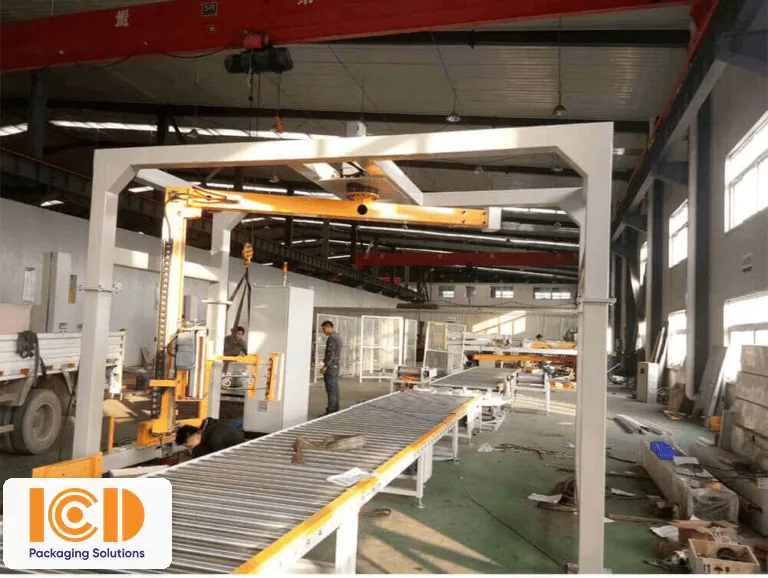
The machine area must fit the catalog dimensions of the machine, plus an aisle for the forklift to bring the pallet in and take it out, and room for the operator to walk around; a machine with a built-in conveyor must be designed together with the warehouse layout.
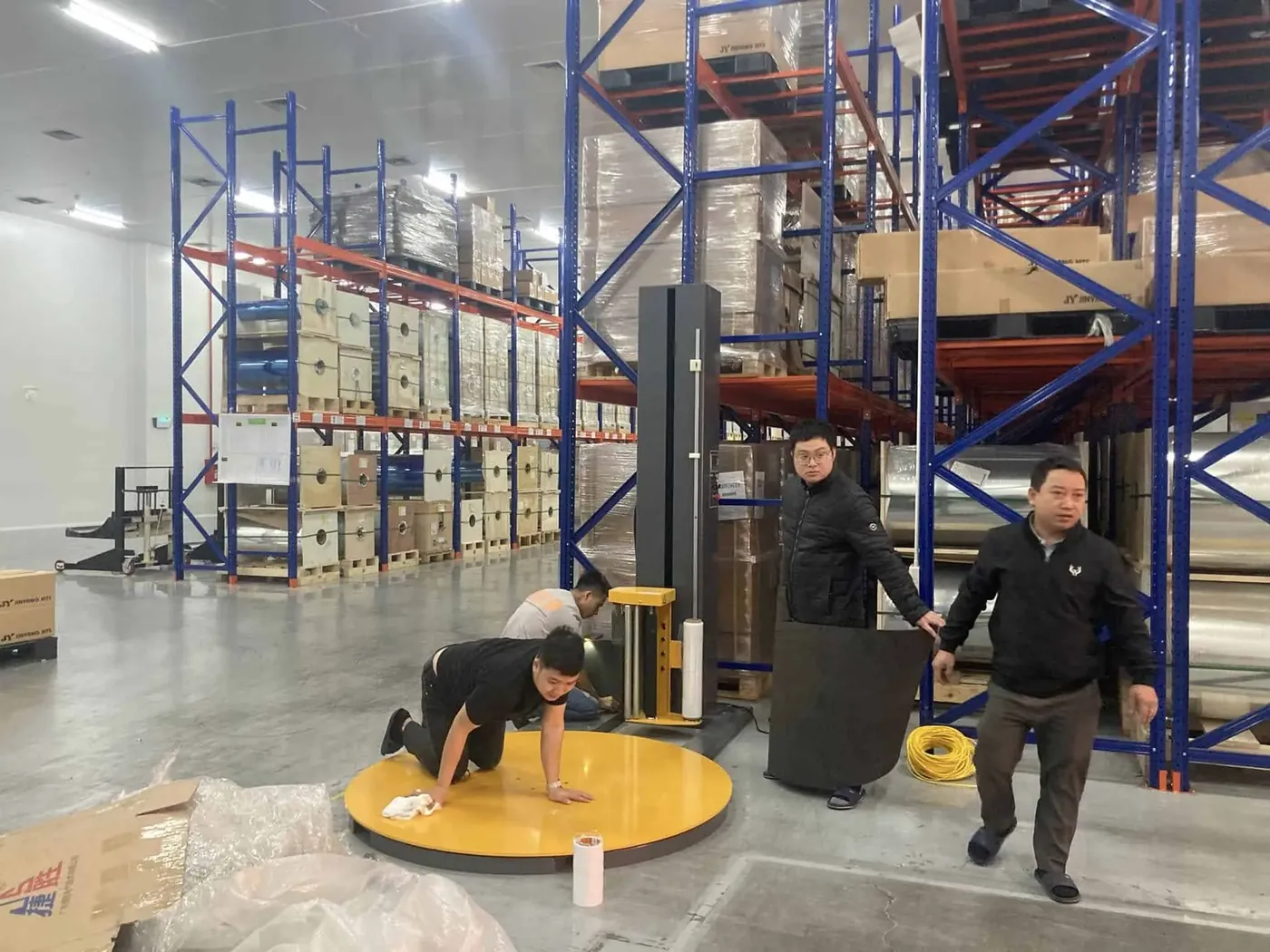
Many companies skip this criterion, then discover after delivery that the machine does not fit, or fits but the forklift must reverse several times to get the pallet onto the table. When we survey a site, we draw the machine footprint on the real floor plan, then mark the forklift route from the packing area to the machine and from the machine to the dispatch area.
A machine with a built-in conveyor, such as the T1800FZ, needs the layout designed from the start and cannot simply be dropped into an existing warehouse. The R1800FZ-PL rotary-arm machine measures about 4200 x 2200 x 3500 mm according to the catalog and needs far more ceiling height than a rotary-table machine. A self-propelled robot needs no fixed spot, but there must be clear space around the pallet so the robot can complete a full lap without hitting racks or neighbouring pallets.
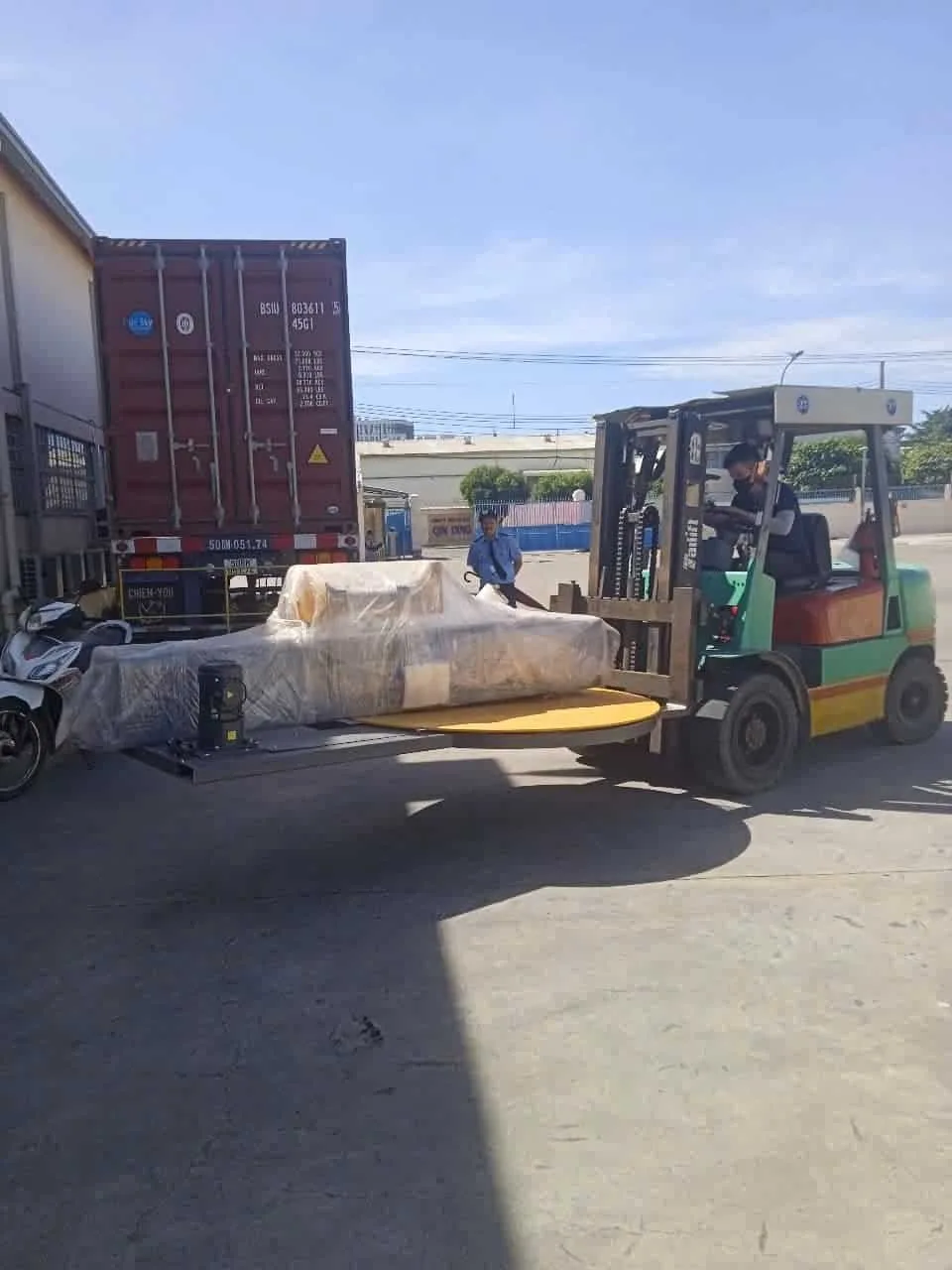
One point often overlooked is forklift access: the truck must bring pallets in and take them out of the wrapping area without cutting across other traffic. For a rotary-table machine that sits close to the floor, also ask about the table height and whether a ramp is needed for a hand pallet truck.
Criterion 5: Investment budget and total cost of ownership
Total cost of ownership is the machine price plus PE film, electricity, maintenance and spare parts over 3 - 5 years; of these, film consumption, which depends on the pre-stretch ratio, is usually the largest item.
The purchase price is only part of the total cost. The price of a stretch wrapping machine varies several-fold between models; ICD Vietnam quotes according to the specific configuration. Beyond the machine price, count the monthly PE film cost, electricity, maintenance and spare parts over 3 - 5 years.
A machine without pre-stretch uses far more film than one with it. For a warehouse wrapping 100 pallets a day, the film cost difference between the two is a significant amount each month, and over a few years it can exceed the difference in purchase price. That is why you should calculate total cost over three years before deciding.
Pre-stretch is a pair of rollers turning at different speeds that stretches the film before it touches the load. A 250% ratio means 1 m of film from the roll is stretched to 3.5 m. Worked example for a 1000 x 1200 mm pallet 1.5 m high (circumference 4.4 m), 500 mm wide film with 50% overlap, 6 wraps on the body plus 4 reinforcing wraps at the base and top: about 44 m of film is wrapped around the load. With 23-micron film, 500 mm wide, LLDPE density about 0.92 g/cm³, each metre of film on the roll weighs about 10.6 g:
| Stretch ratio | 1 m of film becomes | Film from the roll needed for 44 m wrapped | Film weight (approx.) |
|---|---|---|---|
| No pre-stretch | 1 m | 44 m | 470 g |
| Pre-stretch 200% (S800E) | 3 m | 14.7 m | 155 g |
| Pre-stretch 250% (X0PS, X100, 2000BF) | 3.5 m | 12.6 m | 135 g |
| Pre-stretch 300% (reference calculation) | 4 m | 11 m | 115 g |
This is a theoretical calculation for comparison; it does not account for film that relaxes after hugging the load or for waste at the start of each roll. Even so, it shows why a machine with pre-stretch uses several times less film than film pulled without a stretch unit, and why the film cost difference can add up over the years to more than the difference in machine price.
Another hidden cost is downtime when the machine breaks. Before buying, ask the supplier whether commonly replaced parts (drive belts, sensors, control boards, pre-stretch rollers) are in stock in Vietnam, how long the wait is, and write that into the contract. Pallet wrappers sold by ICD Vietnam carry a 12-month warranty under the warranty and repair policy published on the website.
Criterion 6: Expansion plans and system integration
If you plan to expand the warehouse or put the machine into a packing line within 2 - 5 years, choose a machine with a PLC, a screen that stores wrapping programs and the ability to connect to a conveyor; otherwise a simple rotary-table machine is enough.
A basic semi-automatic machine runs on its own, with no link to a conveyor or management system. The 2000BF has a 7.2-inch PLC screen for setting wrapping programs; the T1800FZ comes with a conveyor for connecting into a line. The Robot S7 Robopac stores 12 wrapping programs and has the R-Connect platform for remote machine monitoring in the Industry 4.0 sense. If your company is building a warehouse management system (WMS) or ERP, ask the supplier exactly what data the machine can export and through which port, rather than relying on the word “connectivity” in a catalog.
If the plan is to automate the whole line within a few years, choosing a machine that can be upgraded with a conveyor from the start saves the cost of replacing it later. With no major automation plan, a simple rotary-table machine is the more practical choice.

Summary: Choose a machine by situation
Putting the six criteria together, you can narrow the machine to one of six common situations below; machine prices: contact us for a quote based on configuration.
- Small warehouse, under 50 pallets a day, limited budget: ICD-T1650F or X0MS.
- Mid-size warehouse, 50 - 200 pallets a day, uniform goods: ICD-Y1650F, X0PS or X100 with 250% pre-stretch.
- Large warehouse, over 200 pallets a day or three shifts: ICD-2000BF, T1650FZ or T1800FZ with a conveyor.
- Liquid, unstable loads, or loads that should not rotate: the ICD-R1800FZ-PL rotary-arm machine or the Robot S7 Robopac.
- Long goods such as pipes, steel and timber: the ICD-S800E horizontal wrapper.
- Small loads, or a machine that must be moved around: a mini stretch wrapping machine.
Stretch wrapping machine FAQ
I cannot decide between the T1650F and the Y1650F. Are the two machines the same?
No. The T1650F takes 2,000 kg and wraps up to 2,100 mm high, and suits a fixed position. The Y1650F takes 1,500 kg and wraps up to 2,000 mm high, and has wheels so the machine can be moved between areas of the warehouse. They sit in the same price segment and differ in design priority.
How many pallets a day justify an automatic machine?
Under 50 pallets a day, a semi-automatic rotary-table machine is enough. From 50 to 200 pallets a day, use a semi-automatic machine with pre-stretch or an automatic machine. Above 200 pallets a day or three shifts, use a fully automatic machine or a robot. These thresholds are based on average volume after adding the growth reserve.
Do I have to buy PE film from ICD for an ICD stretch wrapper?
No. ICD Vietnam machines accept standard machine-roll PE film from other suppliers, as long as the roll fits the film carriage (500 mm wide, 76 mm core). ICD Vietnam can supply PE film together with the machine if you want a complete package, but it is not required.
How long does it take for a stretch wrapper to pay for itself?
It depends on your volume and how you wrap today. The calculation: payback in months equals the machine price divided by the monthly saving, which is the hand-wrapping labor you save plus the film you save through pre-stretch. A warehouse wrapping many pallets a day pays back much faster than one wrapping a few dozen. Send ICD Vietnam your pallets per day and current film use for a specific calculation.
Where can I buy a reliable stretch wrapping machine in Hanoi?
ICD Vietnam has distributed pallet stretch wrapping machines since 2011, with a Hanoi warehouse and a southern workshop. Machines come with a VAT invoice and a 12-month warranty under the company warranty policy; technicians install the machine and train operators at the customer’s warehouse.
How is a semi-automatic stretch wrapper different from an automatic one?
A semi-automatic machine turns the table and raises and lowers the film carriage by itself, but the operator must attach the film tail and cut the film by hand. A fully automatic machine clamps, cuts and stops by itself after wrapping, so you only place the pallet and press a button; in return the investment is higher.
Can a wrapping robot wrap small pallets and light loads?
There are limits. According to the product pages, the Robot S7 Robopac and XT4550 need a pallet of at least 600 x 600 mm, and the XT4550 a load of at least 60 kg; the Maxgo needs a pallet of at least 900 x 900 mm and 100 kg. Smaller, lighter loads should use a rotary-table machine.
Can a carton stretch wrapping machine be used to wrap pallets?
No. A carton wrapper such as the ICD-DBC800 is designed for small individual packages, and its table and wrapping height are not enough for a pallet. Wrapping pallets needs a rotary-table machine with a table of 1500 - 1650 mm or more, a self-propelled robot or a rotary-arm machine.
What film thickness does a stretch wrapping machine use?
Pallet wrappers usually use LLDPE machine-roll film 500 mm wide, about 20 - 30 microns thick, with a 76 mm core. Light, uniform carton loads use the thinner end of this range; heavy, sharp-cornered or long-distance loads use thicker film or more reinforcing wraps.
Contact us for machine selection advice
Send ICD Vietnam your pallets per day, type of goods and expected budget to get free advice on the right machine. Machine price: contact us for a quote based on configuration; 12-month warranty.
ICD Vietnam Industrial Manufacturing Co., Ltd.
- Northern Vietnam (Hanoi warehouse): 3rd Floor, Thang Long A1 Building, Bau Hamlet, Thien Loc Commune, Hanoi - 0983 797 186 / 090 345 9186 / 090 5859 186.
- Southern workshop: 551/212 Le Van Khuong Street, Tan Thoi Hiep Ward, District 12, Ho Chi Minh City - 098 6784 186.
- Email: sales@icdvietnam.com.vn. Zalo: Chat Zalo.
- Quote: fill in the quote request form.
References
- Mechanism and use of heat-shrink film in packaging - Institute of Packaging Professionals (IoPP).
- Wikipedia - Stretch wrap: the difference between stretch film and heat-shrink film.
- EUMOS 40509:2020 Test method for load unit rigidity, European Safe Logistics Association (EUMOS).
- Directive 2014/47/EU on the technical roadside inspection of commercial vehicles, Annex III (cargo securing).
- EN 12195-1:2010 Load restraining on road vehicles - Safety - Part 1: Calculation of securing forces.
- Masterplat Plus, rotary-table wrapper specifications, Robopac.
- ICD Vietnam stretch wrapping machine product pages and warranty policy (read on 17/10/2026).