
Table of Contents
- Three groups of film, three English names
- Stretch film, stretch wrap or pallet wrap?
- Shrink film: shrink film, shrink wrap and shrink sleeve
- Cling film: cling film, cling wrap, plastic wrap
- Wrapping machines and machine parts in English
- Film thickness: gauge, mil and micron
- Use the right terms when ordering and declaring to customs
- Frequently asked questions
- Contact ICD Vietnam
- References
Reviewed and updated by ICD - Week 44/2026
PE pallet wrap is called stretch film in English, also known as stretch wrap or pallet wrap. Heat-shrink film is shrink film or shrink wrap, and food-wrapping film is cling film or plastic wrap. Vietnamese lumps all three under the phrase “PE film”, so there is no single English word for it; to pick the right term, ask how the film holds the goods: by cold stretching, by shrinking when heated, or by clinging to a smooth surface.
- Stretch film for pallets: stretch film, stretch wrap, pallet wrap (the same material)
- Shrink film: shrink film, shrink wrap; food wrap: cling film, plastic wrap
- Thickness: 1 mil = 25.4 micron = 100 gauge; 80 gauge is roughly 20.3 micron
- An order should state film type, material, thickness with unit, width, core and roll type
This glossary follows the order in which you meet terms when buying: film type names, wrapping machine names, thickness specifications and the words that appear on import documents. Each name is checked against ASTM standards, encyclopedia entries and government tariff schedules.
Three groups of film, three English names
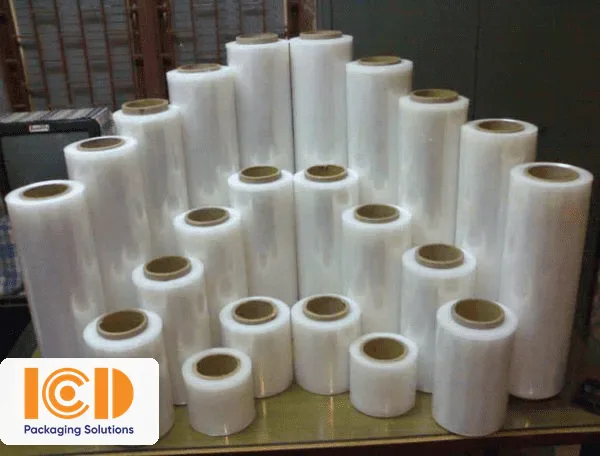
Wikipedia describes stretch wrap (or stretch film, sometimes called pallet wrap) as a highly stretchable plastic film wrapped around goods, with the film’s elastic recovery holding the load tight. Shrink wrap (or shrink film) is applied loosely around goods and tightens when heat is applied. Plastic wrap, also called cling film, cling wrap or food wrap, is a thin film used mainly to cover food that clings to smooth surfaces without adhesive. The ASTM D4649 standard names the first group “stretch films”, so in contracts and technical documents “stretch film” is the safest term; “stretch wrap” and “pallet wrap” refer to the same material.
| Criterion | Stretch film | Shrink film | Cling film |
|---|---|---|---|
| Common English names | stretch film, stretch wrap, pallet wrap | shrink film, shrink wrap | cling film, cling wrap, plastic wrap, food wrap |
| How it holds the load | Stretches while wrapping, elasticity holds the load, no heat needed | Wrapped loosely, then heated to shrink tight to the goods | Clings to smooth surfaces by itself, no adhesive |
| Common materials | LLDPE is the most common; PVC and other PE types can also be used | Polyolefin (including PE, PP), PVC | PVC is the most common worldwide; LDPE is the cheaper option |
| Used for | Consolidating goods on pallets, bundling small items | Bundling multiple packs, wrapping items, bottle labels | Covering food in kitchens and food processing sites |
Stretch film, stretch wrap or pallet wrap?
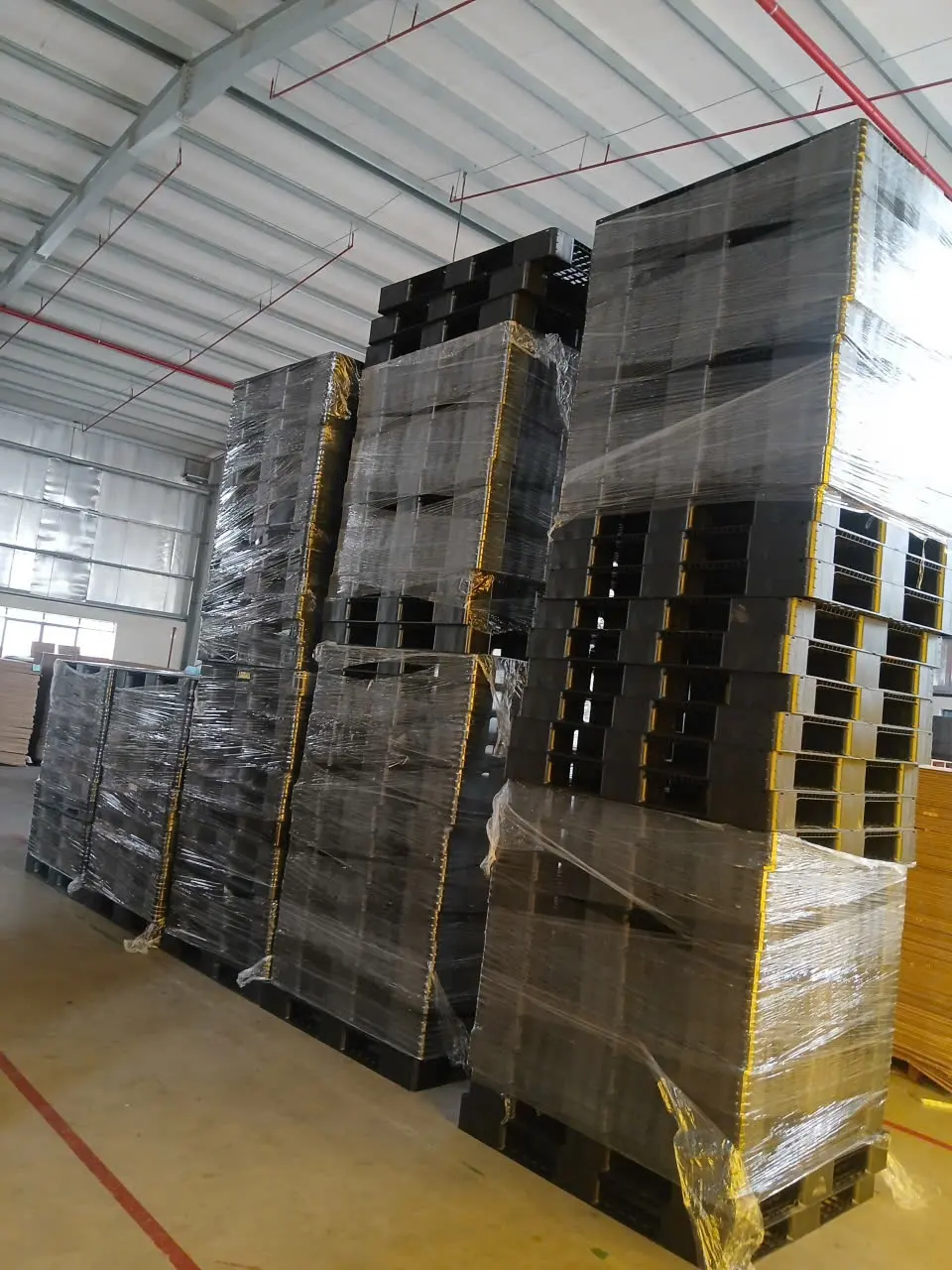
All three names refer to the same material. The most common material is LLDPE (linear low-density polyethylene); according to Wikipedia, hexene or octene comonomers give film with better elongation at break and puncture resistance. Many films break at about 500% elongation but are stretched only about 100-300% during wrapping, and the remaining elastic recovery is what holds the load. ICD Vietnam’s PE stretch film rolls all belong to this group, including hand rolls and machine rolls.
Wikipedia divides stretch film into five forms, each with its own English name when you read a catalog:
- Hand stretch film: rolls for hand wrapping.
- Machine stretch film: rolls used on wrapping machines.
- Extended core stretch film: rolls with a core extended to act as a handle.
- Bundling stretch film: film for bundling small items.
- Static dissipative film: anti-static film, used for sensitive components.
“Wrapping film” is also heard in conversation, but it is a generic term that does not distinguish stretch film from shrink film, so it should not be used as the goods name on a purchase order.
Cast film and blown film: two ways to make stretch film
According to Wikipedia, stretch film is made by two methods. Blown film extrudes molten plastic through a circular die and cools it with air: slower, but with better cling, at the price of less uniform width and higher cost. Cast film extrudes through a slot die and cools quickly on rollers: the film is more uniform, has more performance features and comes off the line in larger volume, so it costs less, but its cling is not as good as blown film.
Shrink film: shrink film, shrink wrap and shrink sleeve
Wikipedia records shrink wrap and shrink film as the same material: a polymer film that shrinks tight over the item it covers when heat is applied, from a handheld heat gun or when a conveyor carries goods through a heat tunnel. Materials include polyolefins (among them polyethylene and polypropylene) and PVC. The film can shrink in one direction (unidirectional) or two (bidirectional) and is supplied as flat rolls, centerfolded rolls or pre-made bags. For details on PE shrink film, see the article on what PE stretch film is.
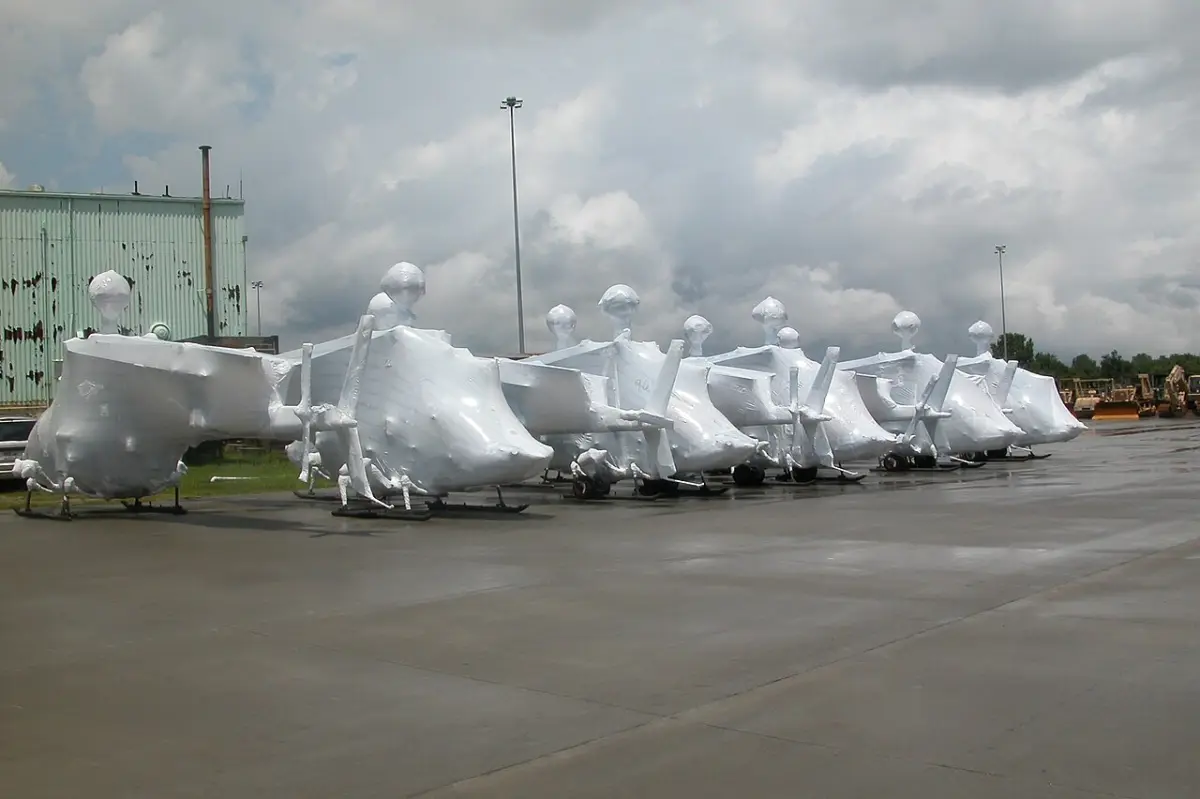
A heat tunnel in English is a shrink tunnel or heat tunnel, sometimes called a shrink oven; the heat source can be electric resistance, infrared lamps, steam or gas flame. Tube-form shrink film used for bottle labels is called shrink sleeve (or shrink label), and the common materials are PVC, PETG, OPS (oriented polystyrene) and polyolefin.
Cling film: cling film, cling wrap, plastic wrap
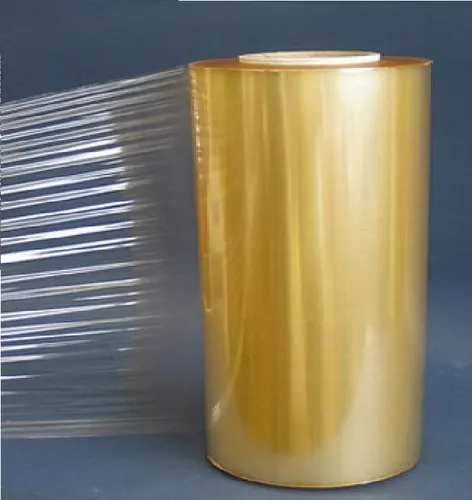
Wikipedia files cling film, cling wrap, plastic wrap and food wrap under one entry and says the common type is about 12.7 micrometres thick, while most household products sold today are only 8-10 micrometres. The original material was PVC, and PVC is still the most common worldwide; LDPE is a cheaper choice but clings less well, so it is often blended with LLDPE. Wikipedia’s Stretch wrap page adds a note: industrial stretch film looks like cling film but is usually not made from food-contact-grade material.
One more PE product is often lumped in as “PE film”: bubble wrap, made from LDPE film with one embossed layer bonded to a flat layer to form air cushions, used to protect fragile goods in transit. It is a cushioning material, not a wrapping film, so it cannot replace stretch film.
Wrapping machines and machine parts in English
Wikipedia calls equipment that applies stretch film a stretch wrapper, with pallet wrapper as the common trade name. By wrapping method: handheld tools (extended core, mechanical brake, pole wrapper, prestretch hand wrapper), semi-automatic machines (turntable, orbital, rotary arm) and automatic machines with a conveyor to feed loads and systems that automatically apply, weld and cut the film. On a turntable machine, the film sits in a film carriage that runs up and down a fixed mast, and tension comes from the load rotating faster than the film is released.


| English | Vietnamese term (unaccented) | Short explanation |
|---|---|---|
| Stretch wrapper / pallet wrapper | may quan mang pallet | Equipment that wraps stretch film |
| Hand wrapper | dung cu quan tay | Includes extended core, mechanical brake, pole wrapper, prestretch hand wrapper |
| Turntable wrapper | may mam xoay | Load sits on a rotating table, film on a carriage on a mast |
| Mast, film carriage | cot, xe giu cuon mang | The carriage holding the film roll runs up and down a fixed mast |
| Rotary arm wrapper | may canh tay quay | Load stays still, an arm rotates around it; suits light or unstable loads |
| Rotary ring / orbital wrapper | may vong quay | A horizontal ring rotates around the load, or a vertical ring for loads passing through |
| Automatic wrapper | may tu dong | Has a conveyor to feed loads, automatic film application, welding and cutting |
| Pre-stretch | keo gian truoc | Stretching the film before it goes onto the load, for example with two rollers running at different speeds |
| Shrink tunnel, heat tunnel | duong ham co nhiet | Heated tunnel on a conveyor for shrink film |
| Heat gun | sung nhiet | Handheld heater for shrink film |
| Cling | do bam dinh cua mang | The film’s ability to stick to itself |
| Elongation at break | do gian dai khi dut | How far the film can stretch before it breaks |
| Puncture resistance | chong dam thung | Resistance to the sharp corners and edges of the load |
| Tear resistance | chong xe rach | The film’s resistance to tearing |
Film thickness: gauge, mil and micron
Overseas quotes often give thickness in gauge or mil, while Vietnamese practice is micron. According to Wikipedia, 1 mil is one thousandth of an inch (0.001 inch), equal to 25.4 micrometres, and in North America it is used for the thickness of film, paper and plastic sheet. Be careful with the word “mil”: in some places it is shorthand for millimetre, and 1 millimetre is roughly 39 mil. By common plastic-film industry convention, 100 gauge equals 1 mil, so each gauge is 0.254 micrometres.
Thickness is only one specification. Wikipedia lists further properties that decide stretch film quality: break strength, cling, clarity, tear resistance and static dissipation. The test method for tensile properties of thin plastic film is set by ASTM in standard D882. Two rolls of the same thickness can still differ a lot in elongation and puncture resistance, so do not compare two quotes by the micron figure alone.
Use the right terms when ordering and declaring to customs
ASTM D4649 states that its guide helps users select, specify and apply stretch film, and that it can be used between buyer and seller to agree on purchase specifications. A clear order should have the following six items:
- Film type by its standard English name: stretch film or shrink film.
- Material: LLDPE, polyolefin (POF), PVC.
- Thickness with unit: micron, mil or gauge, never a bare number.
- Width, core diameter and roll weight.
- Hand roll or machine roll.
- Cast or blown if you need a specific cling or uniformity.
On customs documents, the international tariff names this group “plates, sheets, film, foil and strip, of plastics” under heading 3920, where polyethylene film usually falls under subheading 3920.10 (of polymers of ethylene). The detailed code depends on thickness, density and each importing country’s tariff; tax rates and procedures are covered in the article on the HS code for PE film.
If you need to pin down the right film type and wrapping machine, ICD Vietnam advises based on your load size and the wrapping method you use.
Frequently asked questions
What is PE pallet wrap called in English?
It is stretch film, also called stretch wrap or pallet wrap. It is the elastic PE film used to wrap and hold goods onto pallets, different from shrink film (heat-shrink film) and cling film (food wrap). The ASTM D4649 standard uses the term “stretch films”.
Is there a difference between stretch wrap and stretch film?
No. Wikipedia records them as the same material, sometimes also called pallet wrap. When writing a contract or order, use “stretch film” consistently throughout the document.
How do shrink wrap and shrink film differ?
They are the same material: a polymer film that shrinks tight to the goods under heat, from a heat gun or a heat tunnel. The difference from stretch film is that shrink film needs heat, while stretch film wraps cold and relies on elasticity.
How do gauge, mil and micron convert?
1 mil equals 0.001 inch, which is 25.4 micron; by film-industry convention, 100 gauge equals 1 mil. So 80 gauge equals 0.8 mil, about 20.3 micron. Some price lists round 80 gauge to 20 micron, so ask which unit the supplier uses.
Can cling film be used to wrap pallets?
It is not advisable. Cling film is made to cover food and is about 8-12.7 micrometres thick according to Wikipedia, whereas pallet stretch film must stretch 100-300% and be strong enough for heavy loads; the ICD-MPE21 hand roll, for example, is 17 micron thick. Industrial stretch film also usually does not meet food-contact standards.
Contact ICD Vietnam
- ICD stretch wrapper machines: See all models
- Northern Vietnam hotline: 0983 797 186 | 090 345 9186
- Southern Vietnam hotline: 098 6784 186
- Email: sales@icdvietnam.com.vn
- Quotation: Request a quote
References
- ASTM D4649-20 Standard Guide for Use of Stretch Films and Wrapping Application, ASTM International (scope, use between buyer and seller).
- Stretch wrap, Wikipedia (names, materials, cast and blown, types of tools and wrapping machines). Same source: the entries on Shrink wrap, Shrink tunnel, Plastic wrap, Plastic film, Bubble wrap and Thousandth of an inch (mil, micron).
- Heading 3920: Other plates, sheets, film, foil and strip, of plastics, UK Integrated Online Tariff, GOV.UK (heading name and subheading 3920.10).
- Shrink sleeve substrates and their usage, Labels & Labeling (tube-form shrink film materials: OPS, PVC, PETG, polyolefin).
- ICD-MPE21 hand roll and ICD-T1650FM machine specifications from the ICD Vietnam product pages, retrieved October 2026.