
Table of Contents
- What extra failure points does an automatic machine have compared with a semi-automatic one?
- Film clamp fails to hold the film end
- Film will not cut or the film tail hangs out after wrapping
- Height sensor misreads, causing under-wrapping or wrapping above the load
- Film carriage jerks or stops mid-mast
- Film breaks at the start of the cycle or winds into the pre-stretch rollers
- Turntable does not return to home position or stops off-position
- Conveyor, pallet position and safety gate: machine will not run or stops mid-cycle
- Pallet is still wrapped loosely although the machine runs a full cycle
- Quick lookup table by symptom
- A 5-minute check at the start of each shift
- When to call a technician instead of fixing it yourself
- Frequently asked questions
- How do automatic wrapping machines differ from semi-automatic ones in terms of faults?
- What fault leaves the film tail hanging out after wrapping?
- What if the height sensor cannot see dark-colored goods?
- Should I cut the film by hand or push the clamp when an automatic machine jams?
- What level should pre-stretch be set to?
- How long is the warranty on ICD Vietnam automatic wrapping machines?
- Contact ICD Vietnam
- References
Reviewed and updated by ICD - Week 48/2026
Automatic pallet wrapping machines most often stop at four points: the film clamp, the film tail cutting and pressing, the height sensor, and the conveyor with its safety gate. Unlike a semi-automatic turntable machine, where the operator stands next to it and fixes problems on the spot, an automatic machine runs unattended, so one dirty sensor or a clamp short of air pressure is enough to stop the whole line. This article follows each step of the automatic cycle to show which step a typical fault appears in, what to check first and when to call a technician.
- Automatic machine faults cluster at the film clamp, film tail cutting, height sensor, turntable homing and conveyor
- Check in this order: film and rollers, sensors, compressed air, and only then the mechanics
- Press the emergency stop before putting your hand into the film carriage and clamp area
- Call a technician with the model, purchase date, alarm code and a short video
This article is for operators and warehouse managers using automatic wrapping machines or machines combined with a conveyor. Common turntable machine faults such as film breaks, hot motors or a table that will not rotate already have their own article in this cluster; here we cover only what automatic machines add.
What extra failure points does an automatic machine have compared with a semi-automatic one?
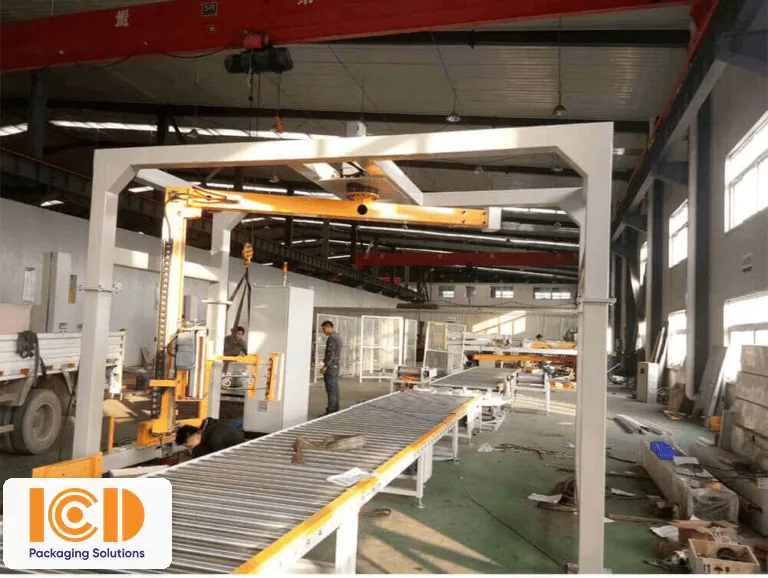
An automatic machine adds a conveyor that feeds loads in and mechanisms that automatically apply, weld and cut the film, so each of those mechanisms is a place that can halt the cycle. Wikipedia describes an automatic wrapper in general as a variant of the semi-automatic machine with an added conveyor feeding system and a system that automatically applies, welds and cuts the film. The ICD-X100 product page states plainly what work has moved to the machine: the automatic film cutting and clamping system means workers no longer cut the film themselves and place its leading end on the pallet. Work handed to the machine also has to be fixed at the machine when it fails.
An automatic machine’s cycle has the six steps below. Each fault in this article is tied to the step where it usually shows up, so that when the machine stops you know where to look first.
ICD Vietnam has three models in the automatic or conveyor-combined group with enough specifications to cross-check when diagnosing. All three state a maximum pre-stretch of 250% and all have optical sensors that measure load height automatically.
| Model | Load capacity | Throughput | Power supply | Automatic features to watch when a fault occurs |
|---|---|---|---|---|
| ICD-X100 | 1,500 kg | 30 - 40 pallets/hour | 220 - 240 V | Automatic film cutting and clamping, self-resetting table, optical height sensor, touchscreen and three-color LED status light |
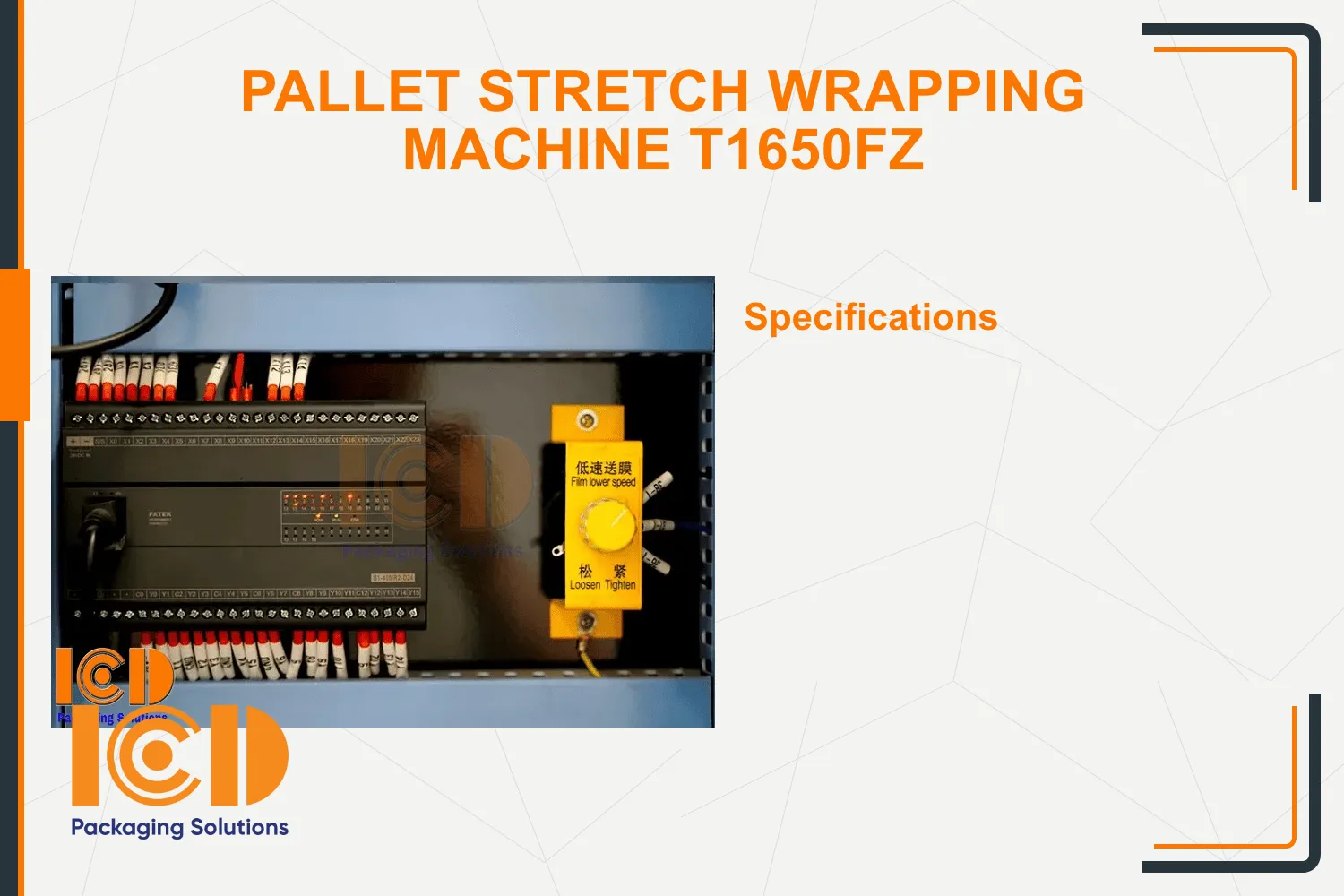
| ICD-T1650FZ | 2,000 kg | 30 - 50 pallets/hour | 220 V, compressed air 0.4 - 0.8 MPa | PLC control, table resets itself after wrapping, servo film system with pneumatic assist, automatic or manual mode selectable |
| ICD-T1800FZ (conveyor-combined) | 1,500 kg | 20 - 40 pallets/hour | 380 V, 3-phase | PLC controlling the conveyor, belt and rotating table; pallets enter on the first conveyor and leave on the second |
Specifications come from ICD Vietnam product pages, retrieved October 2026. How a factory puts a machine into operation is covered in the article on the handover of the ICDT1650F automatic wrapping machine at Bau Bang Industrial Park; each model’s specifications should be checked against its product page before being used as a basis for diagnosis.
Film clamp fails to hold the film end
If the clamp does not hold the film end, the film slips off the pallet at the start of the cycle and the machine wraps with nothing to grip; at the end of the cycle the film tail comes loose. OEE Lab’s troubleshooting guide groups this fault with film cutting faults and gives three checks: the cutting and clamping mechanism, its timing against the film carriage position, and film wound around a roller because it was threaded wrongly.
Film will not cut or the film tail hangs out after wrapping
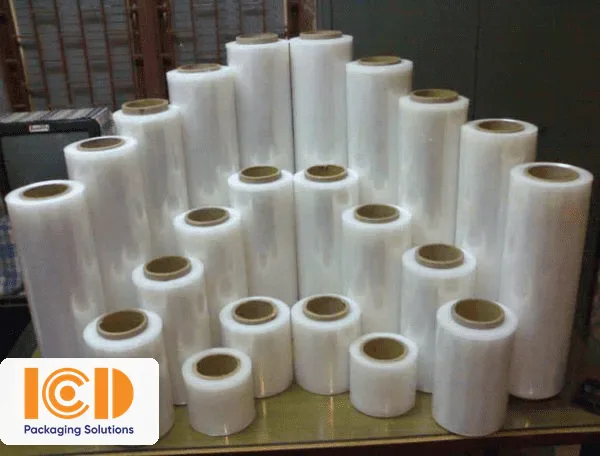
A tail left hanging after the cycle means the cutting or tail-pressing step did not finish the job, and the culprit is rarely the film roll. OEE Lab lists closely related causes: a cutting mechanism, heating element or clamp with a problem; cut timing that is off so the tail is long; a tail press arm or brush that is not working; and film with low cling so the tail does not stick back onto the pallet.
A long tail also causes line faults. These tails catch on forklift tines or conveyor rollers and drag on to cause a fault on the next pallet. If cutting and pressing are both adjusted and the tail still comes loose, talk with your supplier about the cling grade of the film in use; ASTM D4649 is the document buyers and sellers use to agree film specifications.
Height sensor misreads, causing under-wrapping or wrapping above the load
Wrapping that stops early, wraps above the top of the load or has the film carriage running up and down searching are all signs the height sensor is misreading. OEE Lab names three causes: a dirty or misaligned sensor eye, dark-colored or clear-film-covered goods that the sensor cannot see, and a damaged or missing reflector. The prevention given is to check the sensor each time the machine is cleaned.
Film carriage jerks or stops mid-mast
A film carriage that jerks, stops mid-mast or wraps unevenly from bottom to top is usually down to the carriage drive and the guide rollers on the mast, not the film roll. OEE Lab names three causes: a worn chain or belt pulling the carriage, worn guide rollers on the mast, and obstructions or damage on the travel path. The fix is to check and tension or replace the chain or belt, replace worn rollers, clean the rail and clear any obstruction. This is routine maintenance, not a shift-level adjustment.

Film breaks at the start of the cycle or winds into the pre-stretch rollers
Film that breaks or winds into the pre-stretch rollers is usually due to stretch set too high for the film type, dirty or worn rollers, or sharp load edges. OEE Lab advises reducing stretch to match film thickness, adding edge protection for sharp loads and checking the pre-stretch rollers; rollers with a worn coating, dirt or slippage also raise film use and make load hold uneven from pallet to pallet.
Turntable does not return to home position or stops off-position
A table that stops off-position or does not return home on its own starts the next cycle out of rhythm, because the film clamp and conveyor both coordinate around the home position. OEE Lab lists four common causes: a loose or worn drive chain or belt, dirty home and position sensors, a motor or inverter with an alarm, and a load placed off-center on the table. The T1650FZ and X100 models both have a function that resets the table after wrapping, so when it does not return home, wipe the position sensors and read the inverter alarm before suspecting the mechanics.
Conveyor, pallet position and safety gate: machine will not run or stops mid-cycle
An automatic machine that will not start or stops mid-cycle usually has a safety or conveyor condition not satisfied, so check these conditions before suspecting an electrical fault. Go through this checklist in order: has the emergency stop been released, are the door and fence closed, is the safety switch under the film carriage blocked by an object, is the pallet fully and correctly centered on the conveyor, and does the screen show any alarm code.
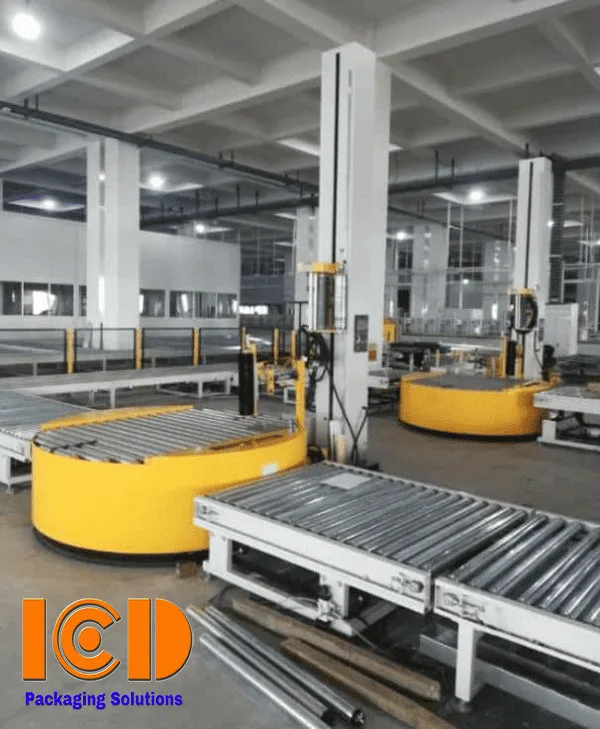
The ICD-X100 product page describes safety devices under the film carriage to protect the operator’s feet and head, a transparent panel for seeing a fault without opening the door, and an alarm system if the carriage lifting belt goes off-track or fails. These devices are also places that easily stop the machine when dust builds up or an object jams them. On conveyor-combined models such as the T1800FZ, a pallet placed off-center on the first conveyor is a familiar cause of crooked wrapping or a stop at the machine entry. The EN 415-6:2013 standard sets safety requirements for the design, installation, operation, adjustment, maintenance and cleaning of pallet wrapping machines, so do not disable a fence or safety switch to keep running.
Pallet is still wrapped loosely although the machine runs a full cycle
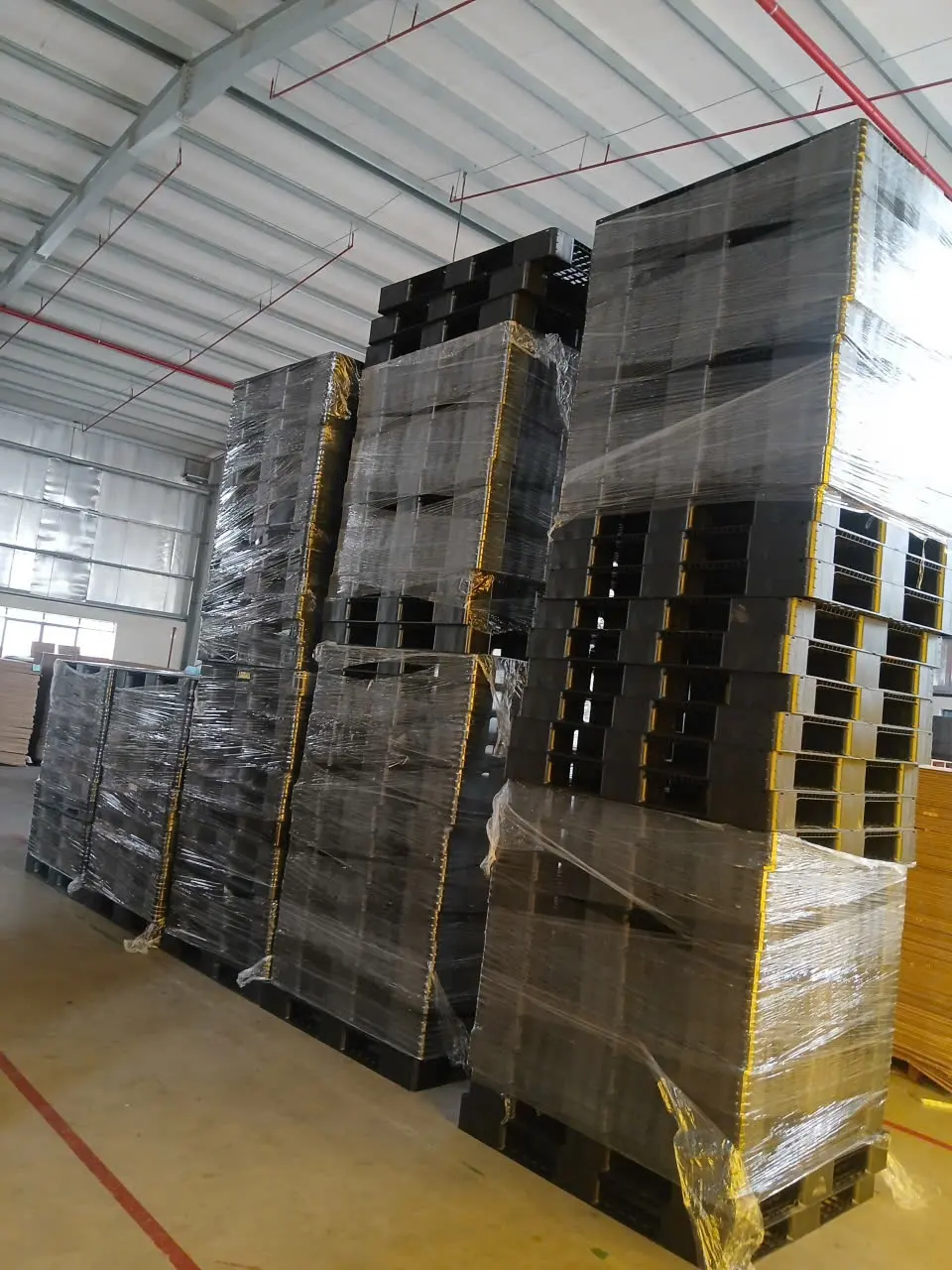
A pallet wrapped loosely even though the machine runs smoothly is usually a wrapping program fault rather than a machine fault. OEE Lab groups the causes: too few wraps or too little holding force, a wrap pattern that does not suit the load, and pre-stretch that is not optimal. The fix is to set the number of wraps and holding force, add bottom and top wraps and choose a wrap pattern that suits the load. The ICD-X100 product page says the machine lets you adjust the top, bottom and reinforcement wrap cycles.
The same source also notes the opposite: over-wrapping wastes film, and you should choose the lowest level that still holds the load after a trial run. Each pallet type should have a recorded wrapping recipe, with a screenshot of the parameters, so the next shift does not have to guess.
Quick lookup table by symptom
The table below is ordered by what to check first: the first item is usually the quickest and cheapest to rule out.
| Symptom | Suspect first | First action |
|---|---|---|
| Film slips off the pallet at the start of the cycle | Clamp lacks force or air, film threaded wrongly | Check the air gauge, re-thread the film, clean the rollers |
| Film tail hangs out, catches on forklift | Insufficient cutting, tail press arm, low-cling film | Run a cycle with no load, check the knife and press arm |
| Wrapping stops early or goes above the load | Height sensor dirty, misaligned, dark-colored load | Wipe the sensor eye, test with a light-colored pallet |
| Film carriage jerks or stops mid-mast | Worn carriage chain or belt, guide rollers | Clear obstructions, check chain and belt, request maintenance |
| Film breaks or winds into pre-stretch rollers | Stretch too high, dirty rollers, sharp load edges | Reduce stretch to match the film roll, wipe rollers, add corner protectors |
| Table stops off-position, does not return home | Dirty position sensor, inverter alarm | Wipe the sensor, read the inverter alarm |
| Will not start in automatic mode | Emergency stop, door, safety switch, off-center pallet | Go through each safety condition, read the code on the screen |
| Pallet wrapped loosely although the machine runs smoothly | Few wraps, low holding force, unsuitable wrap pattern | Run a trial and record the wrapping recipe for that pallet type |
A 5-minute check at the start of each shift
Most of the faults above can be avoided with a short check at the start of each shift. The items below follow OEE Lab’s prevention guidance and the ICD machine specifications:
- Wipe the height sensor eye and position sensors.
- Wipe the pre-stretch rollers and check the film threading path.
- Check the compressed air gauge and listen for air leaks, on air-powered machines.
- Run one sample pallet to watch the clamp, cut, tail press and table homing.
- Check the fence, doors, safety switch under the film carriage and the emergency stop.
When to call a technician instead of fixing it yourself
Call a technician when the fault repeats after you have wiped the sensors, re-threaded the film and checked the air; when the screen reports a motor or inverter fault; or when the circuit breaker trips repeatedly.
Frequently asked questions
How do automatic wrapping machines differ from semi-automatic ones in terms of faults?
Automatic machines add a conveyor feeding loads and a system that automatically applies, welds and cuts the film, as Wikipedia describes. So beyond the common turntable faults, they have extra faults at the film clamp, cutting knife, tail press arm, height sensor and conveyor.
What fault leaves the film tail hanging out after wrapping?
It is usually the cutting or tail-pressing step not completing: a problem with the cutting mechanism, heating element or clamp, off cutting timing, a tail press arm that is not working, or film with low cling (OEE Lab).
What if the height sensor cannot see dark-colored goods?
Wipe the sensor eye, test with a light-colored pallet to confirm the fault is in the load, then ask the machine maker about a sensor and sensitivity setting suited to dark goods. OEE Lab states plainly that dark or clear-film-wrapped goods are one cause of the sensor not seeing the load.
Should I cut the film by hand or push the clamp when an automatic machine jams?
No. Press the emergency stop and cut the power before putting your hand in. The EN 415-6:2013 standard sets safety requirements for operating, adjusting, maintaining and cleaning pallet wrapping machines, so do not disable a fence or safety switch to keep running.
What level should pre-stretch be set to?
By the specification of the film roll in use, not by the machine’s maximum. The three models X100, T1650FZ and T1800FZ state a maximum of 250%, but OEE Lab advises setting the level the film manufacturer recommends.
How long is the warranty on ICD Vietnam automatic wrapping machines?
12 months under ICD Vietnam’s warranty and repair policy. When calling to report a fault, prepare the model, serial number, purchase date, alarm code and a short video.
Contact ICD Vietnam
- ICD Vietnam pallet wrapping machines: machine selection advice, technical support and warranty
- Northern Vietnam hotline: 0983 797 186 | 090 345 9186
- Southern Vietnam hotline: 098 6784 186
- Email: sales@icdvietnam.com.vn
- Zalo: Chat Zalo
References
- Stretch Wrapper Troubleshooting: Causes & Fixes, OEE Lab (causes and fixes: film cutting and clamping, film tail, height sensor, turntable, pre-stretch, film carriage).
- Stretch wrap, Wikipedia (classification of wrapping machines; automatic machines include a conveyor and a system to apply, weld and cut film).
- SS-EN 415-6:2013 Safety of packaging machines - Part 6: Pallet wrapping machines, Swedish Institute for Standards (scope of safety requirements).
- ASTM D4649-20 Standard Guide for Use of Stretch Films and Wrapping Application, ASTM International (agreeing film specifications between buyer and seller).
- ICD-X100, ICD-T1650FZ and ICD-T1800FZ machine specifications from ICD Vietnam product pages, retrieved October 2026.