Table of Contents
Reviewed and updated by ICD - Week 44/2026
PE film used for the right purpose and in the right way is safe: virgin food-grade PE is permitted for food contact, and the main risks come from microwaves, hot fatty food and film of unknown origin. The answer also depends on which film you mean, because PE film falls into two very different groups: cling film for food at home and pallet stretch film in the warehouse.
1. Two kinds of PE film, two levels of risk
| Film type | What it is for | Touches food? | What to check |
|---|---|---|---|
| Food cling film | Covering plates, tubs, food in the fridge | Yes, directly | Food-use label, plastic type (PE or PVC), microwave label |
| Zip bags, freezer bags | Holding and storing food | Yes, directly | Food-use label, manufacturer name, do not reuse after holding raw meat |
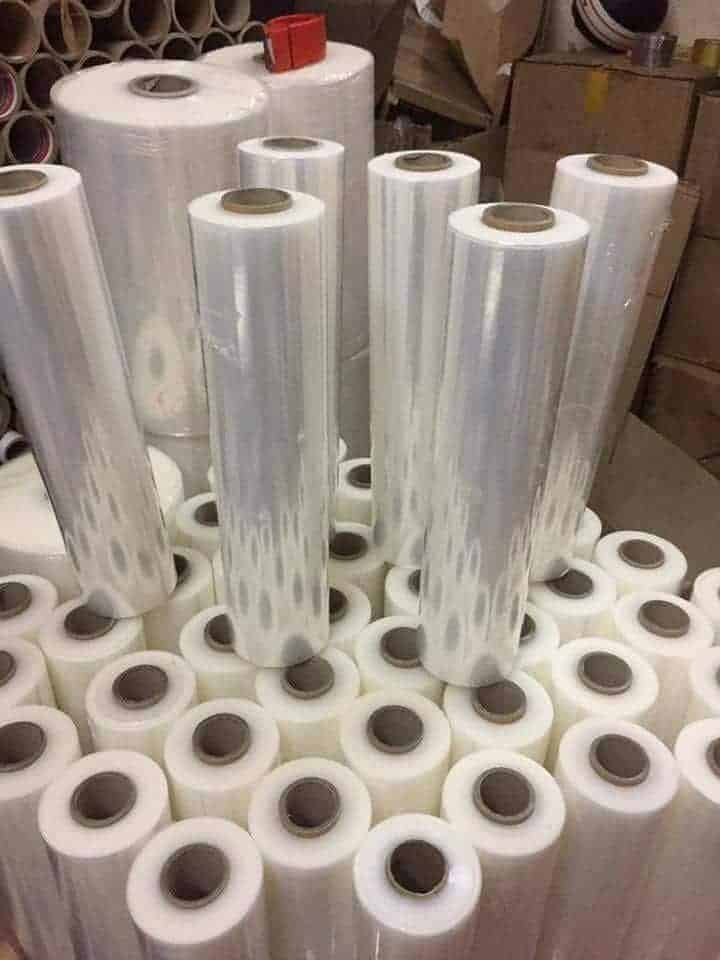
| Pallet stretch film, shrink film | Securing and wrapping loads in the warehouse and in transit | No, wraps the outside of packaging | Strength, stretch, width and thickness; not a food-grade standard |
This means the food safety question only arises for the first two rows. Pallet stretch film is an industrial material wrapped outside cartons or sacks that are already packed, so the selection criteria are strength and stretch and not a food-grade standard. Food that is not otherwise packed should not be wrapped directly in pallet stretch film; there must be a layer of food packaging inside.
2. Cling film: conditions for safe use
Choose the right type and read the label
Virgin PE for food packaging is permitted under the US 21 CFR 177.1520, while in Europe food-contact plastic must meet Regulation 10/2011, with overall migration not exceeding 10 mg per dm² of contact surface. The practical question when buying is telling PE from PVC: the two films look almost the same, so the plastic type on the label is the basis, not how it feels to the touch. Film with no label, sold by weight, with no manufacturer name should not be used in contact with food.
Microwaves and hot food
The US Food Safety and Inspection Service (FSIS) advises using only film labelled microwave-safe, keeping the film from touching the food while reheating, and not using thin plastic bags in the oven. The reason is that PE film softens at a much lower temperature than PP, and hot fatty food is hotter than boiling water, which can deform the film and make it stick to the food. Food that is still hot gives off steam, so let it cool a little before covering.
PE and PVC: the difference is the plasticiser
Soft PVC film needs a plasticiser, and some types use DEHA. A study by Petersen (1995) on cheese wrapped in PVC film recorded DEHA migrating into fatty food, which could bring intake to near or above the acceptable daily level. PE film does not use such a plasticiser, so for fatty items like meat and cheese, read the label to know the film type.
Reuse and hygiene
Cling film is single-use, because the thin, clinging surface is very hard to wash clean. Zip bags can be reused for dry goods, but should not be reused after holding raw meat or fish because of the risk of cross-contamination.
3. Environmental impact
Thin film is hard to collect and recycle: EPA data shows that plastic bags, sacks and film in the United States were recycled at 10% in 2018, lower than natural HDPE bottles (29.3%). In Vietnam, plastic bags are subject to environmental protection tax at VND 50,000/kg under Resolution 579/2018/UBTVQH14, with exemptions set out in Circular 159/2012/TT-BTC. Cutting back on film where it is not needed is the most direct way to reduce the impact.
Frequently asked questions
Is PE film safe for health?
Yes, when it is virgin food-grade PE and used correctly. Risk comes from microwaves, hot fatty food and unlabelled film.
Is it OK to cover food with PE cling film in the fridge?
Yes. The low temperature in a fridge is the normal condition of use for cling film.
Can I reheat food in the microwave under cling film?
Only when the label clearly says microwave-safe, and keep the film away from the surface of the food. Without a label, do not use it in the oven.
How do I tell PE film from PVC film?
The two look almost the same, so read the plastic type on the packaging label. Soft PVC contains plasticisers, and some types use DEHA.
Can pallet stretch film be used to wrap food?
No. Pallet stretch film is an industrial film wrapped around the outside of a load, with no food criteria. Food needs food packaging inside.
Are there alternatives to PE cling film?
Yes: glass containers with lids, reusable silicone lids, and beeswax wraps. Each has its own limits, so choose by how you use it.
Contact ICD Vietnam for advice
ICD Vietnam Industrial Manufacturing Co., Ltd.
North: 3rd Floor, Thang Long A1 Building, Bau Hamlet, Thien Loc Commune, Hanoi, 0983 797 186 / 090 345 9186 / 090 5859 186
South: 551/212 Le Van Khuong Street, Tan Thoi Hiep Ward, District 12, Ho Chi Minh City, 098 6784 186
Email: sales@icdvietnam.com.vn
Zalo: Chat on Zalo now
References
- 21 CFR 177.1520, Olefin polymers (Cornell LII) - law.cornell.edu
- Regulation (EU) 10/2011 on plastic materials in food contact (overall migration limit 10 mg/dm2) - eur-lex.europa.eu
- USDA FSIS, Cooking Safely in the Microwave Oven (microwave-safe labelling, keep plastic wrap off food) - fsis.usda.gov
- Petersen J.H. (1995), PVC cling film in contact with cheese: global migration and specific migration of DEHA, Food Additives & Contaminants 12(2) - tandfonline.com
- US EPA, Plastics: Material-Specific Data (bags, sacks, film recycled 10% in 2018) - epa.gov
- Resolution 579/2018/UBTVQH14 on the Environmental Protection Tax Schedule (plastic bags taxed at VND 50,000/kg) - luatvietnam.vn