Table of Contents
- 1. PE film: the saving is real, but the figure depends on the machine
- 2. Time and the number of people standing and wrapping
- 3. Repeating the same recipe every time
- 4. Lower musculoskeletal risk for the wrapper
- 5. The payback sums: calculate by your own output
- 6. A film allowance for each pallet type
- Choosing a machine type by output
- When you do not need a machine yet
- Frequently asked questions
- Contact ICD Vietnam
- References
Reviewed and updated by ICD - Week 43/2026
Use a stretch wrapper when the number of pallets wrapped each day is large enough that the film and time you save pay back the investment. In a warehouse wrapping from a few dozen pallets a day, the biggest saving is usually the PE film, not the labor; in a warehouse that wraps few pallets or handles very varied goods, hand wrapping is still a reasonable choice.
This guide takes the viewpoint of the person deciding whether to buy. The six reasons below are rewritten using sourced figures or calculations with stated assumptions, in place of round numbers like “save up to 70%” or “payback under 12 months” that no warehouse can verify. To see the benefits split by type of warehouse, also read the article on the specific benefits of stretch wrapping machines.
- Film: the saving is real thanks to pre-stretch, but only when the machine has a pre-stretch unit; when calculating payback, use a conservative 30-50%.
- Time: saves about 2 minutes per pallet; at 50 pallets/day that is only about VND 1 million a month at minimum wage, and only at 200 pallets/day does it become a full job position.
- Quality: a machine repeats the same recipe each time, but whether the recipe is right must still be checked by trial runs with your own goods.
- Do not buy yet when output is low, the goods are varied, or you do not know the machine’s pre-stretch.
1. PE film: the saving is real, but the figure depends on the machine
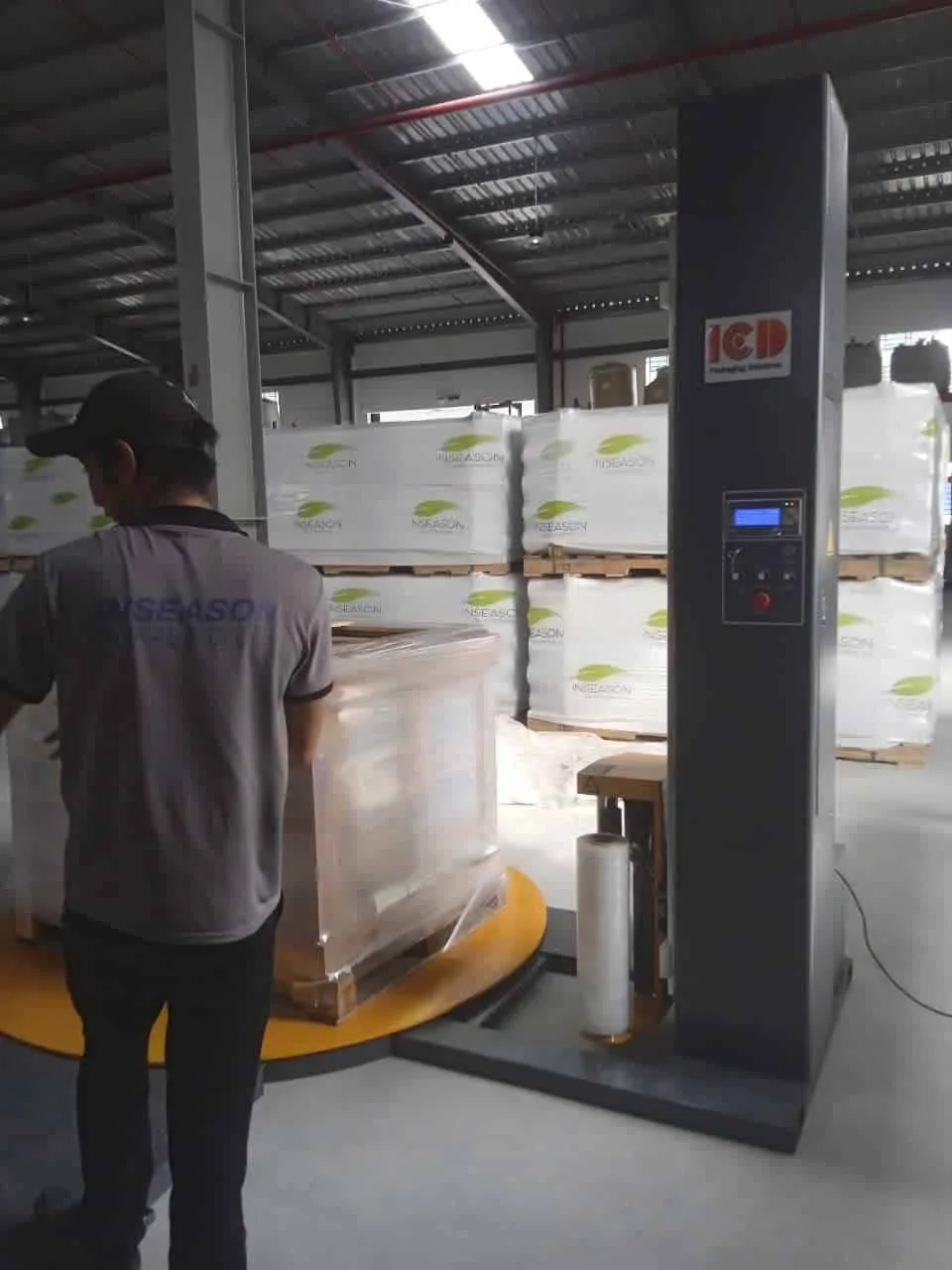
A machine saves film through pre-stretch: two rollers turning at different speeds elongate the film before it touches the pallet. Hand wrapping only stretches the film about 10-20%, while a machine with a pre-stretch unit usually runs at 150-250%, so for the same layer of film on the load, much less film comes off the roll.
To get a figure in place of “save up to 70%”, I calculated for a sample pallet of 1000 x 1200 x 1500 mm. About 44 m of film is needed lying on the load. Film of 23 microns, 500 mm wide, with an LLDPE density of about 0.92 g/cm³ weighs about 10.6 g per meter. Hand wrapping with 10% stretch needs about 40 m pulled off, about 424 g. A machine stretching 150% needs only about 17.6 m, about 187 g; at 250% stretch about 12.6 m, about 133 g.
The model gives a higher saving than the 30-50% manufacturers usually publish because it assumes the two wrapping methods hold the load equally well. In practice, people setting up machines often add turns to be safe, and the load-holding effect of highly stretched film does not rise linearly: a Cal Poly thesis (2012) found no correlation between pre-stretch percentage and load containment in ISTA 3E testing, while a 2025 study by a Warsaw University of Technology group recorded a linear relationship between the number of turns, the pre-stretch level, and stabilizing force. The two results do not agree, so the safe advice is to use 30-50% as the conservative level when calculating payback.
The surest check is to measure it yourself: weigh the film roll before and after hand wrapping 10 pallets, then do the same with a machine on the same type of load. Divide by 10 to get the real grams of film per pallet in your warehouse.
2. Time and the number of people standing and wrapping
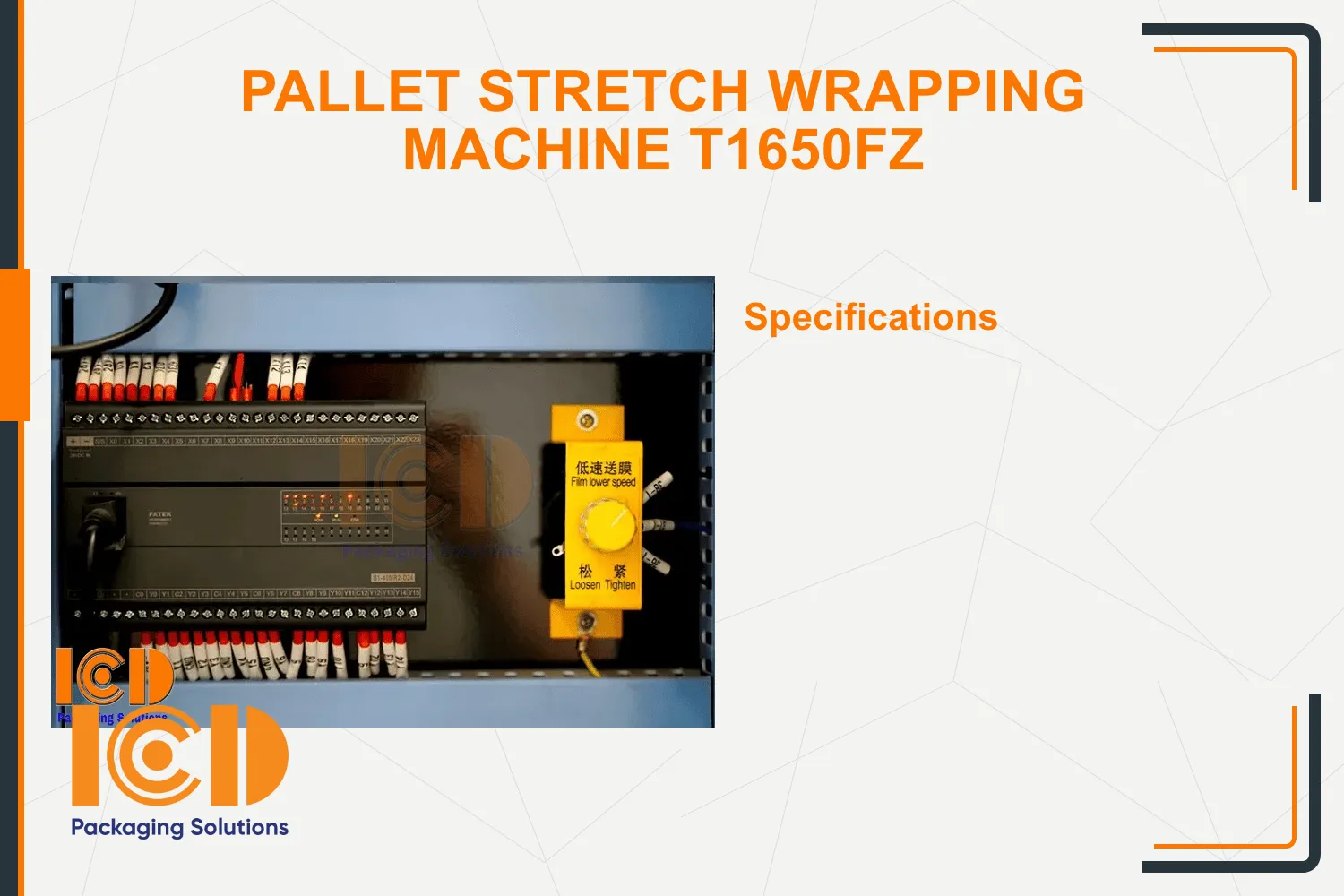
Commercial sources show hand wrapping takes about 3-5 minutes per pallet and a semi-automatic machine about 1-2 minutes. On the ICD product pages, the ICD-X0MS states a packing speed of 30 pallets per hour (2 minutes per pallet), the ICD-T1650FM states 20-40 pallets per hour, and the automatic ICD-T1650FZ states 30-50 pallets per hour. Use a conservative saving of 2 minutes per pallet.
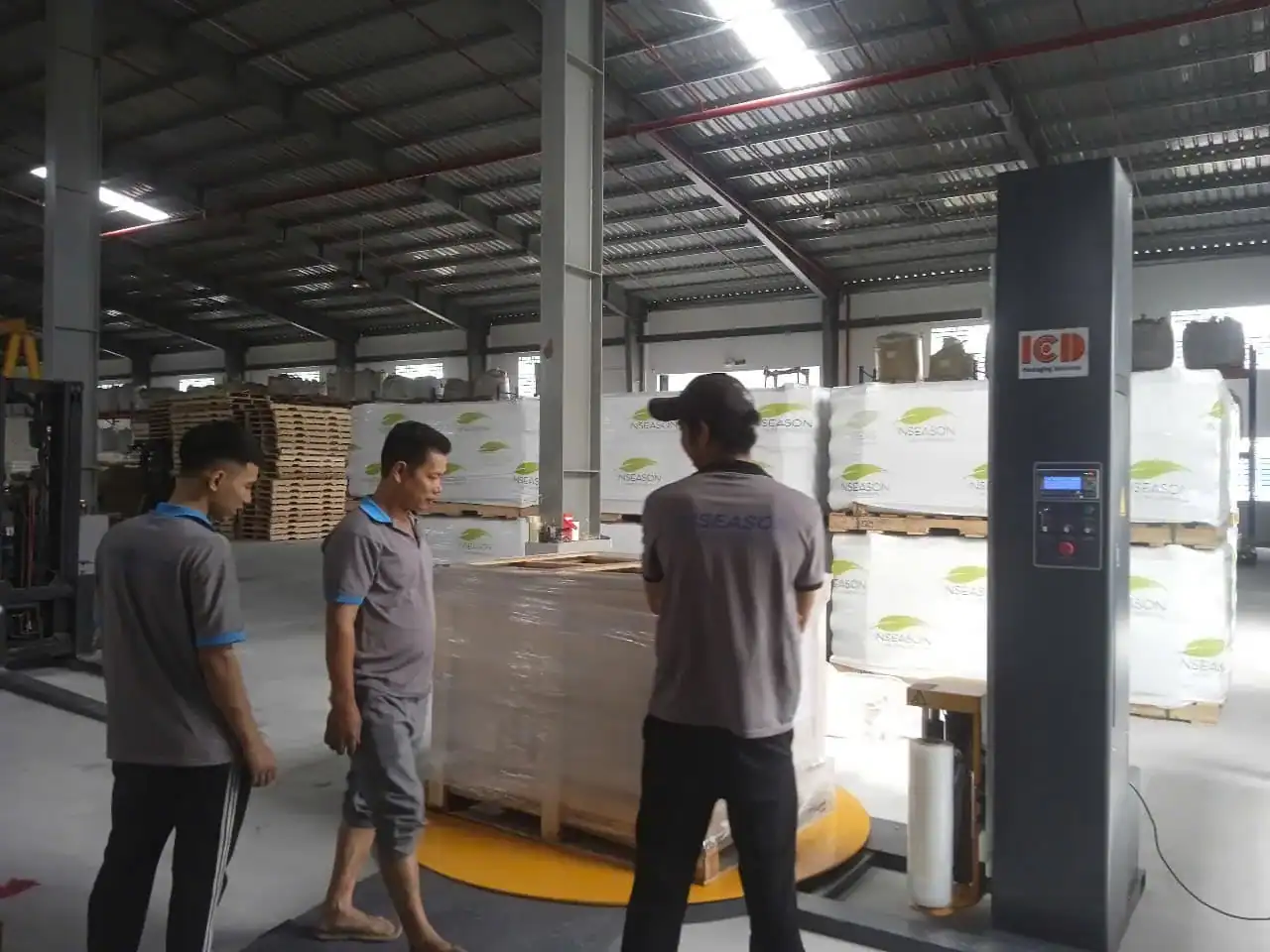
The value of those 2 minutes is much smaller than people think. Under Decree 293/2025/ND-CP, the Region I minimum hourly wage from 1 January 2026 is VND 25,500. A warehouse wrapping 50 pallets a day, 25 days a month, saves about 41.7 hours, about VND 1.06 million a month at the minimum rate. Real wages are higher than the floor, but the scale is still low. At 200 pallets a day, the figure becomes about 6.7 hours a day, close to one job position.
3. Repeating the same recipe every time
Hand wrapping depends on the person wrapping: one wraps 5 turns, another 7, and the same person wraps tighter in the morning than in the afternoon. A machine lets you preset turntable speed, base turns, top turns, and pull force; the ICD-T1650F on its product page has 3 adjustable film tension levels, and the ICD-X0MS has 6 program memories. Every pallet of the same type is wrapped the same way.
The benefit here is evenness, not absolute security. A 2021 study by the Warsaw University of Technology group tested under the EUMOS 40509 and 40511 standards and concluded that choosing the right film and wrapping pattern reduces the risk of damage while also reducing film use. That means the right recipe gives good results, and the recipe must be trial-run with your own goods. The machine only helps that recipe repeat every time.
4. Lower musculoskeletal risk for the wrapper
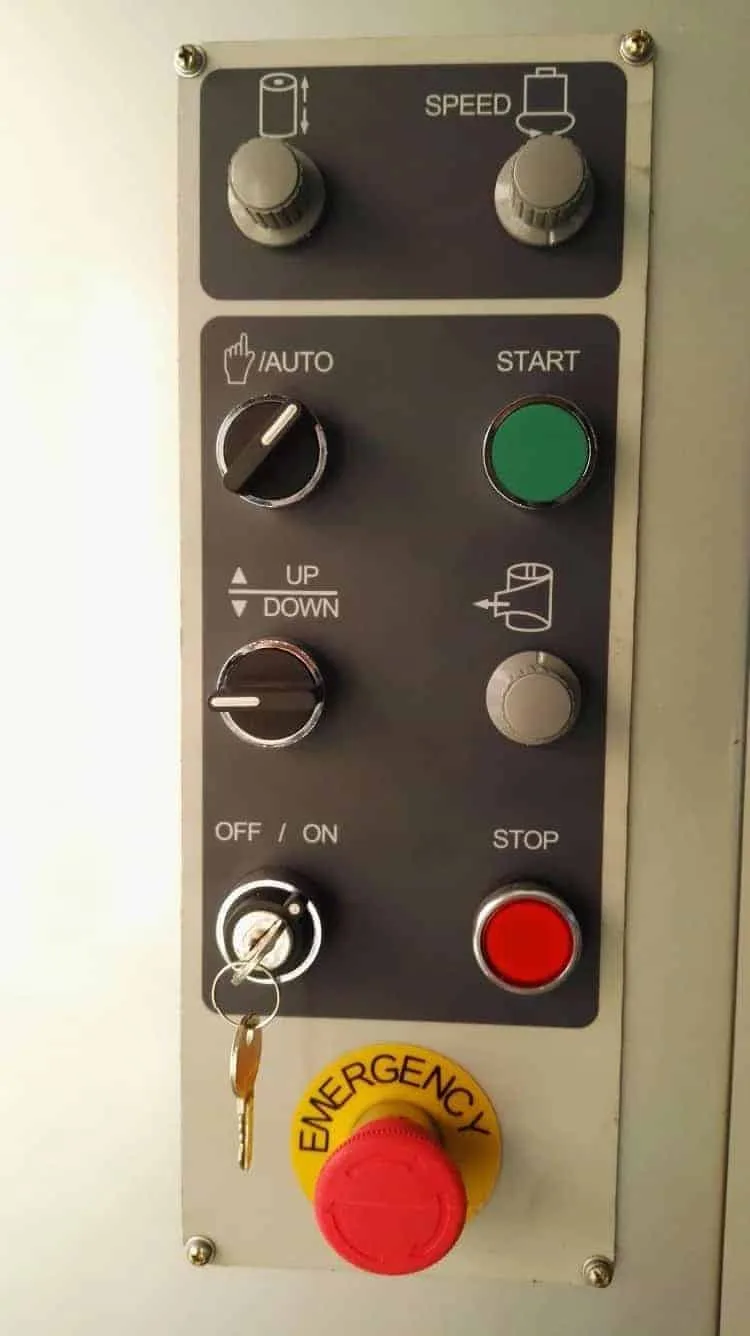
WorkSafe Victoria (Australia) classes hand pallet wrapping as work with a risk of musculoskeletal disorders because the wrapper must bend, reach, twist, and use repeated force, and names an automatic or semi-automatic wrapper as the preferred solution. A business that hand wraps in volume carries a cost that is rarely counted: people leaving, back pain, hiring and retraining.
A machine does not remove the hazard but moves it elsewhere: the turntable, rollers, and mast moving up and down are all moving parts. The BS EN 415-6:2013 standard on pallet wrapper safety sets requirements for operation, adjustment, and cleaning, so buying a machine must come with a safe operating procedure; that part is covered in the article on the consequences of using a wrapper incorrectly.
5. The payback sums: calculate by your own output
Formula: months to payback = machine price divided by monthly saving (film cost plus labor). ICD machine prices are “contact for a quote”, so this guide does not fill in a figure; take the actual quoted price and divide by the last column of the table. For reference prices of each machine line, see the 2026 stretch wrapping machine price guide.
| Pallets/day | Pallets/month | Film saved | Film cost | Labor | Total/month |
|---|---|---|---|---|---|
| 20 | 500 | 133 kg | VND 6.6 million | VND 0.4 million | VND 7.1 million |
| 50 | 1,250 | 331 kg | VND 16.6 million | VND 1.1 million | VND 17.6 million |
| 100 | 2,500 | 663 kg | VND 33.1 million | VND 2.1 million | VND 35.2 million |
| 200 | 5,000 | 1,325 kg | VND 66.3 million | VND 4.3 million | VND 70.5 million |
The table’s assumptions, stated so you can substitute your own warehouse’s numbers: 25 wrapping days a month; film saved 265 g per pallet (between 237 g for a 150% stretch machine and 291 g for a 250% stretch machine, per the model in reason 1); film price VND 50,000/kg (an illustrative figure, replace it with the price on your invoice); time saved 2 minutes per pallet at VND 25,500 per hour (Region I minimum hourly wage). All of it is ICD Vietnam’s calculation, not data measured in a specific warehouse.
If you want to be more conservative, replace the film saving with the manufacturers’ 30-50%, and the payback figure will lengthen accordingly. The table also shows one thing worth remembering: at low output the labor part is almost negligible, so the buying decision rests mainly on film and on the evenness of wrapping quality.
6. A film allowance for each pallet type
When wrapping by machine, the number of turns and the stretch level are fixed, so grams of film per pallet becomes a figure you can manage. You set an allowance for each type of goods (for example carton pallets, sack pallets, beverage pallets), weigh a trial and record it; any shift that uses more than the allowance gives you grounds to recheck the film roll, the pull force, or how the goods are stacked. With hand wrapping this number varies by person, so it is hard to set an allowance.
Evenly wrapped pallets are also easier to check at handover. This is a small but real benefit: tidy wrapping with the base turns hugging the pallet shows that the warehouse has a procedure, and when a dispute over damaged goods arises, checking against the wrapping allowance is easier.
Choosing a machine type by output
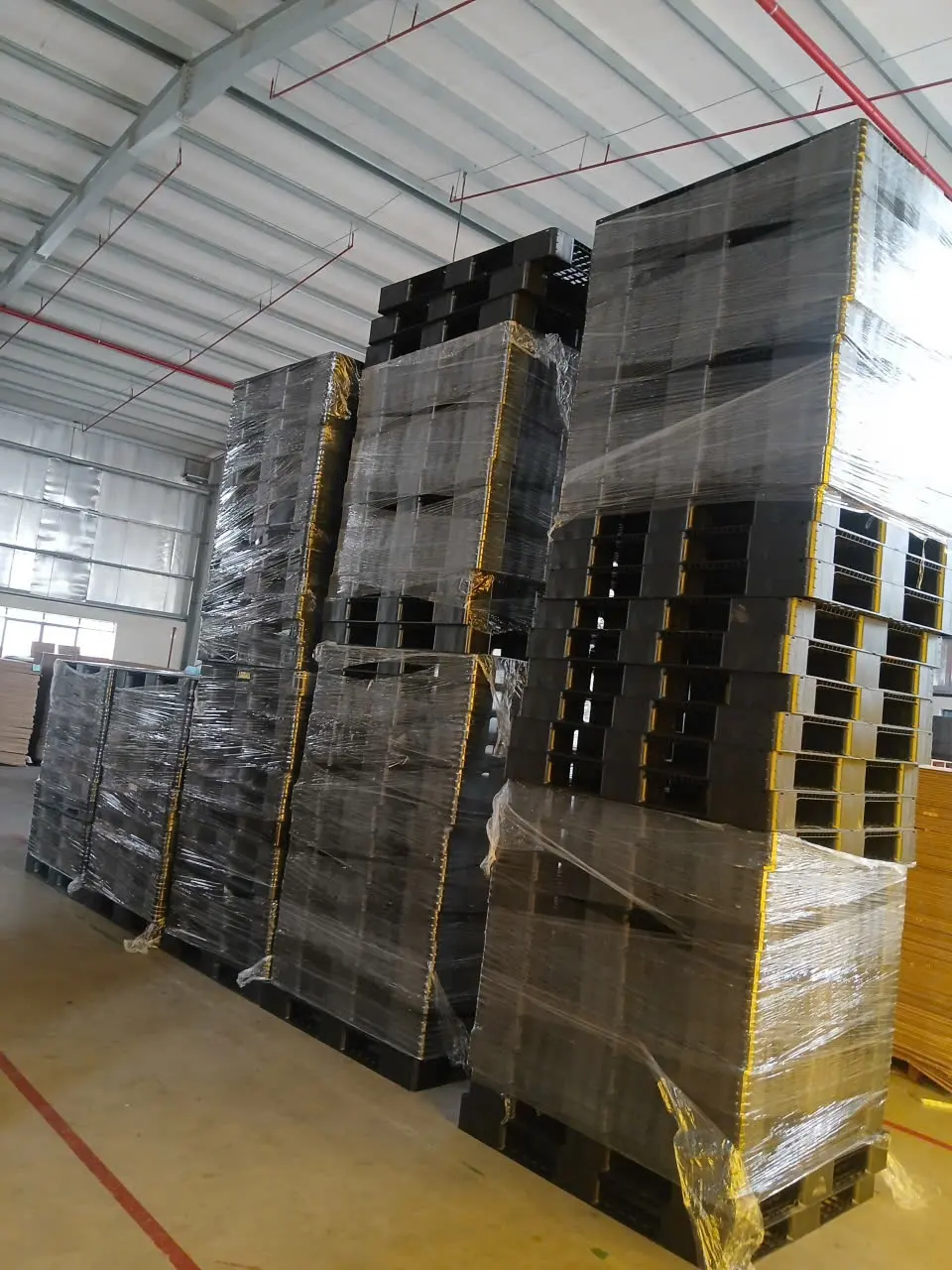
Most warehouses start with a semi-automatic machine. Per the specifications on ICD Vietnam’s product pages:
- Semi-automatic turntable: ICD-T1650F (2,000 kg load, 0-12 rpm, the product page suggests warehouses wrapping 50-150 pallets/day), ICD-Y1650F (1,500 kg load, on wheels so it can be moved), and ICD-X0MS (1,500 kg load, 30 pallets/hour).
- Semi-automatic M type: ICD-T1650FM (1,000 kg load, 20-40 pallets/hour), where a hand pallet truck pushes straight into the M-shaped slot of the turntable so the pallet does not need lifting onto the table.
- Automatic: ICD-T1650FZ (30-50 pallets/hour, film carriage stretching 250%) and the ICD-T1800FZ combined with a conveyor for continuous dispatch lines.
- Heavy goods or goods that should not rotate: rotating-arm wrappers (ICD R1800FZ-PL) and self-propelled robots (Robot S7, Masterplat Plus ICD-TP3), where the pallet stays still and the machine travels around it.
For detailed selection by pallet size, load height, and weight, see the article on how to choose a stretch wrapping machine.
When you do not need a machine yet
There are three situations to consider carefully before buying:
- Low output. At 20 pallets/day, the table above gives about VND 7 million in savings a month, of which labor is under half a million. Divide the quoted machine price by that figure and decide for yourself how long a payback is acceptable.
- Goods very varied in size and shape. If the wrapping recipe cannot be standardized, the machine struggles to deliver its repeatability advantage; heavy, long, or non-rotating goods need a different machine from the turntable type.
- A machine without pre-stretch, or a warehouse using it only temporarily. In that case the film saving in reason 1 is almost nil.
In these cases the middle-ground solution is hand wrapping with less bending: WorkSafe Victoria advises putting the pallet on a lift table with a turntable so the wrapper bends less. When output rises, go back to the table under reason 5 and recalculate.
Frequently asked questions
How much film does a stretch wrapper save compared with hand wrapping?
Manufacturers usually publish 30-50%. ICD Vietnam’s calculation model for a sample pallet of 1000 x 1200 x 1500 mm with 23 micron film gives 56% when the machine stretches 150% and 69% at 250% stretch, assuming the same film length lying on the load. When calculating payback, use a conservative 30-50%, and weigh a film roll over 10 pallets to get your warehouse’s real figure.
From how many pallets a day should a warehouse invest in a stretch wrapper?
There is no single threshold for every warehouse, because it depends on the machine price and the film price you pay. Under the assumptions in this guide, 20 pallets/day saves about VND 7.1 million a month and 50 pallets/day about VND 17.6 million. Divide the actual quoted machine price by your warehouse’s figure to get the months to payback.
How much faster is a stretch wrapper than hand wrapping?
Commercial sources show hand wrapping at about 3-5 minutes per pallet and a semi-automatic machine at about 1-2 minutes. The ICD product pages state ICD-X0MS 30 pallets/hour, ICD-T1650FM 20-40 pallets/hour, and ICD-T1650FZ 30-50 pallets/hour.
Does a stretch wrapper hold loads more securely than hand wrapping?
A machine lets every pallet be wrapped evenly to the same recipe. Security also depends on the film type, number of turns, pull force, and how the goods are stacked, so you need to trial run with your own goods. For heavy goods, wrapping film also does not replace strapping in transport.
Contact ICD Vietnam
ICD Vietnam advises on choosing a machine by your warehouse’s output and goods. See the models at ICD pallet stretch wrapping machines or send your needs through the quote request.
- Northern Vietnam (Hanoi warehouse): 3rd Floor, Thang Long A1 Building, Bau Hamlet, Thien Loc Commune, Hanoi - 0983 797 186 | 090 345 9186
- Southern Vietnam workshop: 551/212 Le Van Khuong Street, Tan Thoi Hiep Ward, District 12, Ho Chi Minh City - 098 6784 186
- Email: sales@icdvietnam.com.vn | Zalo: Chat Zalo
References
- Decree 293/2025/ND-CP on the minimum wage (effective 1 January 2026)
- BSI, BS EN 415-6:2013 - Safety of packaging machines, Part 6: Pallet wrapping machines
- WorkSafe Victoria, Stretch wrapping pallets
- Tkaczyk S. et al., Study of the Stability of Palletized Cargo by Dynamic Test Method, Sensors, 2021
- Tkaczyk S. et al., Pilot Study of Stretch Film for Securing Palletized Loads, Sensors, 2025
- Cal Poly, thesis on pre-stretch and pallet load containment in ISTA 3E testing, 2012
- Film saving of 30-50% and hand wrapping time of 3-5 minutes against 1-2 minutes for a machine: documents from wrapper distributors and makers (2022-2025), commercial sources, no link.
- Turntable load, speed, output, and stretch ratio specifications on ICD Vietnam product pages, accessed October 2026; the film weight model and the saving table are ICD Vietnam’s calculations, with assumptions stated in the guide.