
Mục lục
Pine wood is one of the most widely used natural timbers in both furniture manufacturing and industrial pallet production. Lightweight, easy to machine, naturally resin-protected and available at a reasonable price point, pine is the dominant species in wooden pallet manufacturing in Vietnam and globally. This guide covers what pine wood is, the two main commercial types, its advantages and limitations, current price ranges, and the products most commonly made from it - with a focus on pallet-grade pine.
1. What is pine wood?
Pine wood is a natural timber harvested from pine trees - a genus of coniferous plants in the family Pinaceae. Characterised by a light colour, straight grain, relatively soft texture and good workability, pine has become one of the most traded commercial timbers in the world. Pine trees grow naturally in temperate and sub-arctic regions including North America, Europe and Russia. In Vietnam, plantation pine is grown and harvested mainly in Da Lat and the Central Highlands.
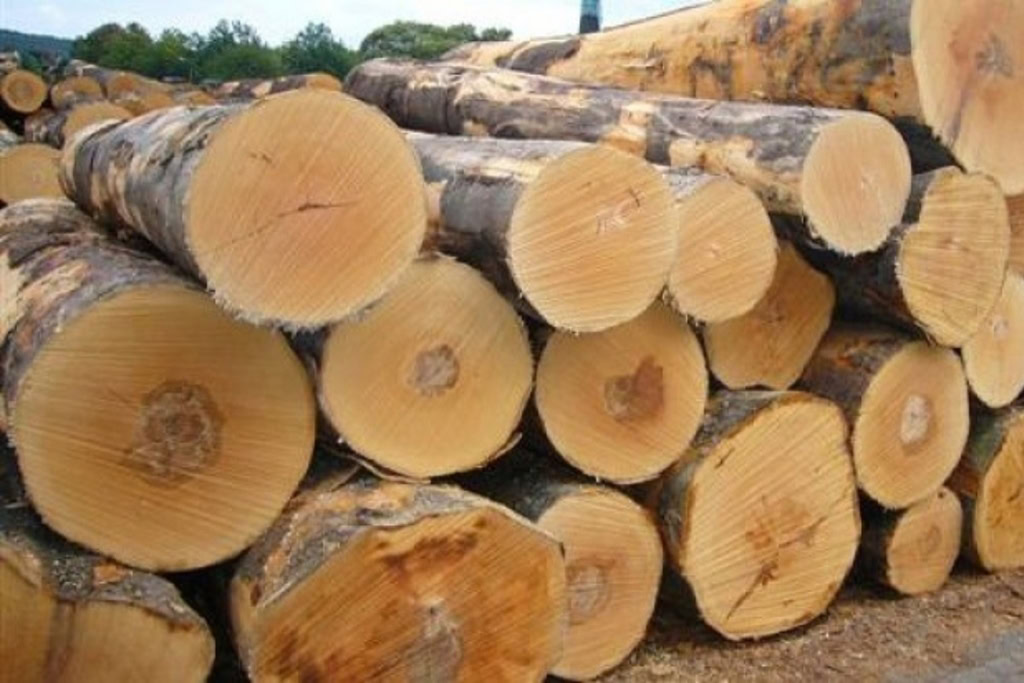
2. The two main commercial types of pine wood
On the Vietnamese market, pine timber is broadly divided into two commercial categories: finger-jointed (glued-laminated) pine board and pallet-grade pine timber. Each has distinct characteristics and is suited to different end uses.
Finger-jointed pine board
Finger-jointed pine board, also called edge-glued panel, is produced by joining dried and treated pine strips using finger-joint profiles and high-grade adhesive (commonly imported from Finland). The manufacturing process uses modern equipment that ensures dimensional stability and resistance to insects.
- Advantages: High dimensional stability, resists warping under changing humidity, competitive price compared with solid hardwood.
- Applications: Indoor furniture (tables, chairs, shelving units), interior decoration, residential and office fit-outs.
Pallet-grade pine timber
Wooden pallets are built by fastening pine boards and bearers together to form a flat platform for freight transport and storage. Among all timber species used for pallets, pine is the most common choice because of its combination of adequate strength, low weight and cost-effectiveness.
- Characteristics: Sufficient load-bearing capacity, relatively light, natural resin provides some resistance to insects.
- Applications: Industrial freight transport and logistics; pallet boards can also be upcycled into furniture, shelving and decorative items.
3. Is pine wood a good material? Pros and cons
Advantages
- Attractive appearance: Soft, natural grain with a light, warm colour tone.
- Lightweight and easy to machine: Simple to cut, shape, transport and install.
- Natural insect resistance: The resin layer present in the wood offers inherent protection against termites and borers.
- Reasonable price: Accessible for a wide range of budgets, from residential to industrial applications.
- Environmentally friendly: Pine is a fast-growing plantation species, easy to recycle and source sustainably.
Disadvantages
- Prone to surface scratching: As a relatively soft wood, it marks more easily than hardwoods under mechanical impact.
- Limited moisture resistance: Absorbs moisture readily if untreated, which can lead to swelling or warping.
- Visible knots: Dark knots are a natural feature of pine and can affect the appearance of finished surfaces.
4. Pine wood price guide
| Type | Price range (VND) | Unit |
|---|---|---|
| White pine | 3,000,000 - 6,000,000 | per m3 |
| Yellow pine | 4,000,000 - 7,000,000 | per m3 |
| Red pine | 6,000,000 - 10,000,000 | per m3 |
| Finger-jointed pine board | 200,000 - 500,000 | per m2 |
| Pallet-grade pine timber | 2,000,000 - 4,000,000 | per m3 |
Prices are indicative and vary by timber grade, moisture content, treatment and order volume. Contact ICD Vietnam for current pallet-grade pine pricing.
See also: Price of one cubic metre of pallet-grade pine
5. Common products made from pine wood
| Product | Why pine is used |
|---|---|
| Pine wood pallet | Adequate load-bearing capacity, lightweight for handling, cost-effective; can be upcycled into furniture |
| Wine cabinet | Natural grain gives a stylish finish; suits contemporary and rustic interiors |
| Bed frame | Light structure, durable enough for everyday residential use |
| Dining table | Wide range of styles, easy to maintain and refinish |
| Sauna and steam room lining | Low thermal conductivity; used in spa and home sauna installations |
| Flooring | Creates a warm, natural feel underfoot |
| Interior doors | Lightweight, easy to design and fit; takes paint and stain well |
| Shelving and decorative items | Workable for handmade, DIY and gift-box applications |
Pine wood in pallet manufacturing: why it is the preferred species
In industrial pallet production, timber selection is driven by three criteria: load-bearing performance, weight and cost per unit of strength. Pine meets all three better than most plantation species available in Vietnam.
| Criterion | Pine (pallet grade) | Typical hardwood alternative |
|---|---|---|
| Density (kg/m3) | 420 - 600 | 700 - 900 |
| Dynamic load capacity | 1,000 - 1,500 kg (standard pallet) | 1,500 - 2,000 kg |
| Cost per m3 | 2,000,000 - 4,000,000 VND | 5,000,000 - 12,000,000 VND |
| ISPM 15 treatment | Heat treatment or fumigation required for export | Same requirement |
| Insect resistance (natural) | Good - resin layer present | Varies by species |
For export pallets, pine must carry an ISPM 15 heat-treatment (HT) or methyl-bromide fumigation (MB) mark to comply with international phytosanitary regulations. ICD Vietnam supplies ISPM 15 certified pine pallets.
Related articles
| Price of one cubic metre of pallet-grade pine | Does pine wood get termites? 4 prevention methods | How heavy is one cubic metre of pine wood in kg? |
1. What wood group does pine belong to in Vietnam’s timber classification?
Pine is classified as Group IV in Vietnam’s national timber classification table - a commercially abundant, workable softwood suitable for furniture and pallet manufacturing but not classified as a protected hardwood species.
2. Does pine wood resist water well?
Not naturally. Untreated pine absorbs moisture relatively quickly, which can cause swelling, warping or surface staining. Applying a waterproof sealant, oil or lacquer significantly improves moisture resistance for both indoor furniture and outdoor applications.
3. Can pine wood be used outdoors?
Yes, provided it has been properly treated. Pressure-impregnated pine (CCA or equivalent treatment) is widely used for outdoor decking, fencing and garden furniture. Untreated pine outdoors will degrade within one to two seasons.
4. Does pine wood get termites or borers?
Pine has a natural resin layer that offers some resistance to termites and wood-boring insects. However, in high-humidity tropical conditions, additional preventive treatment is recommended. For pallets used in export, ISPM 15 heat treatment eliminates insect risk entirely.
5. Which wood species is most commonly used in pallet manufacturing?
Pine is the industry’s first choice for wooden pallets because it combines adequate load-bearing strength with low weight and a lower cost per cubic metre than most hardwood alternatives. For standard loads up to 1,500 kg dynamic, pallet-grade pine meets the specification without the cost premium of hardwood.
Contact ICD Vietnam
Hotline: 0983 797 186 / 090 345 9186 / 090 5859 186
Email: sales@icdvietnam.com.vn | Zalo: Chat Zalo