
Mục lục
- Key points summary
- 1. Pre-shift inspection
- 2. Operating a stand-up electric forklift
- 3. Operating a sit-down electric forklift
- 4. Safe load handling rules
- 5. Key rules for driving in a warehouse
- 6. Parking and end-of-shift procedure
- 7. Battery protection: the 80/20 charging rule
- Optimal travel speed by floor surface
- Eco mode vs Power mode: when to use each
- Related articles
- Contact ICD Vietnam
Skipping the pre-shift inspection causes 30% of warehouse forklift accidents. This guide walks through every step of safe electric forklift operation - from the five-minute pre-shift check to the correct end-of-shift shutdown - so your operator can handle Xilin electric forklifts confidently and without incident.
Key points summary
- A pre-shift safety check is mandatory before every shift to eliminate hidden technical risks.
- Stand-up forklifts require coordinated use of the safety pedal under the left foot and the joystick.
- Sit-down forklifts handle similarly to an automatic car but respond more sharply, especially when cornering.
- The golden rule for load handling: keep the load pressed back against the carriage and travel at the lowest safe height to prevent tipping.
- Always end the shift by parking in the designated area, lowering the forks flat, and checking battery level.
1. Pre-shift inspection
Spending five minutes on a walk-around check lets you take control of the machine and catch faults early.
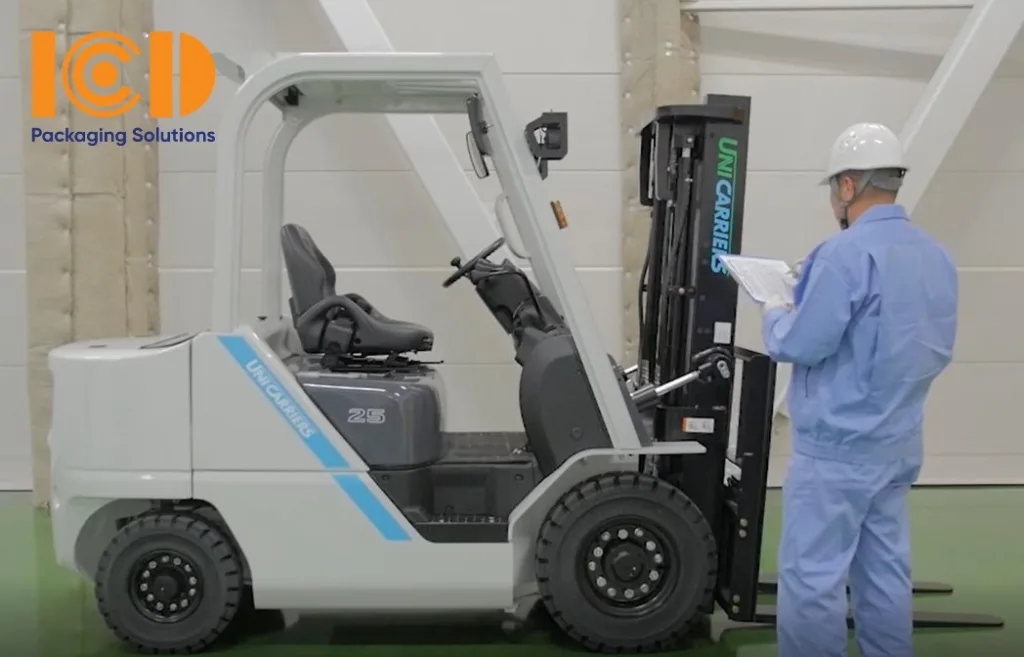
Start with a visual walk-around. Check tyres for cracks, damage, or embedded debris. Inspect the lift chains to confirm they are properly lubricated and not slack. Look under the machine for hydraulic oil leaks - the hydraulic system is the heart of all lifting and lowering movement.
For the electrical system, confirm the battery connector is firmly seated with no signs of scorching. Read the charge indicator to verify the battery is fully charged before the shift starts. Test the horn, flashing beacon, and mirrors - these are your primary communication tools in a busy warehouse. Finally, clear the operator compartment of any objects that could jam the accelerator or brake pedal.
2. Operating a stand-up electric forklift
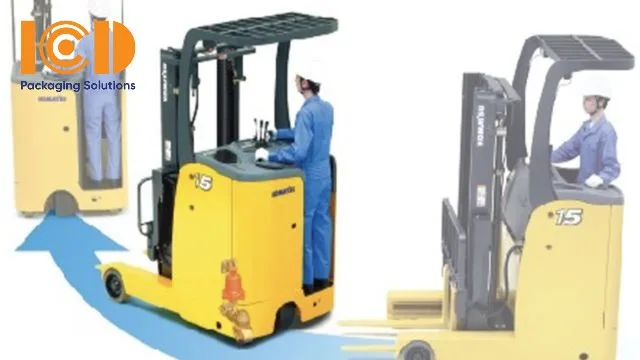
Stand-up electric forklifts are the preferred choice for narrow-aisle warehouses because of their tight turning radius.
To start: turn the key and step fully into the compartment. The most important feature is the safety pedal under your left foot. If you lift your foot off that pedal, all controls are immediately cut off - a safety mechanism that ensures the operator is always in position before the machine moves.
To travel, use the joystick: push forward to drive ahead, pull back to reverse. Travel speed is proportional to how far you move the joystick. Important note for new operators: the steering wheel is at the rear of a stand-up forklift, so when you turn, the tail of the machine swings in the opposite direction. Always allow clearance behind the truck when turning near racking.
Lift and lower controls are integrated on the joystick or on side levers. When picking from high racking, use the reach function to extend the forks into the pallet precisely, then retract the mast close to the body before travelling so the centre of gravity stays stable.
3. Operating a sit-down electric forklift
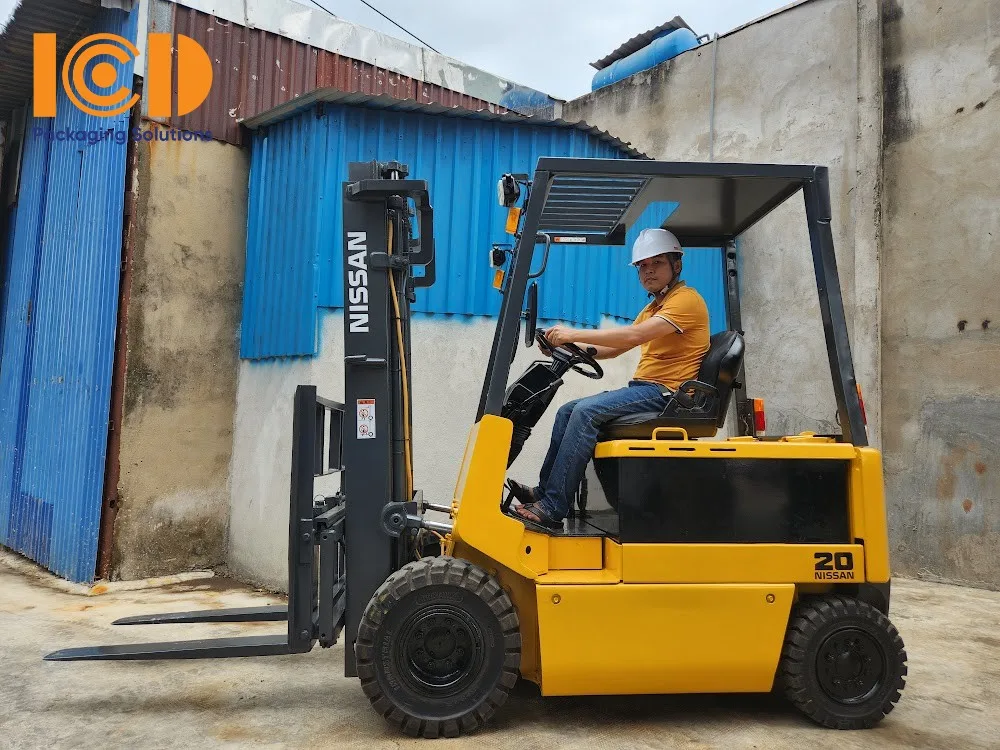
Sit-down electric forklifts offer greater operator comfort during long shifts and can handle heavier rated loads.
Before starting: adjust the seat so your feet reach both the brake and accelerator comfortably, and always fasten the lap belt. Before turning the key, confirm the direction selector is in neutral and the parking brake is engaged.
Driving a sit-down forklift feels similar to an automatic car: steer with the wheel, accelerate with the right foot pedal. However, the steering system is very sensitive - a small movement of the wheel produces a sharp direction change. Practise at slow speed before carrying loads to build confidence with the response.
The hydraulic system on sit-down models typically uses three separate levers:
- First lever - raises and lowers the forks.
- Second lever - tilts the mast. Always tilt the mast back when carrying a load so the load cannot slide forward.
- Third lever - side-shift: moves the forks left or right without reversing the truck, which saves time when aligning to a pallet.
4. Safe load handling rules
Preventing tip-over is the top priority when working with an electric forklift. The centre of gravity shifts continuously with load height and weight.
Always position the load as far back against the carriage as possible so the load centre stays close to the truck’s centre of gravity. Never carry a load on the tips of the forks - this unbalances the truck and risks fork failure. Check the load capacity plate on the truck and never exceed the rated capacity.
When travelling with a load, lower the forks to 15-20 cm above the floor and tilt the mast back. If the load is tall enough to block your forward view, the mandatory rule is to travel in reverse so you can see your path and protect people around you.
5. Key rules for driving in a warehouse
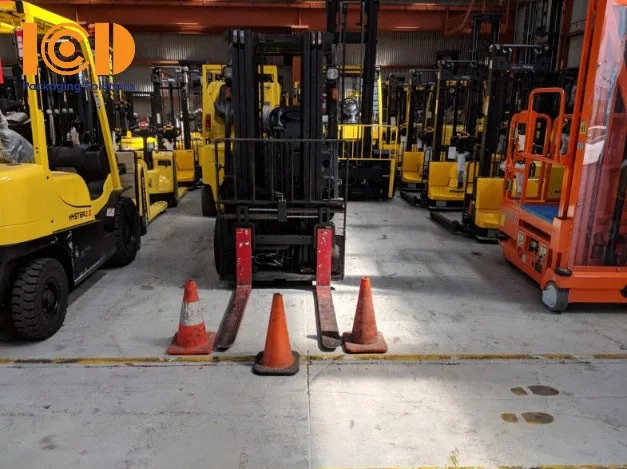
Warehouse environments have heavy pedestrian traffic and limited space, so speed management is critical. Always slow down at corners and doorways. Use the horn as your primary communication tool - sound it before entering blind corners or intersections to alert people in your path.
When working on ramps, follow this non-negotiable rule: always keep the load facing uphill. That means driving forward going up and reversing going down. This stops the load from pitching forward and prevents the truck from tipping nose-down. Never turn the truck sideways on a ramp.
6. Parking and end-of-shift procedure
A correct end-of-shift shutdown protects the machine and leaves it ready for the next operator. Park on a level surface away from main aisles and away from fire equipment.
Before leaving the cab, lower the forks flat to the floor so no one can trip over raised forks. Apply the parking brake firmly, return the direction selector to neutral, and turn the key off completely. Finally, check the battery level. If it is below 30%, take the truck to the charging station immediately - deep discharging shortens battery life significantly.
7. Battery protection: the 80/20 charging rule
Top search results often say “only unplug when fully charged” - this is correct for lithium but wrong for lead-acid. The correct rule depends on battery type:
- Lead-acid battery: charge only when capacity drops to 20-30%, charge to 100%, and rest at least 2 hours before the next shift. Shallow charging (above 50%) causes premature degradation within 6-12 months.
- Lithium LFP battery: opposite rule - do not charge to 100%. The 20-80% range is optimal. Short top-up charges during breaks are better than one full charge at end of shift.
- Both types: avoid discharging below 10%. When the 20% alarm sounds, bring the truck to the charger immediately.
Optimal travel speed by floor surface
| Floor surface | Optimal speed (km/h) | Reason |
|---|---|---|
| New epoxy floor (clean, high friction) | 5-7 | Safe, no sliding |
| Old concrete (worn, dusty) | 3-5 | Dust reduces friction; braking is less sharp |
| Wet epoxy floor | 2-3 | Friction coefficient drops 70%; truck can slide 2 m braking from 5 km/h |
| Concrete with oil spill | 1-2 or STOP | More slippery than water; clean immediately |
| Industrial rubber floor | 4-6 | Good friction but wears PU tyres faster |
Eco mode vs Power mode: when to use each
- Eco mode (speed and acceleration reduced 30%): use for long unloaded runs over 50 m, or loads below 30% of rated capacity. Saves 20-25% battery per shift.
- Power mode: use when lifting loads above 70% of rated capacity or crossing ramps steeper than 2 degrees. Battery consumption is 1.4x Eco mode, but the truck does not slow unexpectedly under heavy load.
- Common mistake: leaving Power mode on all shift shortens battery life by 25%. Set Eco as the default and switch to Power only when needed.
Related articles
| Xilin electric forklifts - full product range | Forklift knowledge hub | ICD Vietnam - material handling solutions |
1. How often should an electric forklift be serviced?
Monthly: check hydraulic oil and lubricate wheel axles. Every 3 months: change oil and inspect seals. Every 6 months: full inspection. ICD provides free inspection during the warranty period.
2. Do operators need a certificate to drive an electric forklift?
Hand pallet trucks do not require certification. Counterbalanced sit-down electric forklifts with a rated capacity above 1 tonne require an operator certificate under Circular 36/2019/TT-BLDTBXH.
3. What does ICD Vietnam offer beyond the forklift itself?
ICD is the authorised distributor of Xilin (Ningbo Ruyi) forklifts in Vietnam, with a 2-year manufacturer warranty, 24/7 technical support, free delivery within Hanoi and Ho Chi Minh City, and free on-site demos at your warehouse.
Contact ICD Vietnam
Hotline: 0983 797 186 / 090 345 9186 / 090 5859 186
Email: sales@icdvietnam.com.vn | Zalo: Chat Zalo