Table of Contents
- 1. The three lever positions decide lift, travel and lower
- 2. The hand pallet truck will not lift
- 3. The hand pallet truck will not lower
- 4. Bleeding the air and adjusting the valve step by step
- 5. Hydraulic oil and routine maintenance
- 6. When to stop doing it yourself and call a technician
- Frequently asked questions
- Contact ICD Vietnam
- References
Reviewed and updated by ICD - Week 43/2026
A hand pallet truck that will not lift or will not lower is usually suffering from low oil, air in the pump assembly, a damaged lever chain or release latch, a jammed valve, or a worn piston seal. Check in order from the easiest job: is the lever in the right position, bleed the air by holding the lever in the lower position and pumping about 10 times, check the lever chain, adjust the valve screw, look at the oil level, and replace the valve or seals only when the earlier steps do not work.
This article applies to hand-pumped low-profile hand pallet trucks and high-lift hand pallet trucks, because they share the same pump and valve mechanism. Electric forklifts have an electrical circuit and a controller, so the diagnosis differs; that is covered in a separate article on electric forklifts that will not lift or lower. The steps below cross-check the documents of two hand pallet truck manufacturers and the Xilin hand pallet truck manual, with the basis for each step stated.
1. The three lever positions decide lift, travel and lower
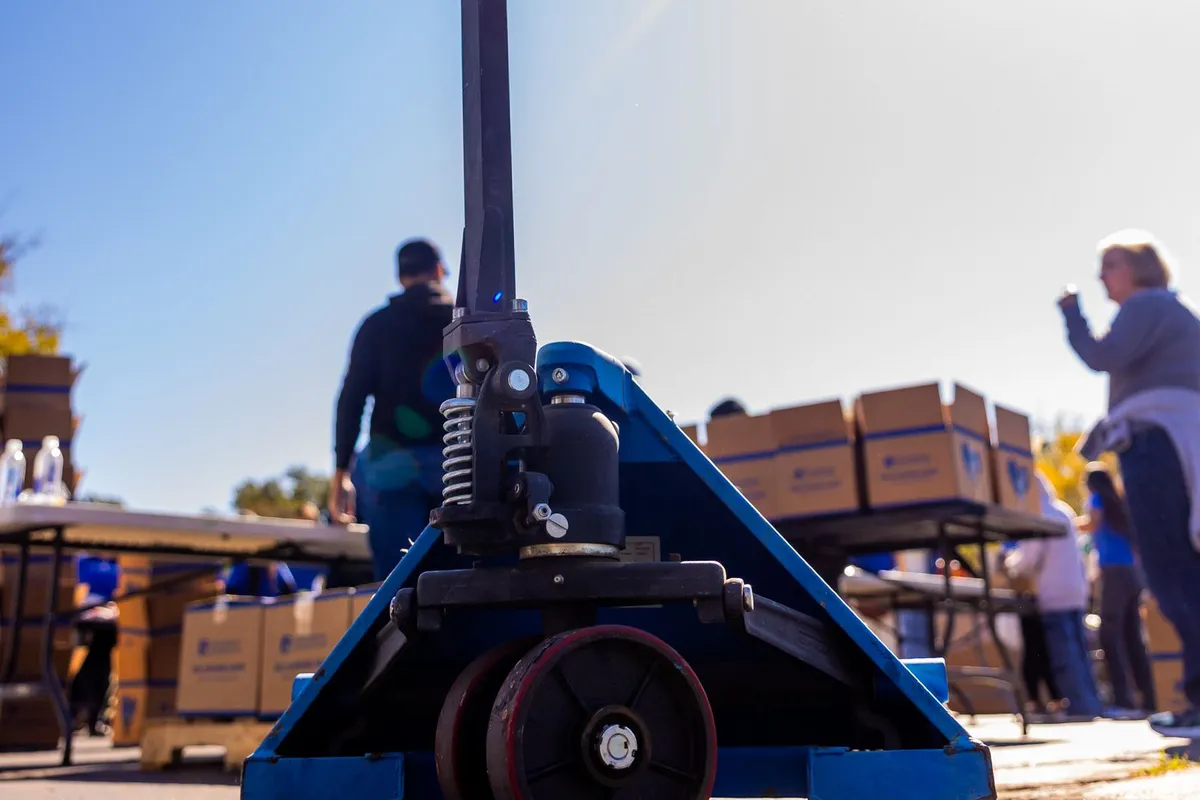
Before taking anything apart, check which position the lever (latch) is in. Hand pallet truck manuals describe three positions: lift, neutral and lower. In the lift position, pressing the handle up and down pumps oil into the cylinder and the forks rise. The neutral position is used when pulling the truck with a load: the lifting mechanism is released from hydraulic resistance, so the handle becomes lighter, but the forks hold their height. Pulling the lever up is the lower position, and the lever is spring-loaded so it returns to neutral when released.
So when you pump and the forks do not rise, the first job is to move the lever to the correct lift position and pump again. For a truck that lowers slowly, also pull the lever firmly rather than holding it halfway. Most “the truck is broken” confusion at this step is simply a lever stuck in the neutral position or knocked out of place by a collision.
2. The hand pallet truck will not lift
When you pump by hand and the forks stay put or rise very slowly, the Sugiyasu (Bishamon) manual lists the main causes as low hydraulic oil, a jammed pressure pin, a damaged valve spring and a faulty steel ball seat. The matching remedies are to add oil, take apart and inspect or replace the pressure pin, replace the valve spring and treat the ball seat. The same manual gives two further signs: needing too many strokes to rise comes from a deteriorated U packing, while lifting light loads but not heavy ones is usually caused by a rough ball seat surface or a damaged steel ball.
The CGH23/25 manual gives a step-by-step check, starting with bleeding the air. Hold the lever in the lower position and pump about 10 times to push air out of the system. If the forks still do not rise, check that the lever chain sits correctly on its shaft, check that the marks printed on the handle and on the pump body line up, and then adjust the valve. If that is still not effective, replace the valve assembly. Note that this is the procedure for one specific model; a Xilin truck is similar in principle, but the positions of screws and nuts may differ, so check the guide supplied with your truck.
| Symptom | Common causes | Remedy per the manufacturer’s documents |
|---|---|---|
| Will not lift | Low oil, air, jammed pressure pin, damaged valve spring or ball | Add oil, bleed air, clean or replace the damaged part, replace the valve assembly |
| Needs very many strokes to rise | Deteriorated U packing | Replace the seal |
| Lifts light loads, not heavy ones | Rough ball seat or damaged steel ball | Treat the ball seat surface, replace the ball |
| Will not lower | Lever chain broken or chain shaft rotating, valve jammed | Replace the chain, hold the shaft firmly with a screw, replace the valve assembly |
| Lifts but sinks gradually | Worn piston seal, leak at the piston or piston body | Replace the piston seal and the leaking seals |
3. The hand pallet truck will not lower
The CGH23/25 manual gives two steps for a truck that will not lower. The first is to check the lever chain: if it is broken, replace it, and the shaft that holds the chain must be fixed in place with a screw. If this shaft turns by itself during pumping, the chain will be damaged. When the chain is good and the forks still will not lower, the cause lies in the valve assembly, which must be replaced. Before replacing it, still try adjusting the valve screw as the model guide describes, because in many cases a readjustment is all that is needed.

4. Bleeding the air and adjusting the valve step by step
These two operations solve most light cases and need no replacement parts. Do them with no load on the forks, on level ground.
- Bleed the air: move the lever to the lower position, hold it there and pump the handle about 10 times. The aim is to push out air that has entered the system, per the CGH23/25 manual.
- Test the lift: move the lever to the lift position, pump and watch the forks. If the forks have risen, go to the next step; if not, check the lever chain and the marks on the handle and pump body.
- Adjust the valve: loosen the lock nut, turn the adjusting screw anticlockwise and try lifting. Once the forks rise, lift to the highest point, hold the lever in the lower position and turn the screw clockwise until the forks begin to lower, then tighten the lock nut (as described in the CGH23/25 manual; the turning direction may differ on other models).
- Recheck all three positions: lift, travel (neutral) and lower. If it still does not work, only then move on to replacing the valve assembly or the seals.
Do not adjust the valve repeatedly or turn it too far. A wrongly adjusted valve makes the forks lower the moment you take your hand off the lever or never hold their height. If after two adjustments it is still not right, stop and hand it to a technician.
5. Hydraulic oil and routine maintenance
The Xilin hand pallet truck manual specifies grade 46# anti-wear hydraulic oil (ISO VG 46) and an oil level check every three months; the CGH23/25 manual also sets a three-month schedule for checking oil and greasing joints, pins, axles and the steering wheel housing with good grease. Use exactly the oil grade the manufacturer states and do not mix others. Oil that is too thin lets the forks sink and oil that is too thick makes the pump heavy; that is a judgement from principle, and the exact specification always comes from the truck’s manual.
How to add oil differs by model. On the CGH23/25, undo the three screws holding the pump cover and lift the cover to fill. On a Xilin truck, follow the guide supplied with it. Remove all load, stand the truck upright and add just enough to reach the specified level; overfilling makes oil spill out and can make the lever work incorrectly. After filling, pump a few times to release air and then test lifting and lowering.
Hand pallet trucks have no separate oil filter, contrary to what many online articles say; debris sits in the oil and on the valve seat itself, so when the oil is black or full of particles, change the oil and clean the valve assembly rather than “cleaning the filter”.
6. When to stop doing it yourself and call a technician
Bleeding the air, checking the oil, moving the lever to the right position and a light adjustment of the valve screw are jobs an operator can do. Replacing the valve assembly, replacing the piston seal or taking the cylinder assembly apart needs special tools and clean oil. OSHA 1910.178(q)(1) requires that an unsafe truck be taken out of service and that all repairs be made by authorised personnel. On a hand pallet truck carrying a heavy load, a wrong repair can let the forks drop.
ICD Vietnam distributes genuine Xilin hand pallet trucks with a 12-month warranty, and also repairs forklifts, rents forklifts and supports instalment purchases. When you need support, send the truck model, the symptoms and the steps you tried in section 4. See also the forklifts supplied by ICD Vietnam, or take a look at the ICD BF-III 2.5-tonne low-profile hand pallet truck for heavy pulling in the warehouse.
Frequently asked questions
1. Why will a hand pallet truck not pump up?
Usually low oil, air in the pump assembly, a lever or lever chain in the wrong position, a valve or ball jammed with debris, or a worn seal. Move the lever to the correct lift position, bleed the air by pumping about 10 times with the lever held in the lower position, and then check the oil level.
2. What can I do when a hand pallet truck will not lower?
Check whether the lever chain is broken and whether the chain shaft is held by its screw. If the chain is good and the forks still will not lower, suspect a jammed or faulty valve assembly. Do not stand under the load while dealing with it.
3. What oil should I use in a hand pallet truck?
According to the Xilin hand pallet truck manual, use grade 46# anti-wear hydraulic oil. Check the oil level every three months and follow the manual supplied with the truck.
4. Where do I look when an electric forklift will not lift?
An electric truck adds an electrical circuit, a battery and a controller. The diagnosis is in a separate article on electric forklifts that will not lift or lower, in the same forklift section of ICD Vietnam.
5. What policies does ICD Vietnam have for hand pallet trucks?
ICD Vietnam distributes Xilin (Ningbo Ruyi) hand pallet trucks with a 12-month warranty, repairs forklifts, rents forklifts and supports instalment purchases. Delivery terms and technical support are confirmed when you order.
Contact ICD Vietnam
Hotline: 0983 797 186 | 090 345 9186 | 090 5859 186
Zalo: icdvietnam | Email: sales@icdvietnam.com.vn
Delivery within Hanoi and Ho Chi Minh City takes 1-3 working days under ICD Vietnam’s shipping policy.
References
- Cause and remedy table for will not lift, many strokes, cannot lift heavy loads: Sugiyasu (Bishamon), Hand Pallet Truck BM40/BM50 Operation and Service Manual, Rev.1 20.09.
- Three lever positions, bleeding with 10 strokes, valve adjustment, seal replacement, 3-month inspection schedule: Pallet Truck CGH23/25 Operator, Parts and Service Manual OPM-708.
- 46# anti-wear oil, oil level check every 3 months: Xilin hand pallet truck manual (Ningbo Ruyi).
- A faulty truck must be taken out of service, repairs by authorised personnel: OSHA 29 CFR 1910.178(q)(1).
- Written by Le Van Thang of ICD Vietnam; ICD Vietnam has operated since 2011 and distributes Xilin forklifts. Updated October 2026.