Table of Contents
- 1. When to charge an electric forklift battery
- 2. Preparing a safe charging area
- 3. Step-by-step standard procedure for charging an electric forklift
- 4. Common mistakes when charging an electric forklift
- 5. Battery maintenance to extend life
- Equalising charge to level the cells
- 6. Lead-acid batteries compared with lithium-ion packs
- 7. Xilin electric forklifts and services at ICD Vietnam
- Frequently asked questions
- Contact us for electric forklift advice
- References
Reviewed and updated by ICD - Week 43/2026
Charging an electric forklift correctly means sending it for charging before the battery is discharged beyond 80% of its capacity, charging in one go until the charger cuts off by itself, topping up with distilled water after a full charge (for lead-acid batteries) and letting the battery cool before working. The charging area must be ventilated because lead-acid batteries give off hydrogen when charging. Lithium packs are different: no water topping up, and they can be opportunity-charged during breaks.
Overcharging, letting the battery run flat and charging in short bursts at the wrong time are the three habits that age a battery fast. This article gives a technically sound charging procedure based on the documents of the truck and battery manufacturers, so the battery of your electric forklift lasts longer.
Summary of the main points
- The right time to charge is before the battery is discharged beyond 80% of its capacity; never let it run down to 0%.
- Standard charging procedure: check that the plates are still covered with electrolyte, open the battery compartment cover to let gas escape, charge fully in one go, and top up with distilled water after charging.
- The charging area must be well ventilated to avoid a build-up of hydrogen gas, which can cause fire or explosion.
- A common mistake is charging in short bursts of a few tens of minutes: every opportunity charge takes away part of the cycle life of a lead-acid battery.
- Tell apart the charging procedure for lead-acid batteries (which need maintenance) and lithium packs (no water topping up, opportunity charging possible).
1. When to charge an electric forklift battery
Charge when about 20% of capacity is left, meaning the battery has discharged about 80%, or as soon as the low-battery warning light comes on. The timing of charging directly decides how long the plates inside the battery last.
Do not discharge beyond 80%: The EnerSys traction battery manual states that the daily discharge should not exceed 80% of capacity; deeper discharge sulphates the plates and gradually destroys their ability to store energy. Many electric forklifts have a light or a bar to indicate low battery, and some trucks cut off lifting when the battery is low to protect it. The Xilin CQDH electric truck manual also notes that you should not keep working once the battery is flat.
Charge right after the working shift: After a day of work the battery needs charging to recover. Do not leave the truck in a low state of charge overnight or over the weekend: EnerSys warns that a battery left partially discharged for a long time develops residual sulphation on the plates, reducing performance and life.
Avoid charging in short bursts: Unlike a mobile phone, a forklift lead-acid battery has a limited number of charge and discharge cycles. Guidance Note GN68 of the UK Materials Handling Association (UKMHA) stresses that opportunity charging is not a free benefit: every top-up charge takes away part of the battery’s cycle life and makes it run hotter. Only use opportunity charging when the charger and the battery are designed for it.
2. Preparing a safe charging area
The charging area must be dry, well ventilated, equipped with fire-fighting means and free of naked flames. It is not just a place to plug in but an area with fire, explosion and chemical risks.
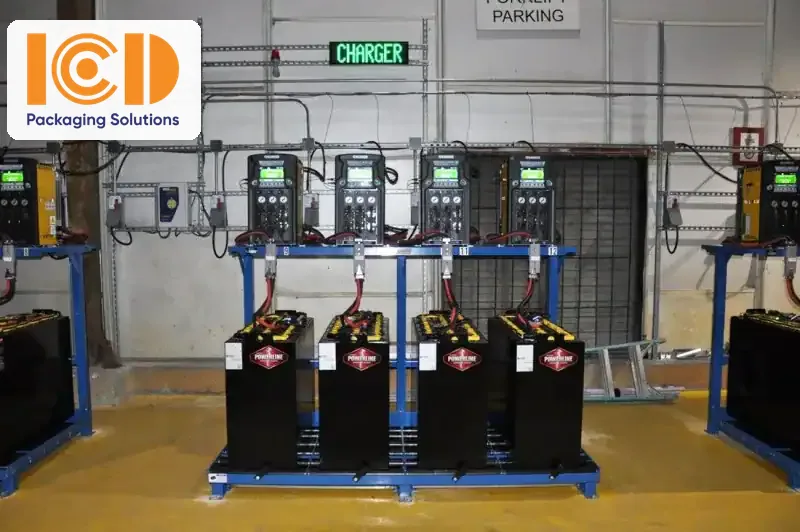
As for location, the charging station must be dry and raised to avoid flooding or dampness that can cause short circuits. Keep it away from heat sources, welding and cutting areas and places in direct sunlight.
A ventilation system is mandatory. While charging, lead-acid batteries undergo electrolysis that releases hydrogen. This gas is colourless and odourless but highly explosive when it accumulates at high concentration in a closed space. The US Occupational Safety and Health Administration (OSHA) rule 29 CFR 1910.178(g) on battery charging areas requires facilities for flushing and neutralising spilled electrolyte, fire protection, protection of charging equipment from damage by trucks, adequate ventilation to disperse fumes, and a ban on smoking and on flames and sparks in the charging area.
The input power must be stable and match the voltage on the charger’s label: the small chargers of electric pallet trucks usually run on single-phase power, while high-capacity chargers may need three-phase. Fluctuating voltage makes the charger cut in and out, harming both the charger’s circuit board and the battery. In addition, keep an ABC powder fire extinguisher near the charging area to deal with electrical incidents promptly.
3. Step-by-step standard procedure for charging an electric forklift
The procedure has six steps, from stopping the truck to closing the battery cover after charging. The difference from many popular guides is that distilled water is added after charging, not before.
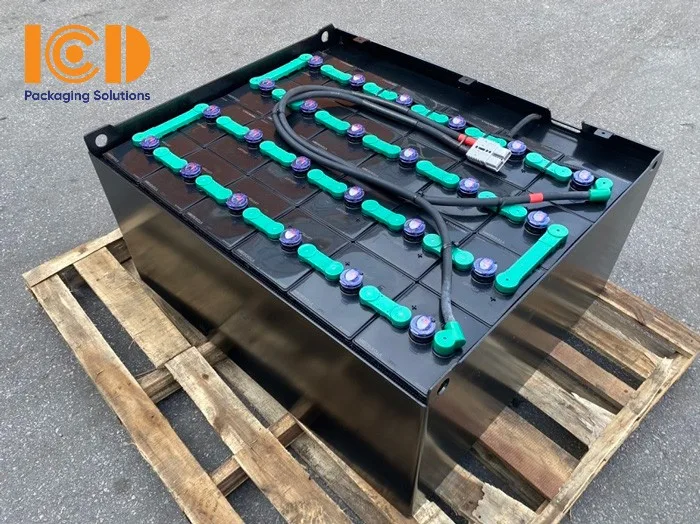
Step 1: Switch off and apply the parking brake. The truck must come to a complete stop on level ground, with the forks lowered to the floor and the key switch fully off so no current is drawn through the truck while charging.
Step 2: Open the battery cover. On a stand-on or sit-down electric truck with a lead-acid battery, open the battery compartment cover or the top cover so gas can escape easily and the battery does not overheat.
Step 3: Check the electrolyte, but do not top up yet. Before charging, open a few cell caps to see whether the plates are still covered. Only if the tops of the plates or the separators are exposed, add just enough to cover the plates. Save the full topping up until after charging, because the electrolyte level rises during charging; filling to the top beforehand makes acid overflow.
Step 4: Connect the charger. Plug the charging connector into the battery connector first, and only then switch on the charger; when disconnecting, switch off the charger first and then pull the connector to avoid sparks. Check the connector ends for looseness, scorching or dust. The indicator light on the charger shows that current is flowing in.
Step 5: Charge until full. Charging time depends on the battery capacity and the charger; according to UKMHA guidance GN68, traction battery chargers are usually designed to recharge a battery discharged by 80% in 6, 8 or 12 hours, matching the shift pattern. An automatic charger cuts off by itself when the battery is full, and you should not unplug it midway.
Step 6: After a full charge. Only now top up with distilled water to the level specified by the battery maker (EnerSys and UKMHA both advise topping up just after charging, when the electrolyte level is at its highest). Let the battery cool before working; Xilin notes that the electrolyte temperature while charging should not exceed 45°C. Close the cell caps tightly and wipe the battery top dry if any electrolyte has splashed, to prevent leakage current.
In short, distilled water is topped up fully only after charging, when the electrolyte level is at its highest; before charging add only if the plates are exposed, and do not top up while the truck is working.
4. Common mistakes when charging an electric forklift
The four mistakes below are the most common, with their consequences and remedies according to the battery and truck manufacturers’ documents.
| Mistake | Consequence | Remedy |
|---|---|---|
| Charging only when the battery is flat at 0% | Deep discharge sulphates the plates, the battery loses capacity and fails sooner | Charge before it discharges beyond 80%, i.e. with about 20% left |
| Opportunity charging (charging in short bursts) | Every top-up charge takes away part of the cycle life and the battery runs hotter | Once you charge, charge until the charger cuts off by itself |
| Not checking the water, topping up at the wrong time or using water that does not meet the standard | Exposed plates are damaged; topping up before charging easily overflows acid; impurities in the water harm the plates | Use distilled water of the right standard and top up after a full charge |
| Charging in a hot, closed place | The battery overheats, hydrogen accumulates and there is a risk of fire or explosion | Charge in an open place and keep the electrolyte below 45°C |
On water for topping up, guidance GN68 refers to British Standard BS 4974 on the purity of water used in lead-acid batteries; the safest approach is to use distilled or special deionised water, not filtered or spring water.
5. Battery maintenance to extend life
Battery maintenance comes down to three main jobs: keep the electrolyte level, keep the battery top and terminals clean, and carry out an equalising charge periodically. The exact frequency should follow the battery maker’s guidance supplied with the truck.
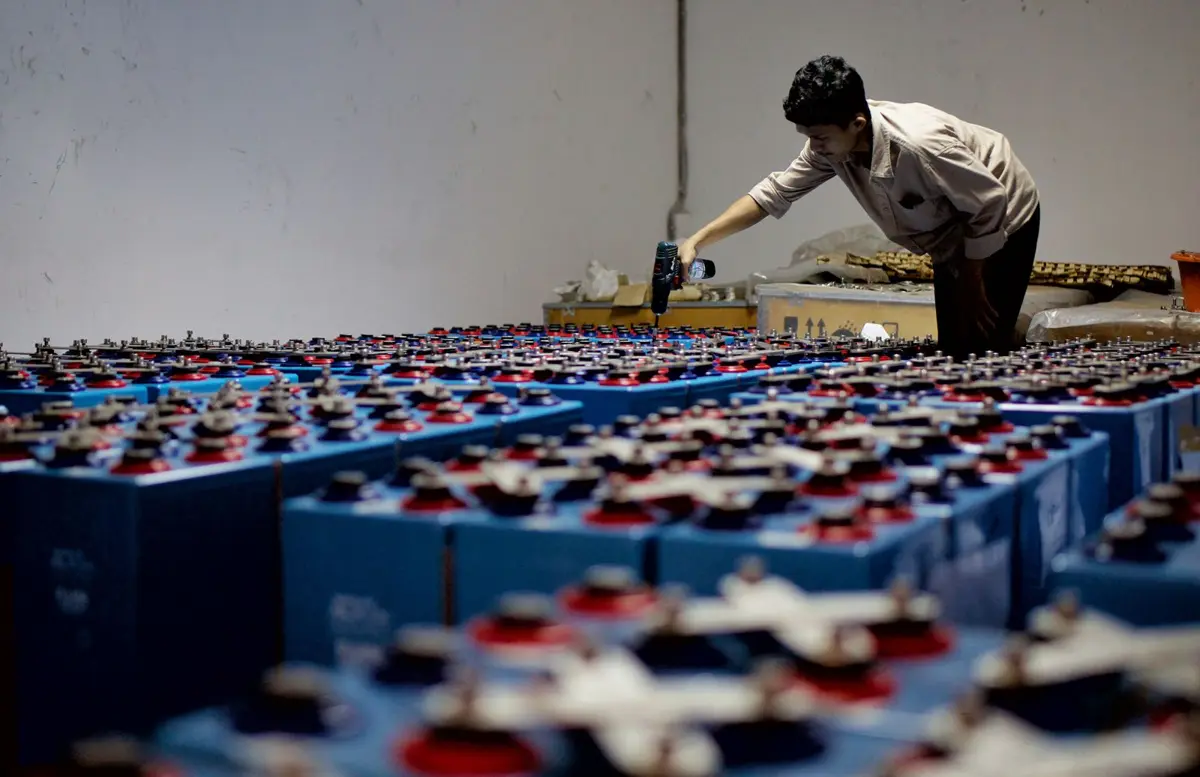
Check the electrolyte level: This is the most important job. EnerSys says the real watering need ranges from weekly to quarterly depending on duty, battery temperature and battery design; the right practice is to check often, top up after charging and use only special distilled water.
Clean the battery top and terminals: Terminals often oxidise and form a white salt layer that obstructs current and heats the cable ends. Clean with a special neutralising solution, dry, tighten and apply a thin layer of anti-corrosion grease.
Check the electrolyte specific gravity: Use a hydrometer to measure acid concentration after a full charge. The Xilin CQDH electric truck manual specifies a specific gravity of 1.24 at 25°C when fully charged for tropical regions, lower than the level commonly found in documents from temperate countries. Once the duty pattern is stable, EnerSys recommends measuring specific gravity every quarter; a persistently low reading means the battery is degrading or the charger has a problem.
Equalising charge to level the cells
An equalising charge is a deliberate extra charge after the normal charge that brings all cells to the same state of charge and reduces residual sulphation on the plates. Many popular charging guides only say to plug in overnight and skip this step.
- Frequency: EnerSys recommends a weekly equalising charge for batteries charged on an 8-hour cycle, and says every traction battery must be brought to the specific gravity on its label at least once a week.
- Sign that equalising is needed: The East Penn service manual says that if the specific gravity of any two cells differs by more than 0.020, an equalising charge should be done.
- How to do it: An automatic charger usually has an equalise mode that runs after the normal charge; with an 8-hour charge cycle, the EnerSys charging data sheet lists an equalising time of about 3 hours. If the charger has no such function, ask the battery maker how to carry it out.
An equalising charge produces more gas than a normal charge, so it is all the more necessary to do it in a ventilated charging area with the battery compartment open. Once equalising is finished is a good time to check and top up with distilled water.
6. Lead-acid batteries compared with lithium-ion packs
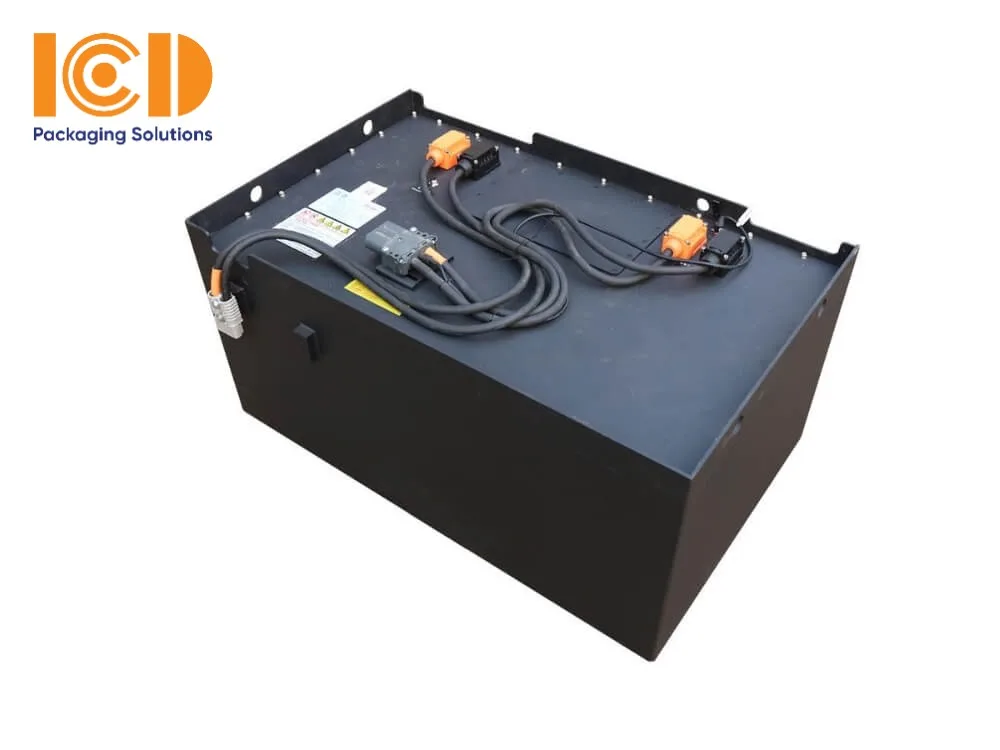
The battery type decides the charging routine of the whole warehouse: lead-acid needs long charging, water topping up and a ventilated charging area; lithium can be opportunity-charged and needs almost no water maintenance.
| Criteria | Lead-acid battery | Lithium pack |
|---|---|---|
| Topping up distilled water | Yes, after a full charge | No |
| Opportunity charging between shifts | Limited, shortens cycle life | Allowed |
| Gas produced while charging | Hydrogen, needs ventilation | No gas to deal with as with lead-acid |
| Equalising charge | Periodic | Not needed, the battery management system balances itself |
| Example, Xilin CBD15W-E | 24V/65Ah weighing 36 kg or 24V/105Ah weighing 49 kg | 24V/50Ah, 24V/20A charger |
| Operating temperature | Electrolyte no higher than 45°C while charging | -10 to 45°C (CBD15W-LiX) |
Lead-acid batteries cost less, the technology is common and easy to repair, but they charge slowly, need water topping up and give off gas while charging; they suit single-shift warehouses charged overnight. Lithium packs charge faster, can be opportunity-charged at any time and need no water maintenance, but the initial investment is higher; they suit warehouses working multiple shifts continuously. For the lithium version of the CBD15W-E, a 24V/50Ah pack with a 24V/20A charger, a simple capacity-divided-by-current calculation gives about 2.5 hours from empty to full, not counting the slow-charge stage at the end of the cycle. If the truck is stored for a long time, the CBD15W-LiX manual advises one charge and discharge every 3 months.
7. Xilin electric forklifts and services at ICD Vietnam
ICD Vietnam distributes genuine Xilin electric forklifts from the Ningbo Ruyi group; each model comes with a battery or lithium pack and a charger to the manufacturer’s specification, with a 12-month warranty. Besides selling trucks, ICD Vietnam also repairs forklifts, rents forklifts and supports instalment purchases. When you need advice on choosing a truck or checking a weak battery, send the truck model and the voltage and capacity of the battery you use to get a specific proposal.
See a related product: ICD EPT20 low-profile electric pallet truck in the electric forklift range supplied by ICD Vietnam.
Frequently asked questions
1. How should an electric forklift be maintained regularly?
Check daily before the shift (mast, forks, chains, hydraulics, electrics, horn, brakes) and check the battery electrolyte level. For longer intervals, follow the manufacturer’s manual: the Xilin CQDH electric truck manual calls for an electrical check every 3 months and a change of HL-N46 or HL-N68 hydraulic oil after 12 months.
2. At what battery percentage should I charge an electric forklift?
For a lead-acid battery, charge before it discharges beyond 80%, i.e. with about 20% left, as EnerSys recommends, and never let it run flat. A lithium pack can be opportunity-charged at any time; on the Xilin CBD15W-LiX, a red light (10-40%) is the time to send the truck for charging.
3. Add distilled water before or after charging?
After a full charge. Before charging only check, and if the plates are exposed add a little to cover them. The electrolyte level rises during charging, and filling to the top beforehand easily makes acid overflow.
4. Does operating an electric forklift require a certificate?
Yes for electric forklifts with a capacity of 1,000 kg or more. Powered forklifts with a lifting capacity of 1,000 kg or more are on the list under Circular 36/2019/TT-BLDTBXH dated 30 December 2019; operating this type of truck is work with strict requirements under Circular 06/2020/TT-BLDTBXH, and drivers must receive safety training under Decree 44/2016/ND-CP (amended by Decree 04/2023/ND-CP). Hand pallet trucks pulled and pushed by human strength are not on this list.
5. What policies does ICD Vietnam have for forklifts?
ICD Vietnam distributes Xilin (Ningbo Ruyi) forklifts in Vietnam with a 12-month warranty. Delivery terms and technical support are confirmed when you order.
Contact us for electric forklift advice
Hotline: 0983 797 186 | 090 345 9186 | 090 5859 186
Zalo: icdvietnam | Email: sales@icdvietnam.com.vn
Delivery within Hanoi and Ho Chi Minh City takes 1-3 working days under ICD Vietnam’s shipping policy.
References
- 80% discharge, topping up after charging, weekly equalising, quarterly specific gravity: EnerSys, Ironclad Superhog Owner’s Manual.
- Opportunity charging shortens cycle life, topping up after charging, BS 4974: UKMHA, Guidance Note GN68 Lead Acid Traction.
- Specific gravity difference of 0.020 between cells: East Penn Manufacturing, Industrial Battery Service Manual.
- Battery charging area requirements: OSHA 29 CFR 1910.178(g).
- Specific gravity 1.24 at 25°C, no operation when flat, maintenance schedule: Xilin CQDH electric truck operating manual; charging temperature of 45°C: Ningbo Ruyi (Xilin), Common sense of the use of electric stacker.
- CBD15W-E and CBD15W-LiX batteries: Ningbo Ruyi (Xilin), Electric Walkie Pallet Truck; CBD15W-LiX manual.
- Circular 36/2019/TT-BLDTBXH dated 30 December 2019; Circular 06/2020/TT-BLDTBXH dated 20 August 2020; Decree 44/2016/ND-CP, amended by Decree 04/2023/ND-CP.