Table of Contents
- 1. Identify the symptom before taking anything apart
- 2. Group 1: power supply, switch and fuse faults
- 3. Group 2: control and safety switch faults
- 4. Group 3: hydraulic faults when the motor still runs
- 5. Forks rise but will not lower
- 6. A six-step check before calling a technician
- 7. When to stop doing it yourself
- Frequently asked questions
- Contact ICD Vietnam
- References
Reviewed and updated by ICD - Week 43/2026
An electric forklift that will not lift or lower usually falls into one of three groups: weak power supply or a blown fuse, switches and control circuits blocking the command, or hydraulics that are low on oil, contaminated, or have a failed pump or jammed valve. Check from the outside in: the battery and power switch, the error code on the display, the oil level, and only then the motor and pump. Most simple faults sit in the first two steps on an electric forklift.
The article cross-checks the troubleshooting tables and error code tables in the Xilin manuals against the general principles of electric forklifts. Each truck series has its own manual and code table, so when an error code is displayed, the manual supplied with the truck is always the final authority. Wherever something is technical reasoning and not manufacturer data, the article says so.
1. Identify the symptom before taking anything apart
Identifying the symptom correctly narrows the causes from the start. The four situations below are the most common, and each points to a different group of causes.
| Symptom | Suspect first | Check first |
|---|---|---|
| Truck will not power up, lights off, neither drives nor lifts | Power switch, emergency stop button, flat battery, fuse | Key, emergency stop button, battery indicator, fuse |
| Truck still drives but the forks stay put when you press lift, no motor sound | Battery weak under load, lift switch, contactor, lift motor | Battery indicator and error code, click of the contactor |
| Pump motor is heard running but the forks do not rise | Hydraulics: low oil, contaminated oil, failed pump | Oil level, oil colour, leaks around the cylinder |
| Forks rise but will not lower | Lowering valve not adjusted correctly or jammed | Manual lowering valve adjusting screw, power supply to the solenoid valve (if fitted) |
The second symptom often misleads users. A truck that still drives means the main power is present, but it does not prove the battery is healthy: the lift motor is a heavy load and draws more current when lifting a load. This is technical reasoning from principle, not manufacturer data, and it explains why the battery must be checked first.
2. Group 1: power supply, switch and fuse faults
The troubleshooting table in the Xilin CBD15W-LiX manual lists four causes of the motor not working: the power switch not turned on, the battery completely flat, the brake not released and a blown fuse. The matching remedies are to insert the key and switch on, charge the battery, check whether the travel switch on the tiller has been pressed by a knock or the brake switch has been reset, and replace the fuse.
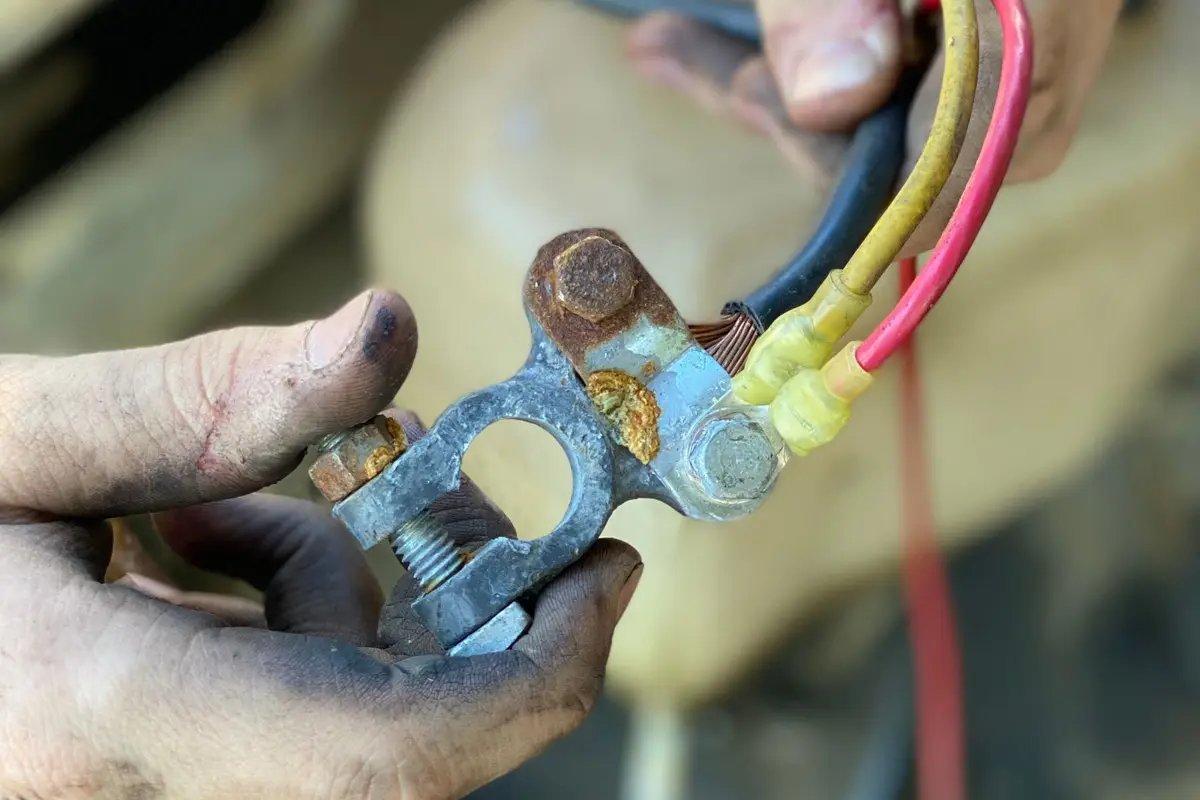
For a lead-acid battery, also check the terminals. An oxidised terminal or loose clamp raises contact resistance, so the voltage drops sharply when you press lift even though the battery still has charge. Clean, tighten and measure again. When measuring with a multimeter, measure while pressing lift, not at rest, because only under load does a weak battery show. The Xilin manual gives no specific voltage threshold for this situation; the figure “below 20V on a 24V truck” seen in many guides has no manufacturer source, so this article does not use it.
The Xilin controller also reports battery level with lights and codes. According to the CBD15W-LiX manual, a steady green light means 70 - 100% left, yellow 40 - 70%, red 10 - 40%, and a flashing red light means nearly empty. Code 31 reports slightly low battery voltage, codes 41 and 42 warn that 20% and 15% of capacity remain, and code 16 reports battery voltage too low. When you see these codes, charge fully before trying to lift again.
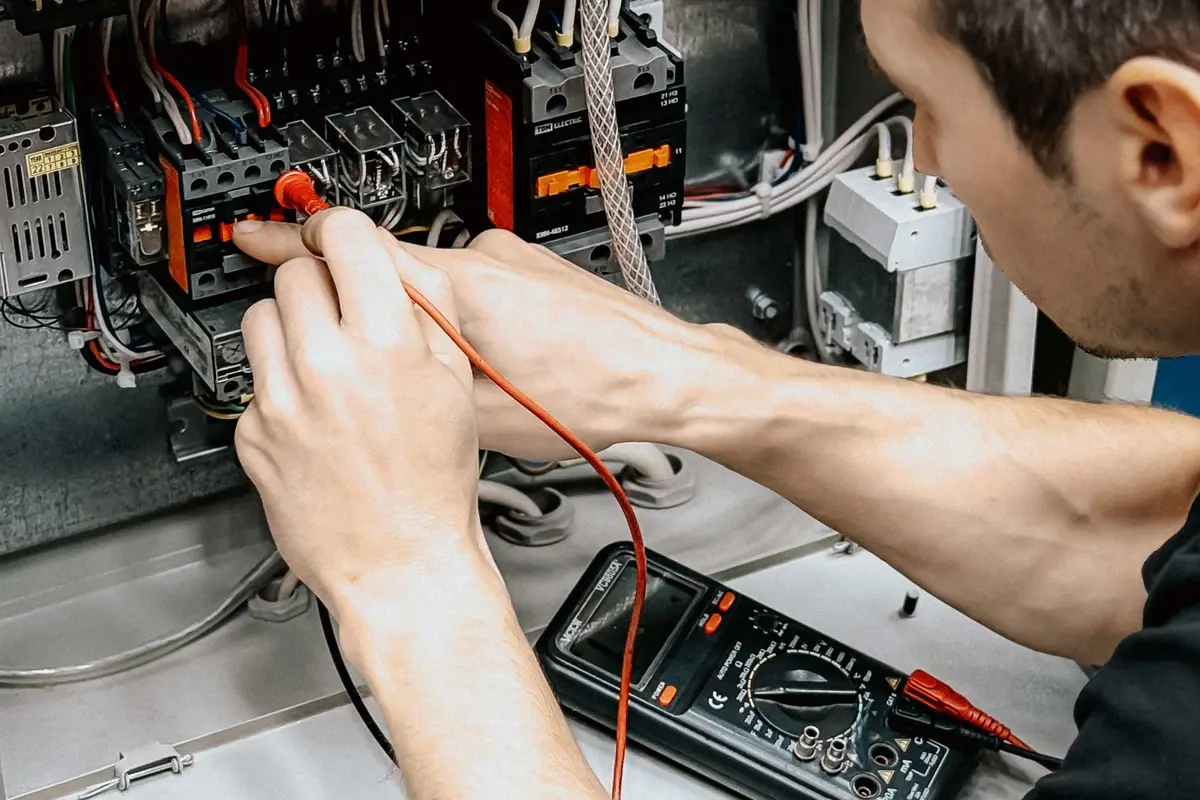
Under OSHA 29 CFR 1910.178(q)(4), a truck that needs electrical repair must have its battery disconnected before work. Pull the battery connector and cut the power before measuring on the circuit or touching the motor. If a freshly replaced fuse blows again, it signals a short circuit or an overloaded motor, and you should not keep fitting a larger fuse.
3. Group 2: control and safety switch faults
Newer electric forklifts have many switches and sensors that block the lift command when conditions are not met. On a low-profile truck these are the switch on the tiller, the emergency stop button and the emergency reverse button; the Xilin CBD20W-II LI manual also describes overload protection when lifting and a travel switch at maximum height. Stand-on and sit-down trucks add seat, pedal and handle sensors, depending on the make. If one signal does not return to its proper position, the controller will not allow lifting.
The controller error code table on the Xilin CBD15W-LiX shows exactly this logic. Code 40 is an operation sequence error: after a reset, the key signals are not in their initial position (throttle, direction switch, lift and lower, safety switch, emergency switch), and the warning clears itself when the signals return to their home position. So before suspecting a failed board, release all buttons, return the tiller to its parking position and switch off and on again.
| Code | Meaning per the Xilin CBD15W-LiX manual | Manufacturer’s remedy |
|---|---|---|
| 16 | Battery voltage too low | Check the battery level; or the voltage level set in the controller is wrong |
| 31 | Battery voltage slightly low | Charge as soon as possible |
| 20 | Abnormal throttle or brake signal | Check the connection between the throttle and the controller (short or open circuit), check whether the throttle is faulty |
| 40 | Operation sequence error after reset | Return the switches to their initial position; the warning clears itself |
| 26 | Lost connection between modules (CAN) | Check the connection of each module and the working state of the module |
| 14, 24 | Main contact or contactor control circuit fault | Internal controller fault, contact the manufacturer |
| 1, 2, 25 | Excess feedback speed, multiplication error, power module failure | Controller faulty, contact the manufacturer |
The table above applies only to the controller of the Xilin CBD15W-LiX. Other Xilin series, or other makes, have their own code tables, so do not look up codes in one general table found online. Codes that lead to “contact the manufacturer” are the moment to stop self-repair: the board and power module require special tools and software.
4. Group 3: hydraulic faults when the motor still runs
Hearing the pump motor run steadily while the forks do not rise is the clearest sign of a hydraulic fault. The troubleshooting table of the Xilin CBD15W-LiX lists three causes for a truck that will not lift: oil that is too thick or not yet filled, contaminants in the oil, and a failed hydraulic power unit. The remedies are respectively to change the oil, remove the contaminants or change the oil, and replace the hydraulic power unit.
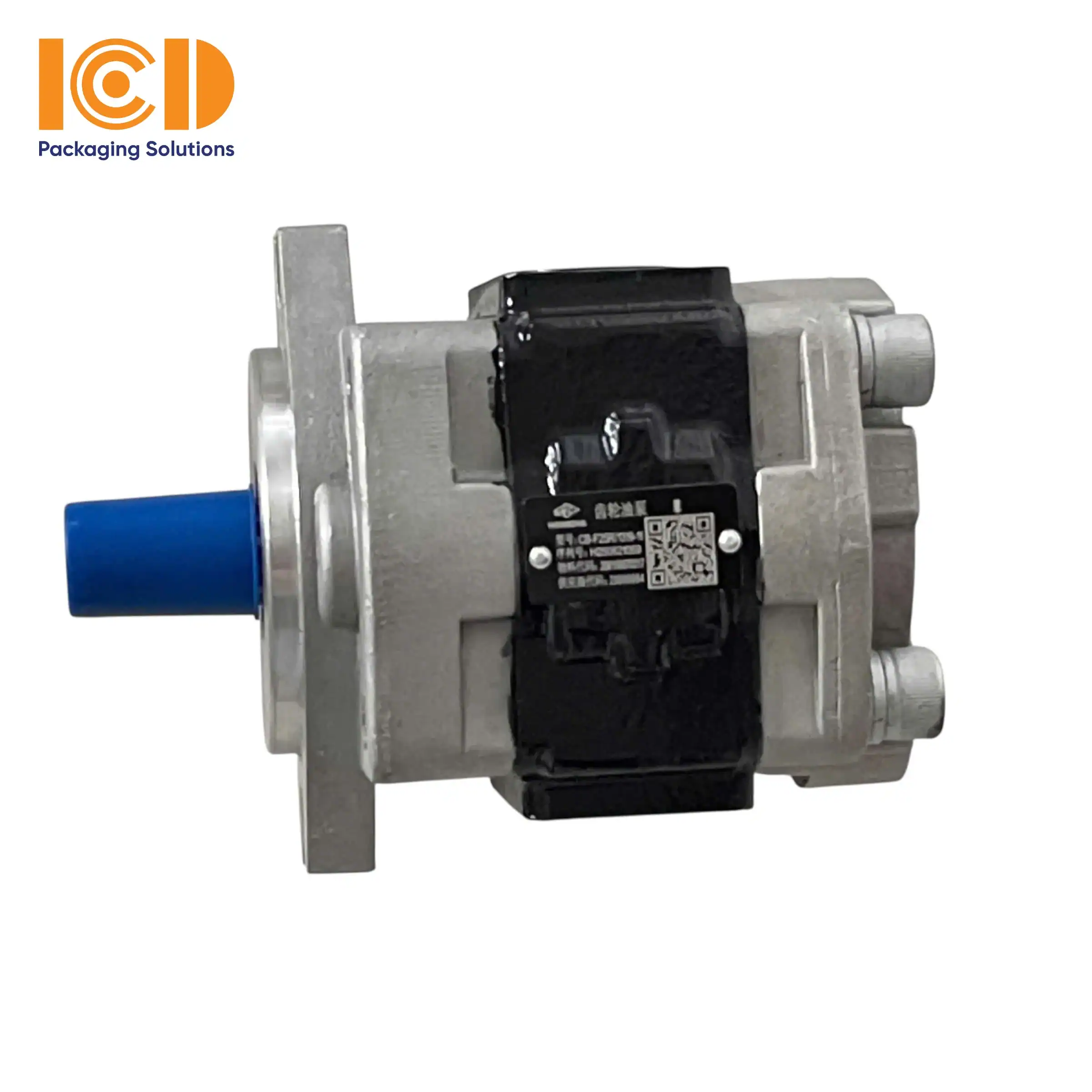
Checking in the right order avoids taking the pump apart unnecessarily. First look at the oil level: the Xilin manual says to remove the screw at the filler hole with a No. 5 hex key, add 250 ml of oil to the CBD15W-LiX pump, raise and lower the hand lever two to three times, raise the forks to the highest point and then tighten the screw, replacing the washer if damaged. Next look at the oil colour: oil that is cloudy as if it contains water, or thick and black and full of particles, calls for an oil change and cleaning. Oil grade and capacity differ by model, so follow the manual of your own truck. The hydraulic oil change interval in the Xilin CQDH manual is 12 months, using HL-N46 or HL-N68 oil.
Oil leaking around the cylinder or the fittings is another sign. The Xilin manual attributes leaks to a damaged seal, slightly worn part surfaces or a loose fitting, and the remedy is to replace the seal, replace the damaged part and retighten the fitting. When oil slips past a seal, pressure cannot be held, so the lifting force weakens and then disappears. If the pump whines, and the forks rise slowly and jerkily, the pump may be worn or drawing in air; this is a diagnosis from symptoms, and only a technician measuring pressure can conclude with certainty.
5. Forks rise but will not lower
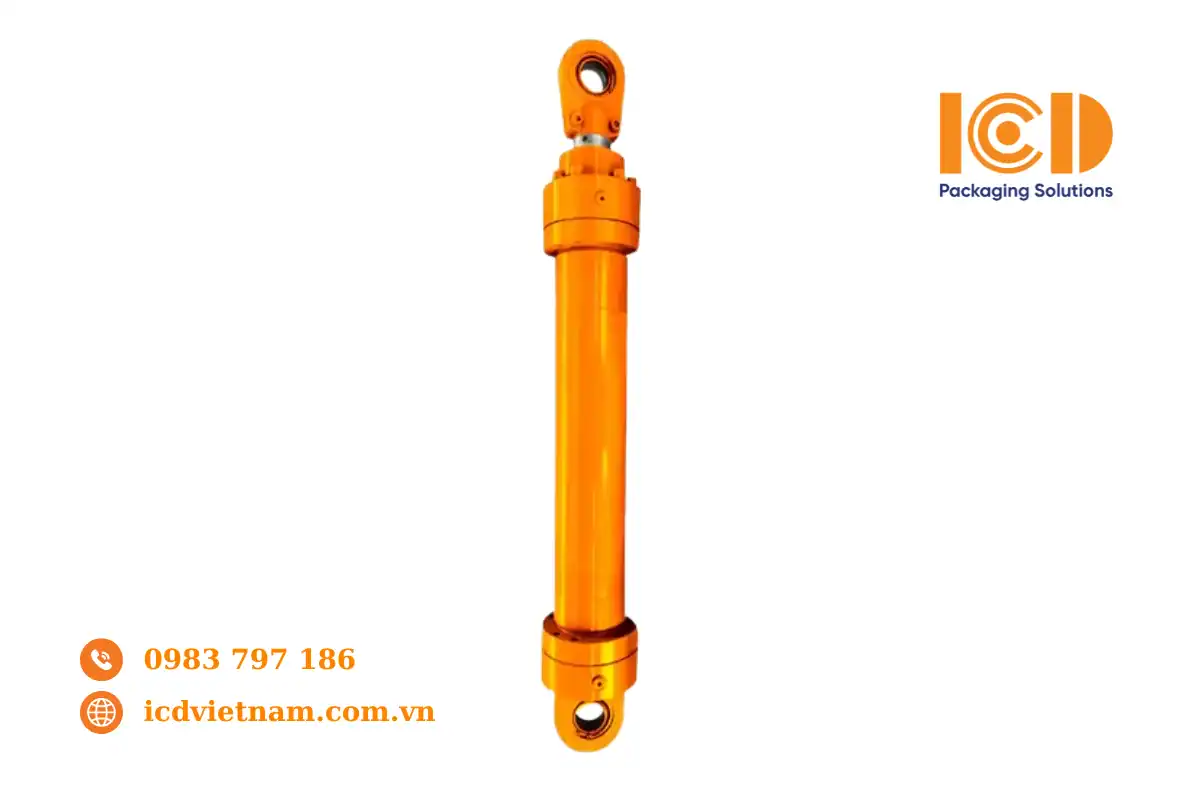
Forks that have risen and will not lower are a more dangerous situation when there is a load up high. The Xilin CBD15W-LiX manual gives the cause as the manual lowering valve not being adjusted correctly, and the remedy is to adjust the position of the lowering valve screw. On trucks with a solenoid release valve (common on stand-on and sit-down trucks), a valve jammed by debris or a burnt coil also makes the lower command fail; this is reasoning from the operating principle and not an item in the Xilin CBD15W-LiX manual, because this series uses a manual lowering valve.
6. A six-step check before calling a technician
The six steps below go from the least laborious job to the one that needs expertise. Follow the order and note the result of each step so that you have exact information when you call a technician.
- Stop the truck safely: lower the forks to the lowest if they will lower, apply the brake, switch off the key and press the emergency stop.
- Read the battery light and the error code: note the code being displayed and look it up in the code table in the manual for your exact truck model.
- Check the power: battery connector, terminals, fuse, emergency stop button, travel switch on the tiller.
- Measure the battery voltage while pressing lift if you have a multimeter and someone skilled in electrics; if not, skip this step.
- Check the hydraulic oil: oil level, oil colour, and leaks around the cylinder, the fittings and the cylinder neck.
- Listen: the click of the contactor and the sound of the pump motor. A click with a silent motor points to the motor or its brushes; a motor that turns while the forks stay put takes you back to the hydraulic group.
The Xilin CBD15W-LiX manual also stresses regular inspection: daily, keep surfaces clean and check the power cable for damage; weekly, check the moving parts, the fasteners, oil leaks, abnormal wear and any heating or sparking in the electrical equipment. A truck inspected regularly rarely loses its lifting function suddenly.
7. When to stop doing it yourself
Adding oil, tightening a connector, wiping the terminals and returning switches to their initial position are jobs an operator can do. Anything involving the control board, pump, cylinder or valves should be left to a qualified person: OSHA 1910.178(q)(1) requires that an unsafe truck be taken out of service and that all repairs be made by authorised personnel. A small wiring error on the control circuit can destroy an expensive board or cause a short circuit and fire.
ICD Vietnam distributes genuine Xilin electric forklifts with a 12-month warranty, and also repairs forklifts, rents forklifts and supports instalment purchases. When you need support, send the truck model, the error code being displayed and the symptoms you noted in section 6. See a related product: ICD EPT20 low-profile electric pallet truck in the electric forklift range supplied by ICD Vietnam.
Frequently asked questions
1. An electric forklift still drives but will not lift: what is the fault?
Usually a battery that is weak under load, a switch or fuse in the lift circuit, or the hydraulics. Listen to the pump motor: if it is silent, check the power, fuses and switches; if the motor turns but the forks stay put, check the oil level, oil colour and leaks around the cylinder.
2. The forks rise but will not lower: how do I handle it?
On a Xilin low-profile pallet truck, check the adjusting screw of the manual lowering valve per the manual. On a truck with a solenoid release valve, suspect a jammed valve or a failed coil. Do not stand under the forks, do not hammer the cylinder, cut the power and call a technician.
3. The electric forklift will not charge its battery?
The Xilin CBD15W-LiX manual gives the cause of a battery that will not charge as a failed charger, and the remedy is to replace the charger. Also check the socket, charging cable and fuse, do not charge at temperatures below 0 degrees C, and stop charging at once if the battery gets abnormally hot, as the manufacturer advises.
4. Why can’t a hand pallet truck lift?
Usually low hydraulic oil, a worn piston seal or a release valve that does not seal. This article is about electric trucks; a manual hand pallet truck has its own pump assembly and its own remedies.
5. What policies does ICD Vietnam have for forklifts?
ICD Vietnam distributes Xilin (Ningbo Ruyi) electric forklifts with a 12-month warranty, repairs forklifts, rents forklifts and supports instalment purchases. Delivery terms and technical support are confirmed when you order.
Contact ICD Vietnam
Hotline: 0983 797 186 | 090 345 9186 | 090 5859 186
Zalo: icdvietnam | Email: sales@icdvietnam.com.vn
Delivery within Hanoi and Ho Chi Minh City takes 1-3 working days under ICD Vietnam’s shipping policy.
References
- Troubleshooting table, error code table, battery lights, adding hydraulic oil, inspection schedule: Ningbo Ruyi (Xilin), CBD15W-LiX Operation Manual and Parts List.
- Overload protection when lifting, travel switch: Xilin Electric Pallet Truck CBD20W-II LI User Manual.
- 12-month hydraulic oil change interval, HL-N46 or HL-N68 oil: Xilin CQDH electric truck operating manual.
- A faulty truck must be taken out of service, disconnect the battery for electrical repairs, daily inspection: OSHA 29 CFR 1910.178(p)(1), (q)(1), (q)(4), (q)(7).
- Written by Le Van Thang of ICD Vietnam; ICD Vietnam has operated since 2011 and distributes Xilin forklifts. Updated October 2026.