Table of Contents
- 1. General construction: the main parts of a self-propelled electric forklift
- 2. Construction compared: walkie, stand-on and high-lift trucks
- 3. The flow of energy from the battery to the motor
- 4. DC motors compared with AC motors on electric forklifts
- 5. Battery specifications by Xilin model
- 6. Detailed maintenance schedule by part
- 7. Important technical terms
- Conclusion: understanding the construction is the basis of efficient maintenance and operation
- Frequently asked questions
- 1. How many motors does a Xilin self-propelled electric forklift have?
- 2. How do I maintain a lead-acid battery to extend its life?
- 3. How does the solenoid valve in a forklift hydraulic system work?
- 4. Why must the controller be protected against water?
- 5. What is the encoder sensor on an electric forklift for?
- 6. Can a Xilin controller be repaired?
- 7. Does an electric forklift need drying after washing?
- 8. Can an old DC motor be upgraded to AC?
- 9. Can the lithium battery of a Xilin forklift be used on another truck?
- 10. Can an electric forklift work outdoors or in cold environments?
- Contact us for Xilin electric forklift advice
- References
Reviewed and updated by ICD - Week 43/2026
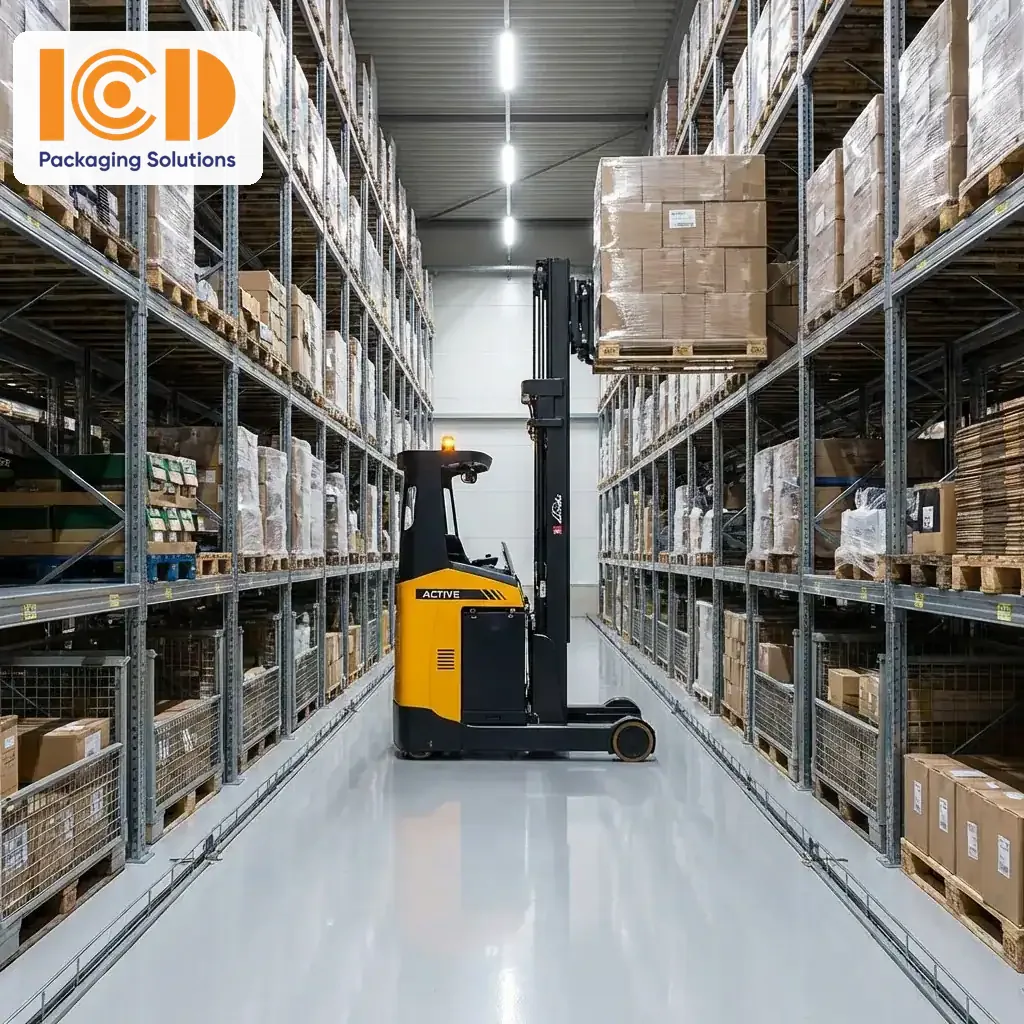
A self-propelled electric forklift (driven by its own electric motor, not a hand-pushed truck) has three main blocks: the energy block (a battery or lithium pack with its charger), the drive and control block (traction motor, controller, electromagnetic brake, wheels) and the lifting block (pump motor, hydraulic pump and valves, cylinders, mast, chains, forks). On Xilin trucks these three blocks appear in every series from walkie electric pallet trucks to reach trucks, differing only in voltage, battery capacity and lift height.
Summary: A Xilin self-propelled electric forklift (CBD/CDD/ES) has more than 10 main parts: mast, traction motor, battery, electric controller, solenoid valves, brake system, wheels, counterweight, sensors and encoder. This article walks through the function of each part, the flow of electricity from the battery to the motor, the difference between brushed motors and AC motors, the battery specifications of each Xilin model on sale, and a maintenance schedule taken from the manufacturer’s manuals.
To maintain it well, operate it safely and keep costs down, you need to understand how each part works. An electric forklift is not just a mechanical machine but a combination of electrical, hydraulic and mechanical systems. This article takes you inside a Xilin electric forklift, from the battery to the controller and from the traction motor to the solenoid valves.
1. General construction: the main parts of a self-propelled electric forklift
Each part does its own job and depends on the others: the battery supplies power, the controller distributes it on the driver’s command, two motors turn electricity into movement, and the hydraulic system and mast turn the pump motor’s rotation into lifting force. The table below summarises the function of each part and what to check.
| Part | Function | What to look for when inspecting |
|---|---|---|
| Mast | Guides the carriage and forks up and down; made of 2 or 3 nested stages | Rollers, sliding channels, cracks at welds |
| Traction motor | Drives the wheels forward and in reverse | Unusual noises, temperature, carbon brushes (DC motors) |
| Hydraulic pump motor | Spins the pump to create oil pressure for lifting and lowering | Groaning while lifting, oil leaks at the pump |
| Battery or lithium pack | Powers the whole truck | Capacity, battery terminals, electrolyte level (lead-acid) |
| Controller | Regulates motor speed and traction according to the driver’s command | Error codes on the display, connectors, moisture |
| Solenoid valves and contactors | Close and break the main circuit and the lift circuit, and reverse direction | Burnt contacts, abnormally hot coils |
| Electromagnetic brake | Brakes the truck automatically when power is lost or the handle is released | Braking bite, brake disc clearance |
| Wheels | Carry the load and steer the direction of travel | Wear, cracks, foreign objects stuck in PU wheels |
| Sensors and encoder | Report speed and position to the controller | Loose signal wires, jerky driving |
| Counterweight | Balances the front load and prevents tipping | Counterweight mounting bolts |
| Hydraulic system (pump, valves, hoses, cylinders) | Carries oil to lift, lower and tilt the mast | Oil leaks, oil level, swollen hoses |
Two load-bearing parts need checking every day: the forks and the lift chains. The Vietnamese-language forklift operator training material of Japan’s Ministry of Health, Labour and Welfare states that forks must have a static strength safety factor of at least 3 and lift chains a safety factor of at least 5, and that the chains on both sides must be adjusted to the same tension so the forks rise and fall level. Wear, bending or rust from long use gradually erodes this safety margin.
On a battery-powered counterbalance sit-down truck, the same material says there are usually three separate motors: the traction motor, the hydraulic pump motor for lifting and the motor for the power steering. Walkie trucks and small stand-on trucks usually have only the traction motor and the pump motor.
2. Construction compared: walkie, stand-on and high-lift trucks
Xilin electric trucks differ mainly in operator position, lift height and battery size. The table below follows the models ICD Vietnam currently distributes; the battery figures follow the product pages, and for other specifications of each model you should read the data sheet supplied with the truck.
| Truck type | Xilin model | Operator position | Battery | Notable construction points |
|---|---|---|---|---|
| Walkie electric pallet truck | CBD15W-E | Walks behind | 24V/65Ah lead-acid (24V/105Ah and 24V/50Ah lithium versions available) | Low lift, 110 mm travel, only lifts the pallet off the floor |
| Lithium electric pallet truck | CBD15W-Lix | Walks behind | 48V/20Ah lithium, weighs 9.7 kg | Brushless motor, regenerative electromagnetic brake |
| Semi-electric stacker | CDD10BIII | Walks, pushed by hand | 12V/120Ah | The motor only lifts; travel is by human strength |
| High-lift electric stacker | CDD15RE, CDD12RE, CDDK12 | Walkie or stands on a platform | 24V/105Ah to 24V/120Ah | Multi-stage mast for racking |
| AC motor electric stacker | CDDR15III | Walkie or stands on a platform | 24V/120Ah | AC motor, regenerative braking, lift limit switch |
| Full-electric stacker | ES15-15ES | Walkie or stands on a platform | 24V/125Ah | Both travel and lifting are electric |
| Stand-on electric pallet truck | CBD20R-II, CBD20SR | Stands on a platform | 24V/210Ah, 24V/240Ah | CBD20R-II uses a brushless AC motor |
| Reach truck | CQDH18C | Stands in the operator compartment | 36V/700Ah | Retractable mast to pick loads from high racks |
Looking down the battery column you can see a pattern: the more a truck has to travel and the higher it lifts, the larger the battery capacity. Walkie trucks need only a few tens of Ah, stand-on trucks go above 200Ah, and reach trucks for high-rack warehouses use 36V/700Ah batteries. A bigger battery is also heavier, and on a counterbalance truck the battery mass helps act as the counterweight that keeps it stable.
3. The flow of energy from the battery to the motor
Electricity goes from the battery through the controller and only then to the motor; it is not wired straight through. This lets the driver make light movements on the handle or pedal while the controller decides how much current reaches the motor. A working cycle looks like this:
- Turn on the key: the main contactor closes and the battery powers the controller.
- The driver moves the handle or presses the accelerator: the controller reads the signal and gradually raises the current to the traction motor, so the truck moves smoothly instead of jerking.
- The encoder on the motor reports actual speed back to the controller to hold speed steady under heavy load or going downhill.
- The driver presses the lift button: the pump motor spins, the pump pushes oil through the solenoid valve into the lift cylinder, and the mast and forks rise.
- Press the lower button: the valve opens the return path to the tank and the forks descend under their own weight, with a throttle valve for slow lowering.
- Release the handle or lose power: the electromagnetic brake closes automatically and holds the truck still.
One safety detail worth knowing: on Xilin’s lithium electric pallet truck series, the handle has an emergency reverse button, and when the handle end touches the driver the truck reverses direction and moves away; the truck also has a power limit when the forks reach maximum height and overload protection when lifting. All of these functions are handled by the controller and the limit switches.
4. DC motors compared with AC motors on electric forklifts
A brushed DC motor passes current into the rotating part through carbon brushes; the brushes wear down, so they must be inspected and replaced on schedule, and carbon dust builds up inside the motor housing. An AC motor (and a brushless DC motor) has no such part, so it has one less maintenance item and less dust, but it needs a more complex controller to create alternating current from the direct-current battery.
| Characteristic | Brushed DC motor | AC or brushless motor |
|---|---|---|
| Wear parts | Carbon brushes, commutator | No brushes |
| Routine maintenance | Inspect and replace brushes, blow out carbon dust | Mainly cleaning, checking bearings and connectors |
| Controller | Simpler | Needs a controller that creates alternating current |
| Regenerative braking | Depends on design | Usually present, returning some power on deceleration |
| Example in the Xilin range | Some older and basic trucks | CBD20R-II, CDDR15III (AC); CBD15W-Lix (brushless) |
The trend across Xilin’s newer series is a move to AC or brushless motors with regenerative braking. The exact power saving depends on the duty cycle, so when comparing two models ask for consumption figures to the manufacturer’s measuring standard (for example VDI 2198) rather than relying on a generic percentage.
5. Battery specifications by Xilin model
The battery is the heaviest and most expensive part of an electric forklift, so the right type must be chosen from the start. Xilin uses two types: lead-acid batteries (which need distilled water topped up and specific gravity checked) and lithium packs (sealed, no water, and can be opportunity-charged between shifts). For example, on the CBD15W-E electric pallet truck, the 24V/65Ah lead-acid battery weighs 36 kg and the 24V/105Ah battery weighs 49 kg, while the 24V/50Ah lithium version uses a 24V/20A charger.
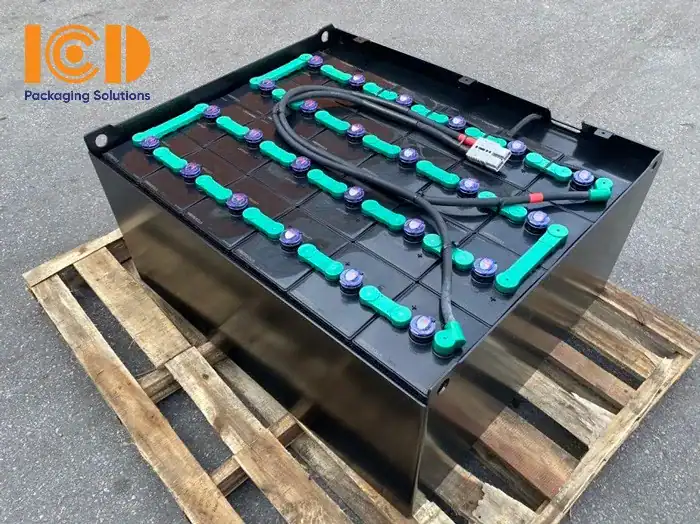
For lead-acid batteries, the Xilin CQDH electric truck manual specifies an electrolyte specific gravity of 1.24 at 25°C when fully charged for tropical regions, and notes that the electrolyte temperature while charging should not exceed 45°C. For lithium packs, the CBD15W-LiX manual lists an operating temperature range of -10 to 45°C, with a green indicator meaning 70-100% charge left, yellow 40-70% and red 10-40%, and if the truck is stored for a long time it should be charged and discharged once every 3 months.
6. Detailed maintenance schedule by part
The maintenance schedule should follow the manual of your own truck model, because each manufacturer and series sets different intervals. The table below combines the Xilin CQDH electric truck manual with the start-of-shift inspection requirements of QCVN 25:2015/BLDTBXH.
| Part | Interval | Task |
|---|---|---|
| Whole truck (forks, chains, mast, oil leaks, horn, brakes) | Start of every shift | Pre-operation check, record in the shift handover book |
| Lead-acid battery | Regularly | Check the distilled water level and electrolyte specific gravity (1.24 at 25°C when full) |
| Electrical parts (motors, controller, wiring, connectors) | Every 3 months | Inspect per the manual, clean, tighten connectors |
| Hydraulic oil | After 12 months | Change HL-N46 or HL-N68 oil |
| Lithium pack in long storage | Every 3 months | Charge and discharge once (CBD15W-LiX) |
| Powered forklifts with a load capacity of 1,000 kg or more | Per QCVN 25:2015 | Periodic safety inspection, every 3 years |
Do not keep working once the battery is flat: the CQDH manual warns about this, because deep discharge both ages the battery quickly and makes lifting force and speed drop suddenly while you are carrying a load. Details of the mandatory inspection are in Circular 36/2019/TT-BLDTBXH dated 30 December 2019, under which powered forklifts with a lifting capacity of 1,000 kg or more fall on the list of machines and equipment with strict occupational safety requirements.
7. Important technical terms
To read specification tables and talk to technicians, you should know a few concepts.
The traction motor drives the wheels and determines speed and traction, while the pump motor provides hydraulic pressure for the lifting system. The controller is an electronic board using power semiconductors (MOSFETs) and a microprocessor, regulating the current to the motor by switching very rapidly according to pulse width (PWM). The contactor is a large electromagnetic relay that closes and breaks the main circuit when the driver turns the key or presses a button.
On the power source side, lead-acid batteries come as open types that need water topping up and as sealed (VRLA) types that do not; lithium packs (usually LiFePO₄) charge fast, can be opportunity-charged and need no water maintenance. In the hydraulic circuit, the solenoid valve controls the direction of oil flow to lift, hold or lower. Finally, the encoder and Hall sensor measure motor position and rotation speed; AC motors and brushless motors need this signal so the controller can synchronise the current.
Conclusion: understanding the construction is the basis of efficient maintenance and operation
A Xilin self-propelled electric forklift (CBD/CDD/ES) is not a black box but a well-matched combination of more than 10 specialised parts: from the battery that supplies power, the traction motor and the hydraulic pump motor, to the controller and the encoder sensor.
Three key points to remember:
- Understand the construction to maintain it correctly. Knowing whether the truck has a brushed motor or an AC motor tells you whether you need a brush replacement schedule.
- Maintain by the manufacturer’s manual. Start-of-shift checks, electrical parts every 3 months, and hydraulic oil changed after 12 months on the CQDH series.
- Choose the right battery for the need. For a truck that runs multiple shifts and needs opportunity charging between shifts, consider lithium; for single-shift work charged overnight, lead-acid still does the job.
Customers who understand how their truck is built, change oil on time, lubricate rollers and keep the controller dry will see fewer sudden breakdowns. By contrast, skipping maintenance usually leads to failure of the hydraulic system or the battery, the two most expensive repair items.
Treat the articles on what a forklift is and the Xilin classification as the foundation, the construction of a hand pallet truck as basic knowledge, and this article as the specialist depth. Once you know each part and its characteristics, you will follow the electric forklift operating guide correctly and a forklift wiring diagram will no longer be a mystery.
Frequently asked questions
1. How many motors does a Xilin self-propelled electric forklift have?
Usually 2 separate motors: the traction motor, which drives the wheels, and the pump motor, which spins the hydraulic pump to raise and lower the mast. A counterbalance sit-down truck that runs on a battery usually has an extra power steering motor. A semi-electric stacker such as the Xilin CDD10BIII has only the lift motor, and travel is still pushed by hand.
2. How do I maintain a lead-acid battery to extend its life?
Three things matter: top up with distilled water (never tap water) and check the electrolyte specific gravity, which per the Xilin CQDH manual is 1.24 at 25°C when fully charged; use the truck until the gauge shows low battery and then charge it fully in one go, without charging in small bursts and without discharging it flat; keep the terminals and contacts clean so rust does not cause a voltage drop. While charging, the electrolyte temperature should not exceed 45°C.
3. How does the solenoid valve in a forklift hydraulic system work?
The solenoid valve takes commands from the controller and shifts position so oil goes into the cylinder (lift), is blocked (hold) or returns to the tank (lower). The valve type, number of positions and number of ports depend on each model’s hydraulic design, so a replacement must use the manufacturer’s exact part number.
4. Why must the controller be protected against water?
Water getting onto the board causes short circuits, burnt components or corroded connectors. A truck working in damp areas, cold rooms or wash-down areas needs the IP protection rating of its controller and motors checked in the data sheet, and water should not be sprayed directly onto the electrical assembly.
5. What is the encoder sensor on an electric forklift for?
The encoder measures the position and rotation speed of the motor and sends the signal to the controller to hold speed steady as the load changes and to limit speed going downhill. A failed encoder or loose signal wire usually makes the truck run jerkily, show an error or not run at all, and needs checking at once.
6. Can a Xilin controller be repaired?
Many controller faults can be repaired if only small components such as MOSFETs, relays or bridge rectifiers have failed; if the microprocessor has failed or the board is deeply burnt, the whole unit usually has to be replaced. Xilin trucks sold by ICD Vietnam carry a 12-month warranty, so a controller that fails within that period is handled under warranty.
7. Does an electric forklift need drying after washing?
Yes. Water standing in the gaps around the motor, controller and connectors causes oxidation and short circuits. After cleaning, blow the gaps dry with compressed air and let the truck dry completely before switching on; it is best to wipe with a damp cloth rather than spray water into the electrical assembly.
8. Can an old DC motor be upgraded to AC?
Technically yes, but the motor, an AC controller and additional sensors and signal wires must all be changed, so the workload is close to replacing the whole drive system. For a truck that has been used a long time, ask a technician to compare the upgrade cost with replacing the truck before you decide.
9. Can the lithium battery of a Xilin forklift be used on another truck?
Not entirely. Each manufacturer and series has a different voltage, battery compartment size and connector (12V, 24V, 36V, 48V…), and the controller must also accept the battery. Only use a battery with the right code for the right model. ICD Vietnam’s quotation for Xilin electric trucks states clearly the battery type supplied with each model.
10. Can an electric forklift work outdoors or in cold environments?
Yes, within the limits of each model. The Xilin CBD15W-LiX lithium pack works in the range -10 to 45°C; the manual for the same model limits the gradient with a load to 5%, which shows that walkie trucks are designed for hard, flat floors. Working outdoors means avoiding rain, drying the electrical assembly after the shift and choosing a model with a suitable protection rating.
Contact us for Xilin electric forklift advice
Need advice on a Xilin CBD/CDD/ES electric forklift? ICD Vietnam - authorised Xilin distributor, 12-month warranty, nationwide delivery.
Northern Vietnam: 0983 797 186 | 090 345 9186 | 090 5859 186 | Southern Vietnam: 098 6784 186
Zalo: icdvietnam | Email: sales@icdvietnam.com.vn
Send the load capacity, lift height, aisle width and number of shifts so ICD Vietnam can advise on the truck configuration and battery type that suit your environment.
References
- CBD15W-E specifications (battery, charger): Ningbo Ruyi (Xilin), Electric Walkie Pallet Truck; CBD15W-Lix and the Li-ion Powered Pallet Truck series (brushless motor, emergency reverse, overload protection): Ningbo Ruyi (Xilin).
- Xilin CQDH and CBD15W-LiX electric truck operating manuals; Ningbo Ruyi (Xilin), Common sense of the use of electric stacker.
- Forklift operator training material, Vietnamese edition (construction, safety factors for forks and lift chains): Ministry of Health, Labour and Welfare of Japan (MHLW).
- QCVN 25:2015/BLDTBXH on occupational safety for forklifts, issued with Circular 51/2015/TT-BLDTBXH dated 8 December 2015: National database of legal documents.
- Circular 36/2019/TT-BLDTBXH dated 30 December 2019, list of machines and equipment with strict occupational safety requirements: National database of legal documents.
- ISO 3691-1, Industrial trucks, Safety requirements and verification, Part 1: Self-propelled industrial trucks; VDI 2198, industrial truck data sheets.
- Battery specifications by model: Xilin electric forklift product pages on icdvietnam.com.vn.