Table of Contents
- 1. How to use a low-lift pallet jack
- 2. How to use high-lift hand trucks and electric hand trucks
- 3. Important points when operating a hand truck
- How high should you lift, and how fast should you travel?
- Storing and maintaining the truck after the shift
- Frequently asked questions
- Contact us for advice on the right truck
- References
Reviewed and updated by ICD - Week 43/2026
Using a low-lift pallet jack takes five steps: check the truck and the load; lower the forks and slide them the full length into the pallet; move the lever to lift and pump the handle until the pallet clears the floor; pull the truck at walking pace; at the destination squeeze the release lever so the forks lower slowly, then withdraw them. On the Xilin DF-III hand pallet truck, about 10 strokes bring the forks to full lift, each about 11 mm.
Quick summary:
- Low-lift pallet jack (hand pallet truck): lower the forks, slide them into the pallet, raise the pallet by pumping the handle, move it, then lower it with the release lever.
- High-lift or electric hand truck: raise the forks by pumping the handle, using the foot pedal or a push button, then lower the load to the desired position.
- Safety notes: always inspect the truck before use, never exceed the rated load, use it only on flat floors and raise and lower loads slowly.
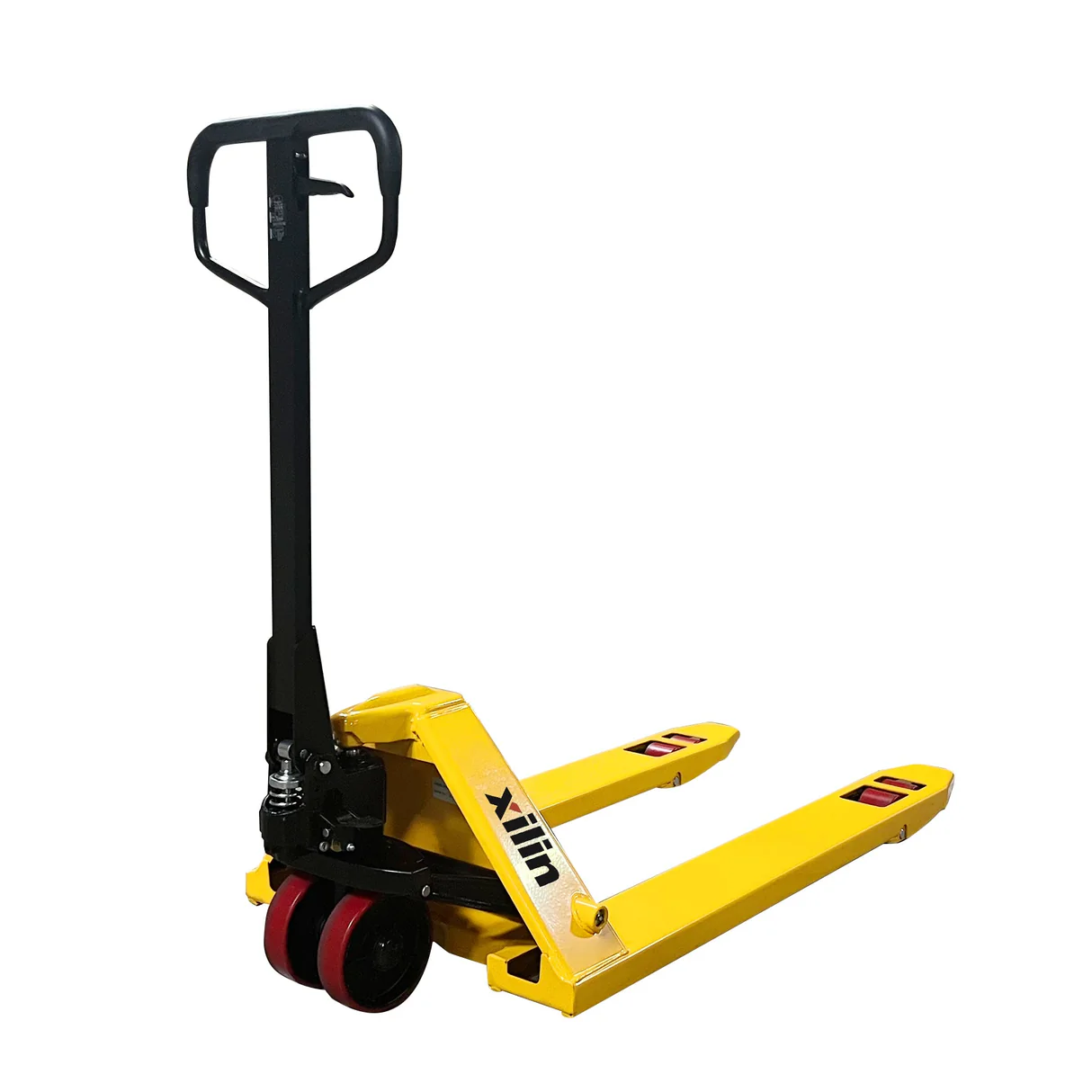
The hand pallet truck is a familiar tool in warehouses and workshops, but to use it safely and efficiently you need to know how to operate it properly.
It looks simple, yet mastering the truck takes care and some understanding. Most of the damage I see on hand pallet trucks is not down to a poor truck but to wrong handling repeated every day: lifting on one fork, pulling a pallet before the forks are fully in, or letting the release lever drop the forks in free fall.
Today we go through it in the right order of operation, with the specifications of the Xilin trucks that ICD Vietnam distributes.
1. How to use a low-lift pallet jack
The low-lift pallet jack, also called a pallet puller, is the most basic and most common type. The operating procedure is simple but must follow the right safety routine to avoid damaging goods and equipment.
Understand the control lever on the handle
The handle has a three-position lever, which is also where beginners go wrong most often. In the lift position, each time you press the handle down, the pump piston pushes oil into the cylinder and the forks rise a little. In the neutral position the handle is used only to pull and steer, the pump does nothing, so you can swing the handle without raising the forks. In the lower position the release valve opens and oil returns to the reservoir, so the forks go down.
When pulling a pallet a long way, leave the lever in neutral so that each swing of the handle does not pump by accident. Xilin describes the DB series as having exactly these three handle modes; the BF-III adds a controllable lowering speed, meaning the lighter you squeeze the lever the slower the forks drop.
Operating steps
- Check before use:
- Inspect the whole truck for damage: forks not bent or cracked, steering and load wheels turning freely, no oil traces around the pump unit.
- Pump a few times with no load: both forks must rise evenly, squeezing the lever must lower them, and they must not sink when left alone.
- Make sure the load does not exceed the truck’s rated capacity shown on its label (for example 2,500 kg for the 2.5-tonne BF-III).
- Position the truck in the pallet: Lower the forks to their lowest, push the truck snugly into the pallet, and make sure the fork tips sit fully and close against the inside of the pallet. The forks must go in their full length so that the load wheels under the tips sit beneath the far support board of the pallet.
- Lift the load: Move the lever to lift and pump the handle up and down to run the lifting mechanism, raising the forks just enough to clear the pallet from the floor. You do not need to lift to full stroke if you are only traveling on a flat floor.

- Move the load:
- Use a pushing posture, keeping your back and spine straight to avoid back pain.
- Move slowly, at about walking speed.
- At corners, take a wide turn to keep balance.
- Avoid going up or down slopes; if you must, ask for help.
- Lower the load: On arrival, just squeeze or press the release lever to lower the forks slowly. Then withdraw the forks from the pallet.
One detail often missed is the handle direction when withdrawing the forks: pull the handle straight along the fork axis and do not steer while pulling, because tips still inside the pallet will scrape the pallet blocks and push the load out of place.
2. How to use high-lift hand trucks and electric hand trucks
High-lift hand trucks and electric hand trucks are normally used to lift loads high or onto racking. The biggest difference from a low-lift truck is the center of gravity: with the load up high the truck is far less stable, so all travel must be done with the load lowered.
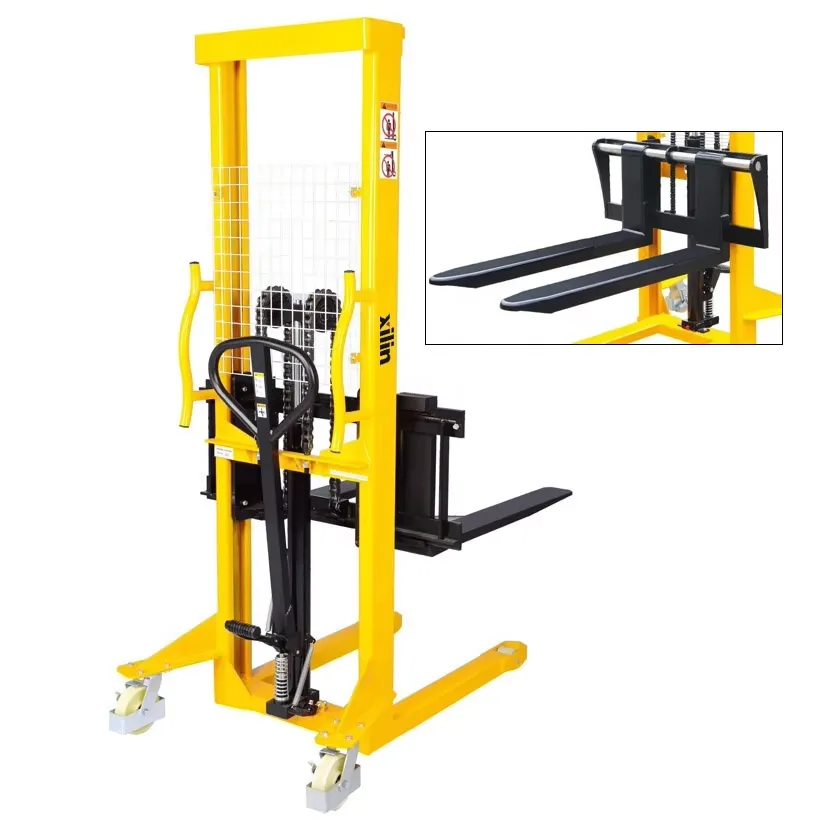
- Step 1: Lower the forks and slide them into the pallet: This basic move is like that of a low-lift truck. On narrow-leg trucks the support legs slide under a single-face pallet; for double-face pallets you must use a splayed-leg truck that straddles the pallet.
- Step 2: Raise the forks:
- On a high-lift hand truck: Keep pumping the handle or press the foot pedal until the forks reach the desired height.
- On an electric hand truck: Use the push button on the handle to raise or lower the forks.
- Step 3: Move and lower the load: Carefully move the truck to where the load must go. Use the release lever or the button to lower the forks slowly.
The right order with a high-lift truck is: travel with the load low, stop right in front of the rack, lift, nudge the pallet gently onto the rack, lower the load onto the beam, then withdraw the forks and lower them fully before moving on. If the truck has a foot brake, set it before lifting. The mast of a high-lift truck is always taller than its lift height; for example the 1.6 m SDJ1000 has a 2,165 mm frame, so watch for doors and pipes along the route.
For an electric hand truck such as the CBD15W-E low-lift electric truck (1,500 kg), the principles stay the same, only a motor replaces human effort. Check the battery level, the emergency stop button and the horn before the shift, charge as the manufacturer instructs, and do not let anyone untrained start the truck.
3. Important points when operating a hand truck
Having worked in logistics, I see many people make the same basic mistakes when using a hand truck. These are not only dangerous but also cut efficiency. Here is what you must remember to keep yourself and the goods safe:
- Keep hands and feet out from under the forks: never place hands or feet under the forks when lifting or lowering a load, to avoid injury.
- Keep the load stable: make sure the goods are stacked evenly and balanced on the pallet.
- Avoid collisions: keep a clear view and do not stack loads higher than your head.
- Use it for its purpose: do not lift a load on one fork only, and let only one person operate a truck.
- Adjust your posture: keep your head and body straight while working to avoid muscle strain.
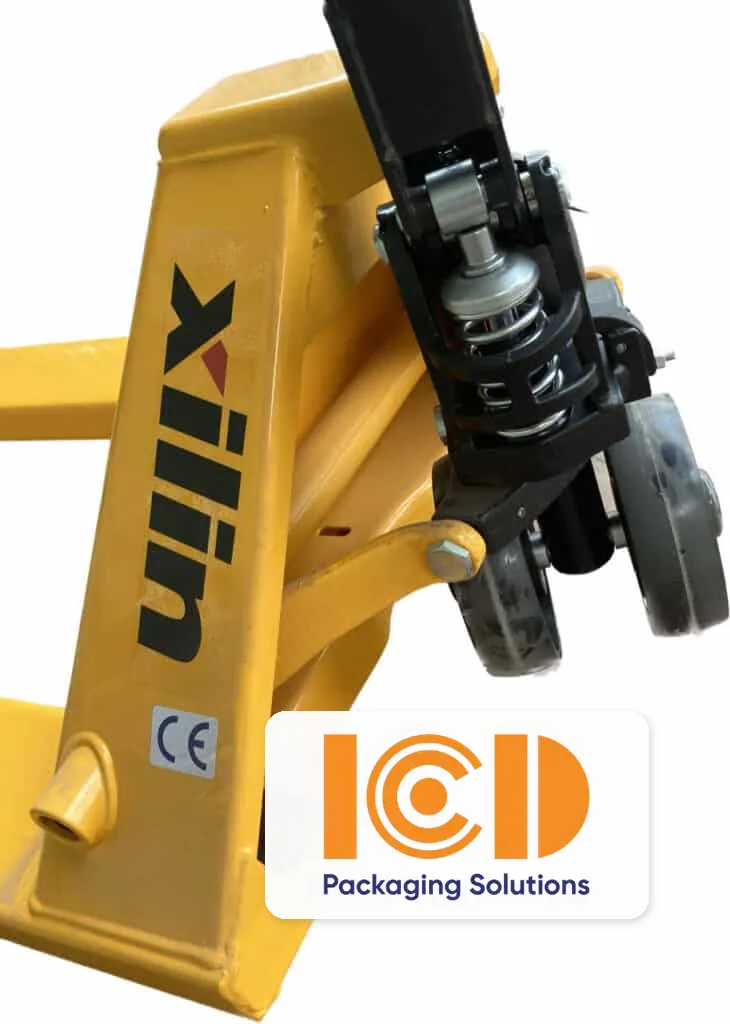
Mastering these safe hand pallet truck operating rules will help you work more efficiently and safely. The two errors I see most often are lifting a pallet on one fork and carrying a person standing on the forks; both bend the forks and can cause accidents.
How high should you lift, and how fast should you travel?
Lift only enough for the pallet and its blocks to clear the floor completely, and enough to pass floor joints or door thresholds on the route. The lifting stroke of a low-lift truck is short anyway, about 185-205 mm depending on the Xilin series, so there is no reason to lift to the limit when you only pull on a flat floor; the higher you lift, the higher the load’s center of gravity and the more the pallet sways in turns.
As for speed, walk at a normal pace, and slower with heavy loads. A hydraulic hand truck is stopped mostly by the person holding the handle, so the momentum of a one- or two-tonne pallet is something you must plan for: slow down well before corners, doors and busy spots, and never run after a truck that is drifting.
Storing and maintaining the truck after the shift
At the end of the shift, lower the forks fully so the lift rod retracts into the cylinder, which keeps dust off the plated rod and stops others from tripping over raised forks. Park the truck on a dry, flat spot that does not block an escape route. Check the oil level and any seepage around the pump unit regularly, and clear strapping and PE film wound around the wheel axles, a common cause of the truck pulling hard.
When the truck pumps without lifting, the forks sink by themselves or oil leaks, stop using it and call a technician; do not keep pumping under a heavy load. If you have any other questions, feel free to ask.
Frequently asked questions
1. Should a hand pallet truck be pulled or pushed?
Prefer pushing, with your back and spine straight, especially when placing a pallet in a tight spot or into a rack. On long runs over a flat floor you can walk ahead and pull the handle in the direction of travel to see the way; do not walk backward pulling the truck toward people or obstacles without looking.
2. Why do the forks not rise when I pump the handle?
First check whether the lever is in the lift position; in neutral the pump does nothing. If the lever is right and the forks still do not rise, there may be low oil, air in the system, or a release valve stuck open; stop using the truck and check the pump unit.
3. Can I use a hand pallet truck on a slope?
As little as possible. A hydraulic hand truck is stopped by human effort, so on a slope a heavy pallet easily drifts. If you must cross a short slope, bring extra help and go very slowly.
4. Does a hand pallet truck operator need a certificate?
A hand pallet truck pushed by human effort is not on the list of machinery with strict labor-safety requirements under Circular 36/2019/TT-BLDTBXH, so it does not require inspection the way a forklift does. Workers still need safety training under the 2015 Law on Occupational Safety and Health and instruction on operation before use.
5. How many strokes does it take to reach full lift?
According to Xilin, the DF-III hand pallet truck needs about 10 strokes to reach full lift, each about 11 mm; the DB needs about 12. In practice a few strokes are enough to clear the pallet from the floor.
Contact us for advice on the right truck
Hotline: 0983 797 186 | 090 345 9186 | 090 5859 186
Zalo: icdvietnam | Email: sales@icdvietnam.com.vn
Delivery within Hanoi and Ho Chi Minh City in 1-3 working days under ICD Vietnam’s shipping policy.
Related product: see the ICD BF-III low-lift pallet truck, 2.5 tonnes, with a one-piece pump, an overload valve and controllable lowering speed, distributed by ICD Vietnam.
References
- Specifications and handle modes of the DB, DF-III and BF-III: Ningbo Ruyi (Xilin), Hand Pallet Truck.
- Circular 36/2019/TT-BLDTBXH of 30 December 2019, list of machinery and equipment with strict labor-safety requirements: National Legal Document Database.
- Law on Occupational Safety and Health No. 84/2015/QH13 of 25 June 2015, National Assembly.
- ISO 3691-5:2014 Industrial trucks, Safety requirements and verification, Part 5: Pedestrian-propelled trucks: ISO.