Table of Contents
- Quick diagnosis: symptoms and causes
- Check the control lever first
- 6 detailed fixes for each cause
- Summary: fix it yourself or call a technician?
- Hydraulic oil and the maintenance schedule for hand pallet trucks
- Why the fault comes back and how to prevent it at the root
- Frequently asked questions
- 1. My hand pallet truck takes 30 pumps to lift. What does that mean?
- 2. What hydraulic oil should a hand pallet truck use?
- 3. After how long does a Xilin truck that will not lift need an overhaul?
- 4. How many liters of hydraulic oil does a hand pallet truck take?
- 5. When does a hand pallet truck need bleeding?
- 6. How often should the hydraulic oil be changed?
- Contact ICD Vietnam - Xilin forklift repair service
- References
Reviewed and updated by ICD - Week 43/2026
A hand pallet truck that will not lift usually comes down to one of five things: the lever on the handle is not in the lift position, low hydraulic oil, air in the pump chamber, a misadjusted release valve screw, or a dirty check valve. The first four you can fix yourself in a few minutes; only a failed piston seal or a cracked pump body means opening the pump or replacing the unit.
A pump that will not lift is a common fault in warehouses, and happens when the hydraulic system loses pressure or a valve does not close tightly. This guide helps you diagnose it by the feel of the pump handle and fix it in order from the simplest cause, most of the time without taking anything apart.
Quick diagnosis: symptoms and causes
Before taking anything apart, pay attention to how the pump handle feels and how the forks react. Each kind of symptom points to a different group of causes, so reading the symptom correctly keeps you from replacing the wrong parts.
| Symptom | Most likely cause | Level |
|---|---|---|
| Pump but the forks do not rise at all | Lever not in the lift position, out of hydraulic oil, piston stuck | Easy to fix yourself |
| Pump feels light, empty, forks barely move | Air in the pump chamber, low oil | Easy to fix yourself |
| Lifts and then sinks back down | Release valve screw misadjusted, dirty release valve or check valve, worn piston seal | Easy to moderate |
| Pump feels heavy, lifts slowly | Hydraulic oil thick or low, load near the maximum | Easy to fix yourself |
| Pump feels light but nothing lifts | Check valve dirty or worn | Moderate |
| Oil leaking outside | Piston seal or pump rod seal failed | Needs a technician |
One benchmark for comparison: according to Xilin’s specifications, the DF-III hand pallet truck reaches full lift after about 10 strokes, each raising the forks about 11 mm. If your truck needs three times as many strokes to lift, the hydraulic system certainly has a problem, even if the forks do get up in the end.
Check the control lever first
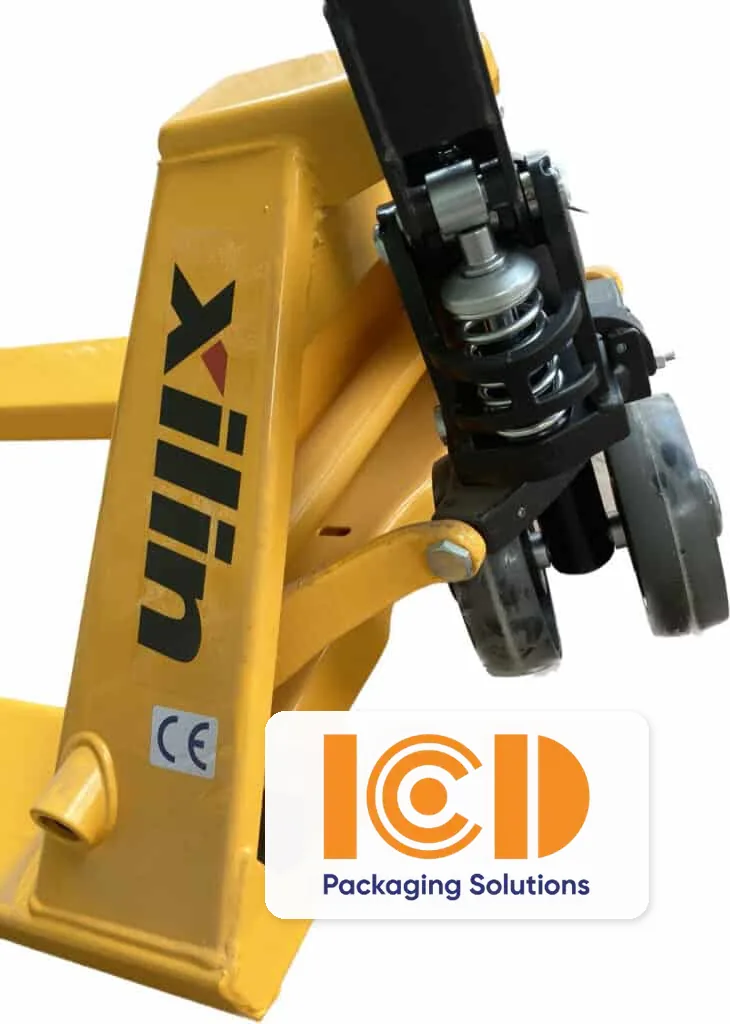
The handle of a hand pallet truck has a lever (a toggle) with three positions: lift, neutral for pulling the truck, and lower. The Xilin manual says to put the lever in the lift position before pumping the handle to raise the forks, and to leave it in neutral when moving a load. If the lever is left in neutral or lower, no amount of pumping will raise the forks. This is the simplest fault but often overlooked, especially by people new to the truck.
If the lever is in the lift position and the forks still do not rise, check next the chain (or pull rod) that links the lever down to the valve unit at the foot of the pump: a chain that has slipped off, broken or gone slack means the lever cannot act on the valve.
6 detailed fixes for each cause
1. Check and top up the hydraulic oil
- Stand the truck on a flat surface and lower the forks completely.
- Find the oil filler plug on the pump body, remove it and check the oil level.
- Top up with 46# anti-wear hydraulic oil (the type the Xilin manual recommends) to the specified level, without overfilling.
- Pump a few times: the forks must rise evenly and hold their position.
The Xilin manual gives the oil quantity for the pump unit as about 0.41 liters, so even a small shortfall is enough to make the pump feel empty. So if you find the oil low, look for the leak as well; do not just top up and carry on.
2. Bleed the air from the pump chamber
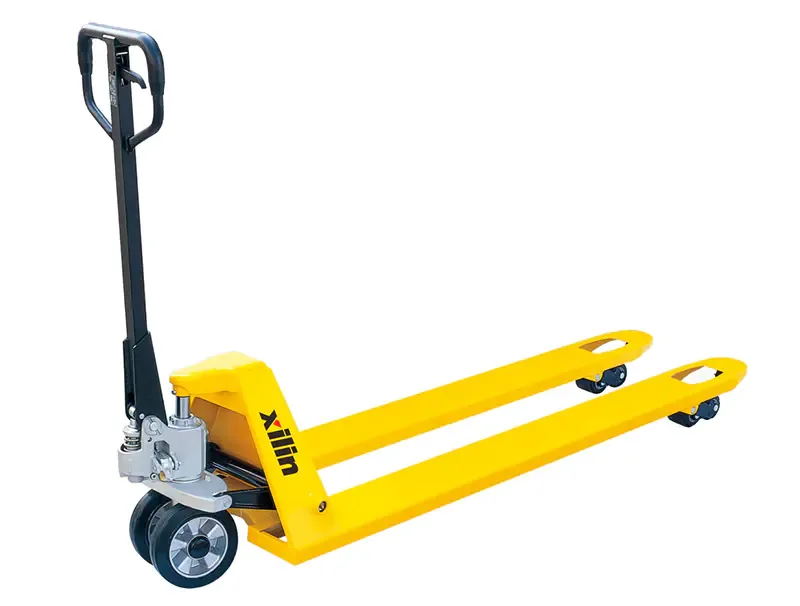
Air gets into the pump chamber when the truck is transported, laid on its side or when the pump body is turned over. The sign is a light, empty-feeling pump with forks that barely move. According to the Xilin manual, bleed the air by moving the lever to the lower position and swinging the handle a few times to push the air out; repeat a few rounds if needed, then move the lever back to lift and test the pump.
3. Adjust the release valve screw
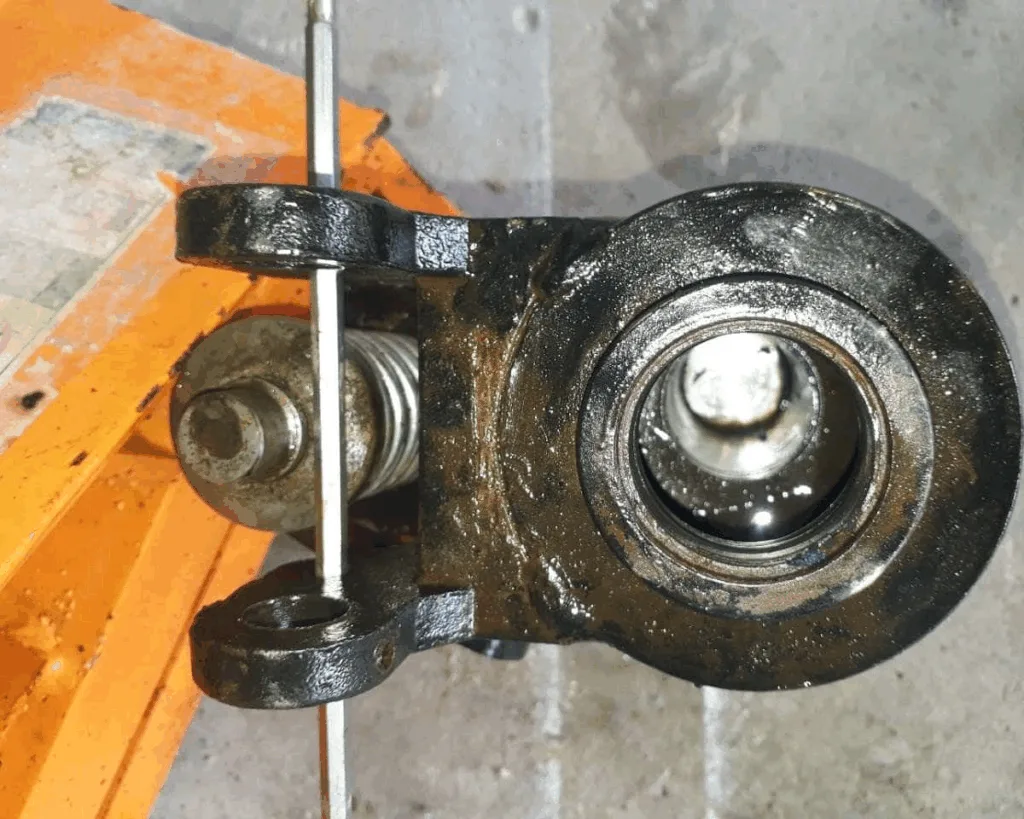
The valve unit at the foot of the pump has an adjusting screw locked by a nut. Xilin’s installation guide says: if the truck lifts and then sinks straight away, loosen the lock nut and turn the screw a little counterclockwise, then test again until it lifts normally; if it lifts but will not lower, turn the screw a little clockwise. After adjusting, remember to tighten the lock nut again.
- Lift a load within the rated capacity and leave it for a few minutes; the forks must hold their position.
- If the forks still sink after adjusting the screw, the valve or seal is worn; go to step 4 or 5.
4. Clean the check valve
- Drain all the oil into a clean pan and remove the oil plug.
- Find the check valve: a small steel ball and spring inside the pump body.
- Take out the ball and spring, wash off the deposits and dry them.
- Refit them the right way round, pour in new oil, bleed the air and pump to test.
5. Replace the piston seal (needs a technician, or do it yourself if experienced)
When oil leaks outside the truck body, or the truck lifts and sinks even though the valve is clean and the screw adjusted, the piston seal has failed. If you have no experience taking a hydraulic pump apart, call a technician to avoid causing more damage. Leaks and the seal replacement procedure are covered in our separate forklift guides.
6. Replace the whole hydraulic pump (when repair will not work)
If the pump body is cracked, the cylinder worn or the ram deeply scored, repair is no longer economic, so replace the whole pump unit of the exact model. After fitting a new pump, fill the oil and bleed the air as in step 2, then test lifting and lowering under load.
Summary: fix it yourself or call a technician?
| Situation | Decision |
|---|---|
| Lever in the wrong position, low oil, air in the system | Fix it yourself in a few minutes |
| Valve screw misadjusted, check valve dirty | Fix it yourself or ask a technician |
| Piston seal failed, oil leak | Call a technician |
| Pump completely failed | Replace the pump or buy a new truck |
If your hand pallet truck has a fault other than a pump that will not lift, see also the hand pallet truck repair service at ICD Vietnam.
Hydraulic oil and the maintenance schedule for hand pallet trucks
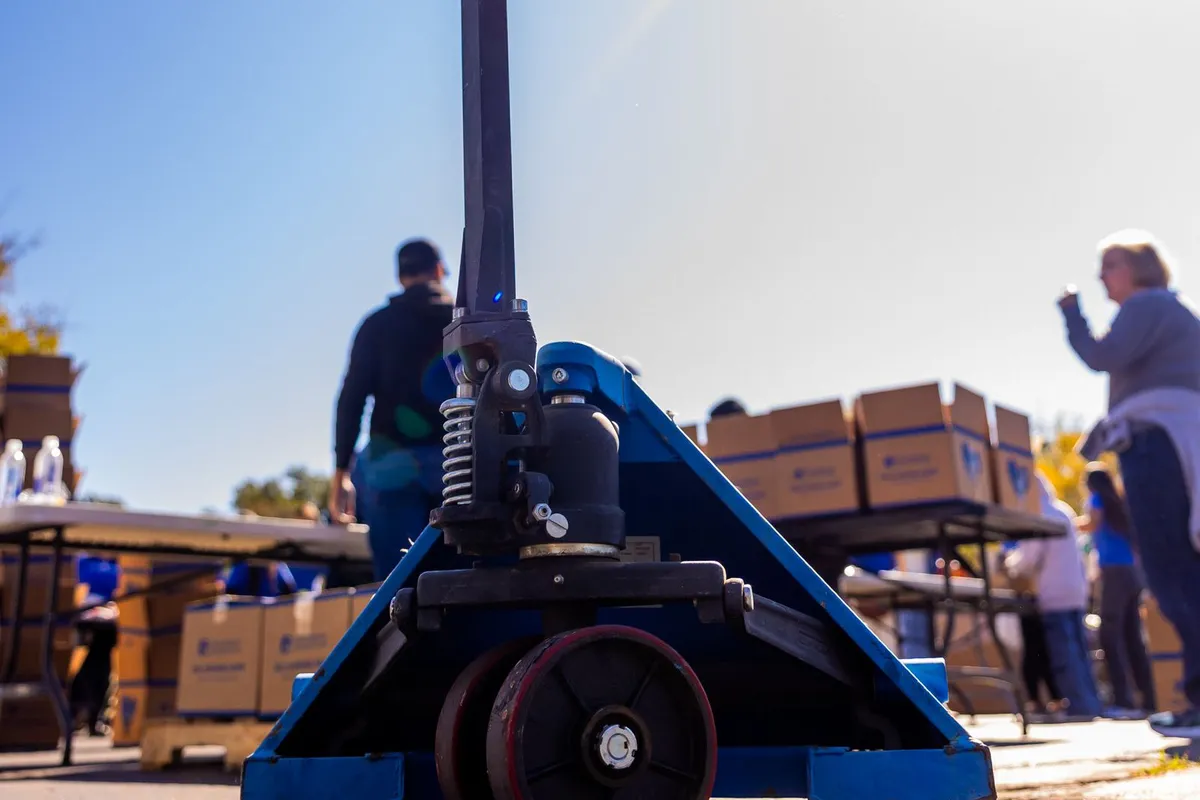
If you fix it but skip routine maintenance, sinking and non-lifting faults will come back. For a hand pallet truck to run steadily, the hydraulic system needs the right oil, enough of it, and joints lubricated on schedule. The table below follows the Xilin hand pallet truck manual.
| Item | Per the Xilin manual |
|---|---|
| Hydraulic oil type | 46# anti-wear hydraulic oil |
| Oil quantity in the pump unit | About 0.41 liters |
| Check the oil level | Every 3 months |
| Lubricate joints, pins, wheel bearings | Monthly |
| Check the wheels and axles | Daily, before the shift |
| End of shift | Lower the forks to the lowest position |
In cold stores, ordinary hydraulic oil thickens at low temperatures, making the pump heavy and the forks slow to rise. In that case, ask your supplier for a hydraulic oil made for cold environments. The whole Xilin hand pallet truck range that ICD Vietnam distributes uses common hydraulic oil, with spare parts that are easy to find.
Why the fault comes back and how to prevent it at the root
When a truck fails again after a repair, it usually comes from three root causes, not from the repair being done wrong. Know them so you can fix the problem for good instead of fixing it again and again.
- Air getting back in through hardened seals: hardened seals draw air into the oil chamber on every stroke, and the forks sink again after a few days. Prevent it by replacing the seals as a set, not with a temporary patch.
- Dirty oil mixed with water rusting the valve ball: condensation rusts the steel ball and the check valve seat so they no longer seal. Prevent it by checking the oil regularly, changing it when it is cloudy or contains water, and closing the oil plug tightly after each fill.
- Frequent overloading: lifting beyond the rated load on the truck wears out the piston seal and valves quickly. Prevent it by using the truck within the load on its label.
One serious mistake to avoid: pouring in engine oil instead of hydraulic oil. Engine oil has additives and a viscosity that do not suit a hydraulic system, and it can jam the valve ball and leave deposits in the cylinder, so the pump will not lift even though it has just been filled. Always use the right hydraulic oil as the manufacturer instructs.

One case that is easy to mistake for a fault: some Xilin hand pallet truck series have a fast-lift function that works only with light loads (under 600 kg on the WB, per the manufacturer’s specification). With a heavier load the pump switches to normal mode on its own, so each stroke raises the forks less; this is by design, not a failed pump.
Frequently asked questions
1. My hand pallet truck takes 30 pumps to lift. What does that mean?
Usually there is air in the pump chamber, low oil or a slightly worn check valve. Bleed the air and top up the oil first; if it does not improve, clean the check valve. For comparison, a Xilin DF-III reaches full lift after about 10 strokes.
2. What hydraulic oil should a hand pallet truck use?
The Xilin manual recommends 46# anti-wear hydraulic oil, available from forklift parts shops. Do not use motorcycle oil or engine oil.
3. After how long does a Xilin truck that will not lift need an overhaul?
There is no fixed interval; pump life depends on the load, the environment and maintenance. Early failure usually comes from dirty oil, low oil or overloading. Checking the oil every 3 months as the Xilin manual says helps you catch it early.
4. How many liters of hydraulic oil does a hand pallet truck take?
The Xilin manual gives the oil quantity for the pump unit as about 0.41 liters. Fill to the specified level with the forks fully lowered, and avoid overfilling, which causes overflow when lifting.
5. When does a hand pallet truck need bleeding?
Bleed the air when the pump feels light and empty, the forks only just move or lift in jerks even though the oil is enough, especially after the truck has been transported or laid on its side. Move the lever to lower, swing the handle a few times, then move it to lift and pump to test.
6. How often should the hydraulic oil be changed?
Check the oil level and color every 3 months as the Xilin manual says; change it at once when it turns cloudy, contains water or has deposits. ICD Vietnam distributes Xilin forklifts with a 12-month warranty, and gives advice through the hotline 0983 797 186.
Contact ICD Vietnam - Xilin forklift repair service
ICD Vietnam Industrial Manufacturing Co., Ltd. - distributor of Xilin (Ningbo Ruyi) forklifts in Vietnam.
North: 0983 797 186 | 090 345 9186 | 090 5859 186 | South: 098 6784 186
Email: sales@icdvietnam.com.vn | Zalo: Chat on Zalo
Delivery within Hanoi and Ho Chi Minh City in 1-3 working days under ICD Vietnam’s shipping policy.
References
- Specifications of the BF-III, DF-III and WB hand pallet trucks: Ningbo Ruyi (Xilin), Hand Pallet Truck.
- Xilin hand pallet truck user manual (Ningbo Ruyi): lever positions, 46# hydraulic oil, oil quantity, air bleeding, inspection schedule.
- Xilin installation guide for the BFC6 hand pallet truck with scale: how to adjust the valve screw when the forks sink or will not lower.
- ISO 3691-5:2014 Industrial trucks, Safety requirements and verification, Part 5: Pedestrian-propelled trucks: ISO.