Table of Contents
- What hand pallet truck seals are and why they matter in the hydraulic system
- Signs that the hand pallet truck seals need replacing
- Types of hand pallet truck seals and how to choose the right kit
- A detailed 7-step guide to replacing hand pallet truck seals at home
- Where to buy hand pallet truck seals and what to watch for
- Common mistakes after replacing seals and how to fix them for good
- Maintenance so the new seals last
- Frequently asked questions about hand pallet truck seals
- 1. How much does a seal kit cost?
- 2. How long does it take to replace the seals?
- 3. Can I use engine oil instead of hydraulic oil?
- 4. Why does the truck still not lift after I replaced the seals?
- 5. Do I need to polish the ram every time I replace the seals?
- 6. How often should I check the oil and seals on a hand pallet truck?
- 7. What policies does ICD Vietnam have for forklifts?
- Contact us for technical advice on hand pallet trucks
- References
Reviewed and updated by ICD - Week 43/2026
The seals of a hand pallet truck are the rubber and plastic gaskets that close the hydraulic pump unit: the ram seal on the large lift ram, the pump seal on the small pump rod, the dust seal at the rod neck and the O-rings inside the valves. When the seals wear, oil seeps at the rod neck, the forks sink by themselves or the pump will not lift; the fix is to replace the whole seal kit with the exact model, refill with fresh hydraulic oil and bleed the air. For Xilin hand pallet trucks, the user manual recommends 46# anti-wear hydraulic oil and an oil check every 3 months.
Summary of the main points
- Hand pallet truck seals are the gaskets that close the hydraulic pump system and hold oil pressure, so the forks can lift a pallet weighing tonnes.
- When the seals fail, the truck shows signs such as oil leaks, a sinking ram or a pump that will not lift.
- This guide covers how the seal kit is built, how to diagnose bad seals, how to choose the right kit, the 7-step replacement procedure and the mistakes that commonly follow a replacement.
- It closes with maintenance following the manufacturer’s guidance so the new seals last.
What hand pallet truck seals are and why they matter in the hydraulic system
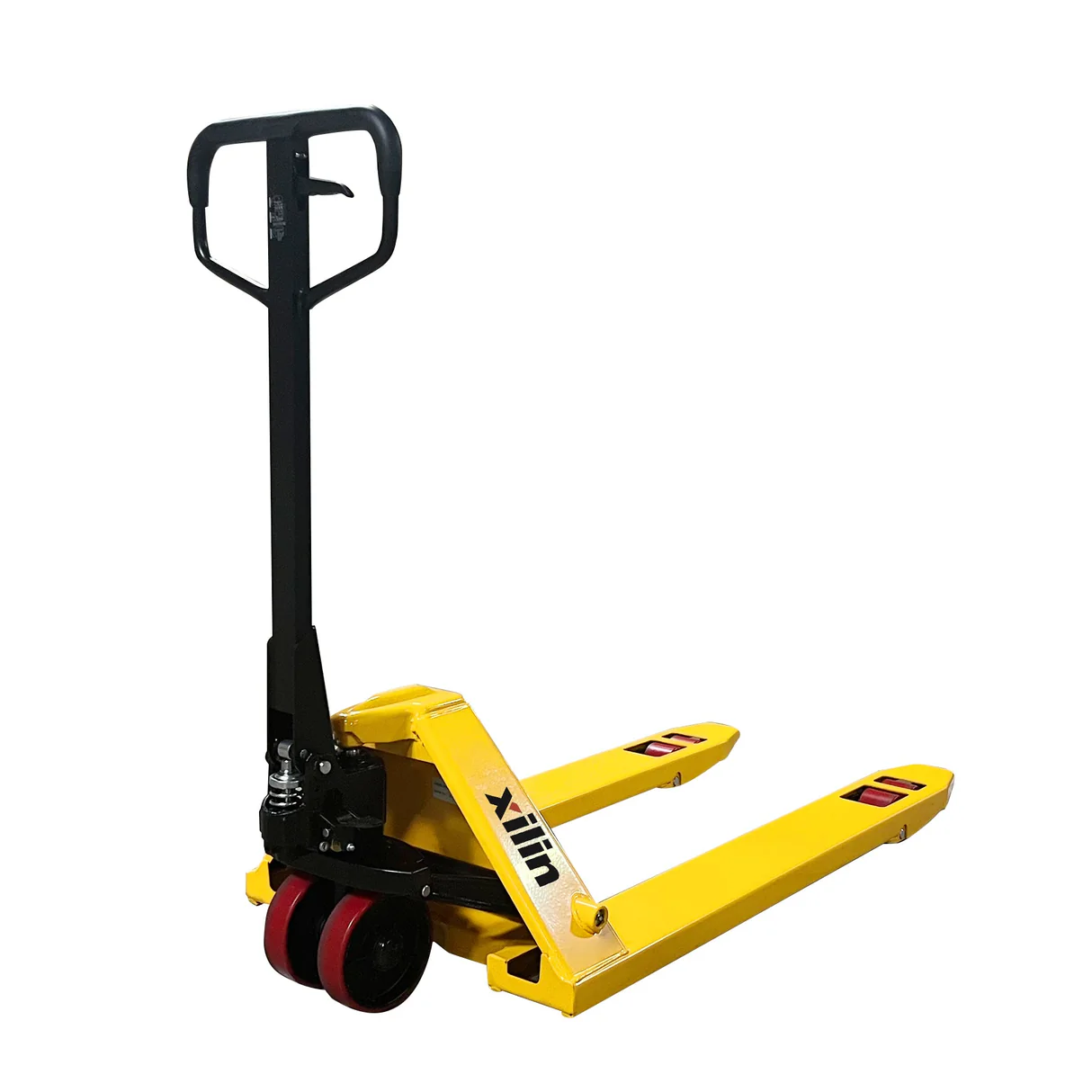
Hand pallet truck seals, also called hydraulic gasket seals, are rings of rubber or synthetic plastic fitted inside the pump unit and ram of a Xilin hand pallet truck. Their core job is to seal: to keep hydraulic oil from escaping and to stop air and dirt from entering the oil chamber.
The truck’s hydraulic system works on the transfer of fluid pressure. When you press the handle, the small pump piston pushes oil through the check valve into the large cylinder and pushes the ram up, carrying the forks with it. Because the ram’s cross-section is many times larger than the pump piston, the force of a hand is multiplied enough to lift a pallet weighing tonnes. All that force is held only by the seal rings: if a single ring leaks, pressure is lost and the forks cannot hold the load.
In terms of construction, a standard hand pallet truck seal kit has several parts working together. The dust seal is the outer ring that keeps grit and dirt from scoring the cylinder. The ram seal, or main seal, is the part that takes oil pressure directly. The O-rings seal the threaded joints and the end caps. Understanding each part helps you buy the right component when it is time to replace.
In a retail seal kit these parts are usually packed together as one seal kit, counted by fitting position rather than by shape. When replacing, replace the whole kit at once: seals of the same age, working in the same oil, wear out at almost the same time, and swapping only the one that failed usually buys a few more weeks before the neighboring ring starts to leak.
Signs that the hand pallet truck seals need replacing
You do not need to be a professional repairer to notice when a truck’s seals have a problem. Just watch what happens in daily work and you can narrow down where the fault is.
The clearest sign is an oil leak. If you see hydraulic oil seeping at the ram neck or running in a stream under the pump unit, the dust seal and ram seal are very likely worn or torn. When oil escapes, the system lacks the fluid to transmit force, so the pump feels very heavy while the forks barely move up.
Another very annoying fault is a sinking ram. You raise a load, but within minutes the forks lower by themselves although you have not squeezed the release lever. This is a sign that the seal inside the release valve or the main piston seal is leaking, so oil flows back to the reservoir instead of being held to maintain pressure. Also, if you hear a squeal or the truck shakes hard while lifting, air may have entered the system through a gap in a damaged seal.
Diagnosis table for hand pallet truck seal failures:
| Observed sign | Technical cause | Action level |
|---|---|---|
| Oil leaking at the ram neck | Dust seal or ram seal torn | Replace immediately |
| Load lifts then sinks back down | Release valve seal or piston seal failed | Replace immediately |
| Pump handle feels light, no lift | Piston seal completely leaking, or oil lost | Check oil and seals |
| Forks lift in jerks and shake | Air has entered the system through a seal | Bleed and replace seals |
| Pump handle does not spring back | Pump spring or stop seal stuck | Clean and replace seals |
Types of hand pallet truck seals and how to choose the right kit
No single seal kit fits every truck. Choosing the right size is essential to make sure the truck does not leak after fitting. The seal size follows the ram diameter, the pump piston diameter and the groove profile of each pump unit, so two trucks with the same capacity but different makers or generations can still use different kits.
By truck type, there are kits for low-lift trucks and kits for high-lift trucks. A high-lift truck has a much longer lifting cylinder to raise loads to 1.5-2.5 m, so its kit is a separate item and you cannot fit low-lift seals in its place.
Even within one brand the pump units differ by series. On the Xilin hand pallet trucks that ICD Vietnam distributes, the BF-III uses a one-piece cast pump and has an overload valve, the DF-III and DB use a different pump unit, and the 5-tonne WB has a fast-lift function when the load is under 600 kg. So when asking for seals, the most important information is the exact truck model, not just the load rating.
| Information needed | Where to find it | Why it matters |
|---|---|---|
| Make and model (e.g. Xilin DF-III, BF-III) | Label on the truck body or pump unit | Each series has its own pump unit and seal kit |
| Rated load | Truck label (e.g. 2,500 kg, 3,000 kg) | Same model, a different load version may have a different cylinder |
| Ram and pump rod diameter | Measure with calipers after removal | To cross-check when buying loose seals with no code |
| Number printed on the old seal | Embossed on the seal face | The quickest way to buy the right size |
| Photo of the pump unit and old seals | Take before and after removal | The seller can check the groove profile |
A small tip that saves a lot of work: photograph each seal ring in order before you remove it, and keep the old seals until the truck runs well. If the new kit is missing or has an odd ring, you still have a sample to compare instead of guessing.
Xilin’s figures above are also a quick check after the replacement: if a DF-III pumps about 10 times and the forks do not travel the full stroke of about 115 mm, or each stroke moves the forks only slightly, then the pump seal or check valve is not sealing yet.
Seal materials and compatibility with hydraulic oil
Hand pallet truck seals are mostly made of nitrile rubber (NBR) or polyurethane (PU), materials that withstand mineral-based hydraulic oil. The point to remember when buying replacement seals is that the material must suit the oil in use: EPDM rubber handles water and steam well but swells in mineral oil, so fitting an EPDM seal into a mineral-oil pump means the seal fails very quickly.
| Seal material | With mineral-based hydraulic oil | Notes when choosing |
|---|---|---|
| NBR (cao su nitrile) | Compatible | Most common in hand pallet truck seal kits |
| HNBR (hydrogenated NBR) | Compatible | More heat- and wear-resistant than NBR |
| FKM (Viton) | Compatible | Used where there are chemicals or high heat |
| PU (polyurethane) | Compatible | Often used for rod seals, good wear resistance |
| PTFE (Teflon) | Compatible | Low friction, often used as an anti-extrusion ring |
| EPDM | Not suitable, swells | Use only with glycol-based brake fluid and water |
A detailed 7-step guide to replacing hand pallet truck seals at home
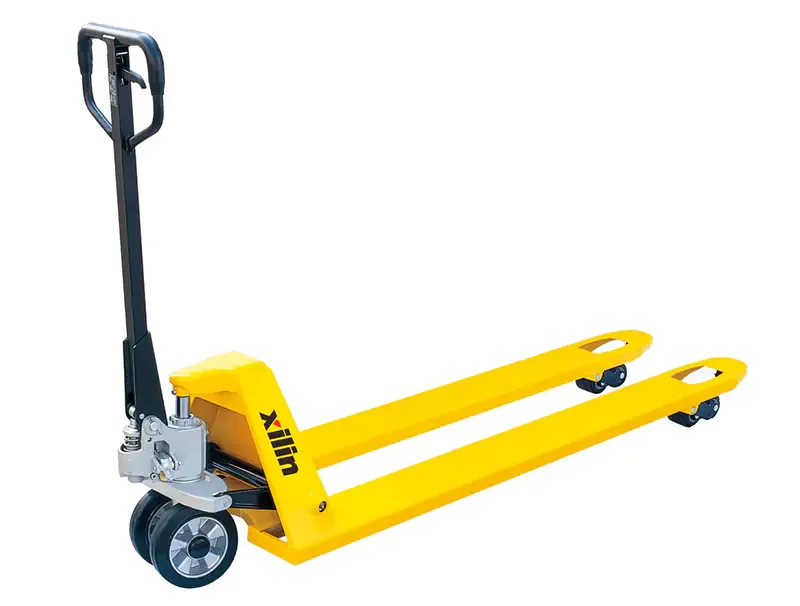
To replace the seals yourself you need some basic tools: a set of wrenches, needle-nose pliers, a thin flat screwdriver, a rubber mallet, an Allen key set, a pan for the old oil, a clean lint-free rag, the exact new seal kit and a can of new hydraulic oil. For Xilin hand pallet trucks, the manufacturer’s manual recommends 46# anti-wear hydraulic oil, and the total oil in the pump unit is only about 0.41 liters for the truck described in the document, so a small can is enough.
Step 1: Drain the old oil and remove the hydraulic pump unit
Support the truck firmly on a flat surface so it cannot tip unexpectedly. Squeeze the release lever to lower the forks to the lowest position. Take the release chain off the release trigger, then remove the handle and the pins that fix the pump unit to the frame.
Then turn the pump unit upside down and drain all the old hydraulic oil into a pan. Note that old oil often holds metal particles and dirt, and should never be reused.
Step 2: Dismantle the ram and piston
Use pliers or a screwdriver to remove the retaining clips. Pull the main ram and the pump piston out of the cylinder. This is an important step; work gently so you do not scratch the cylinder bore.
Step 3: Inspect and treat the ram
Once it is out, wipe the ram dry with a clean cloth. Check whether the surface has deep scratches or rust. If the ram is scratched, oil will still leak through the scratch even with new seals. For light scratches you can polish the surface with fine sandpaper. If the scratches are too deep or the ram is bent, you must replace the ram together with the seals.
Step 4: Remove the old seal set
Use a thin flat screwdriver or a seal puller to pry the old rings out of their grooves. After long use old seals are often hardened or flattened. Be sure to note the order and direction of each ring (which way the seal lip faces) so the new seals do not go in backward.
Step 5: Fit the new seal kit
Clean the seal grooves thoroughly and dry them with a lint-free rag. Apply a thin film of clean hydraulic oil or special grease to the new seals to help them slide in. Carefully seat the seals in the grooves, facing the direction you noted in step 4. For stiff rings, press slowly around the circumference with your fingers or a blunt tool, and avoid a sharp screwdriver tip, since one small cut in the seal lip is enough to cause a leak.
Step 6: Reassemble the system
Put the piston and ram back into the cylinder. Refit the clips, springs and control handle, remembering to thread the chain through the hole in the pump handle pin so the lever can work the release valve. Make sure every part is seated snugly and no foreign object has fallen into the pump unit. Tighten the pump cap only hand-tight; over-tightening can deform the seal ring in the cap.
Step 7: Fill with hydraulic oil and bleed the air
Open the filler plug and fill with new hydraulic oil to the pump unit’s specified level, usually level with the filler opening. One very important point is to bleed the air: following the Xilin manual, move the lever on the handle to the lower position and pump the handle up and down a few times to push air out of the system. Finally, test by lifting a pallet within the rated load, mark the ram position and leave it for a few minutes; if the ram does not sink and the pump unit does not leak, it passes.
Where to buy hand pallet truck seals and what to watch for
The price of a seal kit varies with the truck model, whether it is a low-lift or high-lift truck and its origin, so the right approach is to ask for a price by model rather than compare prices in general. A kit for a high-lift or electric hand truck has more parts and usually costs more than one for a low-lift truck.
If you want to buy parts directly and replace them yourself, you can go to forklift parts shops, lifting equipment dealers or order on e-commerce platforms. When buying online, measure the ram diameter accurately with calipers and send a photo of the old seals to avoid buying the wrong size.
Comparison of places to buy hand pallet truck seals:
| Where to buy | Advantages | Disadvantages |
|---|---|---|
| Parts shop, lifting equipment store | In stock, you can inspect the goods | Travel needed, easy to end up with fakes |
| E-commerce platform | Low price, home delivery | Hard to check quality, wrong sizes common |
| Authorized dealer of the truck brand | The right kit for the model, good technical advice | Price usually above the market average |
For Xilin hand pallet trucks distributed by ICD Vietnam, you can send the truck model, load rating and a photo of the label on the truck body to the ICD Vietnam team for advice on the right way to proceed.
How to spot a poor-quality seal kit
No home test replaces goods with a clear origin, but a few signs help weed out bad ones: rough edges or leftover mold flash on the seal, rubber that is blotchy and uneven in color, size and printed numbers that do not match the old seals, or a kit with fewer rings than the grooves in the pump unit. If you see any of these, do not fit them; a cheap seal kit that fails after a few weeks costs you another pump teardown and another can of oil.
Common mistakes after replacing seals and how to fix them for good
In many cases the truck still leaks oil or will not lift after new seals are fitted. This usually comes from mistakes in the fitting, not from the seal kit.
The most common mistake is fitting the seal lip backward. A hydraulic seal seals in one direction only: the lip (the recessed part) must always face the pressurized oil so that as pressure rises the lip expands and grips the cylinder wall. If fitted backward, the seal leaks as soon as there is load.
The second mistake is not cleaning thoroughly. One tiny grain of sand or a metal particle from the old oil in the seal groove can tear the rubber ring within a few strokes. Wipe the ram and grooves with a lint-free cloth soaked in clean hydraulic oil before fitting.
The third mistake is not bleeding all the air. If the truck lifts in jerks or feels spongy, the main cause is air still in the pump unit. Repeat the bleeding as in step 7: move the lever to the lower position and pump a few times.
The fourth mistake, common for first-time do-it-yourselfers, is leaving out the ball or spring of the check valve inside the pump unit. Then no amount of pumping lifts the forks, even with brand-new seals. Go back over the dismantling and reassembly to see whether any part is left over.
Maintenance so the new seals last
How long seals last depends more on how the truck is used every day than on the seal kit. The Xilin hand pallet truck manual gives a simple maintenance rhythm that any warehouse can follow:
- Daily: check the wheels and axles, and remove thread, strapping and rags wound into the wheels before the shift.
- After the shift: lower the forks to the lowest position so the ram retracts fully into the cylinder, and the dust seal does not have to wipe off dust that has sat on the rod for a long time.
- Monthly: lubricate the joints, pins and wheel bearings as instructed.
- Every 3 months: check the hydraulic oil level and top up with 46# oil if low.
Besides the maintenance rhythm, the two habits that ruin seals fastest are overloading and off-center lifting. A pallet over the rated load on the label pushes cylinder pressure above the design level; the BF-III has an overload valve to stop this, while other series depend on the operator. Lifting a pallet on one fork or with the load shifted to one side puts uneven force on the ram and wears the seals unevenly.
Frequently asked questions about hand pallet truck seals
1. How much does a seal kit cost?
The price depends on the truck model, whether it is a low-lift or high-lift truck, and the origin of the kit. A kit for a high-lift or electric hand truck has more parts and so usually costs more than one for a low-lift truck. The fastest way to get the right price is to send the truck model and a photo of the old seals to the seller.
2. How long does it take to replace the seals?
Most of the time goes on removing the pump unit, cleaning the grooves and bleeding the air, so a first-timer takes considerably longer than an experienced technician. Allow enough time for cleaning and inspecting the ram, because rushing these two steps is a common reason for having to strip it down again.
3. Can I use engine oil instead of hydraulic oil?
Better not. Engine oil has a different viscosity and additives from hydraulic oil, which can make seals swell or harden and make the pump work unevenly. For Xilin hand pallet trucks, the manufacturer recommends 46# anti-wear hydraulic oil.
4. Why does the truck still not lift after I replaced the seals?
There are two common possibilities: either you have not bled the air from the system, or you left out the ball of the check valve inside the pump unit. Bleed the air by moving the lever to the lower position and pumping a few times, then go back over the dismantling and reassembly to see whether any part is left over.
5. Do I need to polish the ram every time I replace the seals?
Only when the ram shows light scratches or rust on its outer surface. If the ram is smooth and shiny, wipe it clean with oil and fit the new seals straight away. A deeply scratched or bent ram must be replaced.
6. How often should I check the oil and seals on a hand pallet truck?
According to the Xilin hand pallet truck manual, check the hydraulic oil level every 3 months, check the wheels daily and lubricate monthly. If you see oil traces around the rod neck or the forks sink, check the seals right away; do not wait for the scheduled date.
7. What policies does ICD Vietnam have for forklifts?
ICD Vietnam distributes Xilin (Ningbo Ruyi) forklifts in Vietnam with a 12-month warranty. Delivery terms and technical support are stated specifically when you place an order.
Contact us for technical advice on hand pallet trucks
If you have trouble working out the seal size or need advice on more complex hydraulic faults, do not hesitate to contact the ICD Vietnam technical team.
Hotline: 0983 797 186 | 090 345 9186 | 090 5859 186
Zalo: icdvietnam | Email: sales@icdvietnam.com.vn
Delivery within Hanoi and Ho Chi Minh City in 1-3 working days under ICD Vietnam’s shipping policy.
Related product: see the ICD BF-III low-lift pallet truck, 2.5 tonnes, with a one-piece pump, an overload valve and controllable lowering speed, distributed by ICD Vietnam.
References
- Specifications of the DB, DF-III, BF-III and WB (fork height, strokes, overload valve): Ningbo Ruyi (Xilin), Hand Pallet Truck.
- Xilin hand pallet truck user manual (Ningbo Ruyi): 46# hydraulic oil, oil quantity, air bleeding, daily, monthly and 3-month check schedule.
- Parker Hannifin, Parker O-Ring Handbook ORD 5700: compatibility of NBR, HNBR, FKM and EPDM with mineral-based hydraulic oil.
- ISO 3691-5:2014 Industrial trucks, Safety requirements and verification, Part 5: Pedestrian-propelled trucks: ISO.