Table of Contents
- Who may operate an electric forklift?
- 1. Inspect the truck before operating it
- How to use a walkie electric hand truck
- 2. How to operate a stand-on electric forklift
- 3. How to operate a sit-down electric forklift
- 4. Rules for lifting and lowering loads safely
- 5. Key points when driving in a warehouse
- 6. Stopping the truck and ending the shift
- Battery protection rules when charging
- 7. Buying Xilin electric forklifts from ICD Vietnam
- Frequently asked questions
- Contact us for advice on electric forklifts
- References
Reviewed and updated by ICD - Week 43/2026
Operating an electric forklift safely takes five steps: inspect the truck at the start of the shift; start it in the correct posture; lift the load close to the mast and travel with the forks low; raise or lower only when the truck has stopped; and at the end of the shift park on level ground, lower the forks to the floor, switch off the key and check the battery capacity. Each type (walkie, stand-on, sit-down) has its own controls, but all share these rules for preventing tip-overs and collisions.
Summary of the main points:
- A safety check is a mandatory step before every shift to rule out hidden technical risks.
- A stand-on truck needs coordination between the foot on the safety pedal and the hand on the joystick.
- A sit-down truck is controlled much like a car, but more sensitively, and you must watch the center of gravity when turning.
- The golden rule of lifting is to keep the load against the mast and travel with it low to prevent tipping.
- Always end the shift by parking in the designated place, lowering the forks to the ground and checking the battery capacity.
Who may operate an electric forklift?
Only people who have been trained and assigned by the company may drive an electric forklift. Motor-driven forklifts with a lifting capacity of 1,000 kg or more are on the list of machinery and equipment with strict labor-safety requirements in Circular 36/2019/TT-BLDTBXH of 30 December 2019, and operating them is a job with strict requirements under Circular 06/2020/TT-BLDTBXH of 20 August 2020. Drivers must therefore receive safety training under Decree 44/2016/ND-CP, as amended by Decree 04/2023/ND-CP.
QCVN 25:2015/BLDTBXH on labor safety for forklifts is more specific still: the company must assign drivers by written decision, keep a shift log, and retrain a driver who moves to a different type of truck or who has not driven for 6 months or more. Someone used to a sit-down diesel truck who moves to a stand-on electric truck therefore also needs fresh instruction under this regulation before starting work.
1. Inspect the truck before operating it
The start-of-shift inspection is a requirement of QCVN 25:2015, not an optional habit. A few minutes of overall checking lets you take control of the equipment and catch damage early, before it becomes an accident.
First, look over the truck’s exterior. Check the tires for cracks, breaks or embedded objects. The lift chains must have enough grease and no slack. Above all, look under the truck for signs of hydraulic oil leaks, since this is the lifeblood of the lifting system.
For the electrics, make sure the battery connector is firmly plugged in and shows no sign of burning. Check the display to see that the battery is charged enough for a new shift. For lithium trucks with a three-color indicator, such as the Xilin CBD15W-LiX electric hand truck, the manufacturer’s manual defines green as 70-100% remaining, yellow as 40-70% and red as 10-40%; at red, take the truck to charge instead of starting a new shift.
Do not forget the warning devices such as the horn, flashing light and rear-view mirror, so that you can interact well with your surroundings. QCVN 25:2015 requires the truck to have a warning horn, a seat belt for a seated driver, and an overhead guard for the driver on trucks with a lift height above 1,800 mm. Finally, clean the cab and remove anything that could jam the accelerator or brake pedal.
If you find any fault in the items above, write it in the shift log and tell the person in charge; do not put the truck to work. A small oil leak or a dead horn today is often the cause of a bigger incident in the middle of a shift.
How to use a walkie electric hand truck
The walkie electric hand truck (electric pallet truck) is the simplest type: the operator walks behind it and every control is on the handle. On Xilin’s lithium electric hand trucks, a multi-function handle brings together the lift, lower, forward and reverse buttons, the emergency reverse button, the key switch and an information display; the truck has an electrical limit when lifting to maximum height and overload protection when lifting.
- Turn on the key switch and check the battery capacity indicator.
- Lower the handle to the control zone (not upright and not against the floor), and turn the butterfly throttle the way you want to go.
- Slide the forks the full length into the pallet and press the lift button until the pallet clears the floor.
- Travel at walking pace, and reverse when going down a gentle slope or when the load blocks your view.
- On arrival, lower the pallet to the floor and withdraw the forks; switch off the key when you leave the truck.
The emergency reverse button at the tip of the handle is the most important safety feature: when the truck reverses toward you and the handle tip touches your stomach, the truck changes direction and runs away from you. Test this button at the start of every shift. On newer models Xilin also offers a slow mode when the handle is upright, useful for maneuvering in tight spaces. This type of truck is designed for hard, flat floors: the CBD15W-LiX manual gives a maximum gradient of only 5% under load.
2. How to operate a stand-on electric forklift
Stand-on electric forklifts are common in narrow-aisle warehouses thanks to their flexible maneuvering. To start, after turning the key, you must stand fully inside the operator compartment. The most important difference is the safety pedal under your left foot: if you do not stand on it, the control system is cut off entirely. This protection makes sure the driver is always in a safe position while the truck moves.
To move, you use the joystick. Push gently forward to go ahead and pull back to reverse. The speed depends on how far you tilt the control, so push it slowly rather than jerking it.
One special note for newcomers is that a stand-on truck’s steering wheel is at the rear, so when you steer, the tail swings out the opposite way. Always watch the clearance around you so the tail does not clip the racking.
Lifting and lowering are also built into the joystick or side levers. When picking from high racking, use the mast reach function to put the forks into the pallet accurately, then retract the mast against the body before traveling to keep the center of gravity stable.
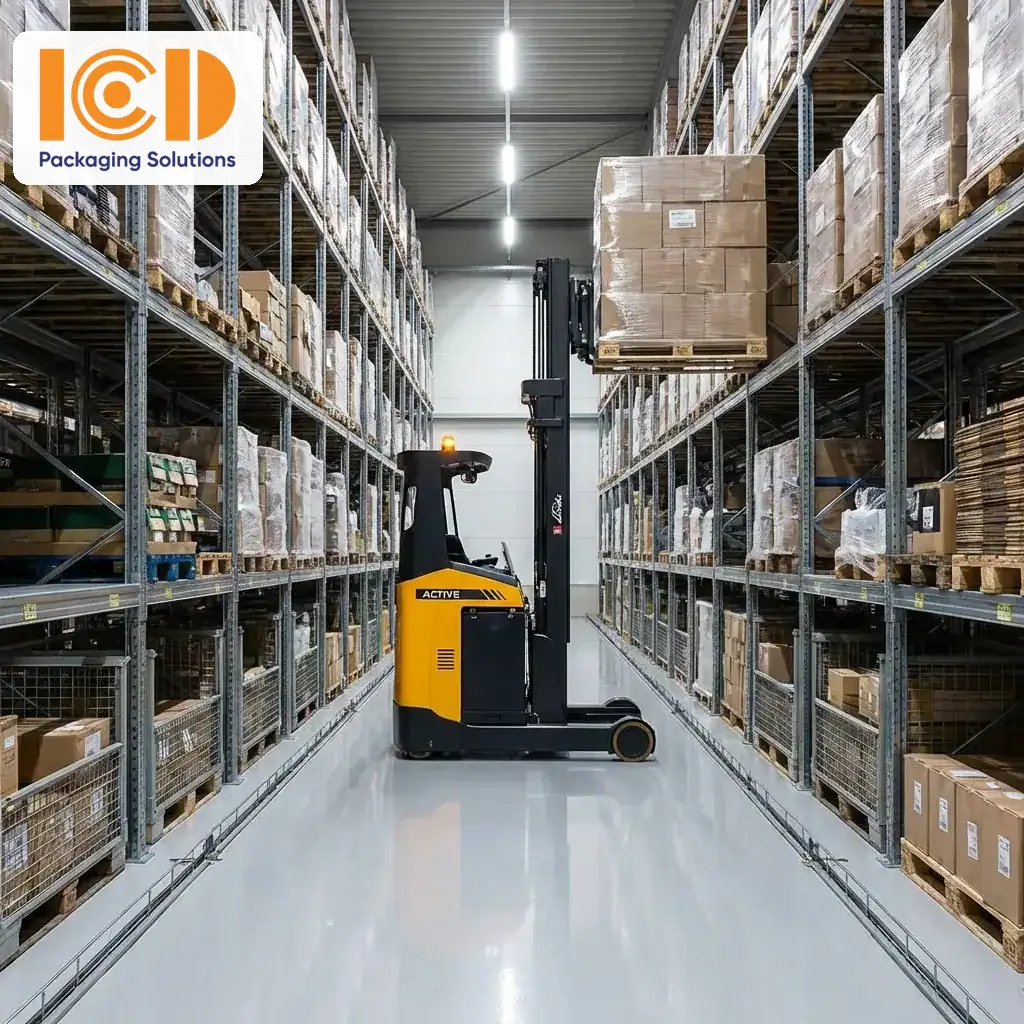
3. How to operate a sit-down electric forklift
Sit-down trucks give the operator comfort over long shifts and carry larger loads. The first step is to adjust the seat so your legs sit comfortably when pressing the brake and accelerator, and always remember to fasten the seat belt. Before switching on the key, make sure the direction selector is in neutral and the parking brake is on.
Driving a sit-down truck is quite similar to an automatic car. You steer with the wheel and accelerate with the right pedal. However, a forklift’s steering is very sensitive, and a small movement of the wheel can change its direction quickly. Get used to this feel at slow speed before working properly.
The hydraulic system of a sit-down truck is usually split into 3 separate levers:
- The first lever raises or lowers the forks.
- The second tilts the mast. Always tilt the mast back while carrying a load so the goods do not slide forward.
- The third is the side shifter, which lets you move the forks left or right without reversing to realign.
4. Rules for lifting and lowering loads safely
Preventing tip-overs is the top priority when working with an electric truck. A forklift’s center of gravity changes constantly with the lift height and the weight of the load.
Always place the load against the mast so the load center sits as close to the truck’s center of gravity as possible. Never lift a load with the fork tips, because it unbalances the truck and easily breaks the forks. Each truck has a capacity plate, which you must read carefully so you never lift beyond the limit. The rated load always comes with a load center distance; for example the Xilin CBD15W-E electric hand truck is rated at a load center of 600 mm, and longer loads that push the load center out reduce the permitted load according to the truck’s load chart.
When traveling with a load, lower it, keeping it just clear of the ground so it does not catch on the floor, and tilt the mast back. Do not raise or lower a load while the truck is moving. If the load is so high that it blocks your forward view, the mandatory rule is to travel in reverse so you can see the way and protect the people around you.
5. Key points when driving in a warehouse
Warehouses often have many people passing and limited space, so speed is something to control. Always slow down when entering corners or going through doorways. The forklift horn is an important means of communication; sound it before entering blind corners or intersections to warn others.
When you must work on slopes, there is one vital rule: always keep the load facing uphill. That means you drive forward going up a slope and in reverse going down. This stops the load from falling down the slope and keeps the truck from tipping forward. In particular, never turn around while the truck is on a slope.
Adjust speed to the floor surface
The floor decides the braking distance. The table below groups the floor types common in warehouses and how to drive on each. Specific speed limits should follow your warehouse rules and never exceed the maximum speed on the truck’s specification plate; the Xilin CBD15W-E electric hand truck, for example, runs at only 4.3 km/h with a load and 4.8 km/h without.
| Surface | How to drive | Reason |
|---|---|---|
| New, clean epoxy floor | Normal speed under warehouse rules | Good grip, little slipping |
| Old, worn, dusty cement floor | Slow down, brake earlier | Dust reduces grip, the brakes do not bite at once |
| Epoxy floor wet with water | Go very slowly, avoid hard braking | Grip drops sharply, the truck slides easily when braking |
| Floor with leaked oil | Stop the truck, wipe it clean, then continue | More slippery than a wet floor |
| Industrial rubber floor | Normal speed, watch wheel wear | Good grip, but PU wheels wear faster |
Eco mode and power mode
Many electric trucks have a switch to choose an energy-saving (Eco) mode and a power (Power) mode. Eco mode reduces speed and acceleration, suitable for long empty runs or light loads; power mode is for lifting heavy loads near the rating or going up slopes, at the cost of faster battery drain. A good habit is to set Eco as the default and switch to power only when really needed. If your truck has this feature, check the manual that came with it for the limits of each mode.
6. Stopping the truck and ending the shift
Ending the shift properly protects the equipment and gets it ready for the next shift. Park on level ground, away from shared walkways and fire-fighting equipment.
Before leaving the cab, lower the forks flat to the ground so others do not trip over them. Set the parking brake firmly, put the direction selector in neutral, switch the key fully off and remove it. Write the truck’s condition and any faults during the shift in the shift log.
Finally, check the battery capacity. If the gauge shows low charge, take the truck to the charging station right away to protect the battery’s life. You can also see our guide to charging electric forklifts for the most suitable way to recharge the equipment.
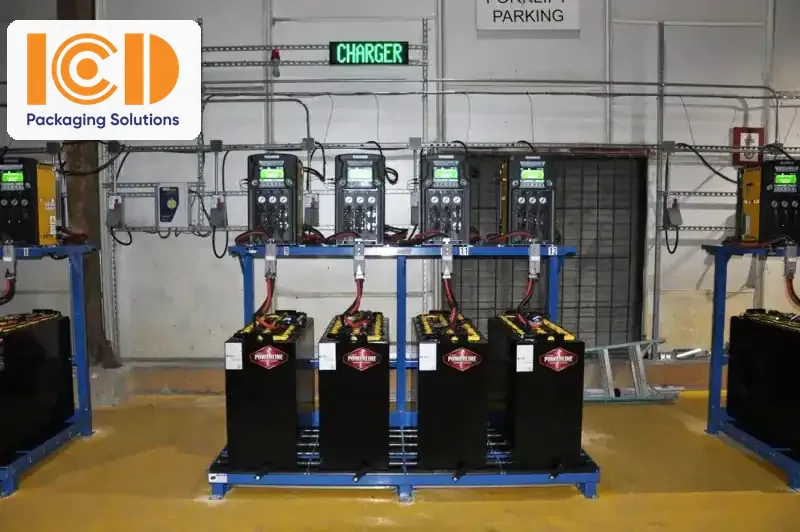
Battery protection rules when charging
Lead-acid batteries and lithium batteries need different charging habits, so do not apply one habit to both. With a lead-acid battery, run it until the gauge shows low and then charge it fully in one go, avoid plugging in for lots of small top-ups during the shift, and do not drain it flat. Xilin notes that the electrolyte temperature during charging should not exceed 45°C, so after charging let the battery cool before working.
Lithium batteries are the opposite: topping up during breaks is normal and no distilled water is needed. According to the Xilin CBD15W-LiX manual, the lithium battery works in a temperature range of -10 to 45°C, and if the truck is stored for a long time it should be charged and discharged once every 3 months. With both types, when the gauge shows low charge take the truck to charge right away instead of trying to finish the run.
7. Buying Xilin electric forklifts from ICD Vietnam
Choosing a truck that is easy to operate and durable, such as Xilin, is the first step toward better warehouse efficiency. ICD Vietnam distributes genuine Xilin electric forklifts from the Ningbo Ruyi Group, from walkie electric hand trucks and stand-on electric trucks to reach trucks for high-racking warehouses.
If you are looking for a safe and efficient lifting solution, contact ICD Vietnam for advice on the models that best suit your needs. Sending your aisle width, floor type, load and the height you need to lift will make choosing faster and more accurate.
Related product: see the ICD EPT20 low-lift electric truck in the electric forklift catalog supplied by ICD Vietnam.
Frequently asked questions
1. How should an electric forklift be maintained regularly?
Check daily against the start-of-shift list (frame, forks, chains, hydraulics, electrics, horn, brakes). For longer intervals, follow the manufacturer’s manual: the Xilin CQDH electric truck manual calls for an electrical check every 3 months and a change of HL-N46 or HL-N68 hydraulic oil after 12 months. With lead-acid batteries, check the distilled water level and electrolyte density regularly.
2. Does operating an electric forklift need a certificate?
Yes for electric forklifts with a capacity of 1,000 kg or more. Operating a truck on the list in Circular 36/2019/TT-BLDTBXH is a job with strict requirements under Circular 06/2020/TT-BLDTBXH; the driver must receive safety training under Decree 44/2016/ND-CP and be assigned by the company in a written decision under QCVN 25:2015. A hand pallet truck pushed by human effort is not on this list, but users still need safety instruction.
3. How high should the forks be when traveling with a load?
Lower the forks, keeping them just clear of the floor so they do not catch on edges and joints, and tilt the mast back. Do not raise or lower a load while the truck is moving; if the load blocks your view, drive in reverse.
4. How does operating a stand-on truck differ from a sit-down truck?
A stand-on truck uses a joystick and a safety pedal under the foot; if you do not stand on the pedal the controls cut off, and its steering wheel is at the rear so the tail swings opposite to the steering direction. A sit-down truck is controlled by a wheel and pedals like an automatic car, with three hydraulic levers for lifting, tilting and side shifting, and the driver must wear a seat belt.
5. What policies does ICD Vietnam have for forklifts?
ICD Vietnam distributes Xilin (Ningbo Ruyi) forklifts in Vietnam with a 12-month warranty. Delivery terms and technical support are stated specifically when you place an order.
Contact us for advice on electric forklifts
Hotline: 0983 797 186 | 090 345 9186 | 090 5859 186
Zalo: icdvietnam | Email: sales@icdvietnam.com.vn
Delivery within Hanoi and Ho Chi Minh City in 1-3 working days under ICD Vietnam’s shipping policy.
References
- Multi-function handle, emergency reverse, slow mode, overload protection: Ningbo Ruyi (Xilin), Li-ion Powered Pallet Truck.
- Speed of the CBD15W-E electric hand truck: Ningbo Ruyi (Xilin), Electric Walkie Pallet Truck.
- Battery charging notes: Ningbo Ruyi (Xilin), Common sense of the use of electric stacker; Xilin CQDH electric truck and CBD15W-LiX operating manuals.
- QCVN 25:2015/BLDTBXH on labor safety for forklifts, issued with Circular 51/2015/TT-BLDTBXH of 8 December 2015: National Legal Document Database.
- Circular 36/2019/TT-BLDTBXH of 30 December 2019, list of machinery and equipment with strict labor-safety requirements: National Legal Document Database.
- Law on Occupational Safety and Health No. 84/2015/QH13 of 25 June 2015; Circular 06/2020/TT-BLDTBXH of 20 August 2020; Decree 44/2016/ND-CP, amended by Decree 04/2023/ND-CP.
- ISO 3691-1, Industrial trucks, Safety requirements and verification, Part 1: Self-propelled industrial trucks.