Table of Contents
- Common failures and how to diagnose a hand pallet truck
- Tools to prepare before repairing a low-lift pallet truck
- A detailed 4-step guide to repairing a hand pallet truck in your workshop
- Common hand pallet truck repair items
- Signs it is time to buy a new truck instead of repairing
- Professional hand pallet truck repair and routine maintenance
- Frequently asked questions
- 1. Is a pump that will not lift always caused by failed seals?
- 2. Should I repair a hand pallet truck myself in the workshop?
- 3. What oil should a hand pallet truck use?
- 4. How often should a hand pallet truck be serviced?
- 5. What do I need to know when buying replacement wheels for a hand pallet truck?
- 6. What policies does ICD Vietnam have?
- Contact us for advice on the right truck
- References
Reviewed and updated by ICD - Week 43/2026
Repairing a hand pallet truck starts with pinning down the failed part: forks that will not lift or sink on their own point to the hydraulic pump unit (seals, valves, oil, air), forks that sit uneven point to the linkage rods and pins, and a truck that pulls hard and shakes points to the wheels. Most pump faults can be fixed in the workshop by replacing the seal kit, refilling with 46# hydraulic oil and bleeding the air as Xilin instructs; a bent ram or a cracked frame is a job for a technician, or a reason to consider replacing the truck.
Summary of the main points:
- Repairing a hand pallet truck takes some understanding of hydraulics and mechanics so that the equipment runs safely after it is restored.
- This guide covers the common failures: the jack will not lift, the forks sit uneven, the wheels wear out and the hydraulic seals fail.
- It also gives a 4-step procedure for restoring the pump unit in your own workshop, the tools to prepare, the repair items you will meet most often and the routine maintenance that extends the life of 2.5-tonne and 3-tonne hand pallet trucks.
Common failures and how to diagnose a hand pallet truck
Identifying the real cause of a failure on a budget hand pallet truck saves a lot of time and the cost of replacing parts you did not need to. Below are the conditions technicians meet most often.
| Symptom | Part to check | Usually fixable in the workshop? |
|---|---|---|
| Lifts with no load, stands still under load | Pump seals, oil, release valve | Yes: replace seals, add oil, bleed air |
| Pump feels light, forks do not move | Air in the pump, low oil, lever in wrong position | Yes: bleed air, top up oil |
| One fork high, one low | Linkage rods, pins under the forks | Yes, if only slightly bent |
| Pulls hard, shakes, clunks | Steering wheel, load wheels, bearings | Yes: replace wheels of the right size |
| Deeply scored or bent ram; cracked frame | Ram, pump body, fork frame | Call a technician or replace the unit |
The truck lifts only light loads or no load at all
The clearest symptom is that the truck lifts normally when empty, but when you put it into a heavy pallet the forks stand still or rise a little and then sink back.
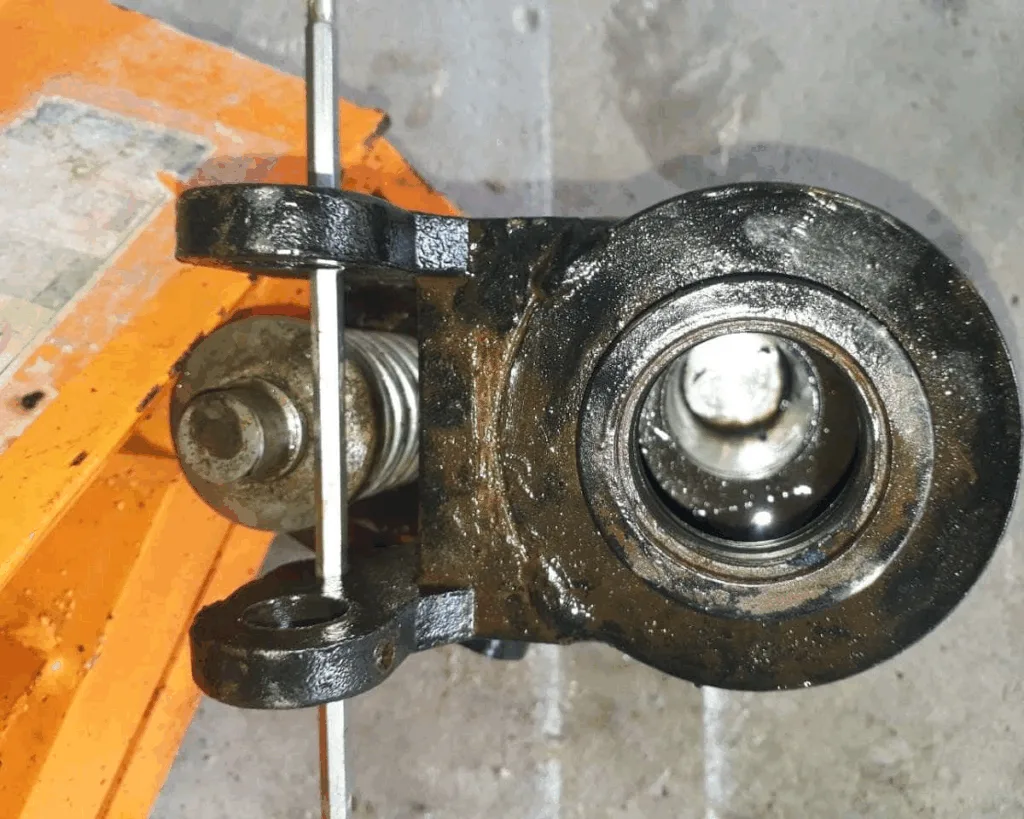
The main cause is an aged, cracked or broken hydraulic seal set that cannot hold oil pressure. Air in the oil chamber also stops the piston from producing enough thrust.
To fix it, check the hydraulic release valve for debris, then fit a new seal kit and bleed out the air bubbles. Before opening the pump, make sure the lever on the handle is in the lift position: in neutral the handle is only for pulling and steering and the pump does nothing.
Forks uneven or out of balance
This usually comes from the habit of loading to one side of the forks, or lifting over the rated load for long periods. The linkage rods underneath or the pins then bend, leaving one fork higher than the other.
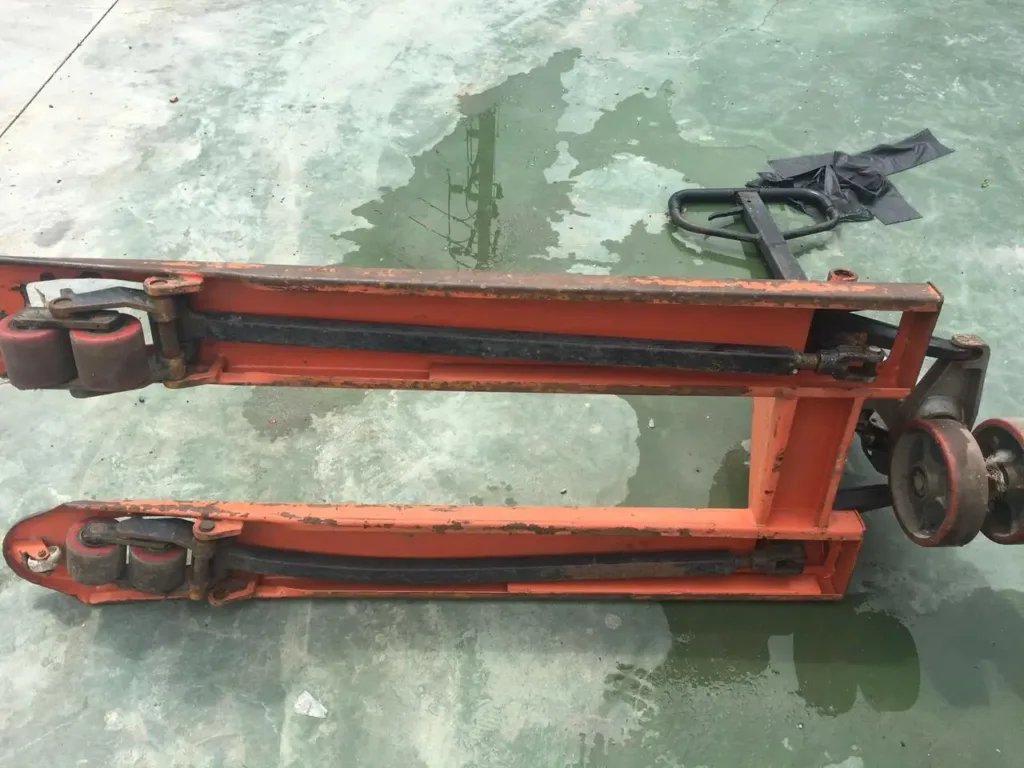
The symptoms are that the truck is hard to slide into a pallet and the load tilts as it rises. The best fix is to take the linkage apart and straighten it, or replace it if the distortion is too great, and re-adjust the lock nuts at the rod ends so both forks lift evenly. After repair, check by lifting with no load to full stroke and measuring the height of both fork tips: on a Xilin DF-III the lowest fork height is about 85 mm (2.5-tonne version) and the full lift about 200 mm according to the manufacturer’s specification, and both sides must match.
Wheels worn flat or with a broken protective layer
Hand pallet truck wheels usually fail from constant travel over rough concrete floors, or from operators pulling at speed and cornering sharply. Strapping, PE film and rags wound around the axle also jam the wheel and wear it unevenly. The symptoms are that the truck moves heavily, clunks and shakes hard.
Choose wheels to suit the working environment: PU for clean floors and epoxy-painted floors that need quiet, smooth running; nylon (often called white plastic wheels) rolls easily and resists wear and corrosion well in wet environments. Xilin offers nylon, PU and rubber wheel options on the BF-III. When a wheel has worn down to its steel core, replace it at once to avoid damaging the bearings and frame.
| Xilin series | Steering wheel | Load wheel |
|---|---|---|
| DF-III 2.5 / 3 tonnes | φ180 / φ160 mm | φ70 x 80 mm |
| BF-III 2.5 / 3 tonnes | φ180 mm (200 mm optional) | Single φ74 x 93, tandem φ74 x 70 mm |
Replacement wheels must match the diameter and width in the table above (measure the old wheel again if you are not sure of the model), because a wheel of the wrong size changes the lowered fork height, so the truck may not enter the pallet or the forks may scrape the floor.
The truck does not work after a long transport
This is a fairly rare fault, but common when buying a used hand pallet truck or moving warehouses. During transport the truck is laid on its side or upside down, so hydraulic oil spills out or air gets into the valve system. The symptoms are a light, empty-feeling handle and forks that do not move up.
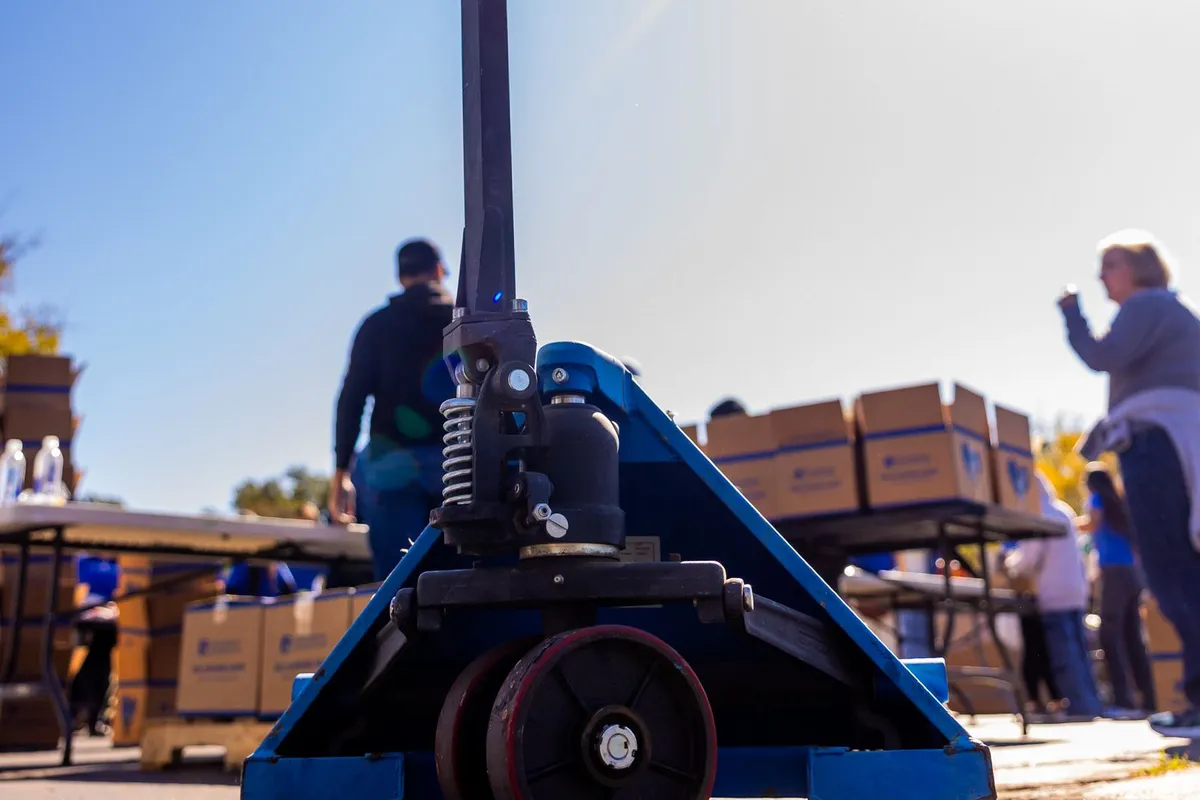
In this case you only need to stand the truck upright, top up the oil and bleed the air, and the truck will work normally. The Xilin manual describes exactly this situation: air gets into the oil during transport or when the pump body is turned over, so the forks do not lift when pumped, and the fix is to move the lever to the lower position and pump the handle a few times to push the air out.
Tools to prepare before repairing a low-lift pallet truck
A complete set of tools makes dismantling and reassembly go smoothly and avoids damage to threads and pistons.
- Basic toolkit: a wooden or rubber mallet, wrenches in various sizes, a pin punch, screwdrivers, a large adjustable wrench, circlip pliers and an Allen key set.
- Consumables: special hydraulic oil (for Xilin trucks the manufacturer recommends 46# anti-wear hydraulic oil), a seal kit of the exact size for the pump unit (each brand and series has different seal sizes), grease and clean rags.
- Special tools: a bearing puller set and a hydraulic seal installer make it easier to seat seals in the piston chamber without tearing the seal lip.
A detailed 4-step guide to repairing a hand pallet truck in your workshop
This procedure focuses on restoring the hydraulic jack, the heart of the hand pallet truck. Before you start, lower the forks fully, support the truck firmly and photograph the pump unit from several sides so you can put it back correctly.
Step 1: Separate the jack handle from the hydraulic pump unit
First, remove the release chain under the handle. Then use a pin punch to drive out the pin holding the handle to the pump unit. Keep the washers and springs so none get lost. With the handle off, you can reach the main piston head.
Step 2: Remove and replace the hydraulic seals
Use an adjustable wrench or large pliers to unscrew the pump cap, then pull the piston out of the chamber. Wipe the old oil off the piston carefully with a rag and check for any scratches. If the rod is deeply scored even new seals will leak, so replace the rod at the same time.
Use a small tool to lift out the old seals and fit the new kit, noting the lip direction of each ring. Apply a thin film of oil to the seals before fitting to reduce friction.
Step 3: Reassemble the pump unit and handle
After replacing the seals, put the piston back in the chamber and tighten the cap. Refit the handle in its original position, drive the pin back in and reconnect the release chain. Make sure the joints are greased so the handle works smoothly.
Step 4: Fill with hydraulic oil and bleed the air
Open the oil chamber cap (usually at the back of the pump unit) and fill with hydraulic oil to the specified level. Then bleed the air as Xilin instructs: move the lever on the handle to the lower position and pump the handle up and down a few times so the air inside is pushed out.
When you move the lever to lift and each stroke raises the forks steadily, the repair is complete. Test with a pallet within the rated load, mark the ram position and leave it for a few minutes: the ram must not sink and the pump unit must not leak.
Common hand pallet truck repair items
The cost of repairing a hand pallet truck varies with the model, its condition and where it is repaired, so the right way to ask for a price is item by item. The table below lists the items you will meet most often, when they are needed and whether you can do them yourself.
| Item | When needed | Do it yourself in the workshop |
|---|---|---|
| Replace the seal kit | Oil seeping at the rod neck, forks sinking | Yes, if you have the tools and the right kit |
| Replace check valve ball and spring | Pump will not lift even after new seals and bleeding | Yes, take care over the order of assembly |
| Replace steering wheels (pair) | Wheel worn flat, pulls hard, shakes | Yes |
| Replace load wheels | Load wheel broken, jammed or worn to the core | Yes |
| Add hydraulic oil | Pump feels light, after transport | Yes |
| Polish the ram | Light scratches, surface rust on the rod | Light scratches yes; deep scratches need a technician with a machine |
| Replace the whole pump unit | Cracked pump body, bent ram, deeply scored cylinder | Call a technician |
| Repaint the frame, general overhaul | Rusty frame, truck many years old | Depends on workshop conditions |
Signs it is time to buy a new truck instead of repairing
Repairing is always cheaper than buying new each time, but there are three cases where carrying on usually stops making sense:
- Total repair cost approaches the price of a new truck: when the pump, wheels and linkage fail together, parts plus labor often come close to a new truck that has a warranty.
- The steel frame or forks are cracked: welding a load-bearing area is high risk and no longer guarantees the rated load.
- The ram has been polished many times: each polish shrinks the rod diameter, so new seals struggle to seal for long; you then need the whole pump unit.
The most common fault is a pump that will not lift - see the causes and fixes in hand pallet truck will not lift.
Professional hand pallet truck repair and routine maintenance
If you do not have the time or the special tools, going to a reputable hand pallet truck repair provider in Ho Chi Minh City or Hanoi is the best choice. These services usually offer a full hydraulic jack restoration package with a clear warranty policy.
- Genuine replacement parts: components from the handle, springs and release valve to the piston for 2.5-tonne, 3-tonne and 5-tonne loads.
- Hydraulic jack restoration: dealing with oil leaks and pressure loss using special equipment.
- Routine maintenance: cleaning wheels, greasing joints, checking and topping up hydraulic oil.
- Replacing hand pallet truck wheels: red and yellow PU wheels and white nylon wheels in standard sizes.
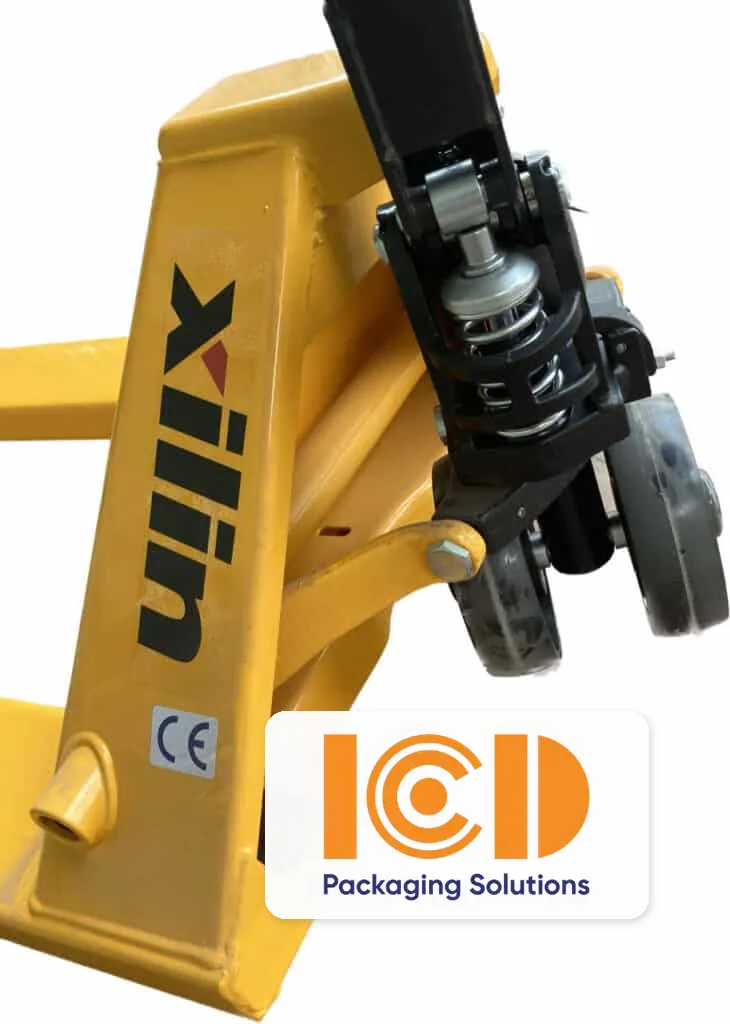
The Xilin manual sets out a maintenance rhythm any warehouse can follow: daily, check the wheels and axles and remove thread, strapping and rags wound into the wheels; monthly, lubricate the joints, pins and wheel bearings; every 3 months, check the hydraulic oil level. At the end of the shift, lower the forks to the lowest position so the ram retracts into the cylinder and dust does not settle on the rod.
Understanding and knowing how to do basic hand pallet truck repairs not only keeps you in control of production but also saves a good deal in warehouse running costs. Always set aside time to check the equipment every day so small faults are found and dealt with before they become serious damage.
Frequently asked questions
1. Is a pump that will not lift always caused by failed seals?
No. Before opening the pump, check whether the lever on the handle is in the lift position, whether the oil level is enough, and bleed the air by moving the lever to the lower position and pumping a few times. Only when you have done these and the truck still will not lift or sinks should you think about replacing the seals or valves.
2. Should I repair a hand pallet truck myself in the workshop?
Jobs such as adding oil, bleeding air, replacing wheels and replacing the seal kit can be done yourself if you have the tools and the right parts. Polishing the ram, replacing the pump unit and welding the fork frame should be left to a technician with special equipment.
3. What oil should a hand pallet truck use?
Use hydraulic oil, not engine oil. For Xilin hand pallet trucks, the manufacturer’s manual recommends 46# anti-wear hydraulic oil.
4. How often should a hand pallet truck be serviced?
Following the Xilin manual: check the wheels daily, lubricate monthly and check the hydraulic oil level every 3 months. If you see oil seeping, forks sinking or the truck pulling hard, check it right away; do not wait for the scheduled date.
5. What do I need to know when buying replacement wheels for a hand pallet truck?
You need the exact diameter and width of the steering wheel and load wheel. For example, per Xilin’s specifications the DF-III uses a φ180 or φ160 mm steering wheel and φ70 x 80 mm load wheels; the BF-III uses a φ180 mm steering wheel and single φ74 x 93 mm or tandem φ74 x 70 mm load wheels.
6. What policies does ICD Vietnam have?
ICD Vietnam distributes Xilin (Ningbo Ruyi) forklifts in Vietnam with a 12-month warranty. Delivery terms and technical support are stated specifically when you place an order.
Contact us for advice on the right truck
Hotline: 0983 797 186 | 090 345 9186 | 090 5859 186
Zalo: icdvietnam | Email: sales@icdvietnam.com.vn
Delivery within Hanoi and Ho Chi Minh City in 1-3 working days under ICD Vietnam’s shipping policy.
Related product: see the ICD BF-III low-lift pallet truck, 2.5 tonnes, with a one-piece pump, an overload valve and controllable lowering speed, distributed by ICD Vietnam.
References
- Specifications of the DF-III, DB and WB: Ningbo Ruyi (Xilin), Hand Pallet Truck.
- Specifications of the BF-III and the nylon, PU and rubber wheel options: Ningbo Ruyi (Xilin), BF-III Premium Type product page.
- Xilin hand pallet truck user manual (Ningbo Ruyi): 46# oil, oil quantity, air bleeding, daily, monthly and 3-month check schedule.
- ISO 3691-5:2014 Industrial trucks, Safety requirements and verification, Part 5: Pedestrian-propelled trucks: ISO.