Table of Contents
- 1. Main parts of a hand pallet truck hydraulic pump
- 2. How the hydraulic pump works
- 3. The role of the hydraulic pump in a hand pallet truck
- 4. Which part has failed, judging by the symptoms?
- 5. Hydraulic pump maintenance guide
- Frequently asked questions
- 1. What are the main parts of a hand pallet truck hydraulic pump?
- 2. What principle does a hand pallet truck hydraulic pump work on?
- 3. Why is the hydraulic pump called the “heart” of a hand pallet truck?
- 4. Does a hand pallet truck pump have a swash plate or a valve plate?
- 5. How far do the forks rise with each stroke?
- Contact us for advice on the right truck
- References
Reviewed and updated by ICD - Week 43/2026
The hydraulic pump of a hand pallet truck is a single-piston pump housed in one pump body: a small pump rod connected to the handle, a large lift ram that pushes the fork frame, a one-way ball check valve that lets oil flow in one direction from the reservoir to the large cylinder, and a release valve that opens the return path when lowering. Each time you press the handle, the pump rod forces oil into the large cylinder; on a Xilin DF-III each stroke raises the forks about 11 mm and about 10 strokes take them to full height.
Quick summary:
- Core parts: pump body (holding the oil chamber and two cylinders), pump rod and return spring, lift ram (lifting piston), seal sets, ball check valves, release valve and adjusting screw.
- Principle: based on Pascal’s law, using oil pressure to lift heavy loads.
- Role: the “heart” of the truck, determining its lifting ability and working efficiency.
Once you have mastered how to use a pallet jack and how to replace its seals, learning about its construction helps you understand the truck you operate.
Among its parts, the hydraulic pump is the core component, the “heart” that lets the truck raise and lower heavy loads with little effort. Knowing the construction of a hand pallet truck hydraulic pump not only helps you use the truck efficiently but also lets you take the initiative in maintenance and repair.
1. Main parts of a hand pallet truck hydraulic pump
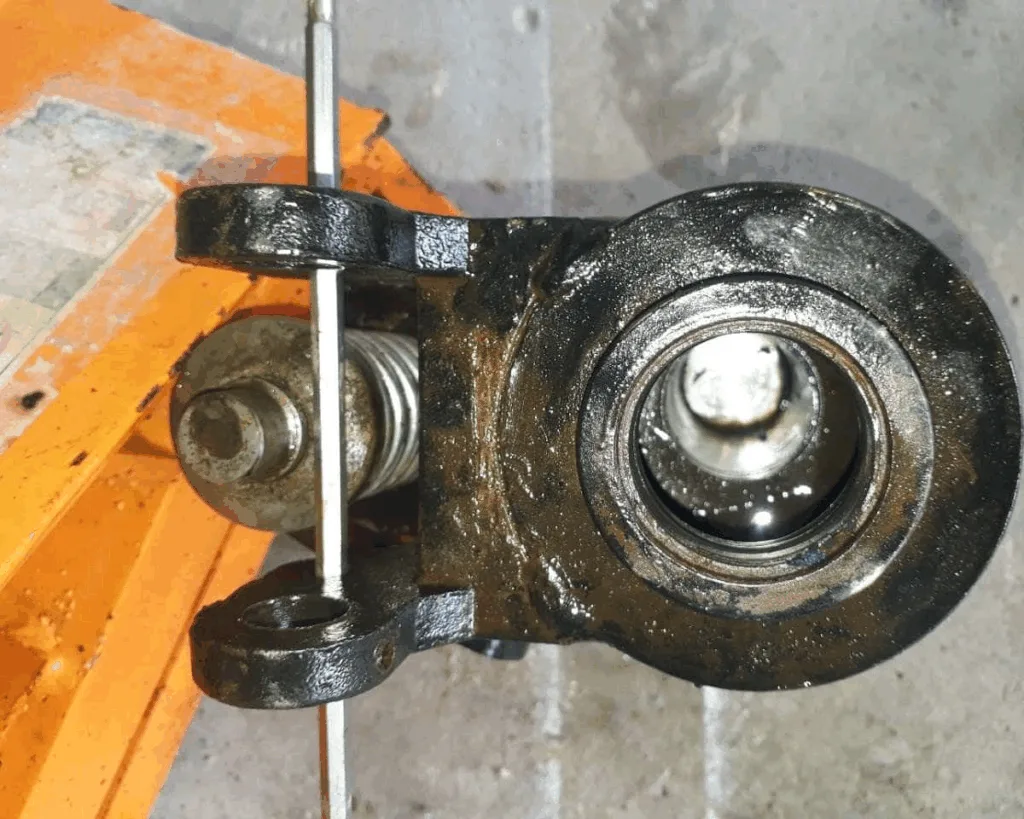
The hydraulic pump of a hand pallet truck is made up of several parts, each with its own function. Unlike the multi-cylinder piston pumps of industrial hydraulic machinery, a hand pallet truck pump is much simpler: one pump rod, one lift ram and a few valve balls, all sitting in one pump body just behind the handle.
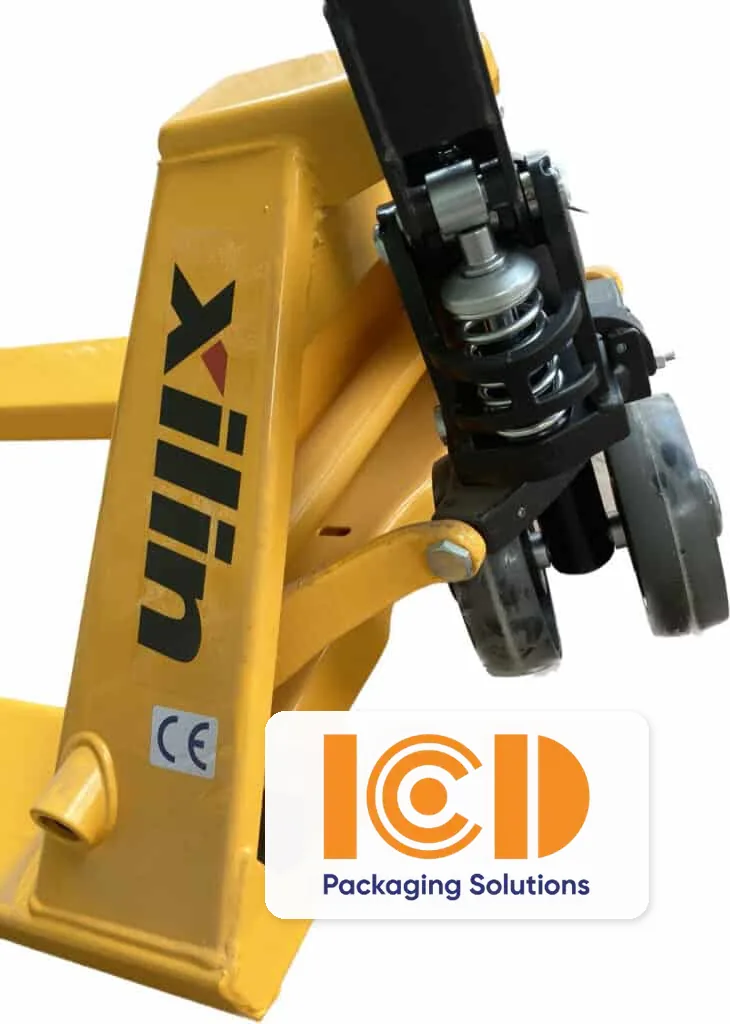
- Pump body: a cast metal block containing the oil chamber, the small pump cylinder, the large lift cylinder and the oil passages connecting them. The pump body must withstand high pressure to stay safe.
- Pump rod (pump piston): connected to the handle through a shaft and spring cap. When you press the handle, the pump rod goes down and forces the oil; the return spring pushes the rod back up after each stroke.
- Lift ram (lifting piston): the large rod inside the lift cylinder; it rises as oil is pumped in and pushes the fork frame up through the linkage.
- Check valves (ball valves): small steel balls resting on seats that let oil pass from the reservoir into the pump cylinder and on to the lift cylinder, and stop it flowing back.
- Release valve: the valve core, push pin and adjusting screw. When you move the lever to the lower position, the chain pulls a plate that presses the push pin and opens the valve; oil returns to the reservoir and the forks come down.
- Seals and gaskets: dust seals and Y-seals on the pump rod and lift ram, an O-ring at the cylinder cap and a washer at the sealing screw. These are wear parts and decide whether the pump holds its oil.
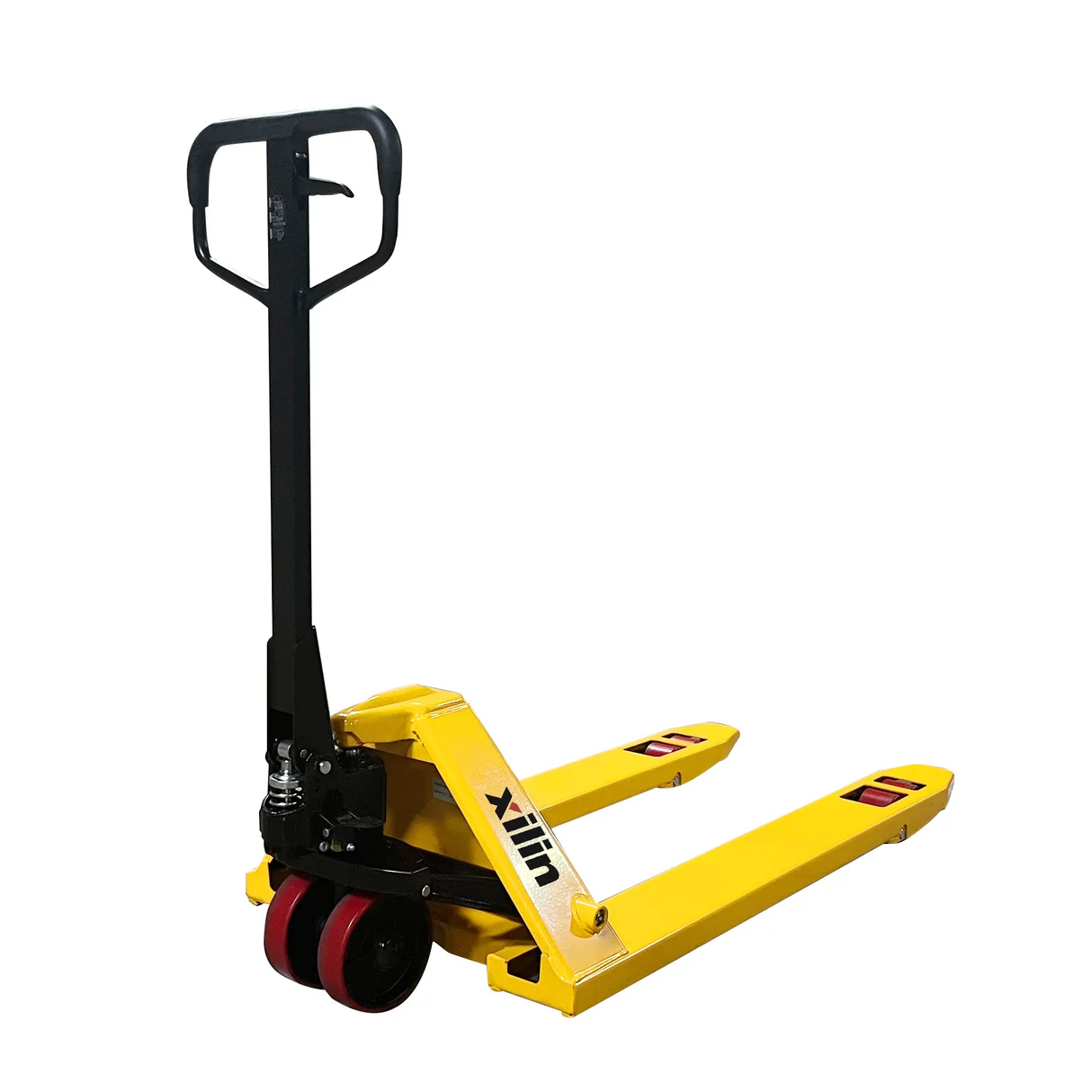
Some series add an overload valve: according to Xilin, the BF-III has a one-piece cast pump and an overload valve, which opens when the load exceeds the rated capacity so the pump will not lift further, protecting the seals and the frame.
Real spare part sizes of a Xilin pump assembly
To show that the parts above are more than theory, here are some details from the parts list of the BF-series pump assembly, taken from the Xilin BFC6 weighing hand pallet truck spare parts catalogue. Sizes can differ by model, so when ordering parts always check the code on your own truck.
| Part | Size listed in the catalogue | Role |
|---|---|---|
| Pump rod (pump plunger) | 18 x 97 mm | Forces oil on each press of the handle |
| Dust seal and Y-seal of the pump rod | 18 | Seals the pump rod and wipes off dust |
| Lift ram (piston rod) | 31.5 x 263 mm | Pushes the fork frame up |
| Guide sleeve, Y-seal and dust seal of the lift ram | 31.5 | Guides and seals the lift ram |
| O-ring of the cylinder cap | 65 x 2.65 mm | Seals the lift cylinder cap |
| Steel valve balls | 6.35 mm and 5 mm | Check valves |
| Release valve adjusting screw | M10 x 1 | Sets the release valve opening point |
| Sealing screw with combined washer | M20 x 1.5 | Plugs the hole in the pump body |
2. How the hydraulic pump works
The hand pallet truck hydraulic pump works on Pascal’s law: pressure applied to a confined fluid is transmitted undiminished.
When you pull the handle up, the spring pushes the pump rod up, the ball on the reservoir side opens and oil is drawn into the pump cylinder. When you press the handle down, the pump rod forces the oil; the ball on the intake side closes, the ball on the lift cylinder side opens, and the oil is pushed into the large cylinder and pushes the lift ram up, raising the forks slowly. Each pull-up and press-down cycle repeats in exactly the same way.
When you want to lower the load, simply move the lever to the lower position. The release valve opens, oil flows back to the reservoir and the forks descend under the weight of the load. In the neutral position both paths are held shut, so you can pull the truck along while the forks neither rise nor sink.
Where is the force multiplied?
Your hand force is multiplied in two stages. The first is the lever arm: the handle is long and the point of action on the pump rod is close to the pivot. The second is hydraulic: the pressure is the same in both cylinders, but the lift ram has a larger cross-section than the pump rod. Using the sizes in the spare parts catalogue above, the 31.5 mm ram has about 3 times the cross-section of the 18 mm pump rod (31.5 squared divided by 18 squared), so the force on the ram is about 3 times the force pressing on the pump rod. The rest of the multiplication comes from the handle and the linkage that raises the forks.
In return the travel gets shorter: each press moves the forks up only a small step. According to Xilin’s specification, the DF-III lifts about 11 mm per stroke and needs about 10 strokes for full travel. If your truck needs clearly more strokes than this to rise, it points to air, low oil or a check valve that does not seal.
3. The role of the hydraulic pump in a hand pallet truck
You can think of the hydraulic pump as the “muscle” of the truck. Without it you could not lift heavy loads by human strength alone.
The hydraulic pump turns a small force from a person’s hand into a large force that lifts the load, making transport work far easier and more efficient.
Many truck failures are caused not by the user but by a hydraulic pump system that was not maintained properly. Understanding the construction of a hand pallet truck hydraulic pump tells you when to top up oil and when to replace seals, so the truck always works at its best.
4. Which part has failed, judging by the symptoms?
This is where understanding the construction pays off most: from the symptom you can guess which part has a problem before taking the pump apart.
| Part | Symptom when it fails |
|---|---|
| Ram seal, scored ram | Oil seeping around the ram neck, forks sinking gradually |
| Pump rod seal | Oil seeping under the handle, spongy pumping |
| Dirty or worn check valve ball | Light pumping but the forks will not rise, or rise and then sink |
| Release valve or adjusting screw out of position | Lifts then sinks at once, or will not lower |
| Low oil, air in the system | Spongy pumping, many strokes needed before the forks move |
| Cracked pump body | Oil seeping where there is no seal; the pump assembly must be replaced |
Each of these symptoms has its own repair procedure: oil leaks by the position of the oil stain, a pump that will not lift by the feel of the handle, and replacing the seal kit once a seal is confirmed faulty.
5. Hydraulic pump maintenance guide
A hand pallet truck pump needs hardly any complicated maintenance, but a few small jobs done regularly decide the life of the seals and valves. The schedule below follows the Xilin hand pallet truck manual.
- Use 46# anti-wear hydraulic oil; the pump assembly takes about 0.41 litres. Do not use engine oil.
- Check the oil level every 3 months; lubricate joints and pins monthly; check the wheels and axle daily.
- After the truck has been transported or laid on its side, bleed the air: move the lever to the lower position and pump the handle several times.
- At the end of a shift lower the forks to their lowest so the ram retracts into the cylinder, which reduces dust settling on the rod and seals.
- Never lift beyond the load rating on the truck’s plate.
Frequently asked questions
1. What are the main parts of a hand pallet truck hydraulic pump?
A pump body holding the oil chamber and two cylinders, a pump rod with a return spring, a lift ram (lifting piston), ball check valves, a release valve with an adjusting screw, and the seals and gaskets that keep it tight.
2. What principle does a hand pallet truck hydraulic pump work on?
Pascal’s law, using oil pressure to lift heavy loads. The small pump rod forces oil through the check valve into the large cylinder, pushing up the ram and the fork frame; opening the release valve lets the oil return and the forks lower.
3. Why is the hydraulic pump called the “heart” of a hand pallet truck?
Because it is the part that decides the lifting ability and working efficiency of the whole truck.
4. Does a hand pallet truck pump have a swash plate or a valve plate?
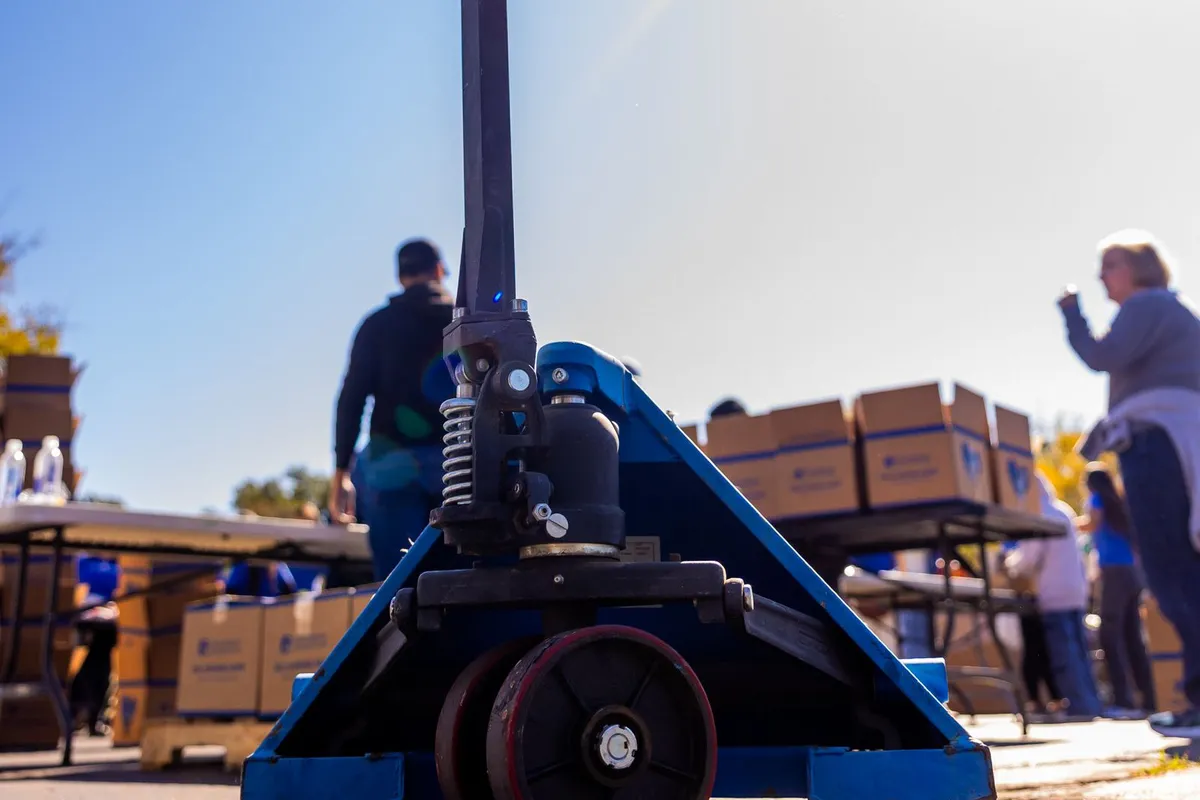
No. Swash plates and valve plates belong to the axial piston pumps used in industrial hydraulic machinery. A hand pallet truck pump is a single-piston pump made up only of a pump rod, a lift ram and ball valves.
5. How far do the forks rise with each stroke?
It depends on the model. According to Xilin’s specification, the DF-III rises about 11 mm per stroke and about 10 strokes complete the travel. Needing clearly more strokes than this points to air, low oil or a valve that does not seal.
Contact us for advice on the right truck
Hotline: 0983 797 186 | 090 345 9186 | 090 5859 186
Zalo: icdvietnam | Email: sales@icdvietnam.com.vn
Delivery within Hanoi and Ho Chi Minh City takes 1-3 working days under ICD Vietnam’s shipping policy.
See a related product: ICD BF-III 2.5-tonne low-profile hand pallet truck with a one-piece cast pump, overload valve and controllable lowering speed, distributed by ICD Vietnam.
References
- BF-III and DF-III hand pallet truck specifications: Ningbo Ruyi (Xilin), Hand Pallet Truck.
- Xilin BFC6-7/BFC6-8 weighing hand pallet truck spare parts catalogue (operation manual and spare parts catalogue): detailed parts list for the BF-series pump assembly.
- Xilin hand pallet truck manual (Ningbo Ruyi): 46# hydraulic oil, oil quantity, bleeding, inspection schedule.
- ISO 3691-5:2014 Industrial trucks, Safety requirements and verification, Part 5: Pedestrian-propelled trucks: ISO.
Written by the ICD Vietnam technical team, distributor of Xilin (Ningbo Ruyi) forklifts. Last updated: 18 October 2026.