Table of Contents
- Key points at a glance
- 1. When to charge an electric forklift battery
- 2. Setting up a safe charging area
- 3. Step-by-step charging procedure - technically correct
- 4. Common charging mistakes and how to fix them
- 5. Battery maintenance to extend service life
- 6. Lead-acid vs lithium-ion: which battery suits your operation
- 7. Equalize charging: the technique most operators skip that adds 30% more battery life
- 8. Measuring true State of Charge - do not rely solely on the dashboard gauge
- 9. Genuine battery and charger supply for Xilin electric forklifts
- Related articles
Reviewed and updated by ICD - Week 37/2026
Overcharging, fully draining the battery, or opportunity charging at the wrong time can cut battery life from 5-7 years down to just 2-3 years. This guide provides a technically correct charging procedure that doubles the service life of your electric forklift battery. Charge when the battery reaches 20-30%, always charge to 100% in a single session, and never interrupt a charge cycle mid-way.
Key points at a glance
- The ideal charging window is when battery capacity reaches 20-30%. Never let the battery fully discharge to 0%.
- The correct procedure includes checking distilled water levels, opening battery cell caps to vent gas, and charging to 100% in one uninterrupted session.
- The charging area must be well ventilated to prevent hydrogen gas accumulation, which is highly flammable.
- The most common and costly mistake is opportunity charging - plugging in for 30 minutes during a break counts as a full charge cycle and accelerates battery degradation.
- Lead-acid and lithium-ion batteries have different charging requirements: lead-acid needs regular distilled water maintenance; lithium-ion charges in 1-3 hours with no water top-up needed.
1. When to charge an electric forklift battery
The moment you plug in directly determines the long-term condition of the battery plates inside.
- The 20-30% rule: Most modern electric forklifts have a low-battery warning indicator. Bring the forklift to the charging station when the gauge shows 2-3 bars remaining, or approximately 20-30% capacity. Allowing the battery to fully deplete causes deep discharge, which sulfates the lead plates and permanently reduces charge capacity.
- Charge immediately after the work shift: After a full day of operation, the battery needs to be recharged to recover energy. Do not leave the forklift in a low-charge state overnight or over a weekend. Unstable acid concentration inside the battery during idle periods accelerates plate corrosion.
- Avoid opportunity charging: Unlike a mobile phone, every time you plug in an electric forklift, the battery management system records it as one full charge cycle. A lead-acid battery typically allows 1,200 to 1,500 charge cycles over its lifetime. Plugging in for 30 minutes during a lunch break and then unplugging wastes one full cycle and causes the battery to degrade faster.
2. Setting up a safe charging area
A forklift charging area is not just a power point - it must meet strict technical safety standards.
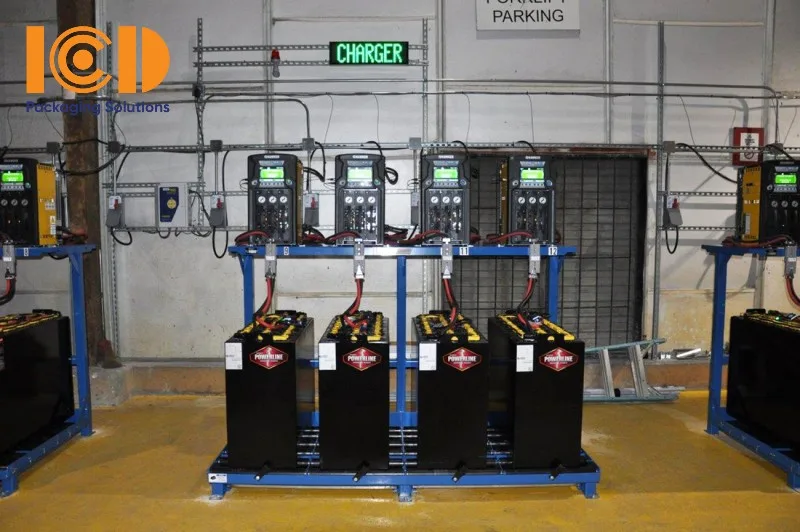
Location: The charging station must be placed on dry, elevated ground to prevent flooding or moisture that could cause short circuits. Keep it away from heat sources, welding or cutting areas, and direct sunlight.
Ventilation is mandatory: During charging, lead-acid batteries undergo a chemical reaction that generates hydrogen gas. Hydrogen is colorless, odorless, and extremely flammable when it accumulates at high concentrations in enclosed spaces. The charging area must have ventilation fans or be located in an open space.
Stable power input: Forklift chargers typically run on 3-phase 380V power. Voltage fluctuations cause the charger to cut in and out repeatedly, damaging both the charger circuit board and the battery. In addition, keep an ABC dry-powder fire extinguisher close at hand to deal with electrical incidents quickly.
3. Step-by-step charging procedure - technically correct
Follow these 6 steps to achieve the best charging efficiency and ensure safety.
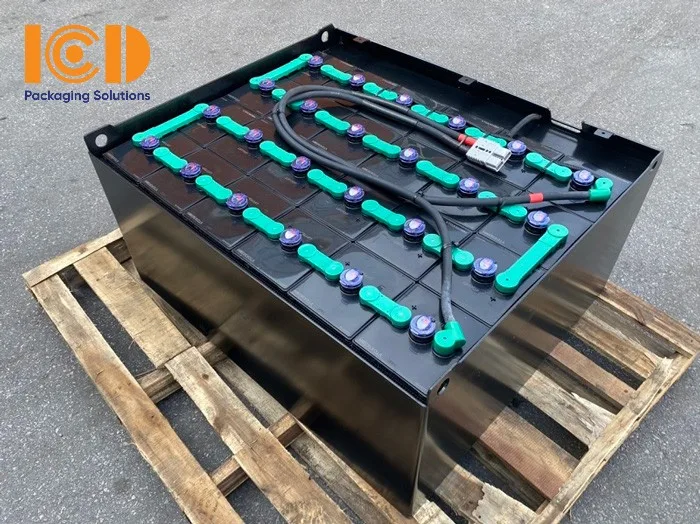
- Step 1 - Turn off and apply the parking brake. Make sure the forklift is fully stopped on level ground. Switch the ignition key fully off so no electrical load is running through the vehicle during charging.
- Step 2 - Open the battery compartment cover. On stand-up or sit-down electric forklifts that use flooded lead-acid batteries, open the battery compartment lid or top cover to allow gas to escape freely and prevent the battery from overheating.
- Step 3 - Check distilled water level. Before charging, check whether the water level in each cell is sufficient. The standard level is 10-20 mm above the lead plates. If it is low, top up with distilled water to the correct level before charging. Do not fill to the brim - during charging the electrolyte heats up and boils, and overfilling will cause acid to overflow.
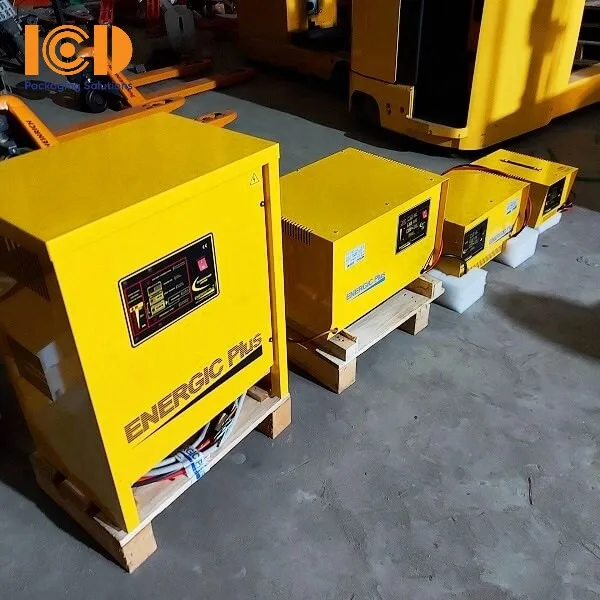
- Step 4 - Connect the charger. Plug the charger connector into the battery connector first, then switch the charger on. Check that the connectors are not loose, scorched, or dirty. When the red indicator light comes on, current is flowing into the battery.
- Step 5 - Charge to 100% without interruption. Standard charging time is 8 to 12 hours. Modern smart chargers cut off automatically when the battery is full. Let the charger complete its cycle until the indicator turns green. Do not unplug when the battery is only at 70-80%.
- Step 6 - Rest the battery after charging. Do not use the forklift immediately. Leave the battery to rest and cool for 30 minutes to 1 hour. Then close all cell caps firmly and wipe the top of the battery with a dry cloth if any acid has splashed out, to prevent leakage current.
4. Common charging mistakes and how to fix them
| Mistake | Consequence | Correction |
|---|---|---|
| Letting the battery fully drain to 0% before charging | Dead cells, battery life cut by 50% immediately | Always charge when at least 20% capacity remains |
| Opportunity charging (partial charges) | Battery loses capacity quickly, cannot hold a full charge | Always charge to 100% in one session |
| Skipping distilled water check or using tap water | Tap water impurities damage the lead plates. Low water level burns plates | Use only distilled water and top up weekly |
| Charging in an overheated or poorly ventilated area | Battery swelling, very high risk of fire or explosion | Charge in a cool, open area below 45 degrees C |
5. Battery maintenance to extend service life
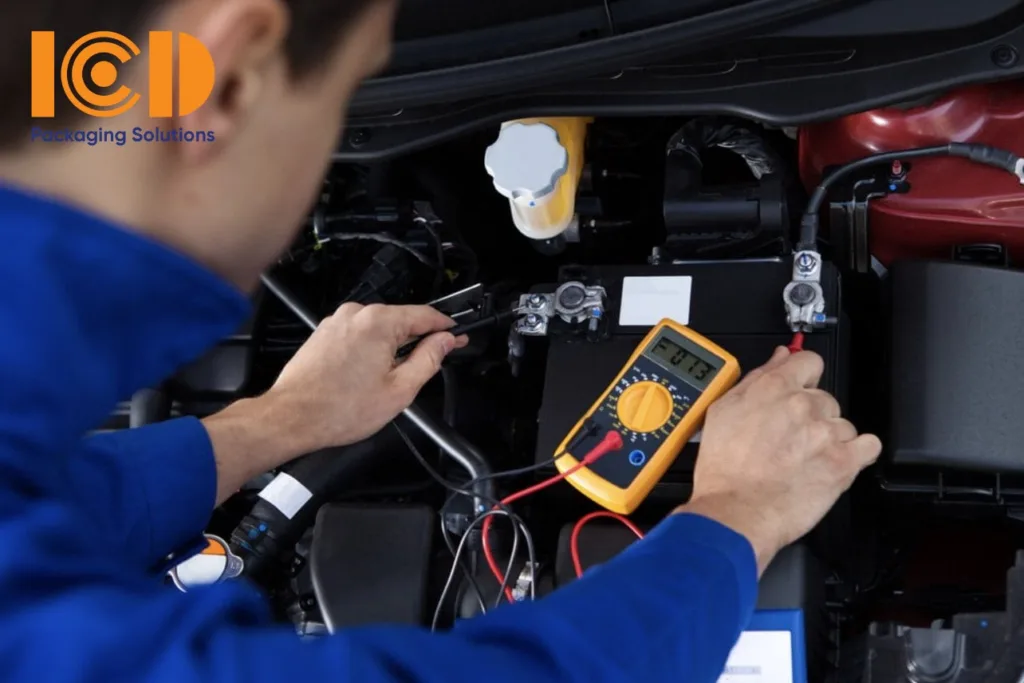
Correct charging alone is not enough. Regular maintenance is the key to keeping a battery healthy for over 5 years.
- Check distilled water weekly: This is the single most important maintenance task. Keep the water level stable to protect the plates. Use only purpose-made distilled water - not filtered or mineral water.
- Clean the battery terminals monthly: Terminal posts oxidize over time and develop a white salt crust. This residue restricts current flow and causes the terminal to heat up. Wash with warm water, dry thoroughly, and apply a thin layer of grease to prevent further corrosion.
- Run an equalize charge: If your charger has an Equalizing function, activate it approximately every 5-10 normal charge cycles. This mode applies a small controlled overcharge for a few hours to balance voltage across all cells and ensure every cell is fully charged equally.
- Check electrolyte specific gravity every 3-6 months: Use a hydrometer to check the acid concentration. The ideal specific gravity of a fully charged battery is 1.26 to 1.28. If the reading is low, the battery may be deteriorating.
6. Lead-acid vs lithium-ion: which battery suits your operation
The type of battery you choose affects both operating procedures and total cost of ownership.
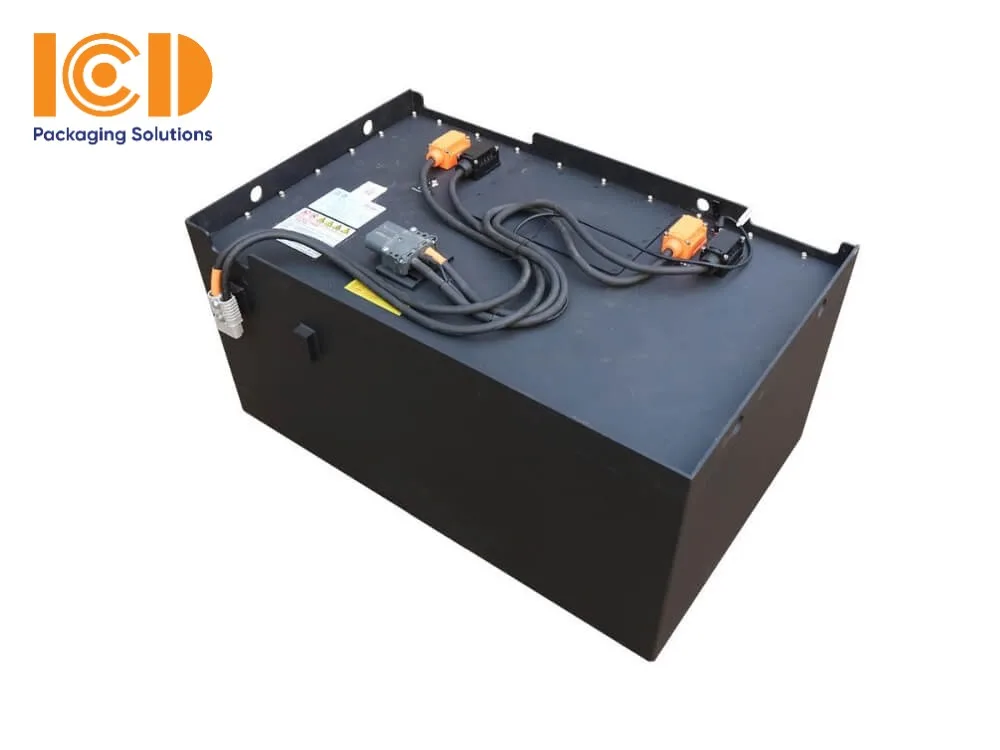
| Feature | Lead-acid battery | Lithium-ion battery |
|---|---|---|
| Charge time | 8-12 hours | 1-3 hours |
| Opportunity charging | Not recommended - wastes a charge cycle | Safe at any time, no memory effect |
| Distilled water top-up | Required weekly | Not required |
| Hydrogen gas emission during charge | Yes - requires ventilation | No |
| Service life | 1,200-1,500 cycles (~5-7 years) | Up to 10 years |
| Initial cost | Lower | Roughly double lead-acid |
| Best suited for | Warehouses running 1-2 shifts per day | Warehouses running 3 continuous shifts |
7. Equalize charging: the technique most operators skip that adds 30% more battery life
Most guides only say “plug in overnight.” The major gap: lead-acid batteries need periodic equalize charging - something almost no Vietnamese guide covers.
- What equalize charging is: intentionally charging at approximately 10% above nominal voltage (for example 14V for a 12V cell) for 2-4 hours. This balances voltage across all cells and breaks down sulfate crystals that have built up on the plates.
- How often: every 30 normal charge cycles (roughly once a month for a forklift running 5 days a week), or whenever you measure a cell voltage difference of more than 0.1V between cells.
- How to do it: smart chargers have a dedicated Equalize button - press once and let it run. Older chargers without this function should be upgraded when buying a new forklift or replaced with a standalone smart charger (approximately 3-5 million VND).
- Real-world impact: without equalize charging, a lead-acid battery lasts about 1,500 cycles. With regular equalize charging: 2,000-2,200 cycles - an increase of roughly 33%.
8. Measuring true State of Charge - do not rely solely on the dashboard gauge
The battery bars on the forklift display measure voltage under load and are not fully accurate. Measure true SOC using electrolyte specific gravity:
| Specific gravity | True SOC | Battery status |
|---|---|---|
| 1.275 - Liên hệ báo giá | 100% | Fully charged, ready to use |
| 1.235 - Liên hệ báo giá | 75% | Good - enough for half a shift |
| 1.200 - Liên hệ báo giá | 50% | Prepare to charge soon |
| 1.170 - Liên hệ báo giá | 25% | Charge now |
| Below Liên hệ báo giá | Below 10% | DANGER - deep discharge, battery degraded |
Tool needed: a battery hydrometer (Liên hệ báo giá). Test by inserting through the distilled water fill cap of each cell.
9. Genuine battery and charger supply for Xilin electric forklifts
To ensure the best operating performance for your forklift, source components from a reputable supplier. ICD Viet Nam is the authorized distributor of Xilin electric forklifts (Ningbo Ruyi) and provides complete battery power solutions:
- Genuine lead-acid batteries from established brands including Rocket, GS, and Faam.
- Lithium-ion battery systems for all Xilin forklift models with extended warranty coverage.
- Smart auto-cutoff chargers with built-in equalize charging mode.
- Battery inspection, cell restoration, and individual cell replacement services to save businesses the cost of a full battery replacement.
If you are experiencing battery problems or need advice on installing a proper charging station, contact our technical team for specialist support.
Related articles
| Xilin Electric Forklifts - Full Model Range | Forklift Categories - All Types | ICD Viet Nam - Industrial Equipment Solutions |
1. When is the right time to charge an electric forklift?
Charge when battery capacity drops to 20-30%. Never let the battery fully drain to 0%, as deep discharge causes sulfation of the lead plates and permanently reduces the battery’s ability to hold a charge.
2. How long does it take to charge a forklift battery?
A lead-acid battery takes 8-12 hours for a full charge from around 20-30% remaining. A lithium-ion battery charges in 1-3 hours. Always charge to 100% and do not interrupt the cycle part-way through.
3. Can I opportunity-charge a forklift battery during the lunch break?
Not recommended for lead-acid batteries. Each plug-in event counts as one full charge cycle. A 30-minute partial charge wastes one of the battery’s 1,200-1,500 allowed cycles and accelerates degradation. Lithium-ion batteries can be opportunity-charged without this penalty.
4. What water do I add to a forklift battery?
Only distilled water (purified water) - never tap water or filtered drinking water. Tap water contains minerals and impurities that damage the lead plates. Top up to 10-20 mm above the plates, not to the brim.
5. What is equalize charging and how often should I do it?
Equalize charging is an intentional controlled overcharge at about 10% above nominal voltage for 2-4 hours, designed to balance voltage across all cells and dissolve sulfate crystals on the plates. Do it every 30 normal charge cycles or roughly once a month. Smart chargers have a dedicated Equalize button.
6. What is the difference between a lead-acid and a lithium-ion forklift battery?
Lead-acid: lower upfront cost, 8-12 hour charge time, requires weekly distilled water top-ups, produces hydrogen gas during charging. Lithium-ion: charges in 1-3 hours, no water maintenance, no gas emission, lasts up to 10 years but costs roughly twice as much initially. Best for warehouses running 3 continuous shifts.
7. Does operating an electric forklift require a license in Vietnam?
Hand pallet trucks do not require a license. Counterbalanced electric forklifts (sit-down) with a rated capacity above 1 tonne require an operator certificate under Circular 36/2019/TT-BLDTBXH.
ICD Viet Nam Industrial Production Company Limited
North: Floor 3, Thang Long A1 Building, Bau Hamlet, Thien Loc Commune, Hanoi - 0983 797 186 / 090 345 9186 / 090 5859 186
South: 551/212 Le Van Khuong, Tan Thoi Hiep, District 12, Ho Chi Minh City - 098 6784 186
Email: sales@icdvietnam.com.vn · Zalo: Chat on Zalo now
Contact our technical team for battery inspection, charging station setup advice, or a quote on genuine Xilin forklift batteries and smart chargers.
Reference
Correct charging window and temperature effects for lead-acid forklift batteries - Battery University - Charging at High and Low Temperatures.