
Mục lục
- 5 wooden pallet types compared
- Pine wood pallet
- Acacia wood pallet
- Plywood (pressed wood) pallet
- Custom-built pallet
- EPAL-standard pallet
- EPAL standard sizes - CP series
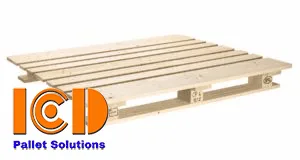
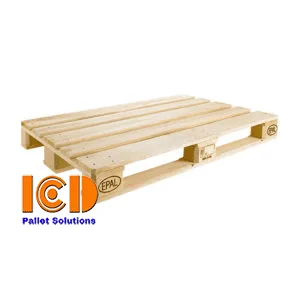
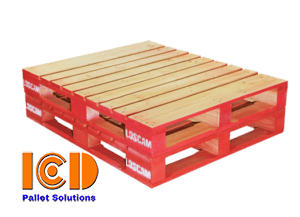
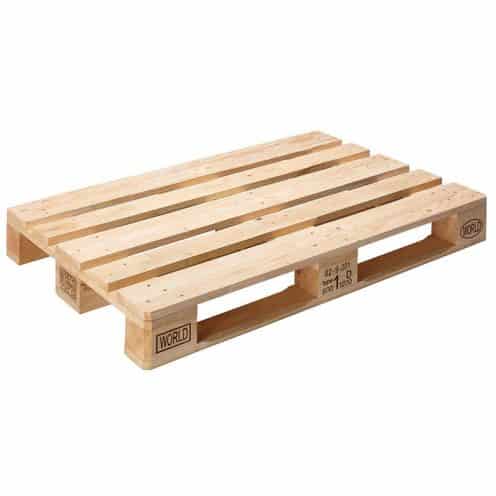
- Photos of wooden pallets at ICD Vietnam
- Related articles
- Frequently asked questions about wooden pallet types
- Contact ICD for a wooden pallet quote
Wooden pallets are an essential component of warehousing and goods transportation. ICD Vietnam supplies 5 main types - pine, acacia, plywood, custom-built, and EPAL-standard - each with distinct load ratings, wood characteristics, and compliance requirements. This guide covers the key specs and typical applications for each type, with photos of pallets in stock at ICD Vietnam.
5 wooden pallet types compared
| Type | Wood | Typical load (dynamic) | ISPM 15 treatment | Best for |
|---|---|---|---|---|
| Pine wood | Pinus spp. | Up to 1,500 kg | Heat treatment or fumigation | Export, light to medium loads |
| Acacia wood | Acacia spp. | Up to 2,000 kg | Heat treatment or fumigation | Heavy industrial loads |
| Plywood (pressed) | Multi-layer board | Up to 1,000 kg | Not required (no raw timber) | Export with strict pest control |
| Custom-built | Any species on request | Per design spec | Per export requirement | Machinery, oversized or heavy goods |
| EPAL standard | Hardwood / pine | Up to 1,500 kg (4,000 kg static) | Heat treatment (mandatory) | International export, repeat-use logistics |
Pine wood pallet
Pine is the most widely used species for wooden pallets. The wood is light, moderately strong, and resists insect attack reasonably well. All pine pallets supplied for export are heat-treated or fumigated to meet ISPM 15, which is the international phytosanitary standard required at almost every border crossing. Pine’s pale colour also makes it easy to inspect for markings and re-stamp for repeat export cycles.
- Key properties: Light weight, good load capacity relative to mass, reusable, easy to repair plank by plank.
- Common uses: Agricultural goods, consumer products, general export containers.
Acacia wood pallet
Acacia (including golden wattle varieties grown in Vietnam) is denser and harder than pine, giving a higher dynamic load rating at the cost of greater weight per pallet - typically 25-35 kg per 1100 x 1100 mm unit versus 18-25 kg for pine. Where a load exceeds what pine can safely carry, or where the pallet must survive rough handling in ports or outdoor yards, acacia is the practical choice.
- Key properties: High density and hardness, good resistance to splitting, suitable for harsh outdoor environments.
- Common uses: Heavy industrial goods, stone and construction materials, long-distance freight.
Plywood (pressed wood) pallet
Pressed plywood pallets are built from multiple thin veneers bonded under heat and pressure. Because the manufacturing process eliminates raw timber, these pallets are exempt from ISPM 15 fumigation or heat-treatment - a significant advantage for exporters whose customers require strict pest-free certification. The trade-off is a lower maximum load rating compared to solid-wood pallets of the same footprint.
- Key properties: No ISPM 15 treatment required, uniform dimensions, low risk of splinters or nails protruding.
- Common uses: Pharmaceutical, food, and electronics exports where cross-contamination and pest risk must be minimised.
Custom-built pallet
When standard footprints (1100 x 1100, 1200 x 1000, 1200 x 800 mm) do not suit the load, ICD manufactures pallets to a buyer-specified drawing. Custom builds are common for CNC machines, compressors, generator sets, and other capital equipment where the base dimensions are fixed by the equipment manufacturer and the pallet must achieve a certified load rating for sea freight.
- Key properties: Fully flexible in size, deck board spacing, stringer count, and wood species; designed to a specific load figure.
- Common uses: Heavy machinery, equipment export, oversized industrial goods.
EPAL-standard pallet
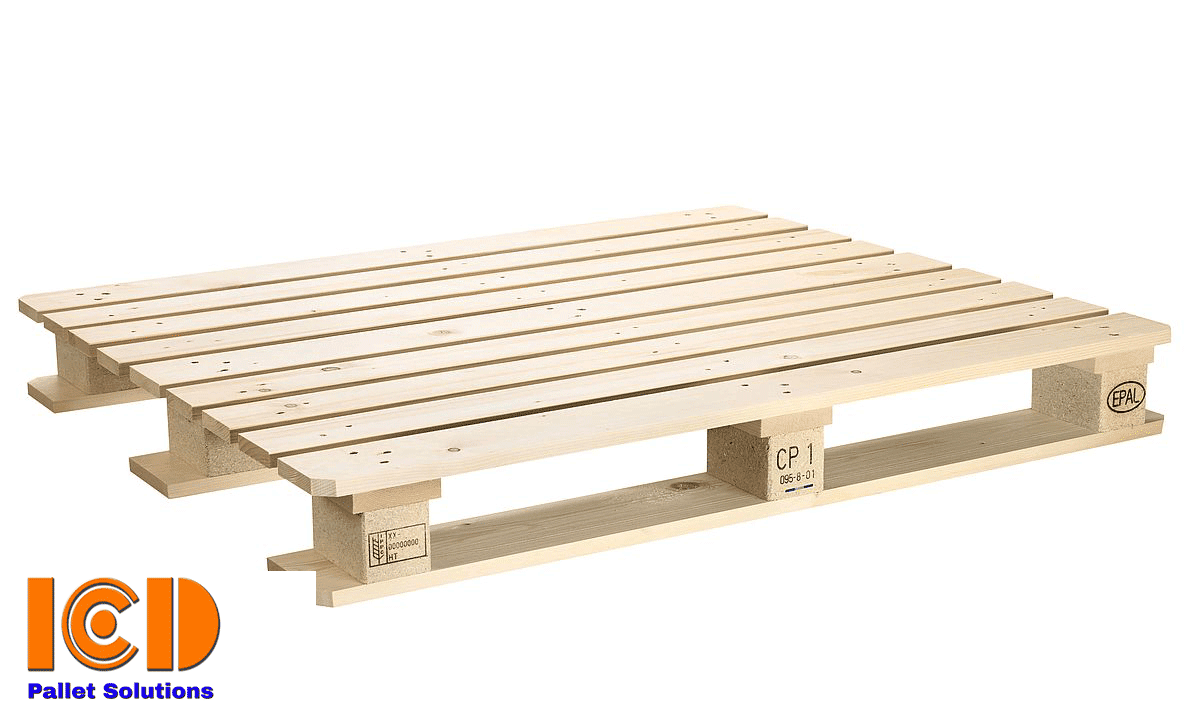
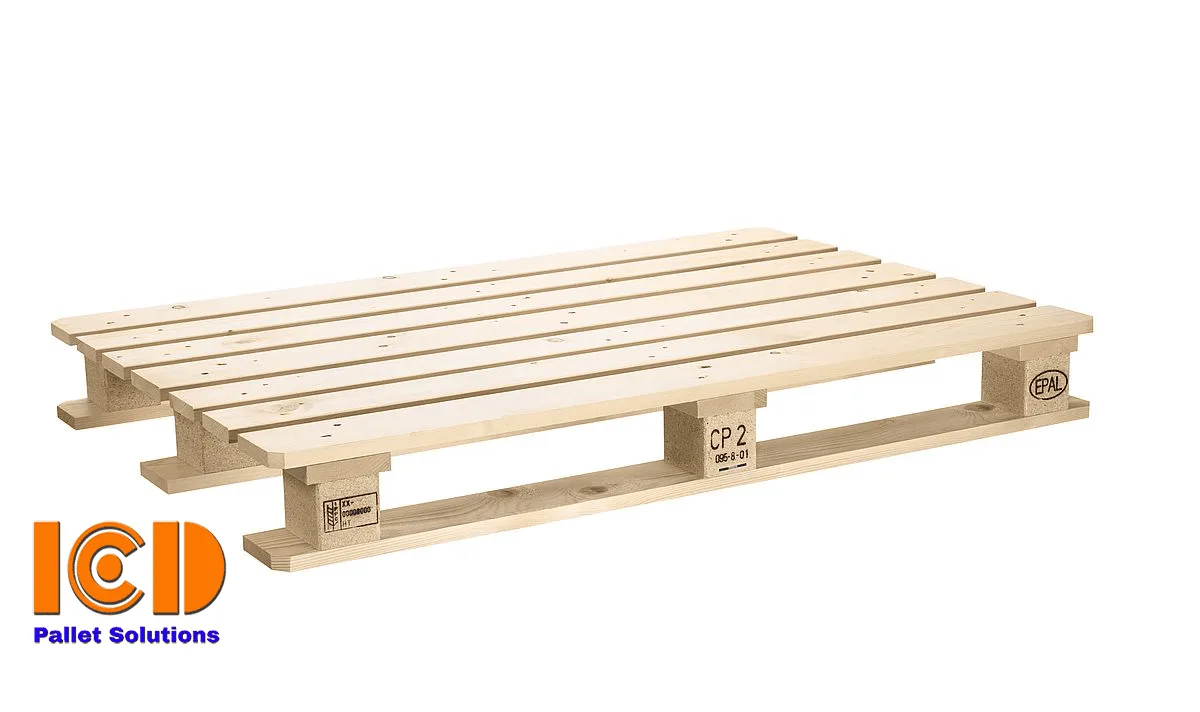
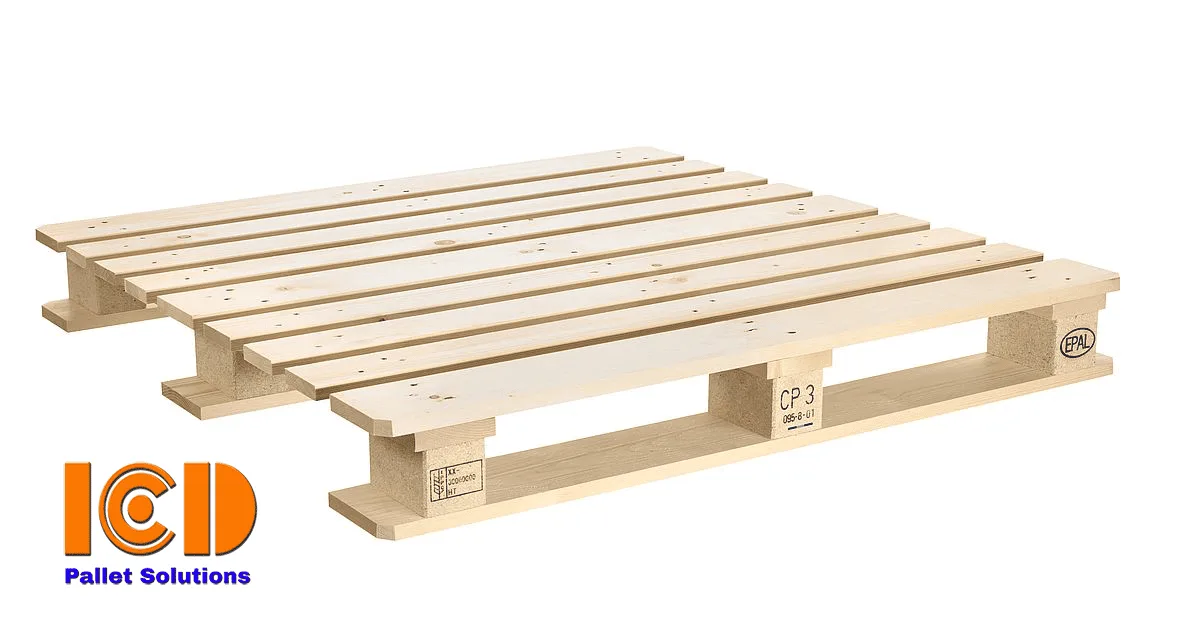
EPAL (European Pallet Association) pallets are produced and inspected to a strict international specification. The standard pallet - 1200 x 800 x 144 mm - is the most traded pallet in the world and is accepted on a swap basis across European supply chains. All EPAL pallets are heat-treated (HT mark, not MB fumigation) and carry the EPAL logo branded into the centre block. ICD also supplies wider CP series (CP1 through CP9) for chemical industry container loads.
- Key properties: International certification, heat-treated to ISPM 15, repairable and swappable in the EPAL pool system, rated 1,500 kg dynamic / 4,000 kg static / 1,000 kg racked.
- Common uses: European exports, FMCG, chemical and retail supply chains requiring pallet pooling.
EPAL standard sizes - CP series
| Type | Dimensions L x W x H (mm) | Industry |
|---|---|---|
| EPAL EU (EUR) | 1200 x 800 x 144 | General, retail, FMCG |
| EPAL 6 (half pallet) | 800 x 600 x 144 | Retail display, small loads |
| EPAL CP1 | 1000 x 1200 x 138 | Chemical drums |
| EPAL CP2 | 800 x 1200 x 138 | Chemical containers |
| EPAL CP3 | 1140 x 1140 x 138 | Chemical IBCs |
| EPAL CP4 | 1100 x 1300 x 138 | Chemical bulk |
| Loscam Asia | 1000 x 1200 x 156 | Asia-Pacific grocery, FMCG |
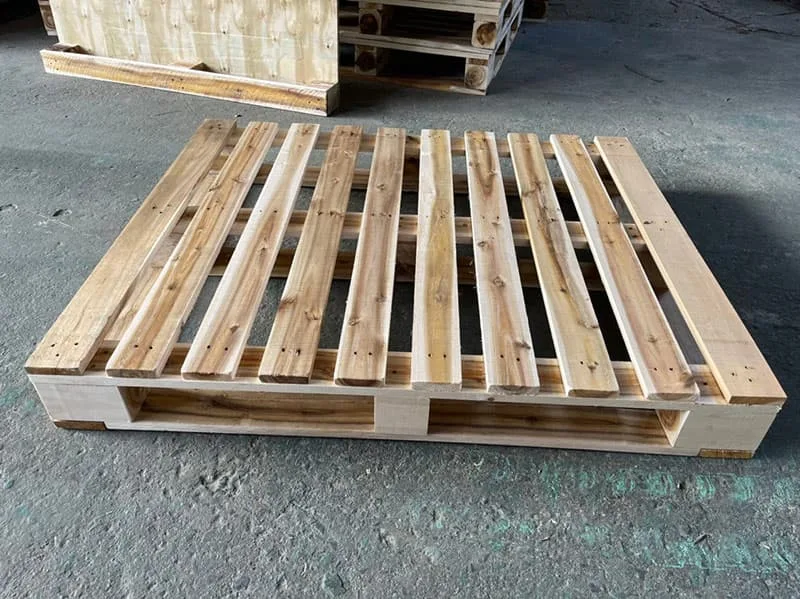
Photos of wooden pallets at ICD Vietnam


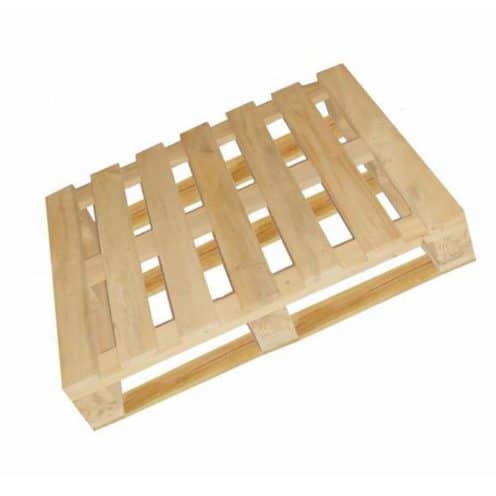
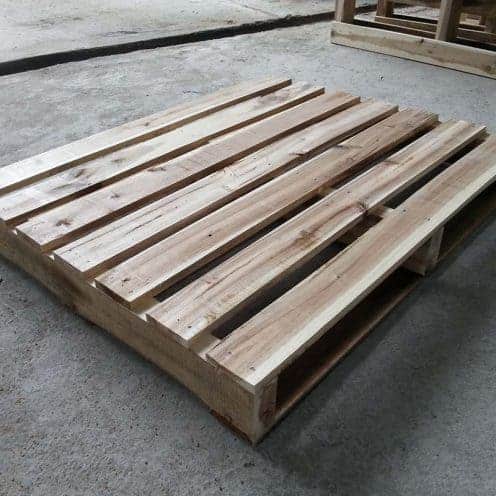
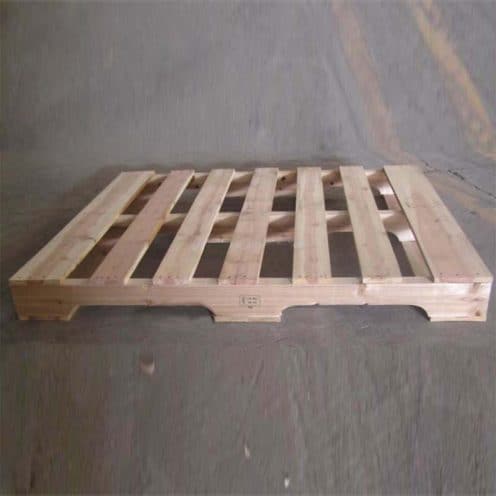
Related articles
| Wooden pallet price list - latest update | ISPM 15 standard: what it is and how to comply | Wood vs plastic pallet: which to choose |
Frequently asked questions about wooden pallet types
1. Which wooden pallet type is best for export?
Pine and EPAL pallets are the most common for export. Both require ISPM 15 heat treatment. Plywood pallets are exempt from ISPM 15 and suit exporters with strict pest-control requirements. EPAL pallets are mandatory for entry into the European pallet pool system.
2. Do all wooden pallets need ISPM 15 treatment?
Solid wood pallets (pine, acacia, custom) used in international trade must carry an ISPM 15 mark - either heat treatment (HT) or dielectric heating (DH). Plywood pallets are exempt because the manufacturing process eliminates viable pests.
3. What is the standard wooden pallet size in Vietnam?
The most common domestic size is 1100 x 1100 mm. For export, 1200 x 1000 mm and 1200 x 800 mm (EPAL EU) are widely used. ICD also manufactures pallets to custom dimensions on request.
4. What load can a wooden pallet carry?
A standard pine pallet carries up to 1,500 kg dynamic. EPAL EU pallets are rated 1,500 kg dynamic, 4,000 kg static, and 1,000 kg racked. Acacia pallets can carry up to 2,000 kg dynamic. Custom pallets are designed to a specific load figure agreed at the time of order.
5. What is the difference between an EPAL pallet and a regular wooden pallet?
EPAL pallets are produced and inspected to a certified international specification (dimensions, wood species, nail pattern, load rating, heat treatment). They carry the EPAL logo branded into the centre block and can be repaired and re-entered into the EPAL pool system. Regular pallets have no pooling agreement and vary in quality.
6. Can ICD build wooden pallets to a custom size?
Yes. ICD manufactures custom pallets to buyer-specified drawings, including non-standard footprints, deck board spacing, stringer count, and wood species. Common applications are machinery export and capital equipment where the base dimensions are fixed by the equipment manufacturer.
Contact ICD for a wooden pallet quote
ICD Viet Nam Industrial Production Company Limited
North: Floor 3, Thang Long A1 Building, Bau Hamlet, Thien Loc Commune, Hanoi - 0983 797 186 / 090 345 9186 / 090 5859 186
South: 551/212 Le Van Khuong, Tan Thoi Hiep, District 12, Ho Chi Minh City - 098 6784 186
Email: sales@icdvietnam.com.vn · Zalo: Chat on Zalo now
Tell us your load weight, dimensions, and export destination - ICD will recommend the right pallet type, confirm ISPM 15 treatment, and quote promptly.