
Mục lục
What is ISPM 15 certification?
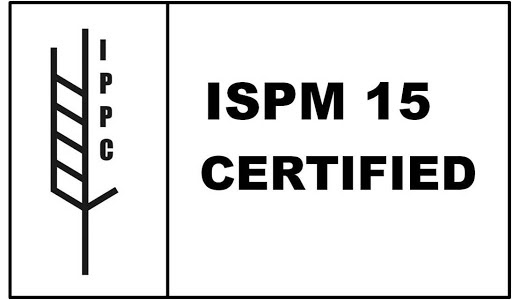
The ISPM 15 standard (International Standards for Phytosanitary Measures No. 15), known in Vietnam as the ISPM 15 phytosanitary standard, is a set of international standards issued by the Food and Agriculture Organization of the United Nations (FAO) to reduce the risk of pests and diseases spreading across national borders through wood-packaged products. ISPM 15 requires Wood Packaging Materials (WPM) to be heat-treated or chemically treated to kill pests, and to be certified with a special mark.
What does ISPM 15 disinfection involve?
ISPM 15 disinfection is the process of treating wood packaging materials to kill pests and other harmful agents. This process has two main methods: heat treatment and Methyl Bromide (MB).
Heat treatment
The heat treatment method is the process of heating wood packaging materials to a certain temperature for a long enough period to completely kill pests.
Advantages of heat treatment
- Safe for the environment, producing no toxic waste.
- Does not change the wood’s structure, ensuring the material’s durability and safety.
- Suitable for many wood types and sizes.
Disadvantages of heat treatment
- The treatment process requires a lot of time and energy.
- High investment cost for heat-treatment equipment.
- Not always effective against all types of pests.
Methyl Bromide (MB)
Methyl Bromide (MB) is a chemical used in the disinfection of wood packaging materials per the ISPM 15 standard. This method involves placing the wood in a sealed chamber and pumping in Methyl Bromide gas to kill pests.
Advantages of MB disinfection
- Fast and effective treatment process.
- Widely used and proven in killing pests.
- Suitable for cases needing quick treatment in a short time.
Disadvantages of MB disinfection
- Methyl Bromide harms the ozone layer and is strictly controlled.
- Can harm human health if not handled properly.
- Relatively high chemical and operating costs.
Other requirements to meet the ISPM 15 standard
ISPM 15 requires wood packaging materials to use debarked wood. Under this standard, wood must be completely debarked, allowing only some small bark pieces to remain that do not exceed the specified size. Specifically, remaining bark pieces must be less than 3 cm wide and the total surface area of each piece must not exceed 50 cm².
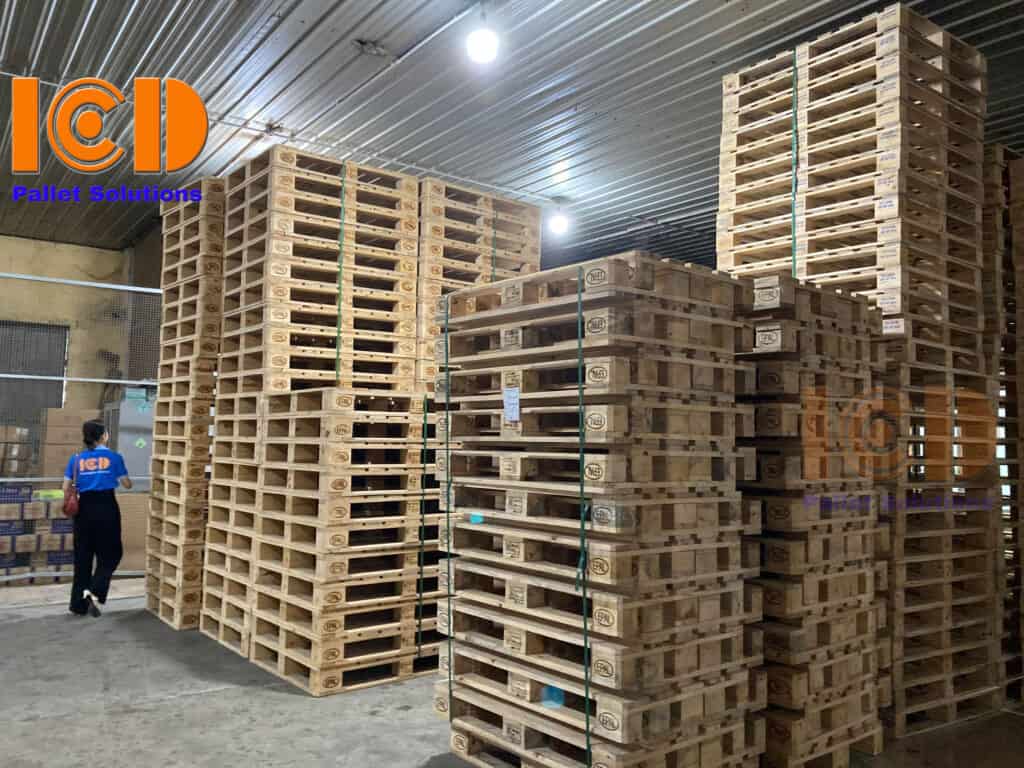
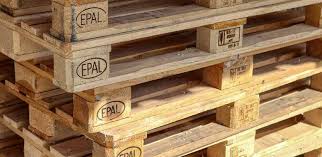
In addition, products must have a clear branding and the recognized ISPM image symbol. This symbol is usually seen on the rails and body of wooden pallets, or on wooden crates, helping identify treated products and ensure ISPM 15 compliance.
Who needs to comply with ISPM 15?
ISPM 15 applies to all organizations, businesses and individuals involved in producing, exporting, and using wood packaging materials in international goods transport. This includes wooden pallet manufacturers, businesses exporting wood products, and international transport service providers.
Why must wooden pallets and wood products comply with ISPM 15?
Compliance with ISPM 15 is mandatory for wood products in international transport for several important reasons:
Preventing the spread of pests
Complying with ISPM 15 helps prevent the spread of pests and diseases across borders, protecting crops and the environment in the importing country.
Protecting forests and biodiversity
The ISPM 15 standard helps protect forests and maintain biodiversity by preventing the intrusion of harmful invasive pest species.
Ensuring safety in cross-border goods transport
Cross-border goods transport requires safety and assurance that nothing can harm the environment or human health in the destination country. ISPM 15 meets this requirement by treating wood products.
Countries’ pest-defense method
Countries often apply ISPM 15 as a defense method to protect their domestic agriculture and forestry from harmful agents from abroad.
Reducing economic impact
Complying with ISPM 15 helps minimize the costs related to handling rejected, destroyed or returned shipments due to non-compliance, while ensuring international trade flows smoothly.
Which materials need ISPM 15, which do not?
Materials that need ISPM 15
The wood packaging materials that must comply with ISPM 15 include: wooden pallets, wooden crates, wooden boxes, and other wood products used in international transport.
Materials that do not need ISPM 15
Some materials do not need to comply with ISPM 15, including: processed wood (such as plywood, particleboard), engineered wood products, and non-wood packaging materials.
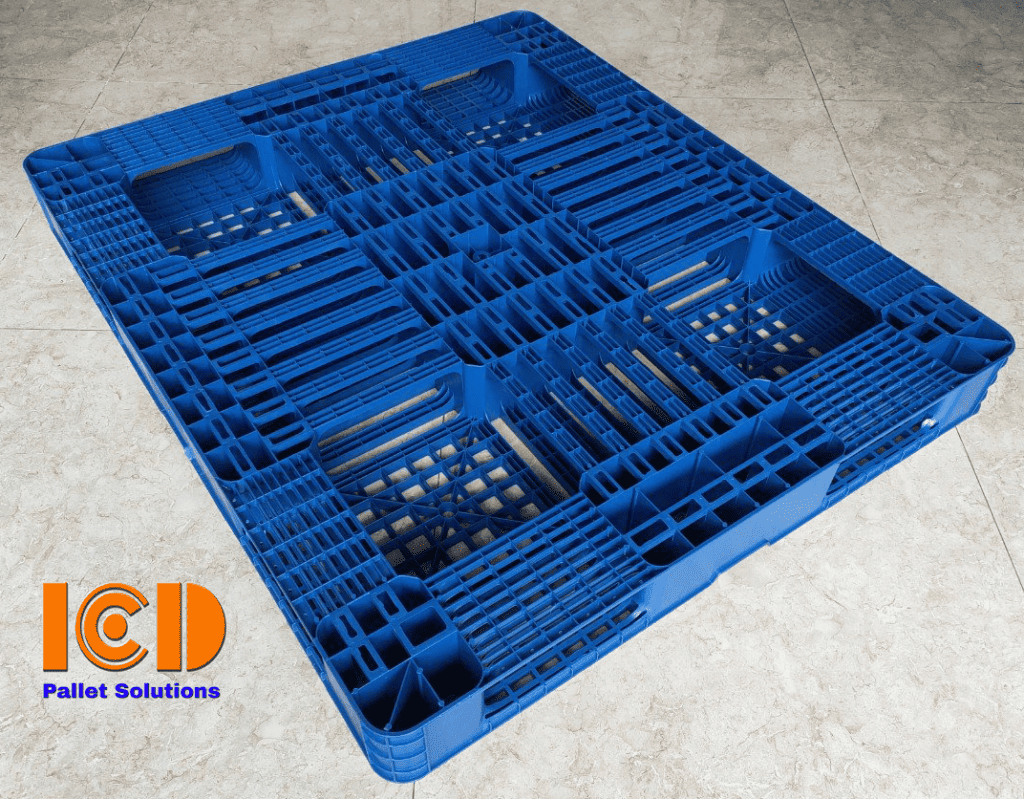
Or simply export plastic pallets. Because plastic is not invaded by termites, bacteria or harmful mold, it passes inspection rounds more easily and does not need to comply with ISPM 15.
How to identify a shipment that has passed ISPM 15 inspection?
A shipment that has passed ISPM 15 inspection will have a special certification stamp, including the country code, the production facility code, the treatment type (HT for heat treatment, MB for Methyl Bromide) and the wood symbol. This mark is printed directly on the packaging material and is easy to identify.
ISPM 15 fumigation certificate
The ISPM 15 fumigation certificate is a document certifying that wood packaging materials have been treated and comply with the requirements of the ISPM 15 standard. This certificate is usually issued by phytosanitary agencies and is mandatory for shipments to clear customs in countries requiring ISPM 15.
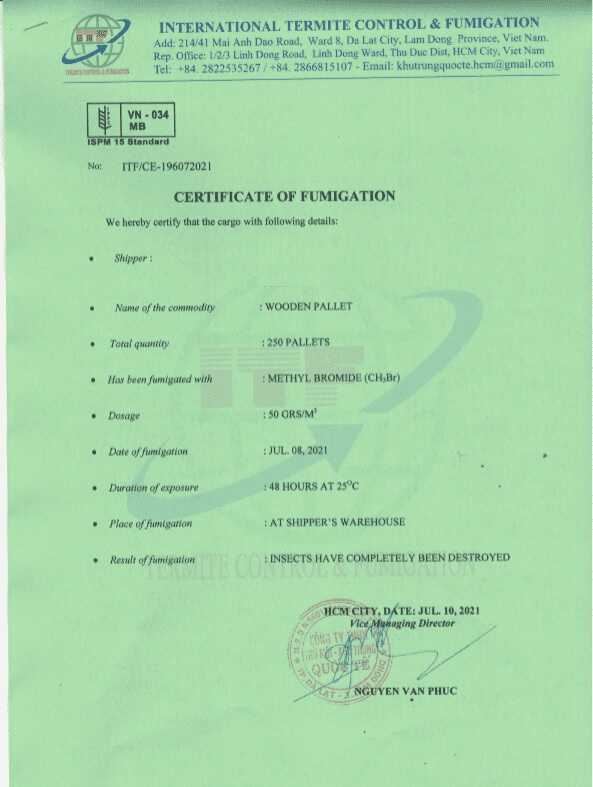
The body issuing the ISPM 15 fumigation certificate
Worldwide, the ISPM 15 fumigation certificate is usually issued by phytosanitary agencies or government-authorized organizations. In Vietnam, this certificate is issued by the following bodies:
- Plant Protection Department - Ministry of Agriculture and Rural Development: This is the main agency responsible for phytosanitary inspection and issuing ISPM 15 certificates for export shipments.
- Regional phytosanitary units: These units operate under the management of the Plant Protection Department and have the authority to issue ISPM 15 fumigation certificates.
Time and process to issue the certificate
The time to issue an ISPM 15 fumigation certificate usually depends on the business’s inspection and wood treatment process. Typically, this process can take from 1 to 3 days, depending on the volume and type of material to be treated.
The process includes the following steps:
- The business registers for inspection and requests a fumigation certificate from the phytosanitary agency.
- The inspection agency inspects the wood packaging material, ensuring it has been treated correctly per the ISPM 15 standard.
- If it meets the requirements, the agency issues the ISPM 15 fumigation certificate, allowing the business to use it to clear the shipment.
To ensure the process goes smoothly, the business needs to prepare all relevant documents and information, and strictly comply with the regulations on treating and packaging wood materials per ISPM 15.
Countries that have adopted ISPM 15
The ISPM 15 standard has been widely applied worldwide with the participation of over 180 countries. These countries have agreed to use ISPM 15 as a measure to protect their agriculture and forestry from the intrusion of harmful pests through wood packaging materials. The list of countries complying with ISPM 15 includes most major countries such as the United States, Canada, the European Union, Australia, China, Japan, and many others.
When did Vietnam join ISPM 15?
Vietnam officially joined and applied the ISPM 15 standard in 2005. From this point, Vietnam began requiring all wood packaging materials used in international trade to comply with the ISPM 15 standard. This includes heat treatment or Methyl Bromide disinfection and applying the certification label per international regulations.
How do Vietnamese businesses currently comply?
Currently, most manufacturing and export businesses using wood packaging materials in Vietnam are well aware of and strictly comply with the ISPM 15 standard. These businesses have invested in heat-treatment systems and built quality-control processes to ensure their products meet the requirements of international markets.
However, there are still some challenges businesses must overcome, such as the investment cost for treatment equipment and training specialized personnel to ensure the treatment process is done to standard. To support businesses, the Vietnamese Government and related organizations regularly organize training programs, seminars and information updates on ISPM 15, helping businesses maintain and enhance their competitiveness in international markets.