
Mục lục
- Step 1: Raw timber intake and selection
- Step 2: Sawing and rough processing
- Step 3: Drying and phytosanitary treatment (ISPM 15)
- Step 4: Planing and cutting to final dimensions
- Step 5: Assembly
- Step 6: Surface finishing and quality control (QC)
- Key quality factors compared
- Related articles
- Frequently asked questions about wooden pallet manufacturing
- Contact ICD Vietnam
A wooden pallet looks simple, but producing one that holds several tonnes of cargo safely and can move across international borders requires a precise, multi-stage process. Le Van Thang, Director of ICD Vietnam, explains each step from the inside: why raw timber selection sets the ceiling on quality, why drying and heat treatment are separate and non-interchangeable operations, and why the nail type used in assembly makes a measurable difference to pull-out strength. Understanding this process lets you judge pallet quality objectively and choose a supplier who follows it rigorously.
Step 1: Raw timber intake and selection
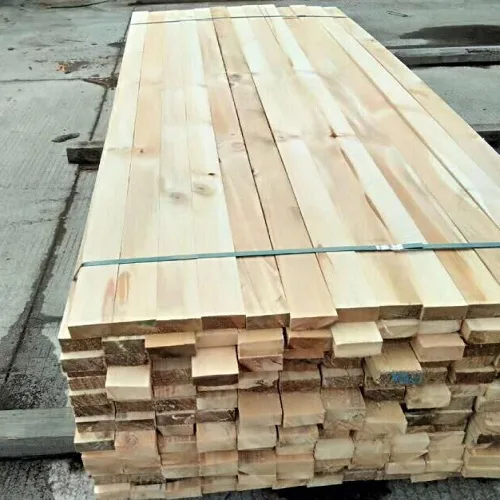
Pallet quality starts with timber quality. Round logs - typically pine or acacia - are received and inspected before any cutting begins. Selection criteria include adequate diameter, a straight grain, minimal dead knots, and no signs of rot or hollow sections. Legal timber sourcing documentation is a baseline requirement at reputable manufacturers.
Step 2: Sawing and rough processing
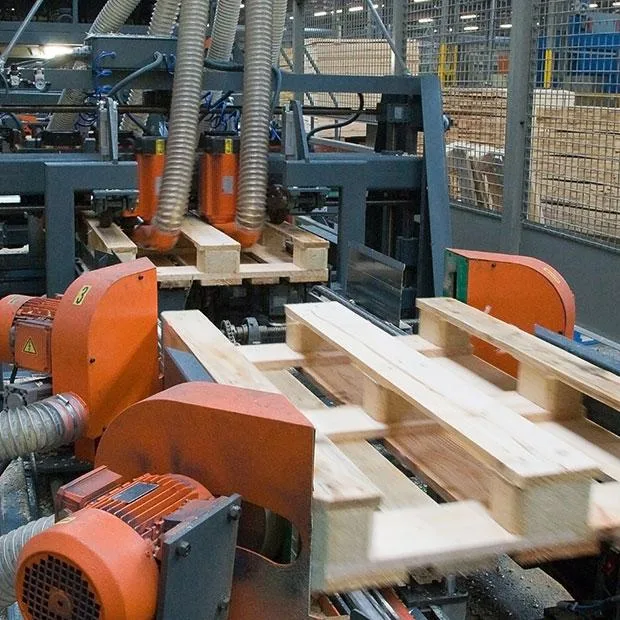
Selected round logs go through a band saw (CD saw) to produce square or rectangular timber blanks. Those blanks then pass through a multi-blade gang saw that cuts them simultaneously into boards of the exact thickness and width specified in the technical drawing. These boards are the deck boards and stringer boards that make up the finished pallet.
Step 3: Drying and phytosanitary treatment (ISPM 15)
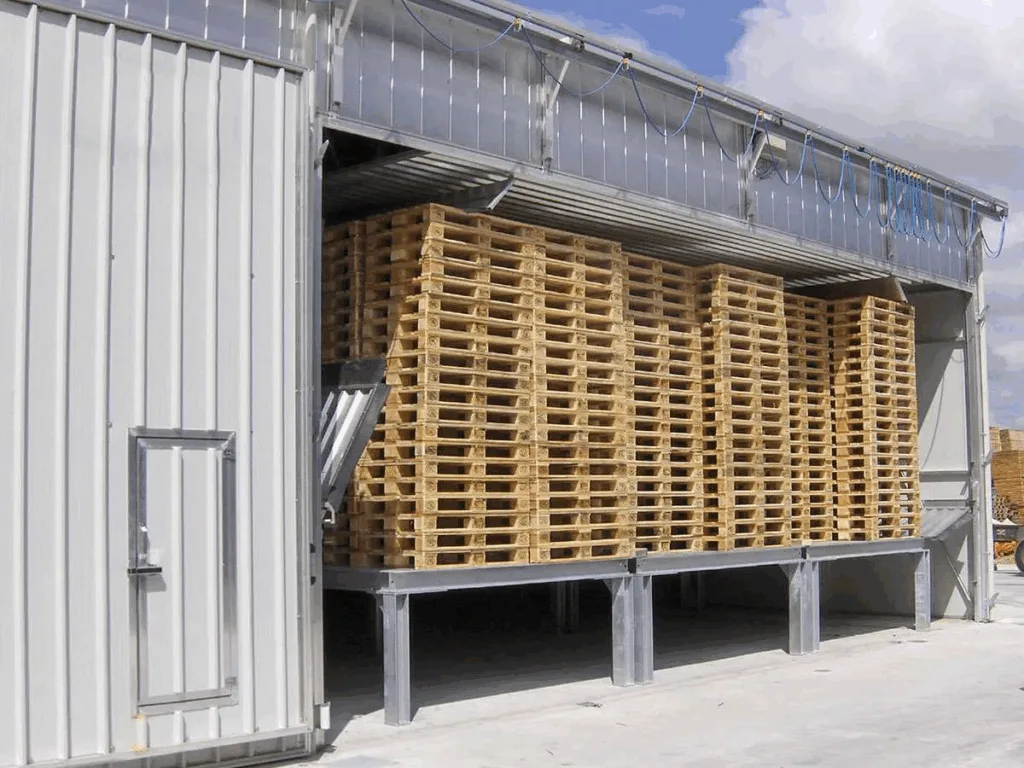
This step is critical: it governs both long-term durability and export eligibility, and the two operations within it serve different purposes.
- Drying: Boards are stacked in an industrial kiln and dried until moisture content falls below 20%. Reducing moisture prevents mould growth, warping, and shrinkage during service, while increasing hardness and overall strength.
- Heat treatment (HT): Export pallets must undergo heat treatment to ISPM 15. The timber is heated in a kiln until the core reaches a minimum of 56 degrees Celsius for at least 30 continuous minutes. This eliminates all insects and pathogens that could be harboured inside the wood and would otherwise spread across borders.
Step 4: Planing and cutting to final dimensions
Dried boards pass through a four-sided planer that smooths all faces, removes splinters, and achieves a consistent thickness across every piece. They then go to a cross-cut saw that trims each board type - top deck boards, bottom deck boards, and blocks or stringers - to the precise lengths defined in the design specification.
Step 5: Assembly
This is where the pallet takes its final form. Workers position all components - deck boards, bottom boards, and blocks or stringers - in a pallet jig that holds every piece at the correct location and spacing. An industrial pneumatic nail gun then fastens all components together.
From direct production experience: nail quality and nailing technique matter as much as timber quality. Spiral-shank nails engineered specifically for pallet assembly grip wood fibres far more firmly than smooth-shank common nails. That single choice produces a measurable difference in pull-out resistance and joint durability under the repeated shock loads of a working pallet.
Step 6: Surface finishing and quality control (QC)
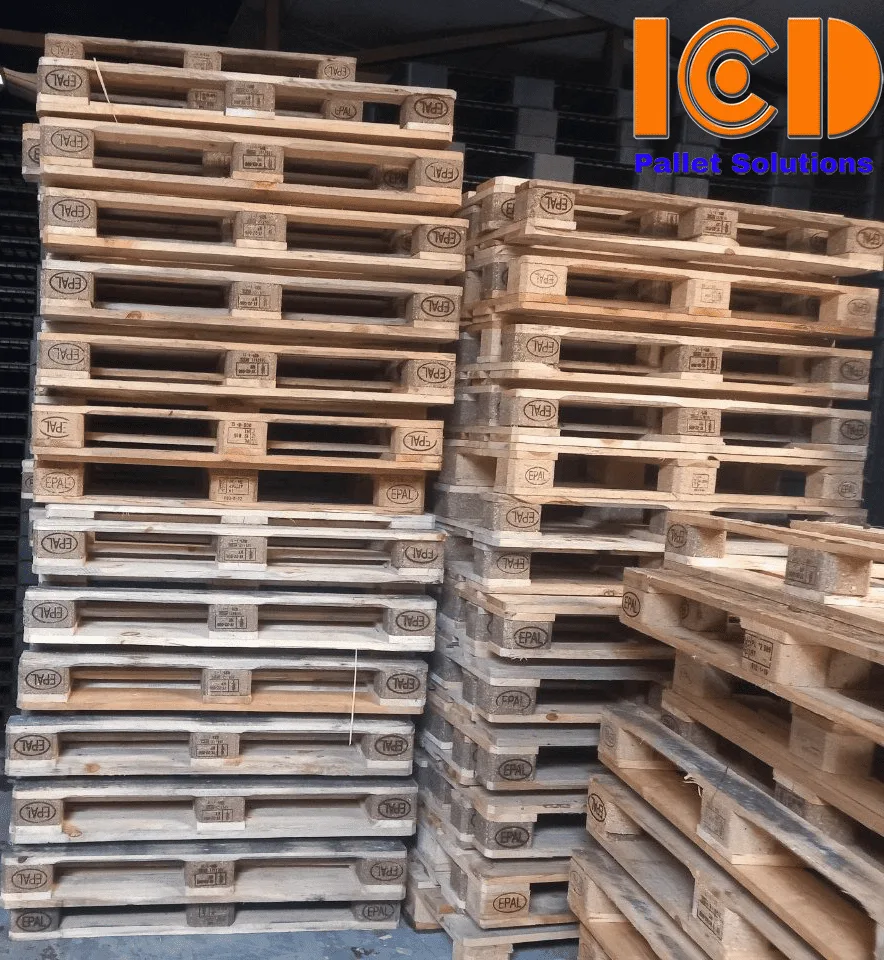
Completed pallets go through final surface work: sharp corners and edges are sanded to remove splinters. Export pallets receive the IPPC mark stamped at this stage to show compliant heat treatment.
The QC team then performs random inspection across each production batch: dimensions are re-measured, nailing quality and joint integrity are checked, and the batch is cleared for dispatch only when all units meet the required standard.
Key quality factors compared
| Factor | What to check | Impact if wrong |
|---|---|---|
| Timber species and grade | Pine or acacia, straight grain, no rot | Premature breakage under load |
| Moisture content | Below 20% after kiln drying | Warping, mould, reduced strength |
| Heat treatment (HT) | Core reaches 56 degrees C for 30 min minimum | Rejected at customs, quarantine hold |
| Nail type | Spiral-shank pallet nails | Joint loosening, pallet collapse in transit |
| IPPC mark | Correctly stamped before dispatch | Shipment detained or returned |
Related articles
| Wooden pallet price list 2026 | ISO standard wooden pallet dimensions | Wooden pallets - ICD Vietnam product range |
Frequently asked questions about wooden pallet manufacturing
1. Is heat treatment the same as kiln drying?
No. Kiln drying reduces moisture content to increase strength and prevent mould and warping. Heat treatment (HT) is a phytosanitary procedure that raises the timber core to 56 degrees C for at least 30 minutes to eliminate insects and pathogens, as required by ISPM 15 for international trade. A pallet can be kiln-dried without being heat-treated, but a heat-treated pallet has necessarily also been dried during the process.
2. Why are spiral-shank nails used instead of smooth nails?
Spiral-shank nails have helical ridges along the shank that lock into wood fibres, giving pull-out resistance several times higher than smooth-shank nails. This keeps pallet joints tight under the vibration and impact loads of normal transport and handling, reducing the risk of joint failure.
3. How long does it take to manufacture a batch of wooden pallets?
Lead time depends on quantity, design complexity, and whether heat treatment is required. A standard order typically takes 3 to 10 days from raw material intake to finished goods ready for dispatch.
Contact ICD Vietnam
Hotline: 0983 797 186 / 090 345 9186 / 090 5859 186
Email: sales@icdvietnam.com.vn | Zalo: Chat Zalo