
Mục lục
A pallet is a flat structural platform - usually wood, plastic or paper - designed to consolidate goods into a single stable unit that a forklift or pallet jack can lift from below. Nearly every product you use daily spent at least one stage of its journey on a pallet. This guide explains what a pallet is, what it does, the three main types, how pallets are used in logistics and export, and the key terms you will encounter when working with them.
Author: Le Van Thang, Director of ICD Vietnam - 15+ years in packaging and logistics supply chain.
1. What is a pallet and what is it used for?
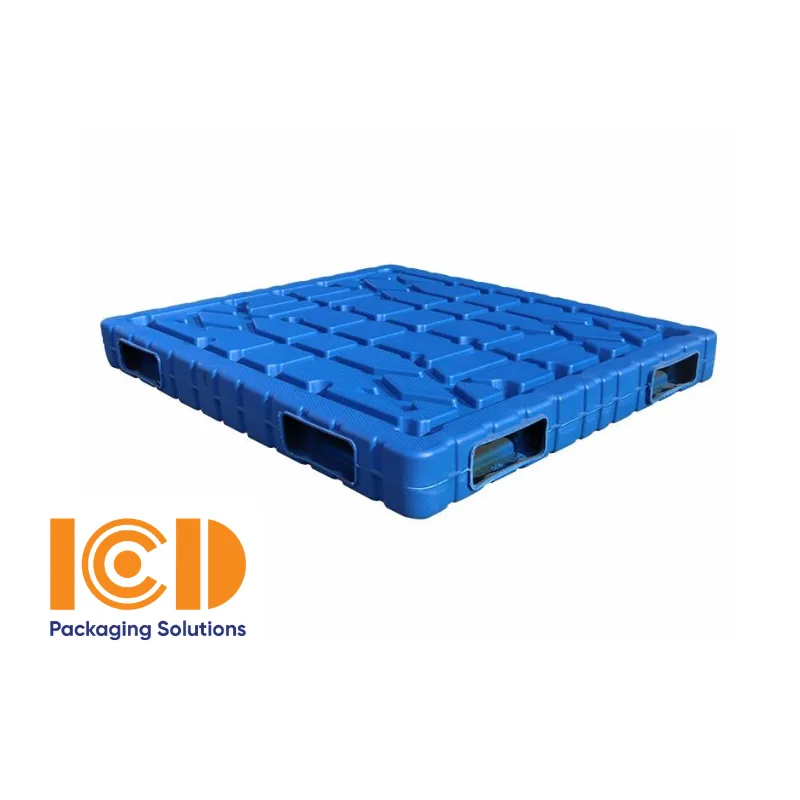
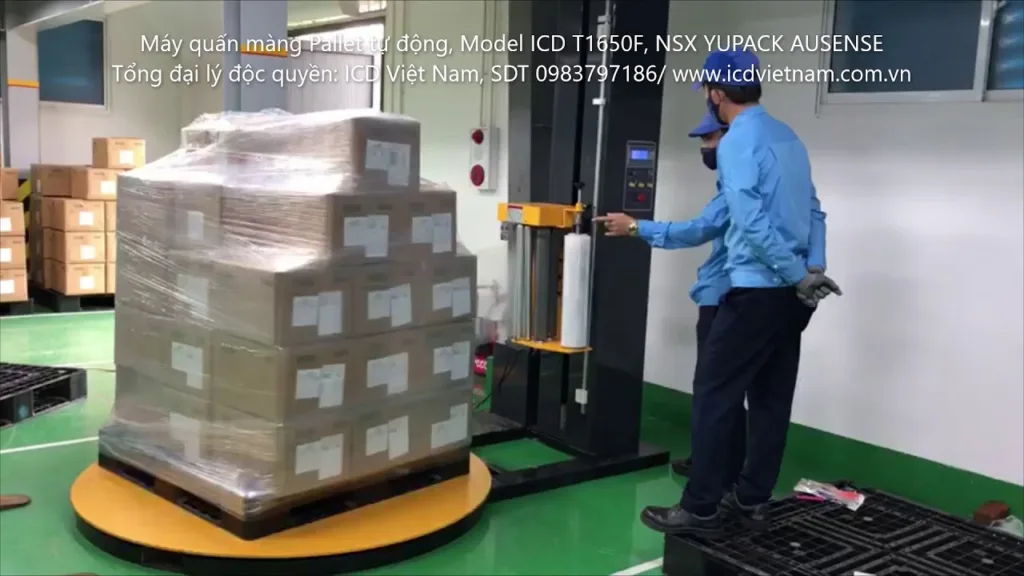
A pallet (sometimes called a skid or loading board) is a flat platform with entry points - forks or legs - that allow the tines of a forklift or the blades of a pallet jack to slide underneath and lift the entire load at once. The core concept is unitisation: instead of handling individual cartons one by one, workers stack cartons onto a pallet, wrap the load with stretch film, and treat the whole stack as a single unit.
Using pallets delivers four measurable benefits:
- Faster handling: Loading and unloading a truck or container takes minutes with a forklift instead of hours of manual labour.
- Better space utilisation: Palletised loads can be stacked vertically on racking systems, multiplying usable warehouse height.
- Cargo protection: Keeping goods off the floor prevents moisture damage, dust contamination and impact during transit.
- Lower labour cost: One forklift operator replaces a team of manual handlers for the same volume of freight.
2. The three main types of pallet
| Type | Key advantages | Key limitations | Best use case |
|---|---|---|---|
| Wood pallet | Low cost, easy to repair, high surface friction | Susceptible to moisture, mould and insects; heavier; splinters | Domestic warehousing, export with IPPC stamp |
| Plastic pallet | Long service life, waterproof, chemical resistant, hygienic, ISPM-15 exempt | Higher upfront cost | Food, pharma, cold chain, repeated-use loops |
| Paper pallet | Very light weight (saves air-freight cost), recyclable, no fumigation required | Lower load capacity, not suitable for wet conditions | Air freight, single-use export |
Wood pallet
Wood pallets account for over 90% of pallets in use worldwide. They are cheap to produce, simple to repair and offer good surface friction that helps cargo stay in place. The main drawbacks are vulnerability to moisture and insects, relatively high weight compared with plastic alternatives, and the risk of splinters in food-grade environments.
IPPC stamp and ISPM 15 - why it matters for export: Any wood pallet used in international trade must comply with ISPM 15, the phytosanitary standard set by the International Plant Protection Convention (IPPC). The pallet must be heat-treated or fumigated with methyl bromide, then stamped with the IPPC mark. Without this stamp, customs authorities can reject or confiscate the entire shipment at the destination port.

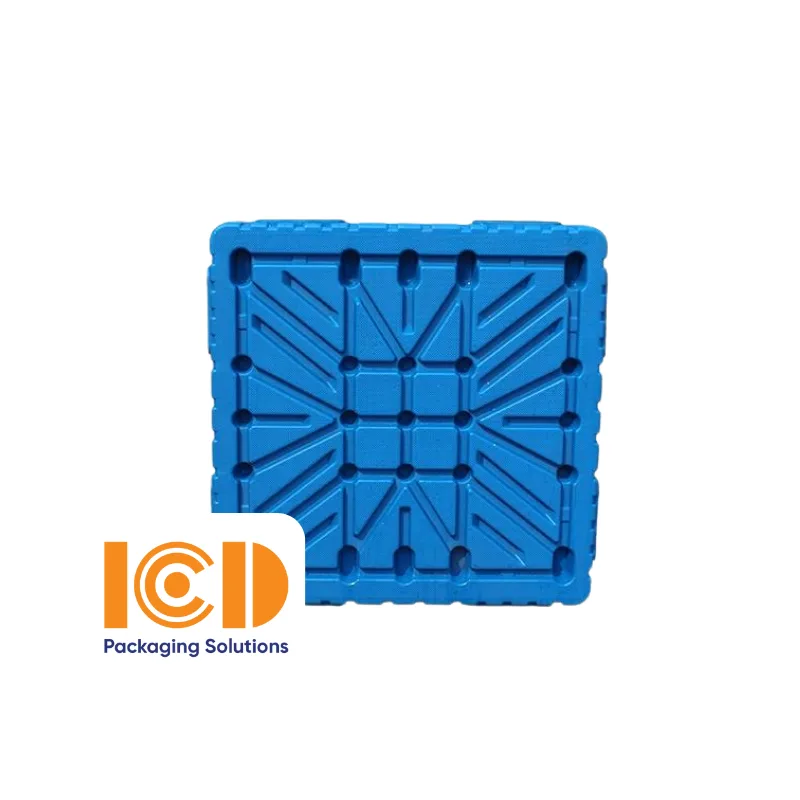
Plastic pallet
Plastic pallets are the modern alternative, increasingly preferred wherever hygiene, durability or export frequency matters. Because plastic is not a wood product, plastic pallets are fully exempt from ISPM 15 requirements - no fumigation, no stamp, no phytosanitary inspection. They resist water, chemicals and bacteria, making them the standard choice for food processing, pharmaceuticals and cold-chain logistics.
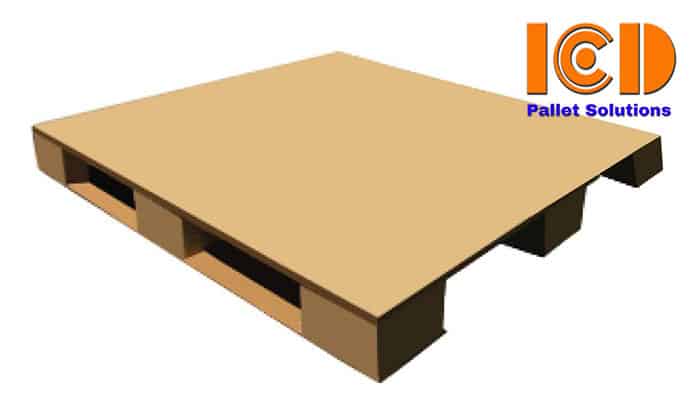
Paper pallet
Paper pallets are made from multiple layers of compressed kraft paperboard. They are significantly lighter than wood or plastic, which directly reduces air-freight cost - where every kilogram counts. They are single-use, fully recyclable, and require no phytosanitary treatment. The trade-off is lower dynamic load capacity and poor performance in humid or wet environments.
3. Standard pallet sizes
| Standard | Dimensions (mm) | Region |
|---|---|---|
| ISO 1 (Asia / Oceania) | 1100 x 1100 | Asia, Australia, domestic Vietnam |
| ISO 2 (North America) | 1200 x 1000 | North America, heavy industrial |
| ISO 3 (Europe) | 1200 x 800 (EUR pallet) | European Union |
| Loscam / CHEP | 1165 x 1165 (Asia pool) | Rental pooling network |
The ISO 1100 x 1100 mm footprint is the dominant standard in Vietnam and intra-Asia trade. Always confirm the required size with your logistics provider or customer before ordering.
4. Pallets in logistics and import/export
What does “palletised cargo” mean? Palletised cargo (also called “pallet freight”) refers to goods that have been loaded onto a pallet and secured as a single unit, ready for forklift handling. When a freight quote states a price “per pallet”, it means the rate for moving one fully loaded, wrapped pallet from origin to destination.
Palletising - the process: Palletising is the act of stacking cartons, bags or drums onto a pallet in a stable pattern, then wrapping the load with stretch film to prevent shifting in transit. The wrapped unit is then ready for warehouse racking, truck loading or container stuffing.
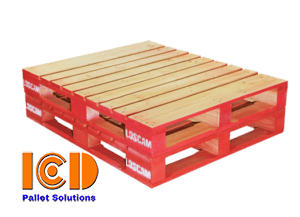
What is Loscam? Loscam (alongside CHEP) is a pallet pooling company. Instead of buying and managing their own pallet inventory, businesses rent pallets from Loscam’s network, use them, and return or transfer them at a different depot within the network. Pooling reduces upfront capital, eliminates pallet management overhead and ensures a clean, standard pallet every time.
What is a pallet jack? A pallet jack (hand pallet truck in British English) is a low-lift wheeled device with two forks that slide under a pallet. The operator pumps the handle to raise the load slightly off the floor, then wheels the pallet to its destination by hand. It is the most common short-distance pallet-moving tool in any warehouse and requires no power source or operator licence.
5. Related terms
Pallet bed (pallet furniture): A popular DIY furniture trend in which old wood pallets are repurposed as bed frames, coffee tables or outdoor seating. The rustic, industrial aesthetic has made pallet furniture a mainstream interior design choice. This use is entirely unrelated to logistics pallets in function, though it uses the same object.
Palette (art): “Palette” (note the different spelling) is a homophone of “pallet” in English and a near-homophone in Vietnamese. In art, a palette is the flat board on which a painter mixes colours. Context always makes the meaning clear, but the spelling difference is worth noting when reading or writing in English.
Related articles
| What is a plastic pallet? Full classification and specs | Plastic pallet vs wood pallet: detailed comparison | What are plastic pallets used for? |
Frequently asked questions about pallets
1. What is the difference between a pallet and a skid?
A pallet has both a top deck and a bottom deck separated by blocks or stringers, giving four-way fork entry in most designs. A skid has only a top deck resting on legs or runners, so it slides rather than lifts cleanly - hence the word “skid”. In everyday usage the two terms are often used interchangeably, though technically they differ in construction.
2. Why must wood pallets for export have an IPPC stamp?
The IPPC stamp certifies that the wood pallet has been heat-treated or fumigated to ISPM 15 standards, killing any insects or larvae inside the wood. This prevents agricultural pests from spreading across borders hidden inside shipping pallets. Most importing countries legally require the stamp; a shipment arriving on unstamped wood pallets can be refused entry or destroyed at the exporter’s expense.
3. What does “one pallet” mean in a freight quote?
In a freight context, one pallet is a unitised load: a pallet board with goods stacked and wrapped on it, treated as a single handling unit. The quoted rate covers moving that complete unit from origin to destination. Dimensions (typically 1100 x 1100 x 1200 mm high) and maximum weight limits are usually stated alongside the rate.
4. Are plastic pallets exempt from ISPM 15 treatment?
Yes. ISPM 15 applies only to solid wood packaging materials. Plastic pallets are not a wood product, so they require no fumigation, no heat treatment and no IPPC stamp for export. This is one of the main reasons food exporters and pharmaceutical companies choose plastic pallets for international shipments.
5. What is pallet pooling (Loscam / CHEP)?
Pallet pooling is a rental service model. A pooling company (Loscam or CHEP) owns a large network of standardised pallets. Businesses pay a rental fee, use the pallets, and return or transfer them at any depot in the network rather than tracking and shipping empty pallets back to source. The model reduces capital outlay, ensures pallet quality, and eliminates the logistical headache of pallet returns.
6. What is a pallet jack and how does it differ from a forklift?
A pallet jack (hand pallet truck) moves pallets at floor level over short distances using human power. It is compact, low-cost and needs no licence to operate. A forklift (powered industrial truck) can lift pallets to racking height, move them over longer distances at speed, and handle much heavier loads, but requires a trained and licensed operator and is a significantly larger capital investment.
Contact ICD Vietnam
Hotline: 0983 797 186 / 090 345 9186 / 090 5859 186
Email: sales@icdvietnam.com.vn | Zalo: Chat Zalo