Mục lục
- 1. What is the shrinkage rate of Polyamide plastic?
- 2. Core factors affecting PA plastic shrinkage in injection molding
- View more plastic pallet products from ICD Vietnam
- 3. Tips to reduce shrinkage in PA plastic parts
- Contact ICD Vietnam for a quote
- 4. References
- 5. You may also be interested in: Shrinkage rate reference table for common plastics
- 6. You may also be interested in: Shrinkage rate comparison chart
Key takeaways:
- The shrinkage rate of Polyamide plastic is a complex variable parameter, typically ranging from 1% to 2% for virgin grades.
- Due to its semi-crystalline nature, PA plastic shrinks significantly upon cooling, which can easily lead to dimensional deviation if mold temperature and injection pressure are not well controlled.
- To minimize this risk, using glass fiber-reinforced plastic is the most effective solution, bringing the shrinkage rate below 0.5%.
- In addition, a properly standardized pellet drying process is a prerequisite for ensuring dimensional stability of the part after molding.
1. What is the shrinkage rate of Polyamide plastic?
In the field of engineering plastic injection molding, understanding the shrinkage coefficient of the material is the first step toward designing accurate molds.
Quick Summary: PA Plastic Shrinkage Rate
Interact to grasp the key knowledge in 60 seconds
1. Shrinkage Rate Comparison
1.0% - 1.5%
1.2% - 2.0%
0.2% - 0.5%
2. Three Core Influencing Factors
Required: Pellets must be dried at 80-100 degrees C for several hours before feeding into the injection machine.
Tips for Designing PA Injection Molds
- Large draft angles: Addresses PA’s extreme adhesion to mold cores upon shrinkage, preventing surface scratching of the part during ejection.
- Symmetric gate placement: Ensures uniform material fill, counteracting uneven shrinkage that causes part warping.
PA plastic, also known as Nylon, belongs to the semi-crystalline plastic group. This means that when transitioning from a molten state to a solid state, polymer chains rearrange into a more ordered structure, resulting in a significant volume reduction.
Below are reference shrinkage parameters for common grades:
- Virgin PA6: Average shrinkage rate ranges from 1.0% to 1.5%.
- Virgin PA66: Due to higher hydrogen bond density and greater crystallinity than PA6, this grade typically shrinks more, ranging from 1.2% to 2.0%.
- Glass fiber-reinforced PA: When reinforced with 15% to 30% glass fibers, the shrinkage rate drops to approximately 0.2% to 0.5%. The glass fibers act as a mechanical framework, preventing polymer chains from contracting excessively.
It should be noted that PA plastic shrinkage is not uniform in all directions. Typically, shrinkage along the flow direction of the plastic is slightly lower than shrinkage perpendicular to the flow direction.
2. Core factors affecting PA plastic shrinkage in injection molding
Knowing the theoretical figures is not enough; technicians need to understand the environmental and machine variables that directly affect the final dimensions of the part.
- The first factor is moisture absorption. PA plastic is well known for its extremely strong ability to absorb moisture from the environment. When pellets absorb water, the water molecules act as a plasticizer, expanding the spacing between polymer chains and causing part dimensions to swell after molding. If the plastic is not dried at a temperature of 80 to 100 degrees C for several hours before processing, the part will not only have voids but also suffer from dimensional inconsistency.
- The second factor is mold temperature. This is the key to controlling the degree of crystallinity of PA plastic. When mold temperature is set high (typically above 80 degrees C), the plastic cools slowly and crystals have sufficient time to form completely. The result is a smooth, high-hardness part but with an increased shrinkage rate. Conversely, if the mold is cooled too quickly, the plastic is “frozen” in an amorphous state, shrinking less but with significantly affected mechanical strength.
- The third factor is injection pressure and hold time. During the phase when the plastic is gradually cooling inside the mold cavity, maintaining sufficient pressure helps supplement additional plastic into the voids caused by volumetric shrinkage. If the holding pressure is too low or the hold time is too short, the part is very likely to have sink marks or dimensions smaller than the original design drawing.
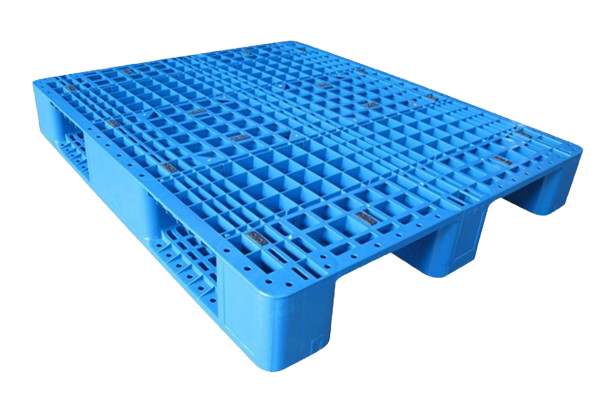
View more plastic pallet products from ICD Vietnam
- ✓Full C/O, C/Q certificates
- ✓Delivery support nationwide
- ✓24/7 consultation
3. Tips to reduce shrinkage in PA plastic parts
To address the shrinkage problem in precision mechanical components, manufacturers typically apply the following strategies:
- Using glass fiber-reinforced plastic is the most effective approach. Not only does it reduce the shrinkage coefficient, but glass fibers also significantly improve the heat resistance and stiffness of the part. This is extremely important for products such as gears, handheld tool housings, or components in automotive engine compartments.
- Optimizing mold design also plays a key role. Design engineers need to calculate larger draft angles compared to other plastic types. The reason is that PA plastic, upon shrinking, grips mold cores extremely tightly; if the draft angle is not large enough, it will lead to difficult part ejection or surface deformation during demolding. In addition, placing gates at symmetric positions helps plastic fill evenly, minimizing uneven shrinkage between different zones of the part.

Contact ICD Vietnam for a quote
- ✓Hotline 1: 0983 797 186
- ✓Hotline 2: 0903 459 186
- ✓Hotline 3: 0905 859 186
4. References
To learn more about technical specifications and scientific studies related to Polyamide plastic shrinkage, you can refer to the following authoritative sources:
- Plastic property data reference: PA plastic shrinkage base data (Omnexus by SpecialChem)
- Injection molding technical report: Mold design optimization for semi-crystalline plastics (ScienceDirect)
5. You may also be interested in: Shrinkage rate reference table for common plastics
Plastic Shrinkage Rate Summary Table
Classified by maximum shrinkage amplitude (%)
6. You may also be interested in: Shrinkage rate comparison chart
Shrinkage Rate Comparison Chart
Compare shrinkage range (Min - Max) of over 70 plastic types and injection molding compounds