
Mục lục
Key takeaways:
- This article gives a comprehensive look at the two most common pallet types today: plastic pallets and wooden pallets.
- Through an at-a-glance comparison table and a detailed analysis of HDPE/PP plastic and the ISPM-15 export standard for wood, you will clearly understand the pros and cons of each.
- The content also guides you in making a decision based on a one-way shipping model versus a closed-loop supply chain, helping businesses optimize packaging cost and run their warehouse sustainably.
In supply chain management, pallets act as the foundational building blocks. Choosing the wrong pallet not only wastes budget but can also disrupt the entire shipping process at the border or damage goods in the warehouse. To never regret your decision, you need to clearly understand the technical nature and the economics of each type.
Should you choose plastic or wooden pallets
Below is a summary of the core criteria for a quick view of the differences between these two product lines:
| Comparison criteria | Plastic pallet | Wooden pallet |
| Service life | Very high (5-10 years) | Low (often under 1 year) |
| Investment cost | High | Low |
| Re-cleaning ability | Very good, can be washed | Hard, absorbs liquids easily |
| Export standard | Fumigation-exempt | Must comply with ISPM-15 |
| Goods safety | High, smooth surface | Medium, prone to nails and splinters |
| Repairability | Almost impossible | Easy to replace a wooden board |
| Self weight | Light and uniform | Heavy and varies with moisture |
Pros and cons of plastic pallets
Plastic pallets are gradually becoming an inevitable trend in modern warehouses thanks to their durability and absolute precision in technical specifications.
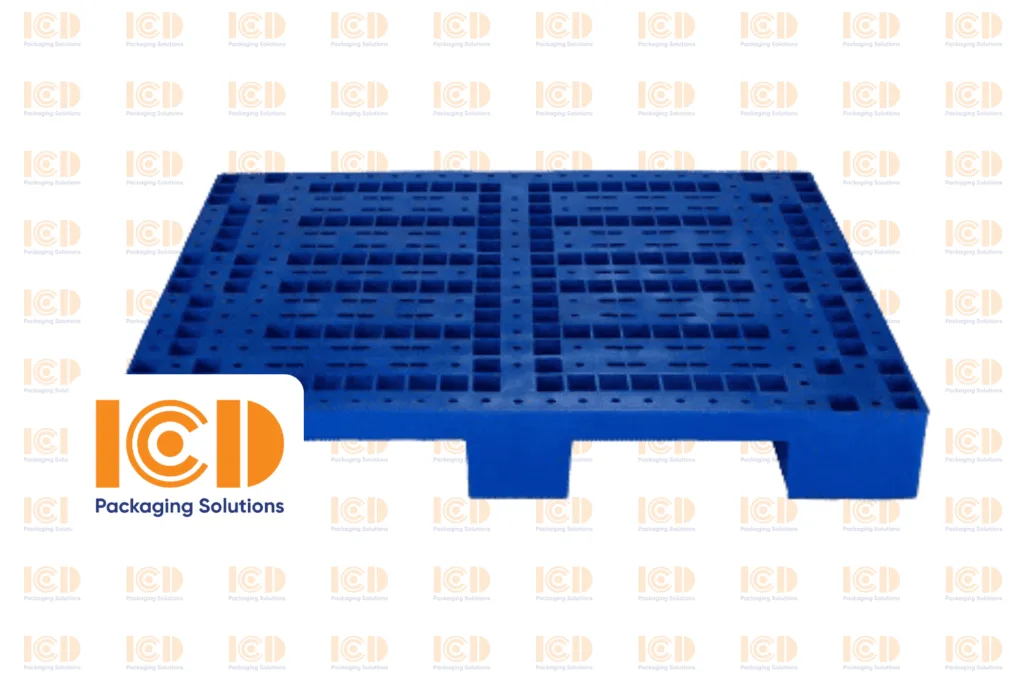
What is a plastic pallet? A plastic pallet is a transport structure produced mainly by injection molding from plastic resins such as HDPE or PP. Unlike natural materials, plastic pallets have a uniform structure, do not change structurally with ambient moisture, and can bear extremely large loads of thousands of kilograms depending on the reinforcing-rib design.
Advantages of plastic pallets
The greatest strength of plastic pallets lies in durability and hygiene. Because they are molded as a single piece, they have no nails or screws that can come loose, tear packaging or injure workers. The plastic surface is waterproof, completely preventing the harboring of harmful bacteria such as E. coli or salmonella - which is extremely important for the food and pharmaceutical industries.
Operationally, plastic pallets are fully compatible with automated forklift systems and high-bay racking thanks to their precise dimensions. They require no ISPM-15 fumigation procedures when crossing international borders, saving time and paperwork costs. In addition, modern plastic pallets can integrate RFID chips, letting businesses automatically track shipment locations across the supply chain.
Disadvantages of plastic pallets
The biggest barrier is the very high initial investment cost, often 3 to 4 times that of wooden pallets. Plastic pallets are produced from fixed molds, so businesses cannot flexibly change dimensions for special orders.
Another drawback is that the friction of the plastic surface is usually lower than wood, making goods prone to sliding if not carefully stretch-wrapped.
Finally, when a plastic pallet cracks, you almost cannot repair it - you can only sell it off as recycled plastic.
When to buy plastic pallets
Businesses should invest in plastic pallets when operating closed-loop supply chains, where pallets are circulated internally and continuously recovered. It is also a mandatory choice for cold storage, environments demanding high hygiene standards, or when using automated racking systems that require dimensional precision down to the millimeter.
Pros and cons of wooden pallets
Despite competition from plastic, wooden pallets hold their position thanks to flexibility and an extremely low price.

What is a wooden pallet? A wooden pallet is assembled from wooden boards (usually pine, melaleuca or acacia) joined by nails or screws. It is the oldest type of pallet and still holds the largest share in global goods movement today.
Advantages of wooden pallets
The absolute advantage of wooden pallets is the low price and the ability to customize sizes quickly without complex molds. You can order wooden pallets to any specification in a short time.
The friction of wood is very high, helping goods grip better when stacked. In particular, wooden pallets are extremely easy to repair; if one board breaks, you simply replace it with another at very low cost.
Disadvantages of wooden pallets
Wooden pallets carry more safety risks because nails and screws can loosen or splinters can pierce goods. They absorb moisture easily, leading to mold and providing an ideal habitat for termites.
To export, wooden pallets must undergo a strict heat-treatment or fumigation process and be stamped with ISPM-15. If they do not meet the standard, the shipment can be held at the border or forced to be re-exported, causing major losses.
In addition, wooden pallets usually have a very short lifespan and rot easily after a few contacts with water.
When to buy wooden pallets
Wooden pallets are the optimal solution for one-way shipping, where the pallet travels with the goods to the customer and does not return. They also suit businesses with a limited initial budget or those needing to pack non-standard-size goods for which no matching plastic pallet mold exists.
How to decide between plastic and wooden pallets
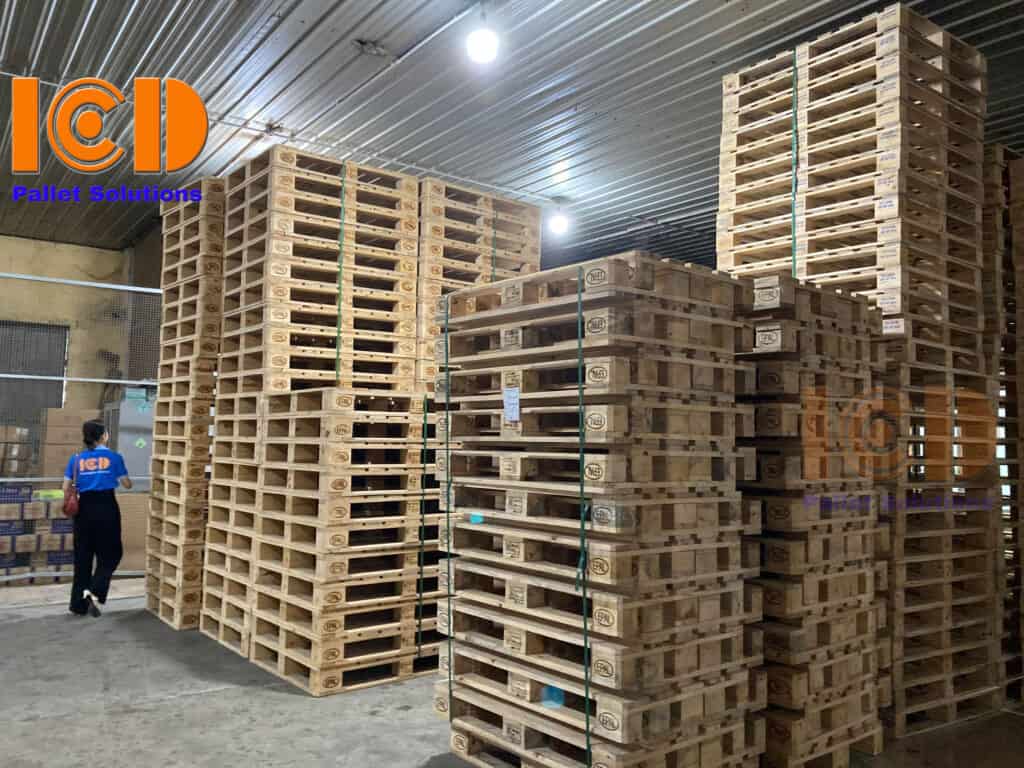
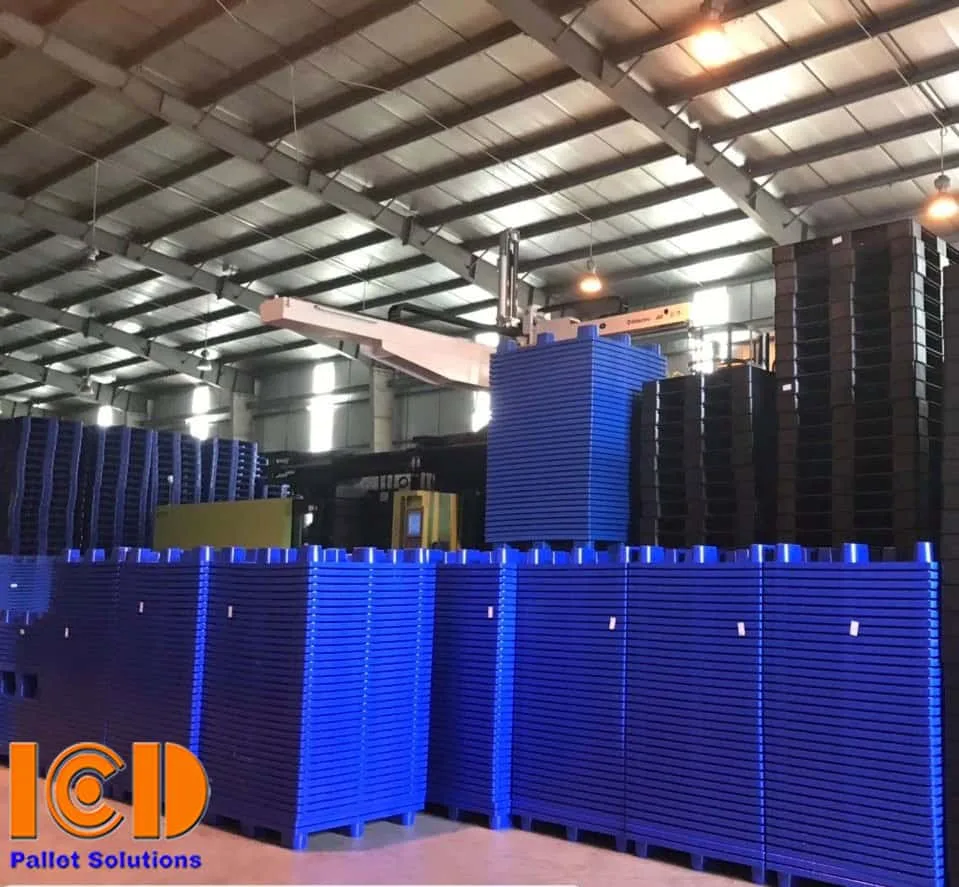
To make the final decision, run a break-even analysis. If the rotation cycle of a pallet in your business exceeds 10 trips, plastic pallets deliver higher economic benefit thanks to their long lifespan. Conversely, if you only ship goods out and do not recover them, wooden pallets are the most economical choice.
Consider your industry’s characteristics. If you work in seafood or food export, plastic pallets are the top priority to avoid contamination and quarantine risks. If you work in building materials or heavy raw goods, wooden pallets with good friction and a low price help you optimize packaging cost effectively. Finally, check your forklift and racking systems; if you use high-bay racks, plastic pallets with steel-reinforced bars ensure far better operating safety than wood.
See also: comparison of pallet materials | static load and dynamic load