Table of Contents
- Key takeaways
- 1. What is the Kraft process? The chemistry behind the strength
- 2. The wood’s journey through a Kraft paper mill
- 3. Why Kraft paper has outstanding mechanical strength
- 4. Application experience from ICD Vietnam
- Frequently asked questions about the Kraft paper manufacturing process
- Contact us for dunnage bag advice
- References
Reviewed and updated by ICD - Week 43/2026
Kraft paper is made from wood pulp cooked in the Kraft process (also called the sulfate process): wood chips are cooked in a solution of NaOH and Na₂S at about 170°C to dissolve most of the lignin and keep the long cellulose fibres, which are then washed, screened and formed into paper. Unbleached pulp gives a yield of about 65 to 70% of the wood mass and produces brown Kraft paper with high tensile and tear strength, used for sack paper, wrapping paper and carton liner.
I am Le Van Thang, and I have worked in packaging supplies at ICD Vietnam since 2011. Kraft paper is the base material of the paper dunnage bags we supply, so understanding how it is made helps me explain to customers why paper that is all called Kraft can differ in strength. This article walks through each stage in the mill, the sourced figures, and what packaging buyers should check.
Key takeaways
The Kraft process uses a strong alkaline liquor, called white liquor, to separate lignin from cellulose fibres at high temperature and pressure. The key technical advantage is that the cellulose fibres are cut short less, so virgin paper has good mechanical strength, toughness and tear resistance. The most common product is brown unbleached Kraft paper.
- Raw material: debarked wood, chipped.
- Cooking: white liquor NaOH + Na₂S, about 170°C, under pressure.
- Washing and screening: separating spent cooking liquor (black liquor), knots and impurities.
- Recovery: burning black liquor in a recovery boiler, regenerating chemicals, producing steam and power.
- Papermaking: spreading pulp on a wire, pressing, drying, calendering and reeling.
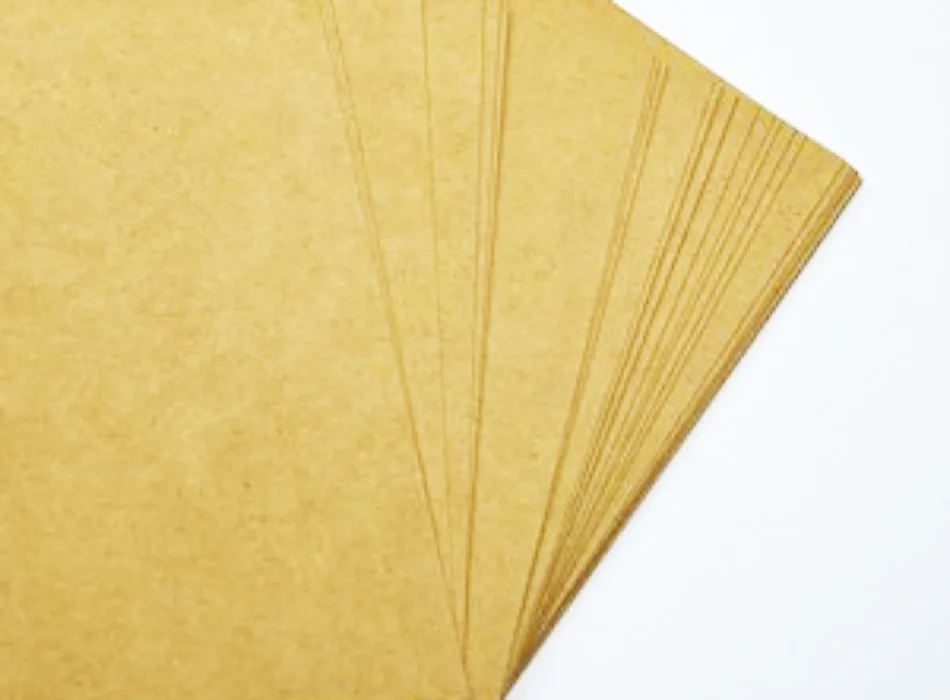
1. What is the Kraft process? The chemistry behind the strength
The Kraft process is a chemical method of making pulp and is now the dominant process in the world for making wood pulp for paper. The name comes from the process patented by C. F. Dahl in 1885 and put into production by the Munksjö mill in Sweden; the word “kraft” in Swedish and German means strength, because the brown paper it produced was much stronger than the papers of the time.
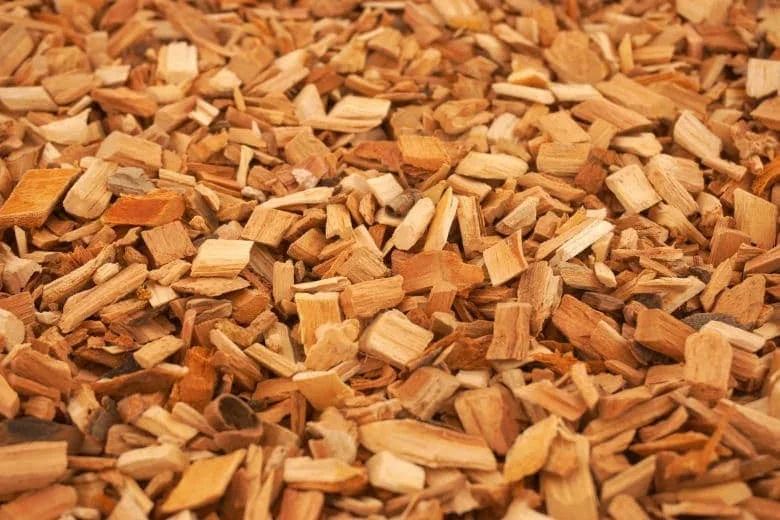
Purpose and raw materials
The aim of cooking is to dissolve most of the lignin, the hard binder between wood fibres, to release the cellulose fibres. Cellulose fibre is what gives paper its strength and structure. Lignin is not removed completely: the brown pulp used for sack paper and liner keeps some lignin, which contributes to the characteristic brown colour.
The Kraft process works for most kinds of wood, both softwood (long fibres) and hardwood (shorter fibres). Wood is debarked, cleaned and chipped into small, even chips so the cooking liquor penetrates evenly.
The core chemistry
The cooking liquor is a strong alkaline solution called white liquor, mainly sodium hydroxide (NaOH) and sodium sulfide (Na₂S), used at about 15 to 25% of the wood mass, with a pH of about 13 to 14. Wood chips are loaded into the digester with the white liquor and heated to about 170°C under pressure, with a cooking time depending on how much lignin must be removed, typically about two hours.
| White liquor component | Role |
|---|---|
| Sodium hydroxide (NaOH) | Strong alkali, dissolves lignin and hemicellulose |
| Sodium sulfide (Na₂S) | Speeds up lignin removal and shortens the time wood spends in hot alkali, so the fibres degrade less |
The sulfide ions in the liquor cut the ether bonds in the lignin molecule, breaking lignin into fragments that dissolve in the alkali. Because sulfide speeds up lignin removal, the wood spends less time in hot alkali than in the older soda process, so the cellulose fibres degrade less and the paper is stronger. Keeping fibre length is the key to the mechanical strength of Kraft paper.
2. The wood’s journey through a Kraft paper mill
Making a roll of Kraft paper is a closed chain of stages, from wood preparation to the finished reel. The table below summarises each step and the main figures according to Wikipedia.
| Stage | Main task | Figures, result |
|---|---|---|
| Wood preparation | Debarking, cleaning, chipping | Even chip size so the liquor penetrates evenly |
| Cooking | Wood chips + white liquor in a pressure digester | About 170°C (170-176°C), pH 13-14, chemicals 15-25% of wood |
| Blow | Discharging the pulp to a tank at atmospheric pressure | Recovery of steam and volatiles (turpentine with softwood) |
| Screening | Removing knots, fibre bundles, impurities | Knots about 0.5-3%, fibre bundles 0.1-1% of digester output |
| Washing | Separating black liquor from the fibres | Usually 3-5 stages of counter-current washing |
| Recovery | Concentrating and burning black liquor, regenerating white liquor | Closed cycle of sodium, sulfur and calcium |
| Papermaking | Spreading pulp on a wire, pressing, drying, calendering, reeling | Reaching the required grammage and smoothness |
Raw material preparation and pulp cooking
After cooking, the digester is discharged into a tank at atmospheric pressure. The result is brown pulp, called brown stock in the industry, and an important by-product, black liquor, containing lignin fragments, carbohydrates from degraded hemicellulose and spent chemicals.
Washing, screening and refining
The pulp is screened through several stages of screens and centrifugal cleaners to remove knots, uncooked fibre bundles and impurities; the knots can be sent back for cooking again. The pulp is then washed in several stages, usually 3 to 5, with wash water flowing against the pulp to separate black liquor from the fibres using the least water.
For pulp used in sack paper and carton liner, the pulp is usually not bleached; after washing, it is refined mechanically so the fibres fibrillate, increasing the bonding area between fibres and making the sheet stronger.
Chemical recovery: the key step for economics and the environment
As a result, a Kraft mill is almost closed-loop for its main inorganic chemicals (sodium, sulfur, calcium). The recovery boiler also makes high-pressure steam that runs a turbine to generate electricity, and according to Wikipedia a modern Kraft pulp mill is usually self-sufficient in power and can have a surplus to sell. The downside is that the process produces odorous sulfur compounds, so mills must treat their exhaust gases.
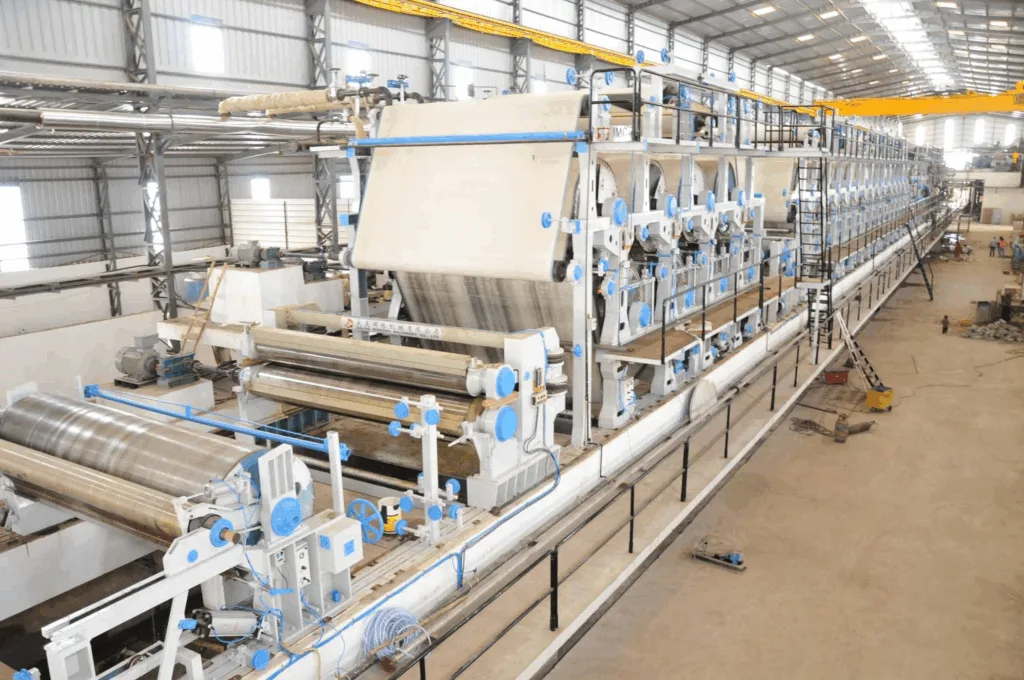
The papermaking stage
The refined pulp goes onto the paper machine. Dilute pulp is spread evenly on a wire to drain water, and the wet sheet is pressed and then dried over hot drying cylinders. Finally the paper is calendered to reach the Kraft paper grammage and smoothness required, then reeled into large rolls to be slit to the width the customer orders.
3. Why Kraft paper has outstanding mechanical strength
Why is Kraft paper the material chosen for sack paper, corrugated cartons and dunnage bag shells (dunnage bag), including the Kraft paper dunnage bag? The answer lies in three features created by the process.
Preserving long cellulose fibres
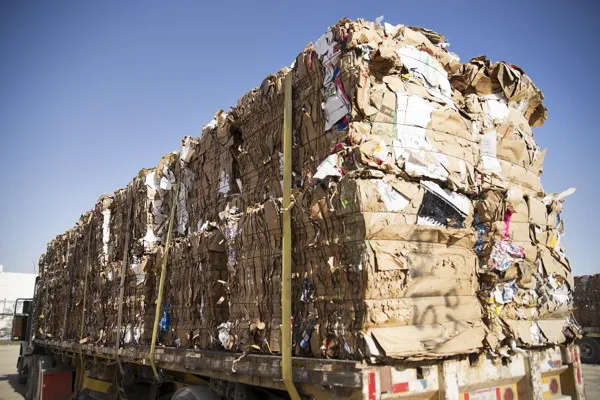
The Kraft process keeps cellulose fibres longer than many other methods. Long fibres have many bonding points with neighbouring fibres, which directly raises the paper’s tensile strength and tear resistance. This is why virgin Kraft paper is stronger than paper made from recycled pulp, whose fibres get shorter with each recycling pass, and why it replaced the sulfite process as the dominant process from the 1940s.
| Criterion | Virgin Kraft pulp | Recycled pulp (old paper, cartons) |
|---|---|---|
| Fibre length | Long, little cutting | Shorter with each recycling pass |
| Tensile and tear strength | High | Lower at the same grammage |
| Impurities | Few | May contain ink, glue, impurities |
| Price | Higher | Lower |
| Mostly used for | Sack paper, export carton liner, paper dunnage bag shells | Fluting, recycled liner, domestic cartons |
Little bleaching: why the paper is brown
Natural brown Kraft paper is made from unbleached pulp. Bleaching removes more of the remaining lignin but lowers pulp yield (from about 65-70% to about 45-50%) and can weaken the fibres. So for packaging that has to carry load, brown Kraft paper is usually chosen: strong, and cheaper than white Kraft paper of the same grammage.
High purity and room for further processing
Virgin Kraft pulp has few impurities, so the paper is consistent and easy to process further, such as coating or laminating with plastic film. For example, PE-laminated Kraft paper has a plastic layer bonded to the paper surface, which limits moisture uptake in a damp container environment. The film reduces moisture absorption but does not make the paper fully waterproof at cut edges and punctures.
4. Application experience from ICD Vietnam
Understanding the Kraft process helps packaging buyers ask the right questions of suppliers, instead of just asking “is it Kraft paper”.
Paper for dunnage bag shells
What buyers should check
When choosing Kraft paper or paper dunnage bags, in my experience you should ask the supplier for a data sheet with grammage (measured to ISO 536), the pulp source (virgin or with recycled content) and tensile strength, tear strength or burst strength. For dunnage bags, also ask for working pressure, burst pressure and test results; cargo going by US rail is often required to have AAR certification, so ask for a valid certificate for the exact bag model.
| Item to ask about | Why |
|---|---|
| Paper grammage (g/m², measured to ISO 536) | Paper that is all called Kraft but differs in grammage differs in strength |
| Pulp source: virgin or with recycled content | Recycled pulp has shorter fibres and lower tear strength |
| Tensile strength, tear strength or burst strength | Direct indicators of resistance to rubbing and impact |
| For dunnage bags: working pressure, burst pressure, test results, certification | Decide whether the bag holds its pressing force for the whole journey |
Frequently asked questions about the Kraft paper manufacturing process
Why is it called Kraft paper?
Kraft is a Swedish and German word meaning strength. The name comes from the brown paper that was much stronger than the papers of the time, made from pulp cooked by the process of C. F. Dahl (patented in 1885) at the Munksjö mill in Sweden.
Are the Kraft process and the sulfate process different?
No. They are two names for the same process. The name sulfate comes from the use of sodium sulfate as a make-up chemical, which is reduced to sodium sulfide in the recovery boiler.
What is the Kraft pulping temperature?
According to Wikipedia (Kraft process), wood chips are usually cooked at about 170°C (170 to 176°C) in a pressure digester, with a time depending on how much lignin must be removed, about two hours.
How do brown and white Kraft paper differ?
Brown Kraft paper is made from unbleached pulp, with a pulp yield of about 65 to 70%. White Kraft paper must be bleached, the yield falls to about 45 to 50% and the fibres can be weakened, so for load-bearing packaging brown paper is usually chosen.
Is the Kraft process environmentally friendly?
The process recovers and reuses almost all the main inorganic chemicals, and modern mills usually generate enough power from the recovery boiler. However the process produces odorous sulfur compounds and a large volume of intermediate chemical liquors, so mills must treat exhaust gases and manage waste closely.
Contact us for dunnage bag advice
For advice on choosing Kraft paper or PP dunnage bags for your shipping route, send ICD Vietnam the void size, cargo type and vehicle. Price: contact for a quote.
ICD Vietnam Industrial Manufacturing Co., Ltd.
- North Vietnam (Hanoi warehouse): 3rd Floor, Thang Long A1 Building, Thon Bau, Thien Loc Commune, Hanoi - 0983 797 186 / 090 345 9186 / 090 5859 186.
- Southern workshop: 551/212 Le Van Khuong Street, Tan Thoi Hiep Ward, District 12, Ho Chi Minh City - 098 6784 186.
- Email: sales@icdvietnam.com.vn. Zalo: Chat Zalo.
References
- Kraft paper manufacturing process (Kraft process) - TAPPI (Technical Association of the Pulp and Paper Industry).
- Wikipedia - Kraft process: cooking conditions, pulp yield, washing, screening, chemical recovery cycle (updated 10/2026).
- ISO 536 - Paper and board: determination of grammage.