
Table of Contents
- Classifying Kraft paper by construction and origin
- Classifying Kraft paper by colour
- Kraft paper types by specialised function
- Classifying Kraft paper by use in cartons
- ICD Vietnam’s experience in choosing Kraft paper
- Frequently asked questions about types of Kraft paper
- Contact us for Kraft paper dunnage bag advice
- References
Reviewed and updated by ICD - Week 44/2026
Kraft paper is usually classified by four criteria: fibre source (virgin, recycled), colour (natural brown, white, black and dyed colours), surface treatment and function (PE lamination, stretchable sack kraft, grease-resistant) and role in the carton (liner facing, fluting medium). The strongest type for load-bearing packaging is virgin brown Kraft; the type used for dunnage bag shells is plastic-laminated Kraft paper.
I am Le Van Thang, and I have worked in packaging supplies at ICD Vietnam since 2011. Customers who buy dunnage bags often ask me: all Kraft paper is the same, so why choose? In fact two rolls of the same brown colour can differ greatly in strength, depending on virgin or recycled fibre and whether it is laminated. This article goes through each way of classifying it, with sourced figures and a quick way to recognise it when goods arrive.
| Criterion | Types | How they differ |
|---|---|---|
| Fibre source | Virgin, recycled | Fibre length, tear and tensile strength |
| Colour | Natural brown, white (bleached), black and dyed colours | Whether bleached or dyed; affects printing and, in part, strength |
| Surface treatment, function | PE lamination, stretchable sack kraft, grease-resistant | Moisture resistance, stretch, grease resistance |
| Role in the carton | Liner (facing), fluting (corrugated medium) | Position in the corrugated board and the mechanical requirements |
Classifying Kraft paper by construction and origin
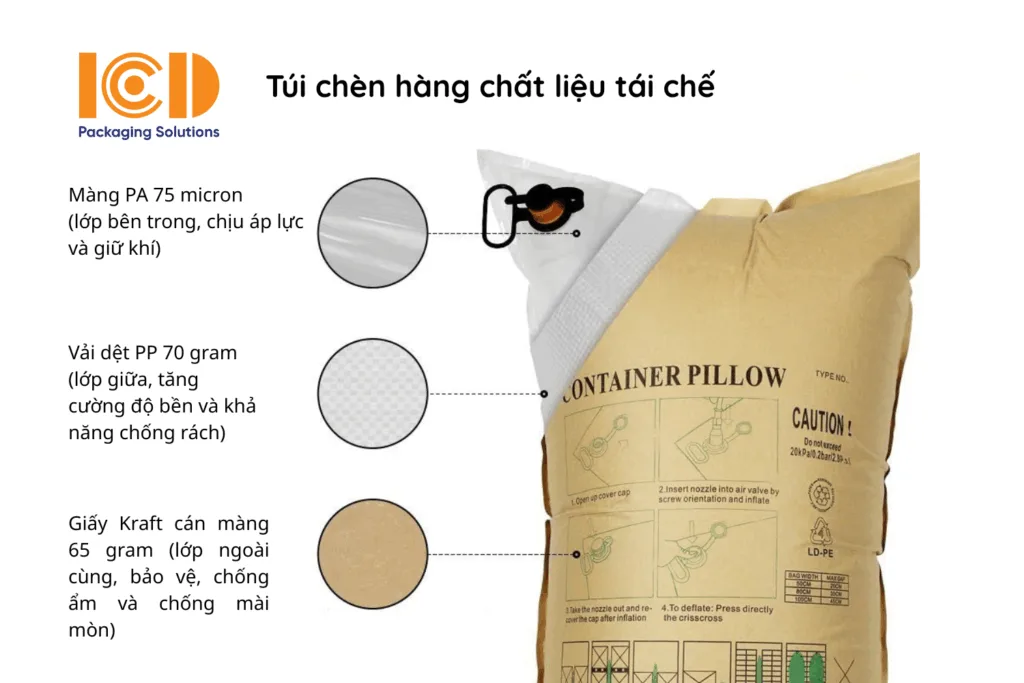
Fibre source is the factor that decides the mechanical strength of Kraft paper most. Paper made from fresh wood pulp has long, tightly bonded cellulose fibres; paper made from recovered paper has fibres shortened at every recycling, so it is weaker. The plastic film laminated onto the paper is a separate matter: it does not change the fibres but helps the paper keep its strength when it meets moisture.
Virgin Kraft paper
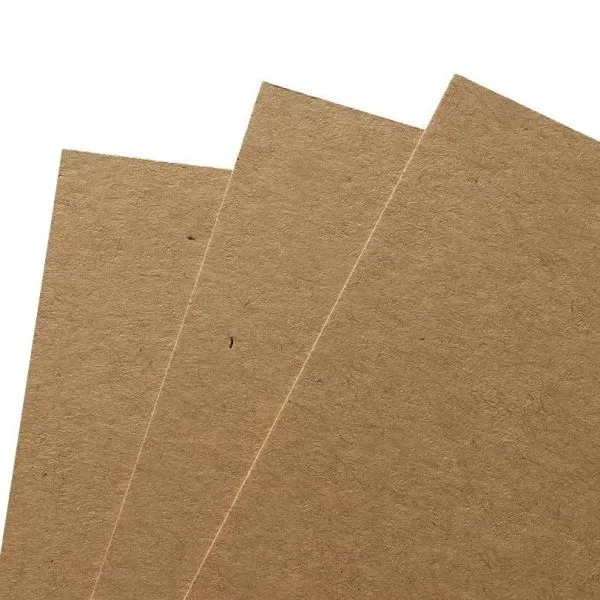
Virgin Kraft paper is made from fresh wood pulp, cooked by the Kraft process in a cooking liquor containing sodium hydroxide and sodium sulfide. The liquor dissolves lignin, the binder in wood, but keeps most of the length of the cellulose fibres. As a result the paper has the highest tear strength, tensile strength and toughness of all Kraft types, with an even surface.
This type is used for cartons that need high compression strength, dry food contact packaging, multi-wall sacks for cement or chemicals, and as the outer shell of dunnage bags. In an air bag the paper is the load-bearing layer when the bag is compressed between two rows of cargo, so the longer the fibres, the less the bag tears at the edge.
Recycled Kraft paper
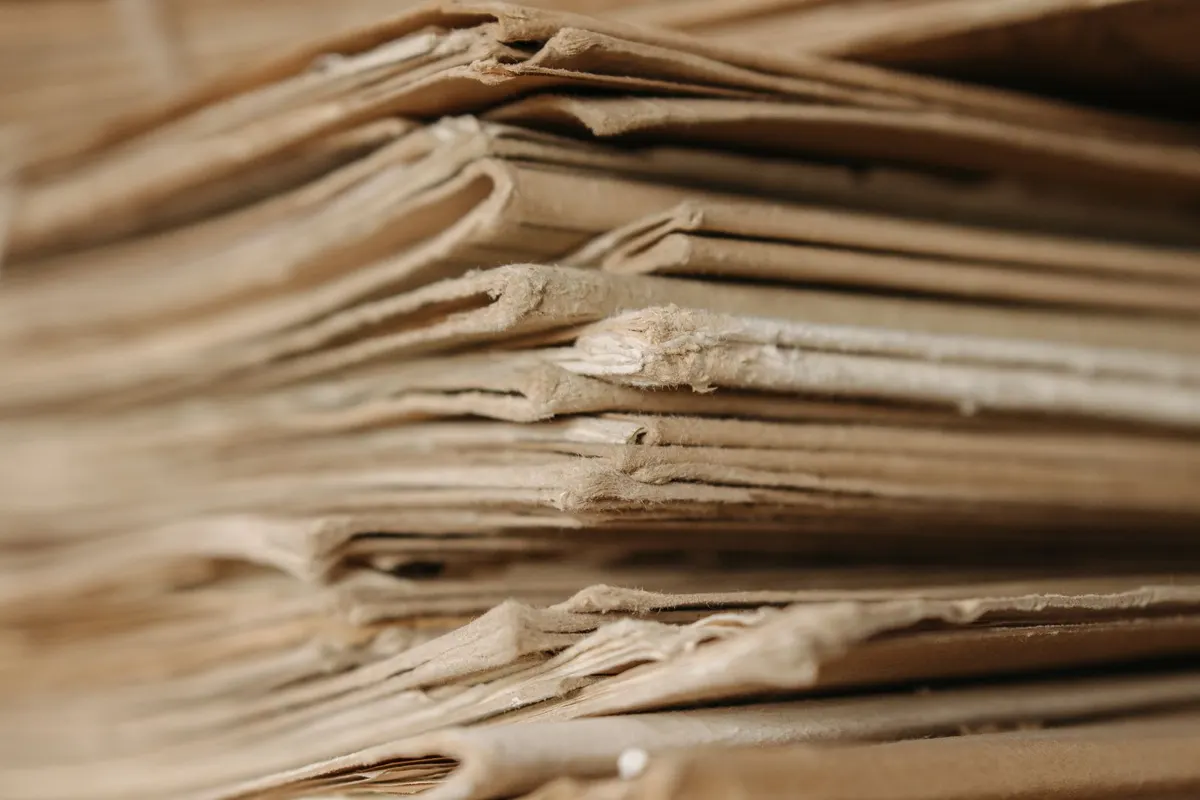
Recycled Kraft paper is made from recovered pulp such as old cartons and used paper. At each recycling the fibres are ground shorter, so the mechanical strength is lower than virgin paper. The colour is usually uneven, sometimes speckled, and the surface is rougher.
Recycled paper suits lining paper, wrapping paper, cartons that do not carry heavy stacking, and is often used as the fluting or the inner liner of corrugated board to cut cost. For direct load-bearing uses such as the shell of an air bag going in a container, I do not recommend recycled paper.
PE-laminated Kraft paper

PE-laminated Kraft paper is Kraft paper, usually virgin, coated with a thin layer of polyethylene by extruding molten plastic onto the paper surface. The PE layer sharply reduces the water vapour, water and grease passing through, but it is not an absolute moisture barrier. According to measurements published in a TAPPI paper in 2007, a 20 g/m² LDPE layer still lets about 3 g of water vapour through per m² in 24 hours at 23 degrees C and 50% humidity, rising to about 19 g at 38 degrees C and 90% humidity.
That figure shows why laminated paper still needs dry storage. Wet paper loses strength very fast: the Stora Enso CKB PE data sheet records wet tear strength at only about 25 to 30% of dry. The PE layer slows that process enough for the paper to keep its strength over a long journey, but does not stop it outright.
Classifying Kraft paper by colour
The colour of Kraft paper reflects whether the paper has been bleached or dyed. Brown is the natural colour of unbleached Kraft pulp; to get white it must be bleached further, and bleaching loses more of the raw material: according to Wikipedia, the yield of unbleached Kraft pulp is 65 to 70%, while bleached pulp yields only about 50%.
Yellow-brown Kraft paper
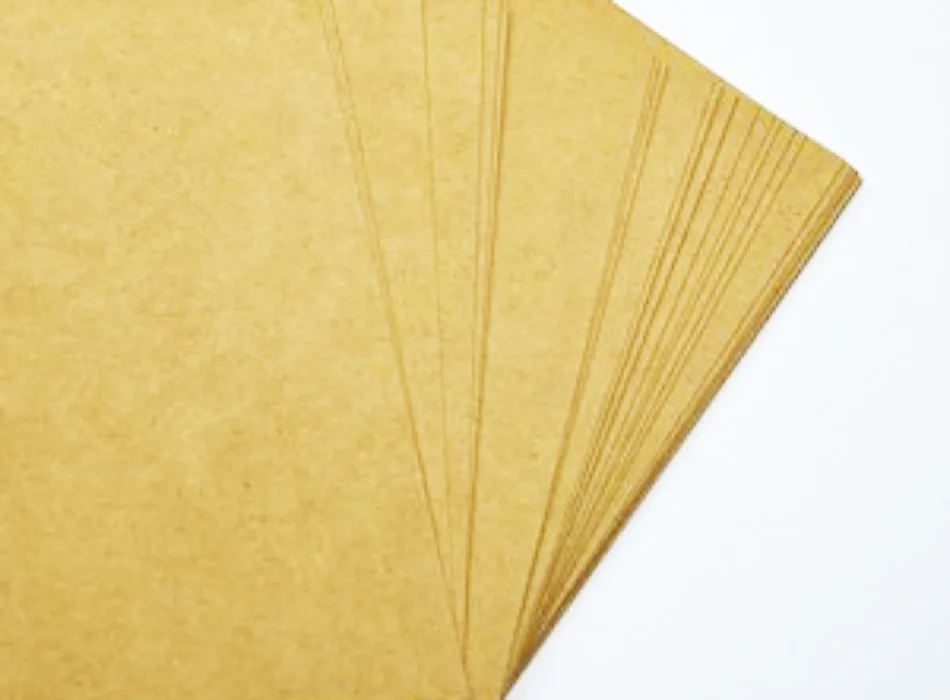
Yellow-brown Kraft paper is unbleached or only lightly bleached, keeping the natural colour of the pulp. Because the fibres do not go through an extra chemical stage, this is the type with the highest mechanical strength and also the most economical, as it uses fewer chemicals and less energy. Most industrial packaging, load-bearing paper bags and dunnage bag shell paper is brown Kraft.
White Kraft paper
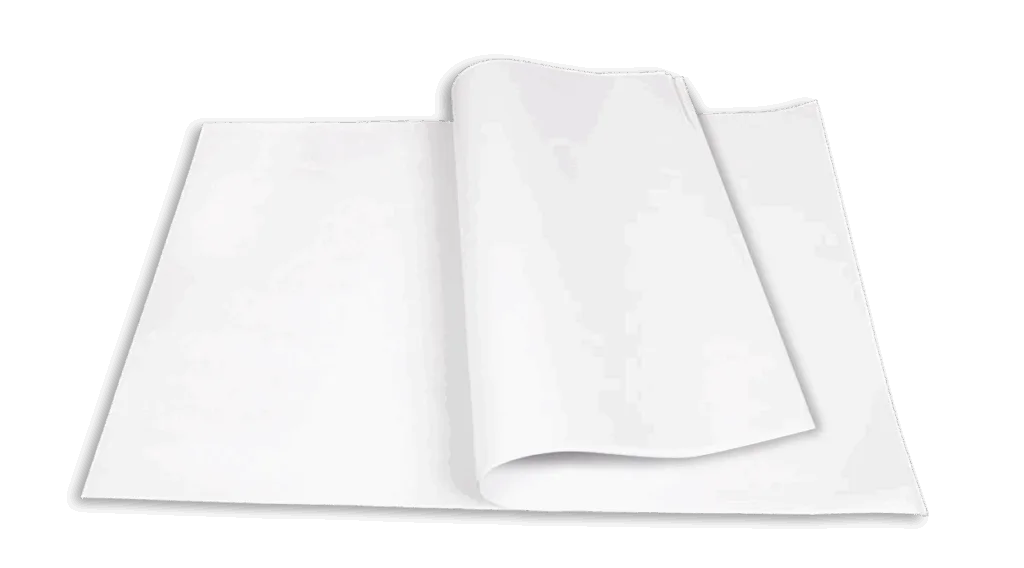
White Kraft paper is paper that has been bleached. A note: some Vietnamese-language sources say white Kraft paper is bleached “by the sulfite method”; in fact sulfite is a different pulping process, while Kraft paper is cooked by the sulfate (Kraft) process and only then bleached. Bleaching usually weakens the fibres slightly compared with brown Kraft.
In return, the white surface prints colour better, so white Kraft paper is used for packaging that needs good looks: cosmetics boxes, fashion bags, food packaging, fast-moving consumer goods. If strength is the first priority, brown Kraft is still the better choice.
Black and other coloured Kraft paper

Black and other coloured Kraft paper is dyed during papermaking or coated with colour on the surface. The main purpose is appearance: gift boxes, premium bags, a base for metallic printing or foil stamping. Strength is not the priority of this group, so it is rarely used for industrial packaging.
Kraft paper types by specialised function
Besides PE lamination, there are two specialised Kraft papers often found in industrial packaging that classification articles usually skip: sack kraft (bag paper) and grease-resistant paper. Both start from brown or white Kraft but are treated to achieve one specific property.
Sack kraft is the paper used for multi-wall sacks holding cement, flour and fertiliser. According to Wikipedia (Kraft paper), micro-creped sack kraft stretches about 4% in the machine direction and about 10% in the cross direction, so the sack survives a drop without tearing. Grease-resistant paper is surface-treated so that grease does not pass through, and is used to wrap fast food. The common grammage range of Kraft paper in general, from the same source, is 40 to 135 g/m².
Classifying Kraft paper by use in cartons
In the carton industry, Kraft paper is divided by position in the corrugated board: liner is the flat layer outside and inside, fluting (medium) is the layer formed into flutes in the middle. The two have different requirements, and the quality of both together decides the edge crush strength (ECT) and box compression strength (BCT).
Kraft liner (facing layer)
Liner is the outermost and innermost layer of the board, taking impact, abrasion and moisture directly. Liner is usually heavier than the fluting, with a smooth flat surface for printing. Liner divides further into virgin liner (often called kraftliner) and recycled liner (testliner); virgin liner is clearly stronger at the same grammage.
| Liner (facing) | Fluting (corrugated medium) | |
|---|---|---|
| Position | Outer and inner faces of the board | In the middle, pressed into flutes |
| Main requirement | Impact strength, moisture resistance, good printing | Stiff, forms flutes well |
| Common fibre source | Virgin (kraftliner) or recycled (testliner) | Usually recycled |
Kraft fluting/medium (corrugated layer)
Fluting is the paper layer pressed into flutes, holding the two liner layers apart. This structure makes the board much stiffer than the sum of flat paper layers, and contributes to vertical compression strength when cartons are stacked; the flutes also create a cushion against shock. So it is not correct to say the flute layer mainly carries horizontal force. Fluting needs stiffness and good flute formation, and often uses recycled paper to reduce cost.
ICD Vietnam’s experience in choosing Kraft paper
Choosing Kraft paper should start from three questions: does the paper carry load directly, is the environment humid, and does the packaging need good printing. Once you answer those three, the type of paper almost reveals itself.
Choices for industrial load-bearing uses
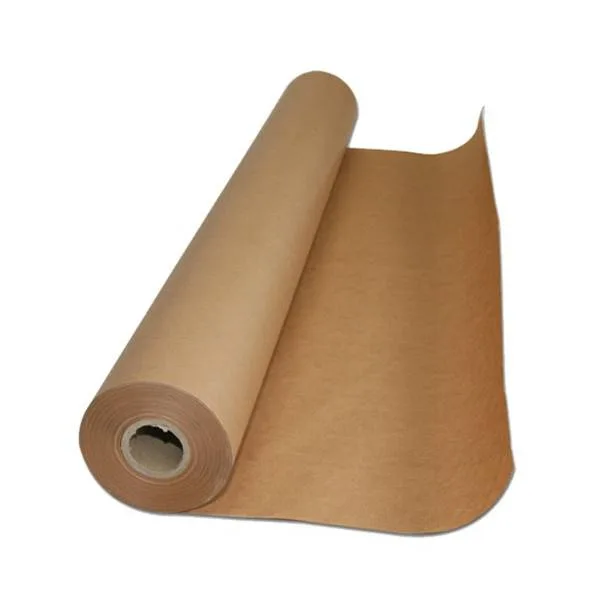
For a dunnage bag shell, the paper must carry load and ride in a damp container for weeks, so it needs virgin brown Kraft laminated with plastic film. That is also the construction of the Kraft paper dunnage bag in the ICD Vietnam catalogue. The biggest risk I meet is not thin paper but moisture: bags kept in a damp warehouse before use, or bag edges cut so that water vapour gets into the paper layer.
The ICD Vietnam catalogue states that paper bags are checked by drop, pull and vibration tests, with AAR, SGS and MSDS certification. Understand it correctly: AAR is the standard of the Association of American Railroads applied to cargo moving by North American rail; for sea cargo, the bag’s holding capacity is calculated by the CTU Code. When buying, ask for a certificate that states the exact bag code you are ordering.
Choosing for carton cost and performance
Cartons that must stack high and carry heavy goods should use virgin liner for both outer and inner faces. To balance cost, many mills use virgin liner for the outer face, where good printing and impact resistance are needed, and recycled paper for the inner face and the fluting. The specific grammage should be chosen by the compression strength to be reached; see our article on Kraft paper grammage.
| Need | Paper to choose | Reason |
|---|---|---|
| Container dunnage bag shell | Virgin brown Kraft laminated with plastic film | High tear strength, the plastic layer slows moisture |
| Cement, flour and fertiliser sacks | Multi-wall sack kraft | Stretches, survives drops |
| Heavy stacked cartons | Virgin liner on both faces | Higher ECT and BCT |
| Ordinary cartons | Virgin liner outside, recycled inside | Cost balance |
| Cosmetics boxes, fashion bags | White or coloured Kraft | Good printing, appearance |
| Lining, void-fill and wrapping paper | Recycled Kraft | Low price, good enough |
A quick way to recognise it in the warehouse: virgin paper has an even colour, and when torn shows long, tough fibres; recycled paper has a mottled colour, tears easily and has short-fibre torn edges. Laminated paper has one glossy side, and water dropped on that side beads into drops instead of soaking in. This is only a preliminary check; to be sure, ask for a data sheet with grammage and tear strength by standard.
Frequently asked questions about types of Kraft paper
How many types of Kraft paper are there?
Kraft paper is usually classified by four criteria: fibre source (virgin, recycled), colour (brown, white, black and dyed), surface treatment and function (PE lamination, stretchable sack kraft, grease-resistant) and role in the carton (liner, fluting). One sheet of paper can belong to several groups at once, for example virgin brown Kraft laminated with PE.
Which is stronger, white Kraft or brown Kraft?
Brown Kraft is usually stronger, because white paper goes through an extra bleaching stage that weakens the fibres a little. If strength is the priority, choose brown Kraft; if good printing is needed, choose white Kraft.
Can PE-laminated Kraft paper be recycled?
It can, but it is harder than plain paper, because the PE layer must be separated from the paper fibres. Wikipedia notes that PE coating helps block moisture but makes the paper harder to recycle. It needs to go to a facility with layer-separation technology.
Are jumbo bags made of Kraft paper?
No. Jumbo bags (FIBC) are made of woven PP fabric, usually with a PE liner. The multi-wall bags made of Kraft paper are cement, flour and fertiliser sacks, using stretchable sack kraft to survive drops.
How does the edge crush strength (ECT) of a carton relate to the type of Kraft paper?
ECT (Edge Crush Test) measures the compression resistance along the vertical edge of the corrugated board, the main factor in stacking ability. ECT depends on the grammage and quality of the liner paper and the stiffness of the fluting; virgin liner gives higher ECT than recycled liner at the same grammage. Moisture lowers ECT: according to Georgia Tech, a 10-point rise in air humidity cuts ECT by about 10%.
What is the common grammage of Kraft paper?
According to Wikipedia, Kraft paper is commonly in the range of 40 to 135 g/m²; paper for carton facing (liner) is usually heavier. A higher grammage does not mean better; choose by purpose: light bags use a low grammage, load-bearing packaging a higher grammage.
Contact us for Kraft paper dunnage bag advice
ICD Vietnam supplies Kraft paper dunnage bags with a plastic-laminated shell and woven PP bags, with a data sheet for each code. Send us the gap size, the type of cargo and the shipping route to get advice. Price: contact for a quote.
ICD Vietnam Industrial Manufacturing Co., Ltd.
- North Vietnam (Hanoi warehouse): 3rd Floor, Thang Long A1 Building, Thon Bau, Thien Loc Commune, Hanoi - 0983 797 186 / 090 345 9186 / 090 5859 186.
- Southern workshop: 551/212 Le Van Khuong Street, Tan Thoi Hiep Ward, District 12, Ho Chi Minh City - 098 6784 186.
- Email: sales@icdvietnam.com.vn. Zalo: Chat Zalo.
References
- Classification of Kraft paper by construction - TAPPI (Technical Association of the Pulp and Paper Industry); water vapour transmission measurements for LDPE-coated paper (Lahtinen, TAPPI 2007).
- Wikipedia - Kraft paper and the Kraft process section on the same page (cooking liquor, pulp yield, sack kraft, grammage).
- Stora Enso - CKB PE, technical data sheet.
- Georgia Tech - effect of moisture on carton compression strength.
- Clemson University - study of the effect of moisture on carton compression strength (2019).
- ICD Vietnam dunnage bag catalogue (Kraft paper bag: paper-plastic lamination shell, Level 1, 15,000 lbs, 0.2 bar) and the bag construction diagram, consulted October 2026.