Table of Contents
- 1. What is PE-laminated Kraft paper? Definition and technical process
- 2. Core benefits: moisture barrier and keeping the paper strong
- 3. Key applications in logistics and packaging
- 4. Selection criteria and quality control
- 5. In summary
- 6. Frequently asked questions about PE-laminated Kraft paper
- Contact us for Kraft paper dunnage bag advice
- References
Reviewed and updated by ICD - Week 43/2026
PE-laminated Kraft paper is Kraft paper covered with a thin layer of polyethylene (PE), usually by extruding molten plastic onto the paper surface, with a common coating weight of about 10 to 50 g/m². The PE layer sharply reduces the water vapour, water and grease passing through, so the paper keeps its strength in humid environments and the bag edges can be heat-sealed. The material is used as the outer shell of container dunnage bags, in dry food packaging, in fertiliser sacks and wherever packaging must stay sealed against moisture.
I am Le Van Thang, and I have worked at ICD Vietnam since 2011. The question customers ask me most about a bag shell is: paper is afraid of water, so is more than a month at sea a problem? This article answers it with real measurements of water vapour transmission, and shows how to check whether a laminated sheet is up to standard.
1. What is PE-laminated Kraft paper? Definition and technical process
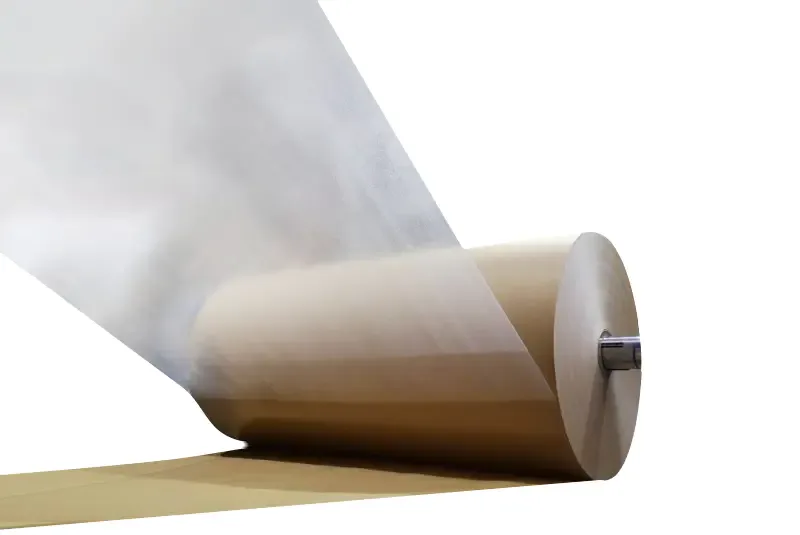
PE-laminated Kraft paper is a packaging material with two main layers: the base is Kraft paper and the coating is polyethylene (PE) plastic. The coating is made by extruding molten plastic or heat-laminating PE film onto the paper surface. The result is a material with the strength and stiffness of paper and the ability to block water and moisture like plastic.
1.1. Physical structure and types of PE
The Kraft paper layer is the load-bearing layer: it gives the tensile strength, tear strength and stiffness the packaging needs to keep its shape and carry load. The PE film layer is the barrier layer: it bonds firmly to the paper after hot pressing and blocks most water, moisture and grease. Depending on the requirement, the maker can coat one side or both; for example the Stora Enso CKB PE Kraft board carries 15 g/m² of LDPE on the reverse side, while the CKB 2PE range carries 20 g/m² on each side.
Two types of PE are commonly used. Low-density PE (LDPE) is the most common in paper extrusion coating: soft, flexible, bonds well to paper and heat-seals easily, so it is preferred for bags that need elasticity and flexible packing. High-density PE (HDPE) is stiffer, with better heat and chemical resistance, and is usually used when extra moisture reinforcement or load-bearing industrial packaging is needed.
1.2. Thermal lamination (extrusion) process and adhesion
Most PE-laminated Kraft paper is made by extrusion coating, because it gives an even coating that bonds firmly. PE granules are melted in an extruder, pressed through a flat die into a thin molten film, and the film is then pressed directly onto the paper between a chill roll and a nip roll. As it cools, the plastic bonds to the surface of the paper fibres.

The adhesion between plastic and paper must be strong enough that the PE layer does not peel when the bag is folded, rubbed or heated in a container. The quality of the coating must also be even: the PE layer must have no air bubbles, thin spots or pinholes, because any gap is a path for water vapour into the paper base. How to test these two factors is covered in section 4.
2. Core benefits: moisture barrier and keeping the paper strong
The biggest value of the PE layer is that it sharply reduces the moisture entering the paper, so the paper keeps its mechanical strength longer in humid environments. The PE layer does not block water vapour completely; it slows the rate of transmission, and that rate also depends on temperature, humidity and coating thickness.
2.1. Moisture barrier mechanism and water vapour transmission rate (WVTR)
Bare Kraft paper absorbs moisture from the air and weakens as humidity rises. For cartons, a Georgia Tech study records that a 10-point rise in relative humidity cuts compression strength by about 10%. According to the Fibre Box Association factor used in the Clemson University study, at 90% humidity a carton keeps only about 48% of its compression strength compared with standard conditions. In other words, paper that takes up moisture can lose up to about 50% of its compression capacity.
The PE layer reduces the water vapour transmission rate (WVTR, also called MVTR), the amount of water vapour passing through one square metre of material in 24 hours. The table below shows measurements of a 20 g/m² LDPE layer presented at the TAPPI conference in 2007, measured by the desiccant cup method:
| Test condition | WVTR of 20 g/m² LDPE (g/m² per 24 hours) |
|---|---|
| 23°C, 50% relative humidity | 3.03 |
| 23°C, 90% relative humidity | 4.89 |
| 38°C, 90% relative humidity | 19.08 |
| 45°C, 90% relative humidity | 32.59 |
The notable figure is the gap between the first row and the last two. A container sitting in the sun at a tropical port can exceed 40°C and be very humid, and then the water vapour passing through the same PE layer is 6 to 10 times higher than in a cool warehouse. That is why, when comparing two laminated papers, you must look at the conditions the WVTR was measured under, not only at one number.
When the paper is kept dry by the PE layer, it keeps its resistance to pressing and tensile force, an important factor for any load-bearing packaging in logistics, including the outer shell of a dunnage bag. The Stora Enso data sheet shows the gap clearly: board without a wet-strength agent keeps only 25 to 30% of its tear strength when wet compared with when dry.
2.2. Heat sealing and resistance to grease and chemicals
PE is a thermoplastic, so PE-coated paper can be sealed with heat. That lets Kraft paper zip bags and stand-up pouches have firmly sealed edges, limiting air, dust and moisture through the seam. The PE layer also stops grease or liquid inside the product, such as fast food or liquid chemicals, from seeping out, and protects the paper from mildly corrosive chemicals.
3. Key applications in logistics and packaging
PE-laminated Kraft paper is used wherever paper must withstand moisture: the shell of dunnage bags going by sea, dry food packaging, sacks for fertiliser and powdered chemicals, and moisture-barrier lining.

3.1. Outer shell of container dunnage bags
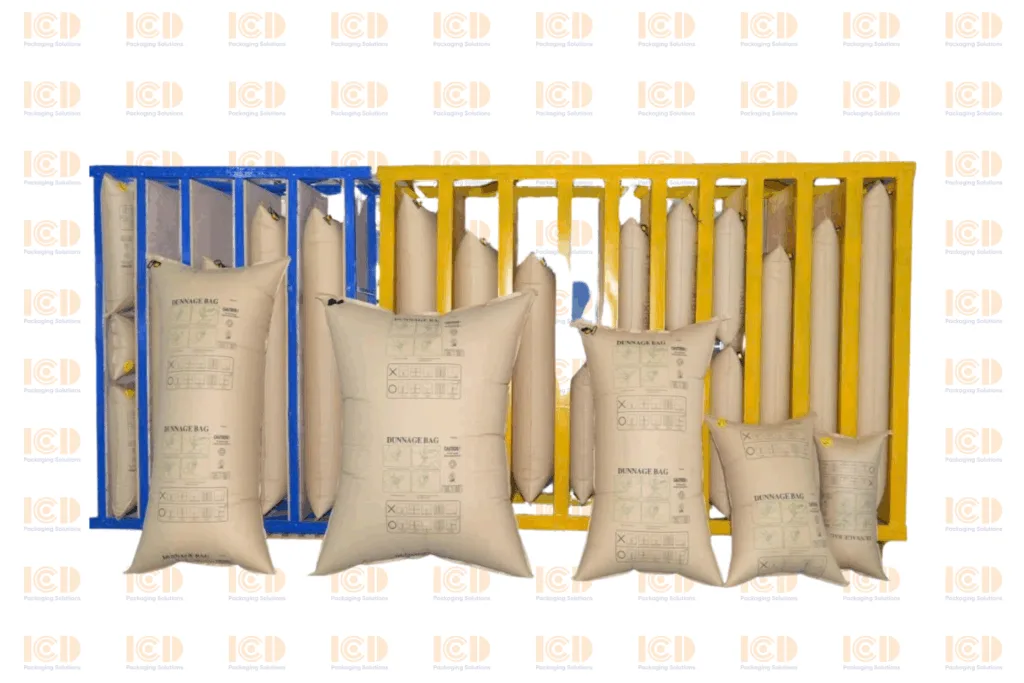
In logistics, Kraft paper laminated with plastic film is the outer shell material of Kraft paper air bags, a type of container dunnage bag. The paper layer takes friction and pressing force from the cargo, the plastic layer keeps the paper from absorbing moisture, and the PA and PE film liner inside holds the air.
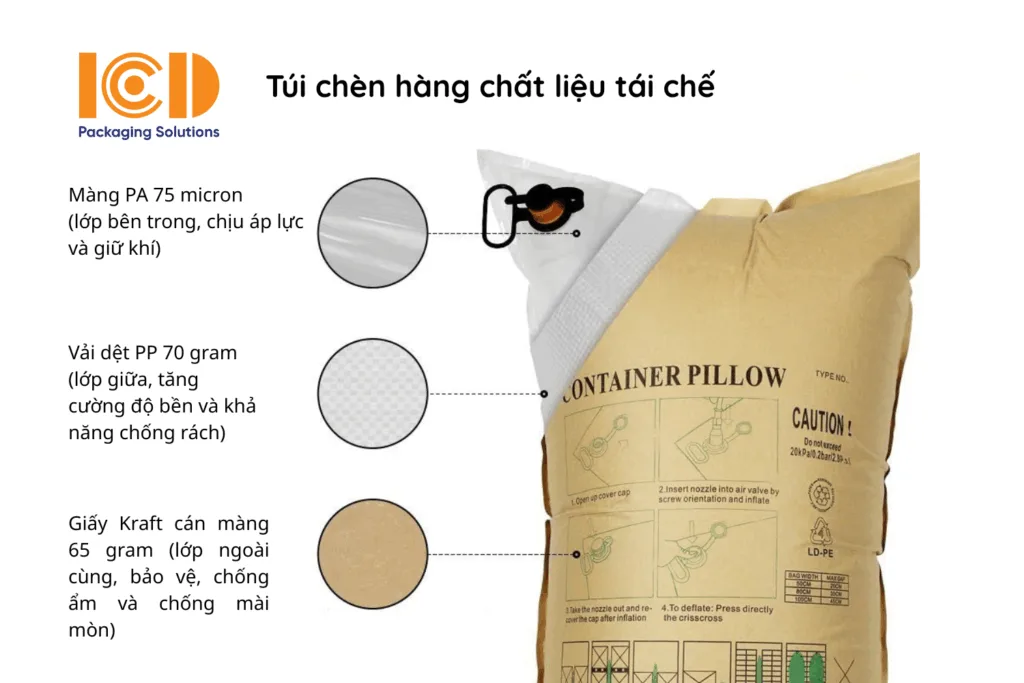
The ICD Vietnam catalogue states that the outer shell of the Kraft bag is paper-plastic lamination, and the construction diagram states that the outermost layer is 65 gram laminated Kraft paper. The ICD Vietnam Level 1 Kraft bag withstands a compression force of up to 15,000 lbs (about 6.8 tonnes) at a working pressure of 0.2 bar. The film layer helps the paper shell keep this strength in a damp container, and also resists abrasion from rubbing against the container wall and the cargo.
Two points should be understood correctly. First, the Level is a classification by the Association of American Railroads (AAR) for dunnage bags in rail cars in North America, not a general requirement for all sea export cargo. Second, Kraft paper bags are normally single-use; for routes where bags must be reused many times, woven PP bags are more suitable.
3.2. Food and other industrial packaging
For dry food packaging such as coffee, flour and grain, the PE layer keeps the product from getting damp and extends shelf life; the Kraft paper zip bag is a familiar example. For agricultural chemicals such as fertiliser, powdered pesticides and aquaculture feed, the PE layer both keeps moisture out and limits the chemicals inside from leaking out and damaging the paper.
In construction, PE-coated Kraft paper is used as a moisture-barrier lining, where paper-based or insulating materials must be kept from contact with water and moisture from the ground. In every application the selection principle is the same: the more humid and hot the environment and the longer the storage time, the thicker and more even the PE layer needs to be.
4. Selection criteria and quality control
To choose the right PE-laminated Kraft paper, look at four things: the grammage of the base paper, the PE coating weight, adhesion and the WVTR under the actual conditions of use. The first two are on the data sheet; the last two need tests.
4.1. Paper grammage (GSM) and PE coating weight
The grammage of the base paper decides most of the mechanical strength and stiffness: with the same fibre type, heavier paper usually carries load better. The PE coating weight is usually stated in g/m² and decides barrier performance and heat-sealing ability. Extrusion coating is commonly about 10 to 50 g/m²; with an LDPE density of about 0.92 g/cm³, a 15 g/m² layer is about 16 µm thick and a 20 g/m² layer about 22 µm (converted by ICD Vietnam). A thicker coating gives a lower WVTR but increases cost and is harder to recycle.
4.2. Lamination quality and adhesion
The PE layer must bond firmly with no gaps or air bubbles. Two checks are commonly used. The peel test pulls the PE layer off the paper: it passes when the plastic takes paper fibres with it (the paper tears before the plastic lifts), showing the bond is stronger than the fibre layer itself. If the plastic peels away cleanly from the paper, adhesion is poor and the barrier layer is easily damaged by folding and rubbing.
The water vapour transmission rate test (WVTR or MVTR) is run by a laboratory and measures the amount of water vapour passing through the material in 24 hours; the lower the number, the better the moisture barrier. This check is especially important for food packaging, pharmaceuticals and bag shells on hot, humid routes.

4.3. Measurement standards often mentioned
The standards and organisations below often appear on data sheets and technical files for laminated Kraft paper:
| Standard / organisation | What it is used for |
|---|---|
| AAR (Association of American Railroads) | Classification of levels and strength testing of dunnage bags in North American rail cars |
| ASTM E96 / E96M | Measuring the water vapour transmission rate (WVTR) of materials, including PE-laminated paper |
| ISO 2528 | Measuring the water vapour transmission rate of paper and board by the cup method |
| ISO 535 (Cobb test) | Measuring the water absorbed by the paper surface, showing how fast the base paper takes up water |
| ISO 187 | Standard test-room conditions of 23°C, 50% humidity, so measurements from different places can be compared |
| FEFCO (European Federation of Corrugated Board Manufacturers) | Guidance on packaging materials, including how to combine paper with a barrier layer |
| Manufacturer technical documents | Adhesion (peel strength) and tear strength of each specific laminated paper code |
4.4. Recycling and sustainability challenges
Bare Kraft paper is easy to recycle, but when laminated with PE it becomes a multi-material package. In recycling, the paper is pulped in water to separate the fibres; the PE layer does not dissolve and must be screened out, and the firmer the bond, the harder it is to separate and the more the recovered fibre may carry impurities. A business therefore has to weigh the moisture-barrier benefit against the difficulty of handling after use. For dunnage bags, the benefit of holding cargo safely and reducing damage is usually put first.
Related product: Kraft paper dunnage bag.

5. In summary
PE-laminated Kraft paper combines the strength of paper with the moisture barrier of plastic, and is an important material in the supply chain. It balances the environmental friendliness of paper with the technical performance of PE film, allowing paper to be used where plastic alone was once needed, at a reasonable cost and packaging weight. Choosing the right base paper grammage and PE coating weight and controlling lamination quality are the conditions for goods to be well protected in hot, humid transport and storage. When comparing suppliers, ask under which conditions the WVTR was measured and what the peel test result was, instead of only asking “is it moisture-proof?”.
6. Frequently asked questions about PE-laminated Kraft paper
How do PE-laminated and PP-laminated Kraft paper differ?
They differ in the plastic layer. PE film, especially LDPE, is softer and more flexible, heat-seals more easily and blocks moisture well, so it is preferred when a sealed, flexible bag is needed. PP film is stiffer, stronger in tension and more heat-resistant than PE, and is usually used for industrial packaging that needs a hard, abrasion-resistant surface, such as woven PP fabric for jumbo bags, but it is harder to heat-seal.
Can PE-laminated Kraft paper be recycled?
Yes, but it is harder than bare Kraft paper because it is a multi-material package. In recycling, the paper is pulped in water to separate the fibres, while the PE layer does not dissolve and must be screened out; the firm bond makes separation more laborious and the recovered fibre may be less clean. So it is best to reduce waste and choose only the coating weight you need.
How do I check the quality of PE lamination?
Check two things. Adhesion: run a peel test; it passes when the plastic takes paper fibres with it and does not peel away cleanly. Barrier performance: measure the water vapour transmission rate (WVTR) over 24 hours according to ASTM E96 or ISO 2528; the lower the number, the better the moisture barrier. Remember to ask at which temperature and humidity it was measured.
How do paper grammage and PE film thickness affect a dunnage bag?
The grammage and construction of the base paper decide the strength of the bag shell against the cargo’s pressing force and vibration in the container. The PE coating weight decides how well the paper shell is protected from moisture: a thicker layer gives a lower water vapour transmission rate. The ICD Vietnam construction diagram states that the outermost layer of the bag is 65 gram laminated Kraft paper.
Does the PE layer make paper completely waterproof?
No. The PE layer blocks liquid water very well, but water vapour still passes through slowly. According to measurements presented at the TAPPI 2007 conference, a 20 g/m² LDPE layer lets through 3.03 g of water vapour per square metre per day at 23°C and 50% humidity, and 19.08 g at 38°C and 90% humidity.
Contact us for Kraft paper dunnage bag advice
ICD Vietnam supplies Kraft paper dunnage bags with a plastic-laminated shell, woven PP bags and inflation guns. Send us the gap size, the type of cargo and the shipping route to get advice on the right bag type. Price: contact for a quote.
ICD Vietnam Industrial Manufacturing Co., Ltd.
- North Vietnam (Hanoi warehouse): 3rd Floor, Thang Long A1 Building, Thon Bau, Thien Loc Commune, Hanoi - 0983 797 186 / 090 345 9186 / 090 5859 186.
- Southern workshop: 551/212 Le Van Khuong Street, Tan Thoi Hiep Ward, District 12, Ho Chi Minh City - 098 6784 186.
- Email: sales@icdvietnam.com.vn. Zalo: Chat Zalo.
References
- Properties of moisture-barrier plastic-laminated Kraft paper - TAPPI (Technical Association of the Pulp and Paper Industry); LDPE WVTR figures from Lahtinen (TUT), “Prediction of WVTR of extrusion coated papers”, TAPPI European PLACE Conference 2007.
- Stora Enso - CKB PE, technical data sheet: LDPE coating weight, wet tear strength, test conditions.
- Georgia Tech - effect of moisture on carton compression strength.
- Clemson University - study of the effect of moisture on carton compression strength (2019).
- Wikipedia - Kraft paper: PE-coated Kraft paper and recyclability.
- ASTM E96/E96M - Standard Test Methods for Water Vapor Transmission of Materials.
- ICD Vietnam air dunnage bag catalogue and bag construction diagram: paper-plastic laminated shell, Level 1, working pressure, compression force.
See also: Dunnage bag materials.