Table of Contents
- Overview: slip sheets and pallets in the logistics chain
- Slip sheet vs pallet compared on 8 criteria
- The biggest difference is inside the container
- When should you use a slip sheet instead of a pallet?
- When is a pallet still the better choice?
- Real cost: how to calculate it for your business
- Using slip sheets and pallets together
- Selection lessons from consulting practice at ICD Vietnam
- In short: slip sheet or pallet?
- Slip sheet vs pallet FAQ
- Can a slip sheet carry heavy cargo like a pallet?
- Do I need to buy a push-pull attachment to use slip sheets?
- Do slip sheets need fumigation like wooden pallets?
- How long do pallets and slip sheets last?
- How do I know whether to choose a slip sheet or a pallet?
- Can slip sheets and pallets be used at the same time?
- Contact ICD Vietnam
- References
Reviewed and updated by ICD - Week 43/2026
A slip sheet differs from a pallet in five ways: it is only 0.9 - 1.5 mm thick instead of about 150 mm, it weighs about 3 - 5.5 kg instead of the 9.5 - 12 kg of a 1100 x 1100 mm plastic pallet, it needs forklifts fitted with push-pull attachments at both ends, it is usually used only 1 - 3 times, and it cannot go on rack shelving. Slip sheets win in containers and on one-way cargo; pallets win in warehouses, on racks and in internal circulation.
Overview: slip sheets and pallets in the logistics chain
Slip sheets and pallets are the two main ways to store, stack and transport goods in the supply chain. A slip sheet is a thin sheet of multi-ply kraftliner paper or plastic with a tab on the edge for the push-pull attachment on a forklift to grip and drag; a pallet is a structure with legs or blocks that forklift tines slide into. A slip sheet can replace a pallet in many situations, but it is not always the best choice.
Understanding the differences lets a business choose correctly for each route instead of switching everything at once. Having worked in packaging materials at ICD Vietnam since 2011, I have seen both kinds of mistake: companies that keep using pallets for one-way export cargo just out of habit, and companies that force slip sheets onto heavy cargo or cargo that must sit on racks, then run into torn sheets and collapsed loads. Savings figures that circulate online (30 - 70%, 640 kg per container, a market worth USD 1.2 - 2.3 billion) have no verifiable source, so this article keeps only figures that are sourced or taken from real products.
Slip sheet vs pallet compared on 8 criteria
The table below compares paper slip sheets with plastic and wooden pallets, using real ICD Vietnam product data and the standards cited. Prices are left out because they depend on the specification and quantity of each order.
| Criterion | Paper slip sheet | Plastic pallet | Wooden pallet |
|---|---|---|---|
| Base height | 0.9 - 1.5 mm | about 150 mm (for example 1100 x 1100 x 150 mm) | commonly 120 - 150 mm |
| Tare weight | about 3 - 5.5 kg per sheet (ICD standard size) | about 9.5 - 12 kg (1100 x 1100 x 150 mm, ICD) | depends on wood species and construction |
| Equipment | Forklift with push-pull at both ends | Forklift, standard pallet jack | Forklift, standard pallet jack |
| Rack storage | No, most are not rigid enough | Yes, within the rack load rating of the model | Yes, within the rack load rating of the model |
| Stacking of loads | Up to 5 tiers depending on packaging strength (ISO/TR 12776) | Per the static load rating of the model | Per the static load rating of the model |
| Number of uses | Typically 1 - 3 times | Many years | Many cycles if repaired |
| ISPM 15 for export | Outside the scope of ISPM 15, no fumigation needed | Outside the scope | Needs heat treatment (HT) or another IPPC-recognised measure, and a stamp |
| Empty storage | 1,000 sheets of 0.9 mm stand about 0.9 m high | Nested or stacked, takes up a lot of space | Stacked, takes up a lot of space |
The table shows that neither side wins across the board. Slip sheets win on height, tare weight, empty storage space and not having to take empties back; pallets win on equipment compatibility, rack storage and number of uses. On ISPM 15 specifically, the advantage is not unique to slip sheets: plastic pallets are also outside the scope, and only wooden pallets must be treated.
The biggest difference is inside the container
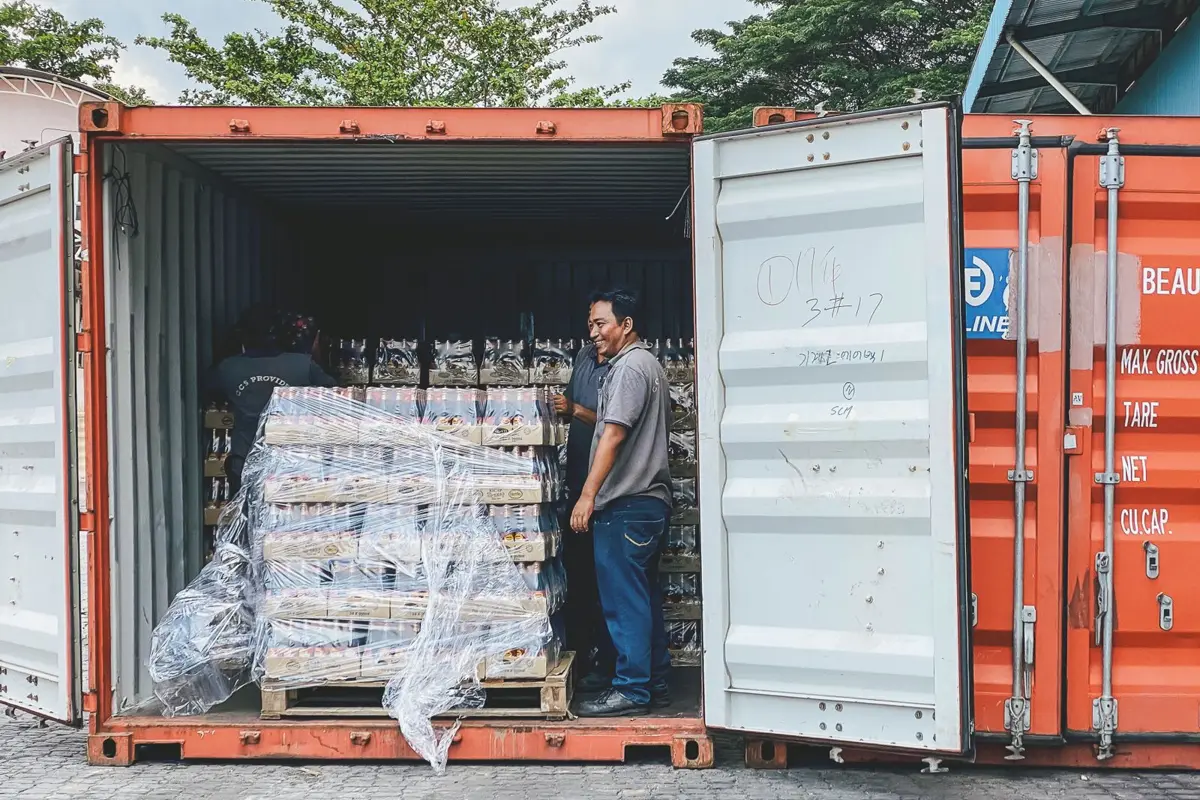
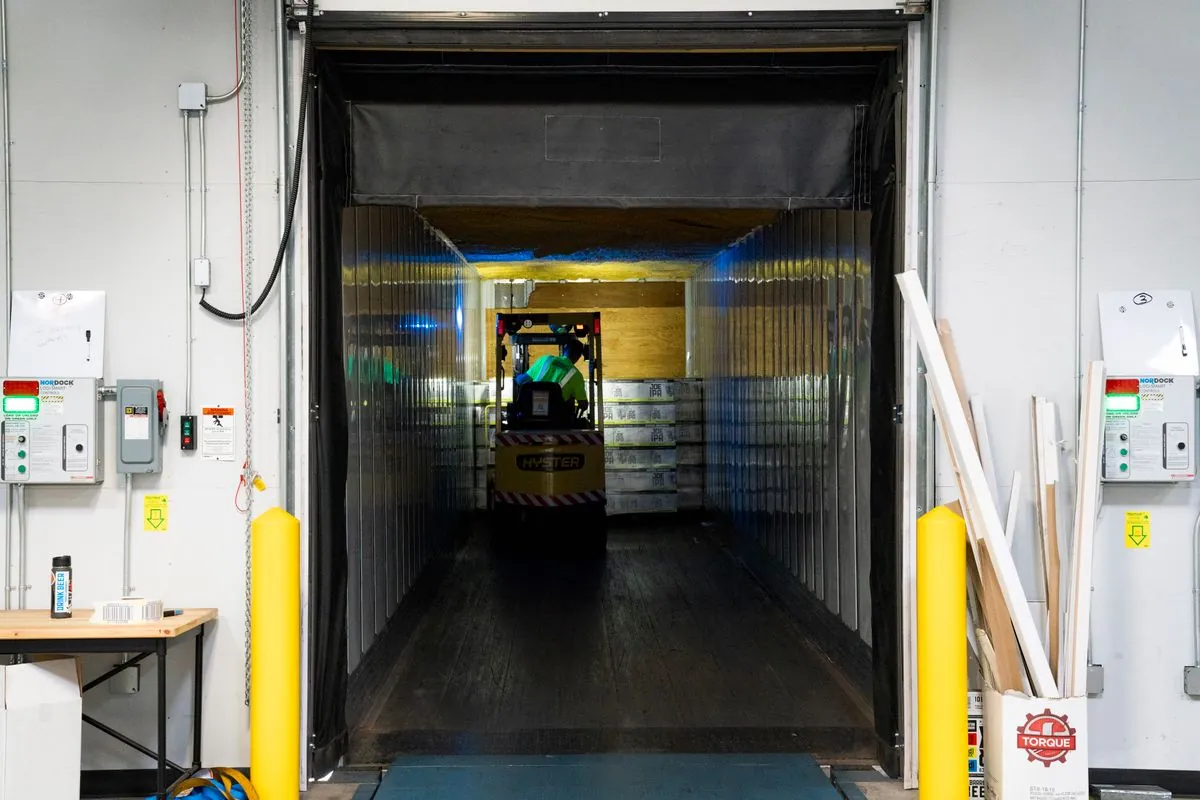
Inside a container, the difference in height and weight turns into real cost. A 40-foot High Cube container has an interior height of about 2,700 mm according to Hapag-Lloyd; two tiers of 150 mm pallets take 300 mm, about 11% of the interior height, while two tiers of 1.5 mm slip sheets take only 3 mm. Whether the difference becomes cargo depends on whether your carton height lets you add another layer.
On weight, 20 loads switching from 1100 x 1100 x 150 mm plastic pallets (about 9.5 - 12 kg each) to paper slip sheets (about 3 - 5.5 kg each) cut roughly 80 - 180 kg of tare. That matters for heavy cargo close to the permitted payload; for light, bulky cargo, height is the part that counts.
When should you use a slip sheet instead of a pallet?
A slip sheet fits best when you export one way, ship cartons of uniform size or bags with a flat base, run a stable route and the receiver has push-pull equipment. Examples include garments, footwear, toys, consumer electronics, cartoned food and bagged agricultural products. A slip sheet is a good choice when:
- Export cargo goes one way and empties do not need to be recovered at the destination.
- You need to make use of container height or payload.
- The receiver has push-pull or roller forks and agrees to receive cargo on slip sheets.
- Your warehouse is short of space for empty base material: 1,000 sheets of 0.9 mm stand only about 0.9 m high.
- You want to skip the ISPM 15 treatment step that wooden pallets need.
Paper slip sheets are often described as “HACCP compliant” and therefore suited to food and pharmaceuticals. HACCP is a control system for the production facility, not a certificate for a piece of liner; what is true is that paper slip sheets are clean, have no nails or splinters and produce no wood dust, and ICD Vietnam holds MSDS and RoHS documents for its products. The claim that slip sheets “shorten customs clearance time” has no basis and is not made here.
When is a pallet still the better choice?
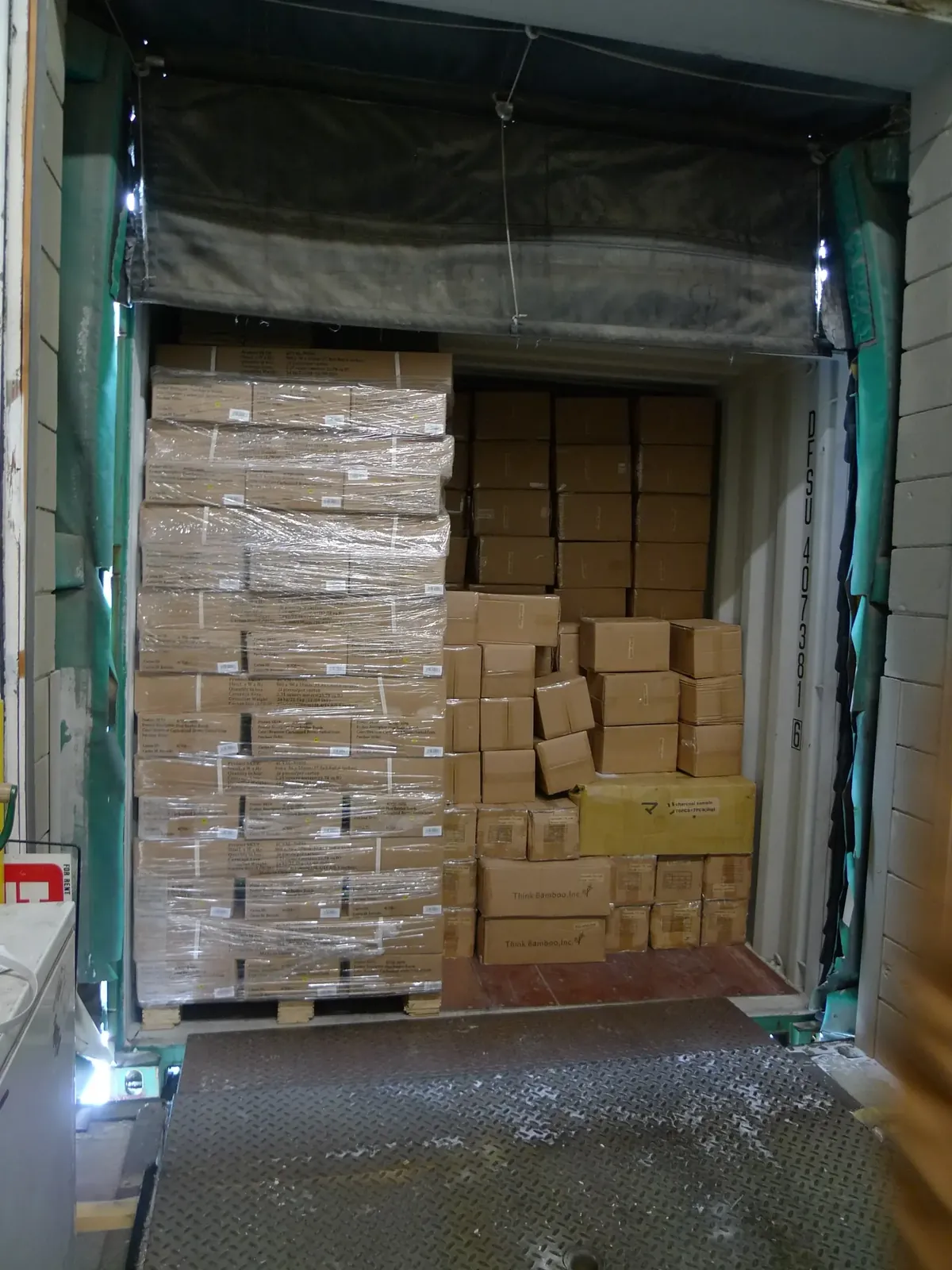
A pallet is better when cargo is heavy, must sit on rack shelving, circulates internally many times, or the receiver has no push-pull equipment. Most slip sheets are not rigid enough to support cargo on shelves, so a warehouse that uses rack shelving still depends on pallets.
Manufacturers with internal warehouses, moving goods between sites and consolidating then splitting loads usually keep pallets, because both hand pallet jacks and standard forklifts can be used with no extra equipment investment. When a plastic pallet circulates for years, its cost per use keeps falling, while a paper slip sheet has to be bought again after 1 - 3 uses. A pallet is the right choice when:
- The package is heavy, the load is concentrated on one point, or it has pointed feet or an uneven base.
- The cargo is stored on rack shelving.
- The cargo circulates internally many times, with hand pallet jacks involved.
- The receiver has no push-pull and does not want to unload by hand.
Real cost: how to calculate it for your business
The right cost comparison is the total base cost per shipment, not the price of one sheet against the price of one pallet. Published ROI tables (for example for 100 containers a month) only work with real prices, so below is a formula where you fill in your own numbers.
Once you have the difference per shipment, work out the break-even point of the push-pull attachment: divide the equipment cost by the difference per shipment to get the number of shipments needed to recover it. A business that ships only a few times a month can hire a handling service with push-pull instead of buying. You will see thresholds such as “only buy once you ship 30 containers a month”; we do not give one, because it depends on equipment prices and the saving per shipment of each business.
Using slip sheets and pallets together
Many businesses use both at once, and ISO 12776 allows this: the load sits on a slip sheet, the slip sheet sits on a pallet in storage, and a forklift with a push-pull attachment pulls the load off the pallet at container loading. The pallet stays in the warehouse; only the load and its slip sheet travel in the container.
This combination keeps the advantages of rack shelving and hand pallet jacks inside the warehouse while winning back height and weight in transport. The condition is that the warehouse has at least one forklift with push-pull at the dispatch door and that the receiver has equipment too.
Selection lessons from consulting practice at ICD Vietnam
The four lessons below come from slip sheet and pallet consultations at ICD Vietnam.
No single solution fits everything. A business usually ends up using both: slip sheets for export routes with light to medium cargo, pallets for heavy cargo or internal storage. Choose route by route; do not switch the whole company at once.
A push-pull investment is not always needed. If you ship only a few times a month, hiring a handling service with the equipment may be cheaper; run the break-even formula above before buying.

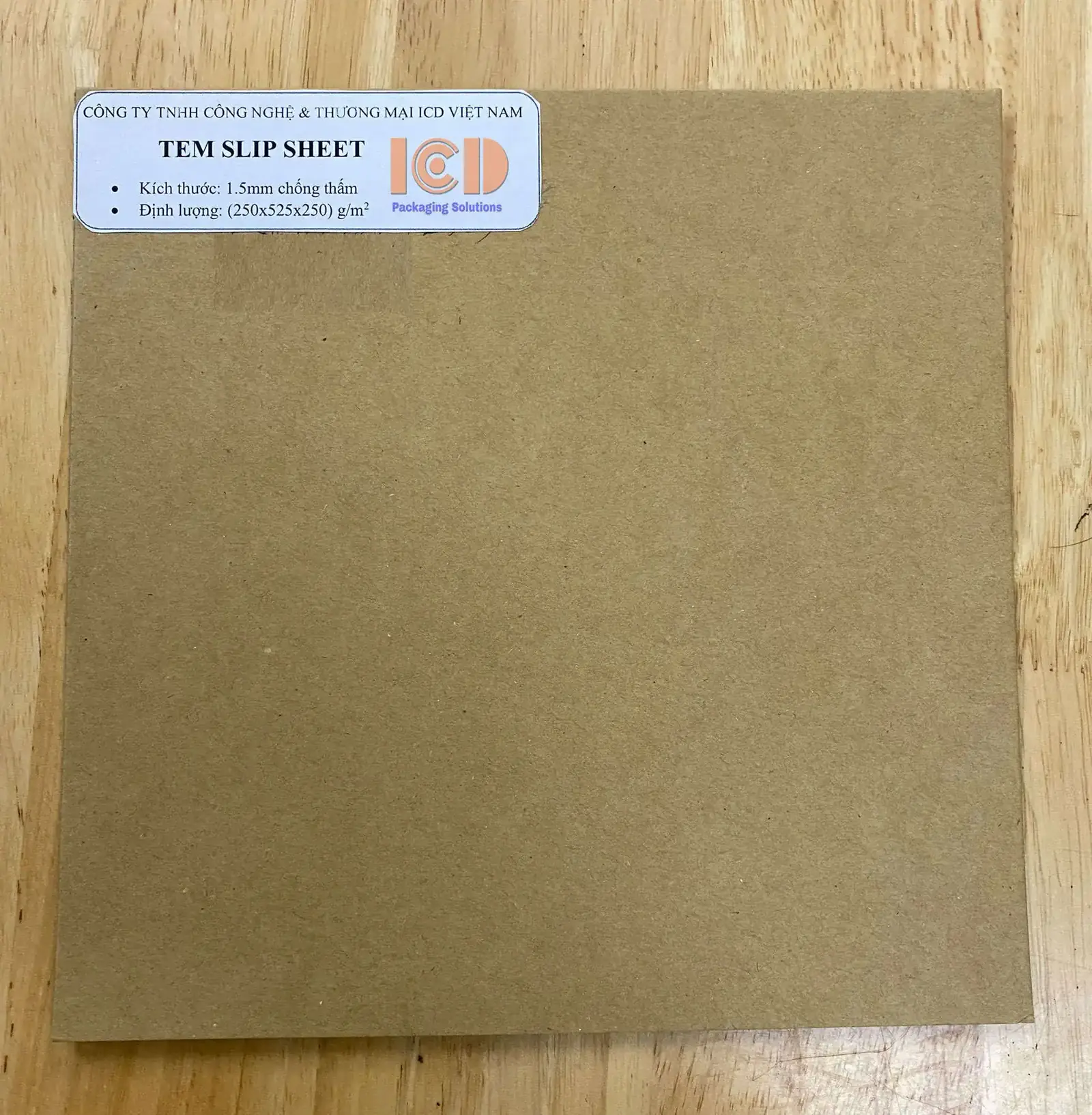
Slip sheet quality has a big effect on cargo safety. A sheet that is too thin or has a weak tab tears easily when pulled. When choosing slip sheets, ask about thickness, coating, the material safety data sheet (MSDS) and test results if your overseas customer requires them. Advice to choose slip sheets “certified to ISPM 15 and HACCP” is wrong: there is no ISPM 15 certificate for slip sheets, because the standard applies only to wood packaging.
Pallets in storage also carry hidden costs. Empty pallets take up space and need inspection and repair; wooden pallets also need watching for damp, mould and termites. This item is often forgotten when comparing with slip sheets.
In short: slip sheet or pallet?
Slip sheets and pallets are not a race with a winner but two tools for two needs. Slip sheets win in containers, on one-way cargo and on storage space for base material; pallets win on rigidity, rack shelving, common equipment and long circulation. The decision should rest on the weight and type of package, the transport route, the equipment at both ends, and a cost calculation with your own real figures.
Slip sheet vs pallet FAQ
Can a slip sheet carry heavy cargo like a pallet?
Not entirely. Slip sheets suit light to medium cargo with a flat base and an even load; for heavy cargo with the load concentrated on one point, pointed feet, or a need to sit on shelving, use a pallet. The load rating of a slip sheet depends on thickness, tensile strength and how the cargo is distributed, and should be confirmed by a trial run.
Do I need to buy a push-pull attachment to use slip sheets?
You need push-pull equipment or roller forks at both the sending and the receiving warehouse, but you do not have to buy it: you can hire a handling service that has the equipment. Work out break-even as the equipment cost divided by the saving per shipment.
Do slip sheets need fumigation like wooden pallets?
No. ISPM 15 from the IPPC (FAO) applies only to packaging made of wood; paper and plastic slip sheets are outside the scope and need no heat treatment or IPPC mark. Plastic pallets are also outside the scope; only wooden pallets must be treated and stamped for export.
How long do pallets and slip sheets last?
A paper slip sheet is typically used 1 - 3 times and then recycled. Plastic and wooden pallets are used for many cycles; their life depends on load, handling and storage, so calculate cost by the actual number of uses.
How do I know whether to choose a slip sheet or a pallet?
Answer four questions: does the cargo travel one way, does the receiver have push-pull, does the cargo need to sit on shelving, and is the package heavy or does it have an uneven base. If the first two answers are yes and the last two are no, a slip sheet is a good candidate; otherwise keep the pallet.
Can slip sheets and pallets be used at the same time?
Yes. ISO 12776 allows a slip sheet to sit on a pallet in storage, and the load is then pulled off the pallet by push-pull at container loading. The pallet stays in the warehouse; only the load on its slip sheet travels in the container.
Contact ICD Vietnam
ICD Vietnam gives free advice on the slip sheet or pallet question for each shipping route. See our 0.9 mm and 1.5 mm kraftliner paper slip sheets (with an HDPE-coated version), plus our plastic pallets and wooden pallets. Price: contact for a quote.
- North Vietnam: 0983 797 186 / 090 345 9186 / 090 5859 186.
- South Vietnam: 098 6784 186; southern workshop: 551/212 Le Van Khuong Street, Tan Thoi Hiep Ward, District 12, Ho Chi Minh City.
- Zalo: Chat on Zalo. Email: sales@icdvietnam.com.vn.
References
- Concept and operating mechanism of slip sheet systems in logistics: Material Handling Industry (MHI), Slip Sheets Fundamentals.
- ISO 12776:2008 Pallets, Slip sheets (scope, tab terminology, push-pull, single-use and multi-use slip sheets): ISO.
- ISO/TR 12776:1995 Pallets, Slip sheets (materials, load surface dimensions, 75-105 mm tab width, minimum thickness, handling procedure), since replaced by ISO 12776:2008.
- ISPM 15 Regulation of wood packaging material in international trade: IPPC, FAO.
- Slip sheet: Wikipedia.
- Interior dimensions of a 40-foot High Cube container: Hapag-Lloyd.
- Weights of slip sheets and plastic pallets: the ICD Vietnam product pages.