Table of Contents
Reviewed and updated by ICD - Week 38/2026
PE (polyethylene) and PET (polyethylene terephthalate) are the two most common plastic films in packaging, but they behave in opposite ways: PE is soft, flexible and extensible, making it ideal for pallet stretch wrap; PET is rigid, crystal-clear and gas-barrier, making it the right choice for beverage bottles and high-clarity display packaging. Choosing the wrong material costs you either product quality or budget.
In the world of packaging, PE and PET are like two siblings with completely opposite personalities. After working with them for more than 15 years, I have seen how misreading their characters leads to wrong choices that hurt both product quality and costs. Most people lump them together as “plastic”, but they are two entirely separate worlds. This article is how I tell the two siblings apart.
What PE and PET film are
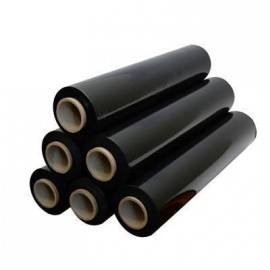
- PE film (polyethylene): Think of PE as a flexible, soft and extremely common material. It is the stuff of carrier bags, cling film for food, and the rolls of stretch wrap used daily on pallets. PE is soft, slightly extensible and usually milky-white or slightly translucent.
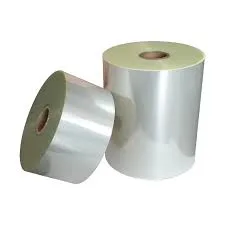
- PET film (polyethylene terephthalate): PET is the rigid, crystal-clear and structured counterpart. It is as transparent as glass and holds its shape very well. Nearly all still-water bottles, carbonated-drink bottles and clear salad containers are made from PET.
Side-by-side comparison of material properties
The difference in character comes from the molecular structure. The table below covers the most important properties you need to know.
| Property | PE film (polyethylene) | PET film (polyethylene terephthalate) |
|---|---|---|
| Clarity | Slightly hazy to translucent | Excellent - glass-like clarity and gloss |
| Tensile strength | Low, but very tough and extensible | Very high, rigid, good load resistance |
| Flexibility | Very high, highly conformable | Low, fairly brittle |
| Moisture and water barrier | Excellent moisture barrier | Excellent barrier to water, oils, CO2 and O2 |
| Heat resistance | Low (LDPE approx. 80 degC) | Higher (approx. 120 degC, up to 200 degC for some grades) |
| Printability | Harder - corona surface treatment required | Excellent - ink adhesion without pre-treatment |
| Cost | Generally lower | Generally higher |
Clarity and appearance
This is the most visible difference. If you need crystal-clear packaging that shows off the product inside, PET is the unrivalled choice. Even the clearest grades of PE cannot match the gloss and transparency of PET.
Tensile strength and flexibility
If you need a bag that stretches to accommodate an oversized item, choose PE. If you need an ultra-thin film that is rigid enough to keep a pressurised carbonated drink from bursting, you must choose PET. PET handles tensile loads well but is comparatively brittle and does not conform the way PE does.
Barrier and product protection
Both materials block liquid water very effectively. The critical difference is gas: PET is a far superior barrier against oxygen and CO2. That is why every carbonated-drink bottle is made from PET - to keep the gas inside. PE cannot hold CO2 at the pressures a carbonated beverage requires.
Practical applications: when to use PE, when to use PET
The differences above make the choice clear once you know what you need to protect.
- Choose PE film when:
- You need a soft, flexible, extensible wrap - carrier bags, bin liners, food cling film.
- You need to unitise and stabilise large loads on pallets (LLDPE pallet stretch wrap).
- Cost is the primary driver and moisture protection is sufficient.
- Gas-barrier performance is not required.
- Choose PET film when:
- You need rigid, well-defined, glass-clear packaging - water bottles, clear food containers, bubble tea cups.
- The product must be protected from oxygen or must retain CO2 (carbonated drinks, specialty coffee packaging).
- Higher heat resistance or sharp print quality is required.
Related articles
| What is PE stretch film? Properties and uses | How to choose the right stretch wrap for pallets | Pallet stretch wrap: a complete guide |
Frequently asked questions about PE vs PET film
1. Which has better UV resistance - PE or PET?
Neither material blocks UV effectively by nature. Manufacturers can add UV-stabiliser additives to either resin to create grades for outdoor use, such as agricultural mulch film. Always check whether the specific grade includes UV additives before using film outdoors.
2. Which is safer for direct food contact?
Both virgin-grade PE (especially HDPE and LDPE) and virgin-grade PET are recognised as safe for food contact. The precautions are the same: do not reuse PET bottles repeatedly and do not expose either material to temperatures beyond its rated limit.
3. Why is pallet stretch wrap made from PE (LLDPE) rather than PET?
The core function of pallet stretch wrap is to grip and unitise the load. The film must be highly extensible and self-adhesive so it clings tightly and holds stacked cartons in place during transport. These are the defining strengths of LLDPE. PET is too rigid and brittle for this application - it would crack rather than stretch around the load.
Contact ICD Vietnam
Hotline: 0983 797 186 / 090 345 9186 / 090 5859 186
Email: sales@icdvietnam.com.vn | Zalo: Chat Zalo
Reference
Comparative material properties of PE and PET plastic film - British Plastics Federation (BPF).