Table of Contents
- Acacia wood price table for 2026, by region
- How have acacia wood prices changed over the years?
- What affects the price of acacia wood
- Overview of acacia wood and its common uses
- Advice when buying acacia wood
- Converting acacia prices from tonnes to m³
- Acacia pallets: are they any good, and how do they compare with other woods
- When should you buy acacia wood or order acacia pallets?
- Frequently asked questions
- How much is acacia wood per cubic metre today?
- How does the price of mature and young acacia differ?
- How much does sawn acacia for pallets cost?
- How much is acacia wood per tonne in 2026?
- How many cubic metres is 1 tonne of green acacia?
- Why are acacia prices high in 2026?
- How does ICD Vietnam quote acacia pallets?
- Contact us to order acacia pallets
- References
Reviewed and updated by ICD - Week 43/2026
Raw acacia timber in Vietnam sells for about 1.2 to 2.0 million VND per tonne of green wood in 2026: young acacia (4 - 5 years) sold for chipping brings roughly 1.2 - 1.7 million VND/tonne, and mature acacia used for veneer peeling brings 1.75 - 2.0 million VND/tonne, according to press reports from April to September 2026. That is the highest level in several years, because supply fell after the 2024 - 2025 typhoons while transport and harvesting costs rose together.
I have worked at ICD Vietnam since 2011, and acacia is one of the main timbers we use to build pallets, so the price of round logs at the yard feeds straight into the price of the pallets we deliver. This article uses only figures that newspapers, research institutes or national standards have published, with the source and date named. Where no public price exists, as with sawn acacia battens or glued boards, I say so plainly and show you how to check a quote you receive.
Acacia wood price table for 2026, by region
Acacia prices in 2026 range from about 1.2 million VND/tonne in Ca Mau to 2.0 million VND/tonne for veneer-grade logs in Bac Ninh. The gap comes mainly from tree age, end use (chipping or peeling) and the distance from the forest to the chip mill, veneer mill or port. The table below collects the prices that regional newspapers printed during the year. All of them are round-log prices bought in the forest, at the yard or delivered to the mill:
| Region, date | Type of acacia | Recorded price |
|---|---|---|
| Gia Lai, April 2026 | Plantation raw timber in general | 1.4 - 1.75 million VND/tonne |
| Gia Lai, April 2026 | Debarked acacia (price paid to growers) | 1.5 million VND/tonne |
| Gia Lai, April 2026 | Acacia aged 4 - 5 years / 7 - 8 years and over | 1.68 / 1.75 million VND/tonne |
| Gia Lai, April 2026 | Small wood and branches for wood pellets | 1.25 - 1.27 million VND/tonne |
| Ca Mau, August 2026 | Commercial acacia | About 1.2 million VND/tonne |
| Bac Ninh, September 2026 | Veneer-peeling acacia / chipping acacia | 1,900 - 2,000 / 1,650 - 1,700 VND/kg |
| Bac Ninh, September 2026 | Peeled acacia veneer | 3.3 - 3.5 million VND/m³ |
Sources: Gia Lai Newspaper (10 April 2026), Thanh Nien Newspaper (5 August 2026), Bac Ninh Newspaper (15 September 2026). These are round-log and peeled-veneer prices, not prices for acacia sawn into battens.
Compared with the same period of 2025, veneer acacia in Bac Ninh is up about 600 VND/kg and chipping acacia is up 400 - 450 VND/kg; in Gia Lai, debarked acacia is up 200,000 - 300,000 VND/tonne. The April 2026 timber market report from Industry News Agency (HTCN) also records raw timber prices rising nationwide, with chipping acacia in the north up 10,000 - 110,000 VND/tonne within the month, while supply stayed low and mill stocks were limited.
How have acacia wood prices changed over the years?
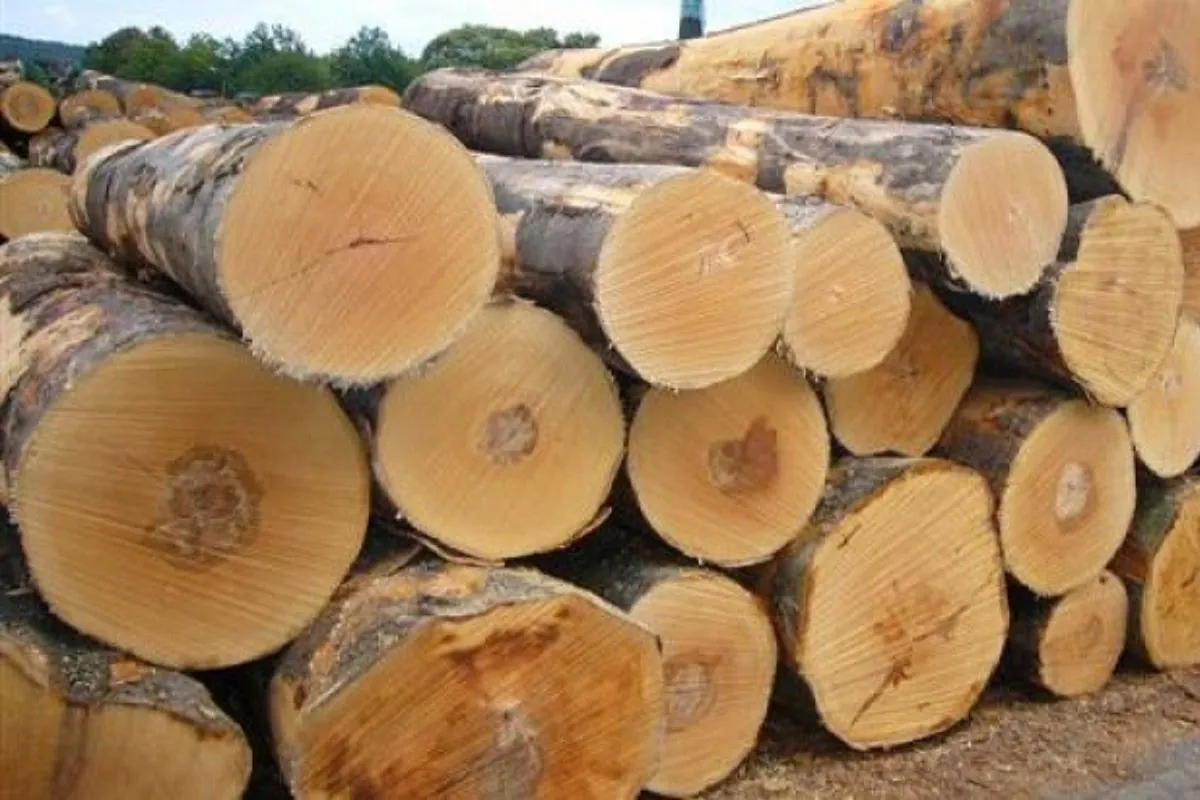
Raw acacia has moved from about 1.2 - 1.3 million VND/tonne in 2013 to the 1.75 - 2.0 million VND/tonne range in 2026, but not in a straight line: it rises and falls with demand for export wood chips. In early 2022, acacia chips in Quang Ngai were at times only about 1.0 million VND/tonne; by July 2022 mills were paying 1.6 - 1.7 million VND/tonne, up almost 50% in half a year, and many households cut even young 3-year-old trees.
A caution when reading the chart: the points are not all the same kind of wood. The 2013 and 2022 points are acacia for paper chips, while the two 2026 points are mature acacia. The trend is still clear, though: each time chip mills compete to buy, round-log prices jump very quickly. In 2013, buyers in Binh Dinh already paid more than 1.5 million VND/tonne for acacia and eucalyptus of 15 cm diameter and up, destined for wall panelling and flooring, well above the price of wood for chips. That gap between small and large wood is still there today.
What affects the price of acacia wood
Acacia prices depend mainly on tree age and diameter, end use, export chip demand, harvesting and transport costs, and supply at the time. In 2026, regional newspapers recorded three specific factors pushing prices up:
Tree age and end use create the clearest gap within a single province. In Gia Lai, acacia aged 7 - 8 years was bought at 1.75 million VND/tonne, above the 1.68 million for 4 - 5 year old trees; in Bac Ninh, veneer acacia at 1,900 - 2,000 VND/kg is above chipping acacia at 1,650 - 1,700 VND/kg. Older trees have thicker, straighter trunks that can be peeled into veneer or sawn into long battens, so they earn a higher price than wood that is only good for chipping.
Export chip demand is the second factor. The March 2026 report from Thi Truong Go recorded the FOB price of chips exported to China up 9 USD/tonne to 167 - 172 USD/tonne, and the April 2026 report noted that supply to the Chinese market fell as Indonesia restricted the harvest of acacia and eucalyptus. When chip mills buy hard, young acacia is pulled into chipping, which drags up the domestic price of raw timber.
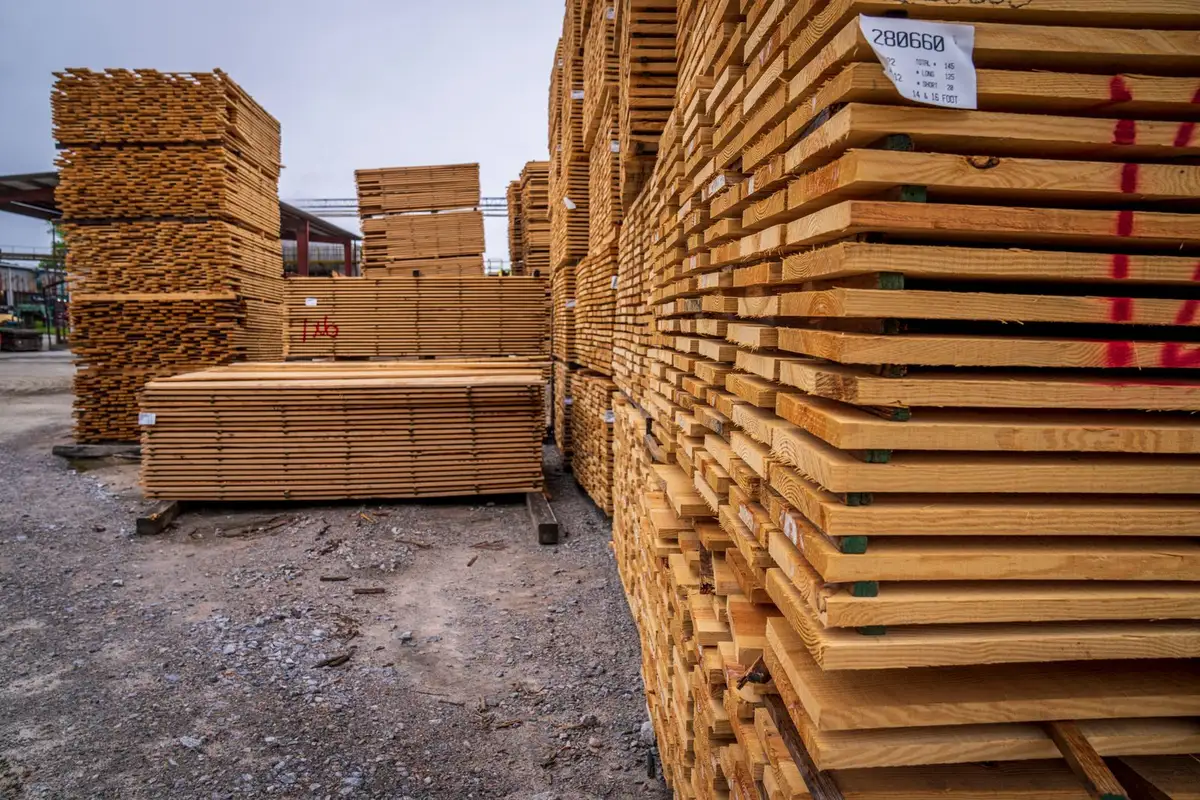
The third factor is cost and harvest season. According to Gia Lai Newspaper (April 2026), haulage rose from about 120,000 to 200,000 - 300,000 VND/tonne depending on distance, and harvest labour at 400,000 - 450,000 VND/day is still hard to hire. Harvest seasons also fall out of step between regions: according to agri.vn (June 2026), acacia in the central region is hard to harvest in the rainy season, while acacia in Ca Mau is hard to harvest in the dry season, so supply from each region rises and falls with the season.
Overview of acacia wood and its common uses
Acacia is the most widely planted plantation timber in Vietnam, mainly hybrid acacia, Acacia mangium and Acacia auriculiformis; in the south, Acacia auriculiformis is often called tram or yellow-flowered tram. All three belong to group IV under TCVN 12619-2:2019, with densities of 0.57 g/cm³ (hybrid acacia), 0.58 g/cm³ (Acacia mangium) and 0.59 g/cm³ (Acacia auriculiformis), and their natural durability is rated poor.
Figures from the Vietnamese Academy of Forest Sciences show how the species differ at harvest age: the wood volume weight at age 7 is 0.469 tonne/m³ for Acacia auriculiformis, 0.455 tonne/m³ for hybrid acacia and 0.414 tonne/m³ for Acacia mangium. These are dry wood mass divided by green wood volume, used to compare species; wood weighed at purchase still holds water and is heavier than these numbers. So for the same m³, Acacia auriculiformis usually gives more tonnes than Acacia mangium.
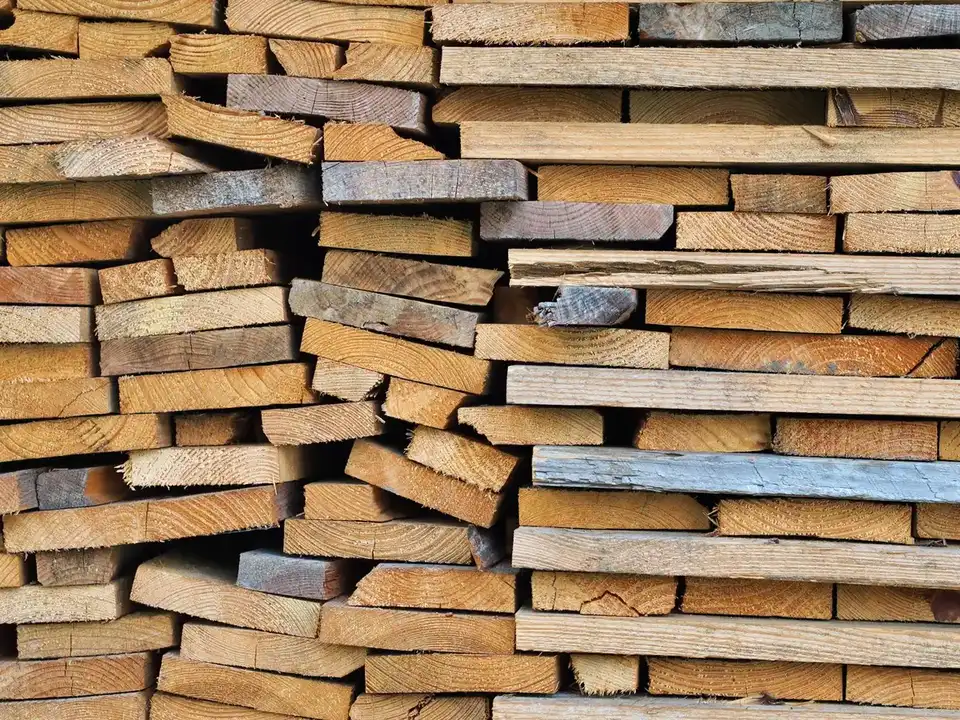
Most young acacia goes into paper chips and wood pellets, while mature acacia is peeled into veneer for plywood and panels, or sawn into battens for furniture, rafters, formwork and pallets. This split explains why a tonne of chipping acacia and a tonne of veneer acacia are priced differently even though they come from the same species.
Advice when buying acacia wood
To buy acacia at a fair price, compare quotes on the same unit, the same condition of wood (green or dried, debarked or not) and the same delivery point. Two quotes that differ by a few hundred thousand dong per tonne may differ only because one already includes haulage to the mill and the other does not.
Before you commit, do these four things:
- Check that the wood shows no sign of borers, split ends or warp.
- Choose the grade and age for the purpose: chips, veneer or sawn battens.
- Collect quotes from several suppliers and convert them to one unit.
- Ask for proof of plantation origin, and an FSC or PEFC certificate if your customer requires one.
The table below lists the common ways prices are quoted, so you avoid comparing two quotes in different units:
| How the price is quoted | Applies to | What to ask |
|---|---|---|
| VND/tonne of green wood at the yard | Round acacia sold to chip and veneer mills | Debarked or not, who pays haulage to the mill |
| VND/kg | Quick quoting by traders and processors | To convert to tonnes, multiply by 1,000 |
| VND/m³ of sawn wood | Sawn acacia battens for pallets and bundles | Green or dried sawn wood, batten size, knot share |
| VND/sheet | Finger-jointed boards, peeled veneer, plywood | Thickness, sheet size, face grade |
Converting acacia prices from tonnes to m³
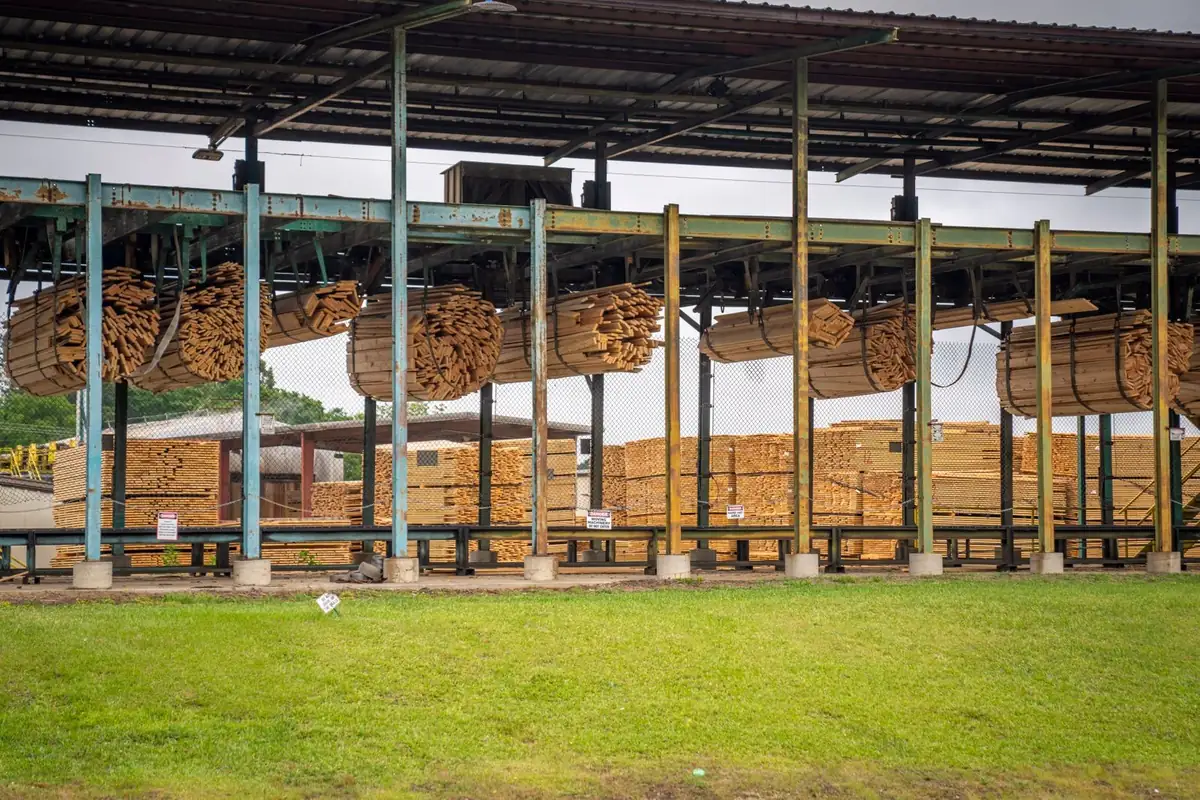
Round acacia is mostly traded by the tonne, while sawn wood and peeled veneer are priced by the m³, so you need one common unit to compare. Converting kg to tonnes only means multiplying by 1,000: 1,900 VND/kg equals 1.9 million VND/tonne. Converting tonnes to m³ has no fixed factor, because freshly harvested acacia holds very different amounts of water depending on species, tree age and time since felling.
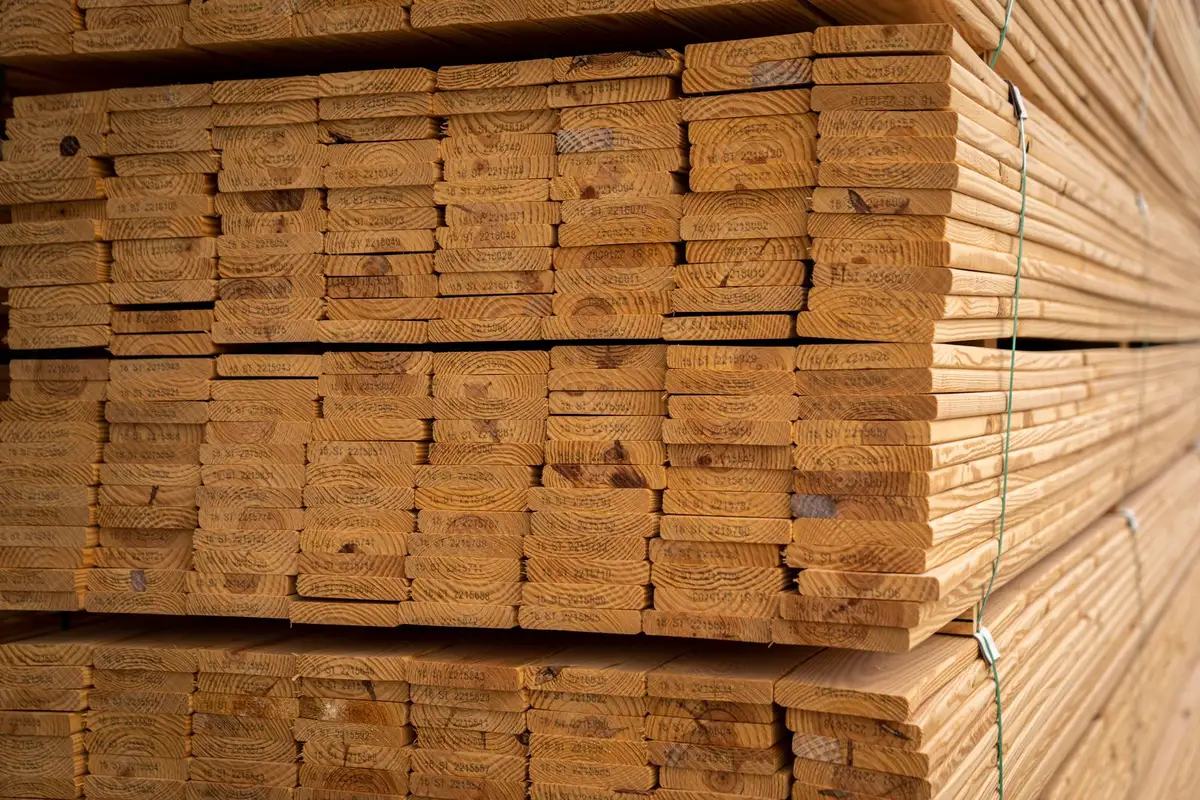
The 0.57 g/cm³ (570 kg/m³) figure for hybrid acacia in TCVN 12619-2:2019 is for dry wood, so 1 tonne of green acacia corresponds to less than 1.75 m³. The surest method is to weigh a sample lot of known volume, then multiply the price per tonne by the number of tonnes in 1 m³. Some localities report by the m³: Ha Tinh Newspaper (May 2023) says that in 2022 Vu Quang district harvested almost 52,000 m³ of acacia at a purchase price of about 1.45 million VND/m³.
Acacia pallets: are they any good, and how do they compare with other woods
An acacia pallet is an economical choice for domestic warehousing and many ordinary export shipments, thanks to the plentiful local plantation supply and easy workability. What you need to know is that TCVN 12619-2:2019 rates acacia durability as poor, so pallet quality depends more on batten selection, drying and storage than on the name of the wood.
When I advise customers choosing a wooden pallet, I put it briefly like this: load capacity is set by the design (board thickness, number of battens, foot style), not by the species alone. Both pallets can be acacia, yet a 15 mm deck on three stringers and a 20 mm deck on nine blocks carry very different loads. So when ordering, send the weight of goods per pallet and how it will be handled (forklift, racking, stacking) so that the structure can be sized to match, instead of only asking “how many kg can an acacia pallet carry”.
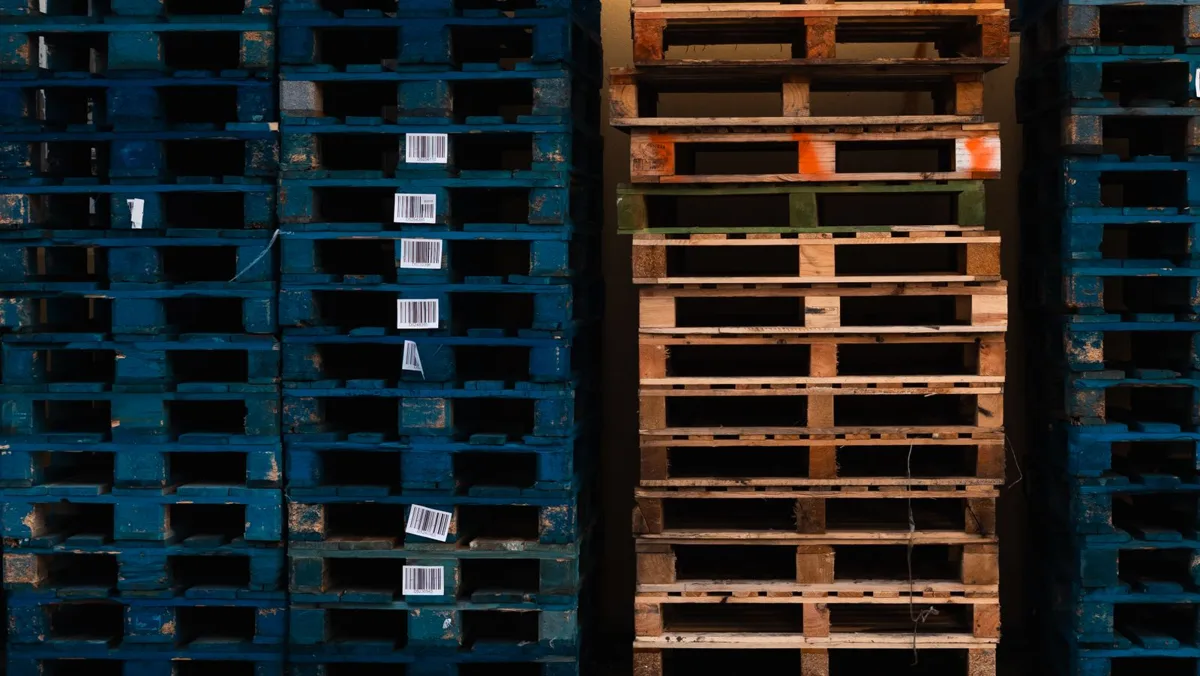
Acacia saws and nails easily, so it is built into many sizes such as 1000 x 1200 mm, 1100 x 1100 mm or 800 x 1200 mm. For export goods, pallets must be treated to ISPM 15 (heat treatment HT or methyl bromide fumigation MB) and stamped with the IPPC mark; the treatment only kills pests present in the wood at the time of treatment and does not prevent mould later. To limit mould, the wood must be dried and the pallets kept in a dry place under cover.
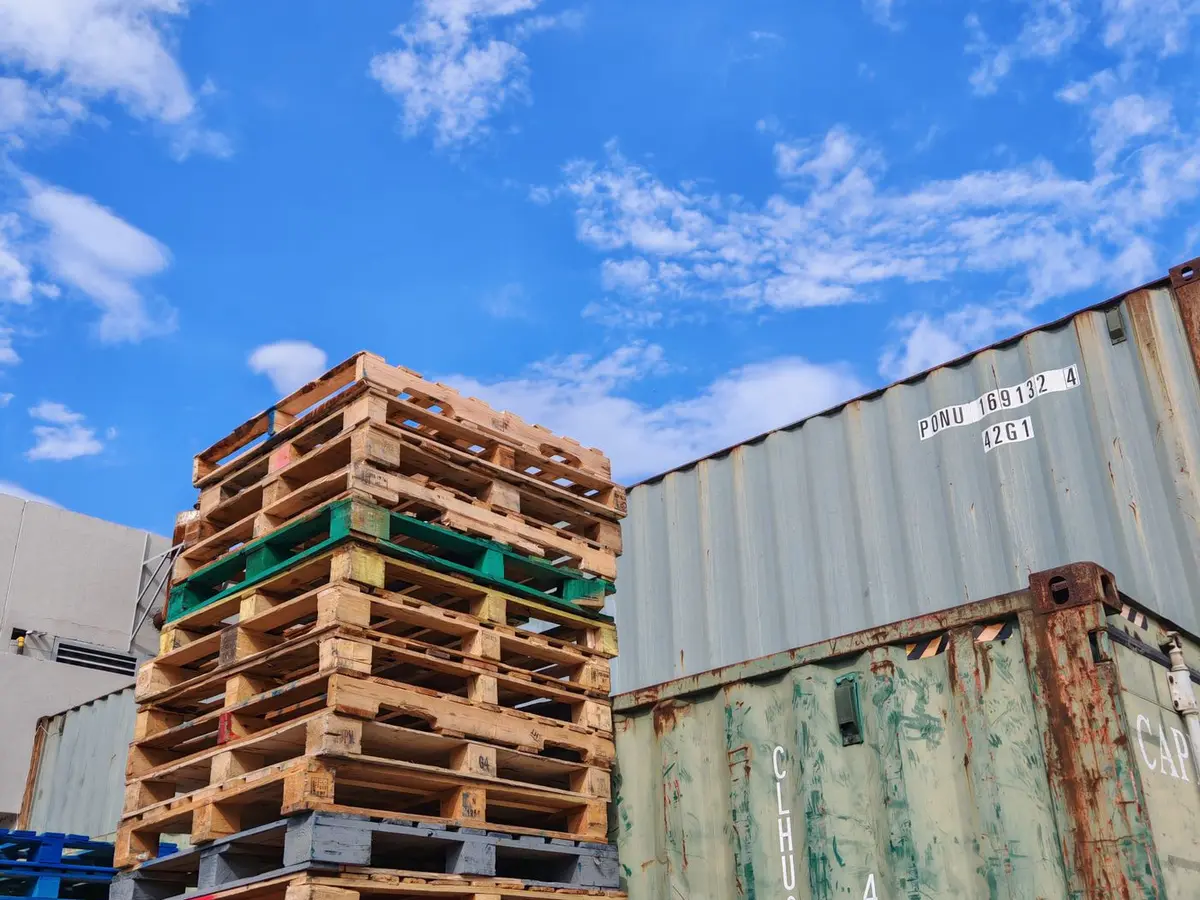
ICD Vietnam does not fumigate itself and has no kiln of its own; our export pallets are treated and stamped with the IPPC mark through a licensed provider. The price of ICD Vietnam acacia pallets is a contact-for-quote price based on size, load and quantity, with volume discounts.
When should you buy acacia wood or order acacia pallets?
There is no month in which acacia is certain to be cheapest, because each region has its own favourable harvest season and prices also follow export chip demand. What you can do is plan ahead: large acacia pallet orders should be scheduled early, placed in batches of one specification, and the quote should state how long it stays valid.
In my experience, two things leave buyers least exposed: grouping orders to the production schedule for a whole quarter instead of ordering week by week, and fixing the batten specification and wood moisture in advance so the workshop can prepare raw material. When round-log prices climb quickly, as from April to September 2026, an early order avoids a quote being revised halfway through.
Frequently asked questions
How much is acacia wood per cubic metre today?
Round acacia is sold mainly by the tonne, at about 1.2 - 2.0 million VND/tonne in 2026; to convert it to cubic metres you must weigh a sample lot, because green wood holds a lot of water. Peeled acacia veneer in Bac Ninh was recorded at 3.3 - 3.5 million VND/m³ (September 2026). Sawn acacia battens have no public price list with a named source; the price follows the quote for each lot and specification.
How does the price of mature and young acacia differ?
Older acacia is paid more because it can be peeled and sawn: in Gia Lai (April 2026), acacia aged 7 - 8 years was 1.75 million VND/tonne against 1.68 million for 4 - 5 years; in Bac Ninh (September 2026), veneer acacia was 1,900 - 2,000 VND/kg against 1,650 - 1,700 VND/kg for chipping acacia.
How much does sawn acacia for pallets cost?
Sawn acacia battens have no public price list from a state agency or association; each workshop quotes by batten specification, moisture and lot size. The timber market report from Industry News Agency recorded sawn wood prices rising in the central and southern regions in April 2026 because raw timber was expensive.
How much is acacia wood per tonne in 2026?
In 2026 raw acacia was commonly bought at 1.2 to 2.0 million VND/tonne: about 1.2 million VND/tonne in Ca Mau (August 2026), 1.5 - 1.75 million VND/tonne in Gia Lai (April 2026) and 1.65 - 2.0 million VND/tonne in Bac Ninh (September 2026), depending on chipping or veneer acacia.
How many cubic metres is 1 tonne of green acacia?
There is no fixed factor, because green acacia holds different amounts of water depending on species, tree age and time since felling. The 0.57 g/cm³ density of hybrid acacia in TCVN 12619-2:2019 is for dry wood, so 1 tonne of green acacia is less than 1.75 m³; the accurate way is to weigh a sample lot of known volume.
Why are acacia prices high in 2026?
Supply fell after Typhoon Yagi in 2024 and storm No. 13 in late 2025, haulage costs rose (in Gia Lai from about 120,000 to 200,000 - 300,000 VND/tonne), harvest labour is short, and export chip demand remains high.

How does ICD Vietnam quote acacia pallets?
ICD Vietnam quotes acacia pallets by size, load, quantity and ISPM 15 treatment requirement; the price is contact for a quote with volume discounts, and returns are accepted within 7 days (the warranty does not apply to wooden pallets). Call 0983 797 186 or chat on Zalo for a quote.
Contact us to order acacia pallets
To get a quote for acacia pallets by size, load and quantity, contact ICD Vietnam. We have a production workshop, a Hanoi warehouse and a southern workshop; orders are processed in 1 - 2 days, with delivery inside Hanoi and Ho Chi Minh City in 1 - 3 days, between regions in 2 - 5 days, and to other provinces in 3 - 7 days.
ICD Vietnam Industrial Manufacturing Co., Ltd.
North Vietnam: 3rd Floor, Thang Long A1 Building, Bau Hamlet, Thien Loc Commune, Hanoi - 0983 797 186 / 090 345 9186 / 090 5859 186
South Vietnam: 551/212 Le Van Khuong Street, Tan Thoi Hiep Ward, District 12, Ho Chi Minh City - 098 6784 186
Email: sales@icdvietnam.com.vn
Zalo: Chat with ICD Vietnam on Zalo
References
- Raw timber prices rise but growers’ joy is incomplete, Gia Lai Newspaper, 10 April 2026.
- Ca Mau wants to keep acacia value by developing the processing industry, Thanh Nien Newspaper, 5 August 2026.
- Bac Ninh: plantation timber prices rise, growers earn high profit, Bac Ninh Newspaper, 15 September 2026.
- Timber market report April 2026 and outlook, Industry News Agency (HTCN), 7 May 2026.
- Timber market report March 2026 and outlook, Thi Truong Go.
- Raw timber in the Mekong Delta: opportunity from acacia forests on acid sulphate soil, agri.vn, 13 June 2026.
- Quang Ngai farmers rush to sell young acacia, Van hoa Newspaper, 5 July 2022.
- Quang Ngai wood chip prices soar, acacia growers glad, authorities worried, Thuong hieu va Cong luan, 30 June 2022.
- Raw timber prices rise sharply: forest growers profit greatly, Ha Tinh New Rural Development Portal, 23 April 2013.
- Raw-material forestry in Ha Tinh improves income for tens of thousands of households, Ha Tinh Newspaper, 4 May 2023.
- Potential uses of hybrid acacia wood and points to note in planting, Vietnamese Academy of Forest Sciences.
- TCVN 12619-2:2019 Wood - Classification - Part 2: By physical and mechanical properties, Ministry of Science and Technology.
- ISPM 15, regulation of wood packaging material, IPPC.
If you also need to plan the packing materials that go with the pallets, try our PE stretch film calculator.